Building a beautiful, lasting deck is a dream for many Utah homeowners. Behind every stunning outdoor space lies a crucial secret: the right deck hardware. It’s the foundation of every safe, durable, and code-compliant deck project, directly impacting its structural integrity, longevity, and final appearance.
What You Need to Know About Deck Hardware
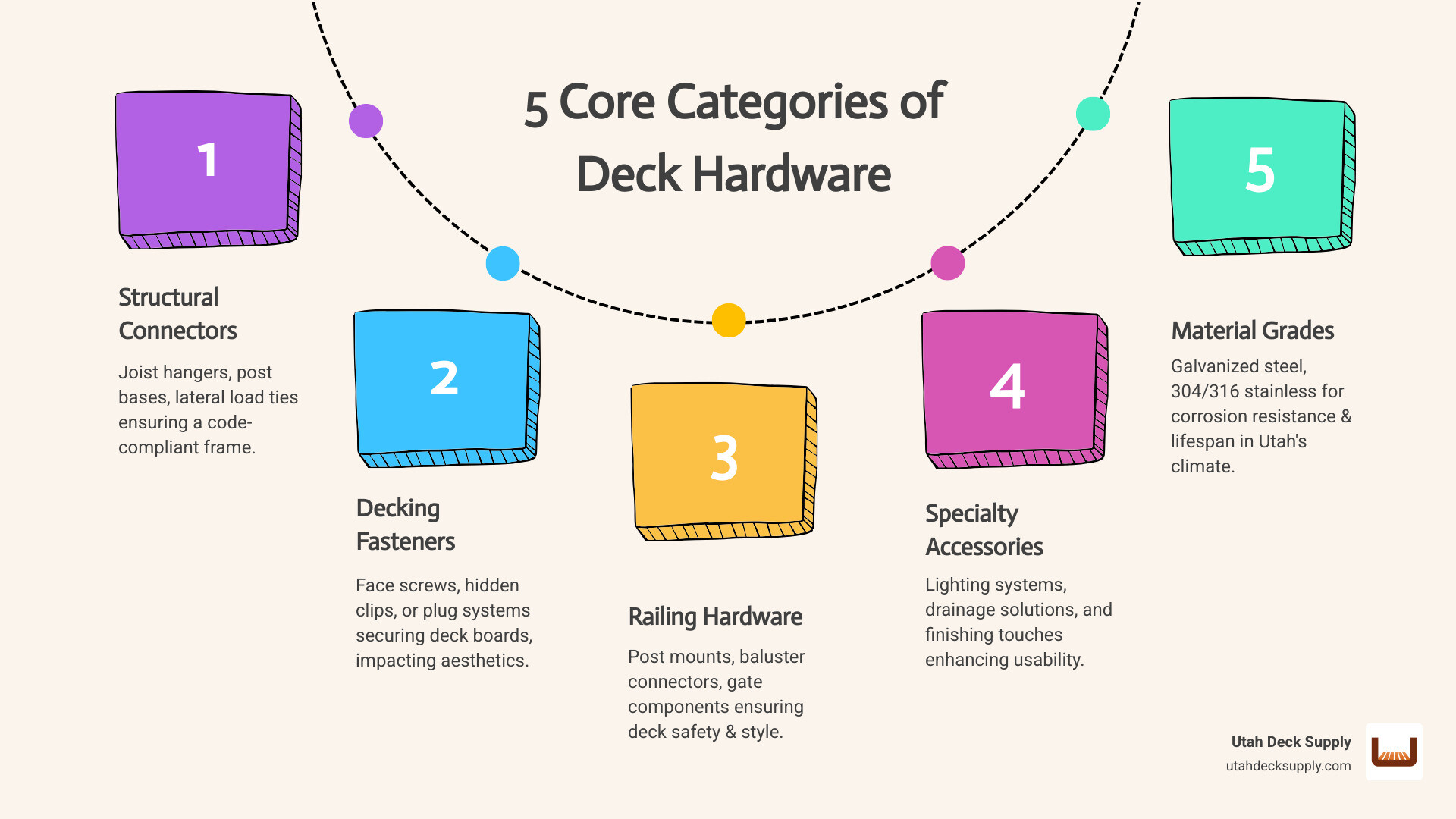
When choosing deck hardware, you need to understand five core categories:
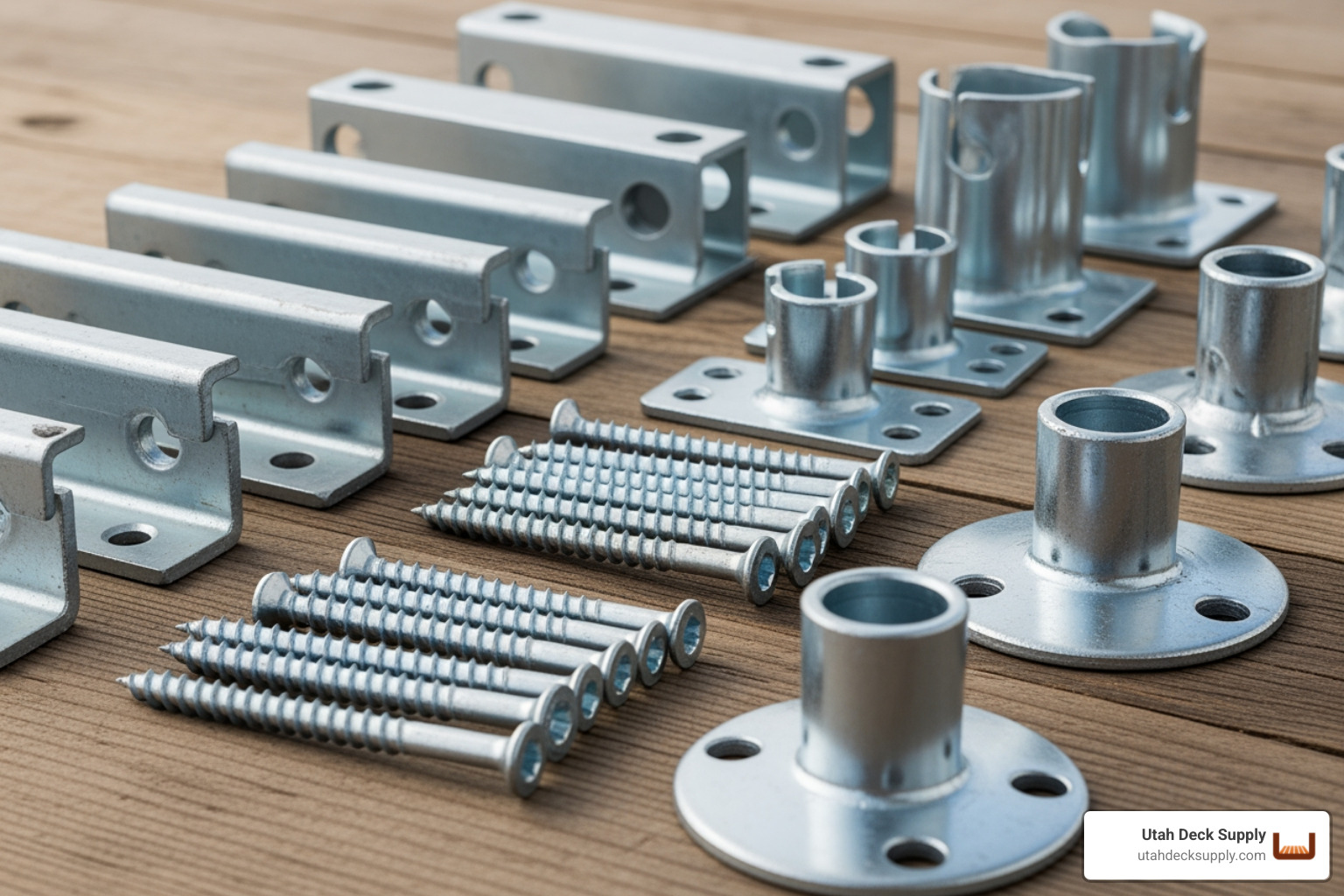
- Structural connectors – Joist hangers, post bases, and lateral load ties that create a code-compliant frame.
- Decking fasteners – Face screws, hidden clips, or plug systems that secure deck boards while affecting aesthetics.
- Railing hardware – Post mounts, baluster connectors, and gate components that ensure safety and style.
- Specialty accessories – Lighting systems, drainage solutions, and finishing touches that improve usability.
- Material grades – Galvanized steel, stainless steel (304 vs. 316), and coated options suited to your climate.
The demand for quality deck hardware is growing, especially with the rise of composite decking and DIY projects. Choosing the right hardware isn’t just about holding boards together—it’s about building a structure that withstands Utah’s extreme temperature swings, passes inspection, and looks great for decades.
I’m James Bonham, co-founder of Utah Deck Supply. With years of hands-on experience from my time at Trex Company, I’ve developed deep expertise in deck hardware systems and installation. Our team has helped hundreds of contractors and homeowners make the right hardware choices, ensuring every project meets code and exceeds expectations.
Essential Deck Hardware for a Strong & Safe Build
The hardware you choose is the literal nuts and bolts of your project, holding everything together from the foundation to the final flourish. Let me explain the critical categories you’ll encounter.
Structural Connectors and Fasteners
These are the non-negotiable components that create a strong, code-compliant frame—the skeleton of your deck. In Utah, where heavy snow and high winds are common, a structurally sound deck is paramount for safety. Structural deck hardware connects the main framing members (joists, beams, and posts) to each other and to your home.
Key components include:
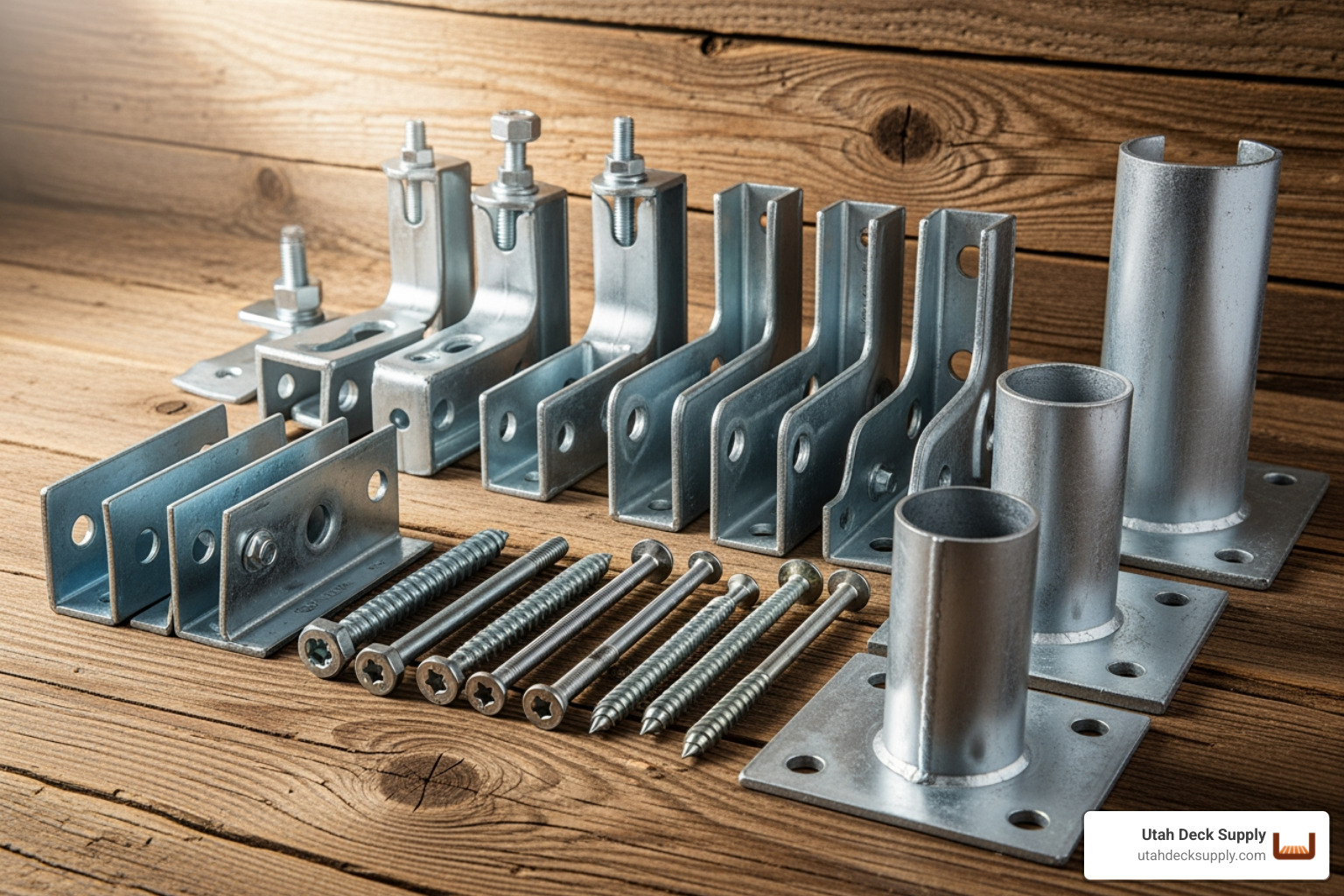
- Joist Hangers: These metal connectors support floor joists, transferring their load to beams or ledgers. Using the right joist hangers is crucial for distributing weight and preventing failure. Tools like the Hanger Selector Tool can help you find the perfect fit for your project’s load requirements.
- Post Bases and Caps: Post bases lift deck posts off concrete footings, protecting them from moisture and rot. Caps seal the top of posts to prevent water damage.
- Structural Screws and Bolts: These heavy-duty fasteners create robust connections for beams, ledgers, and posts. Unlike standard screws, structural screws are engineered to carry significant loads and meet building codes.
- Lateral Load Connectors: Often overlooked, these are vital for safety. They tie the deck to the house, resisting forces that could pull it away, as required by the International Residential Code (IRC).
Honestly, getting these structural elements right is the most important step in deck building. It’s where safety and longevity begin.
Decking Fasteners: Screws vs. Hidden Systems
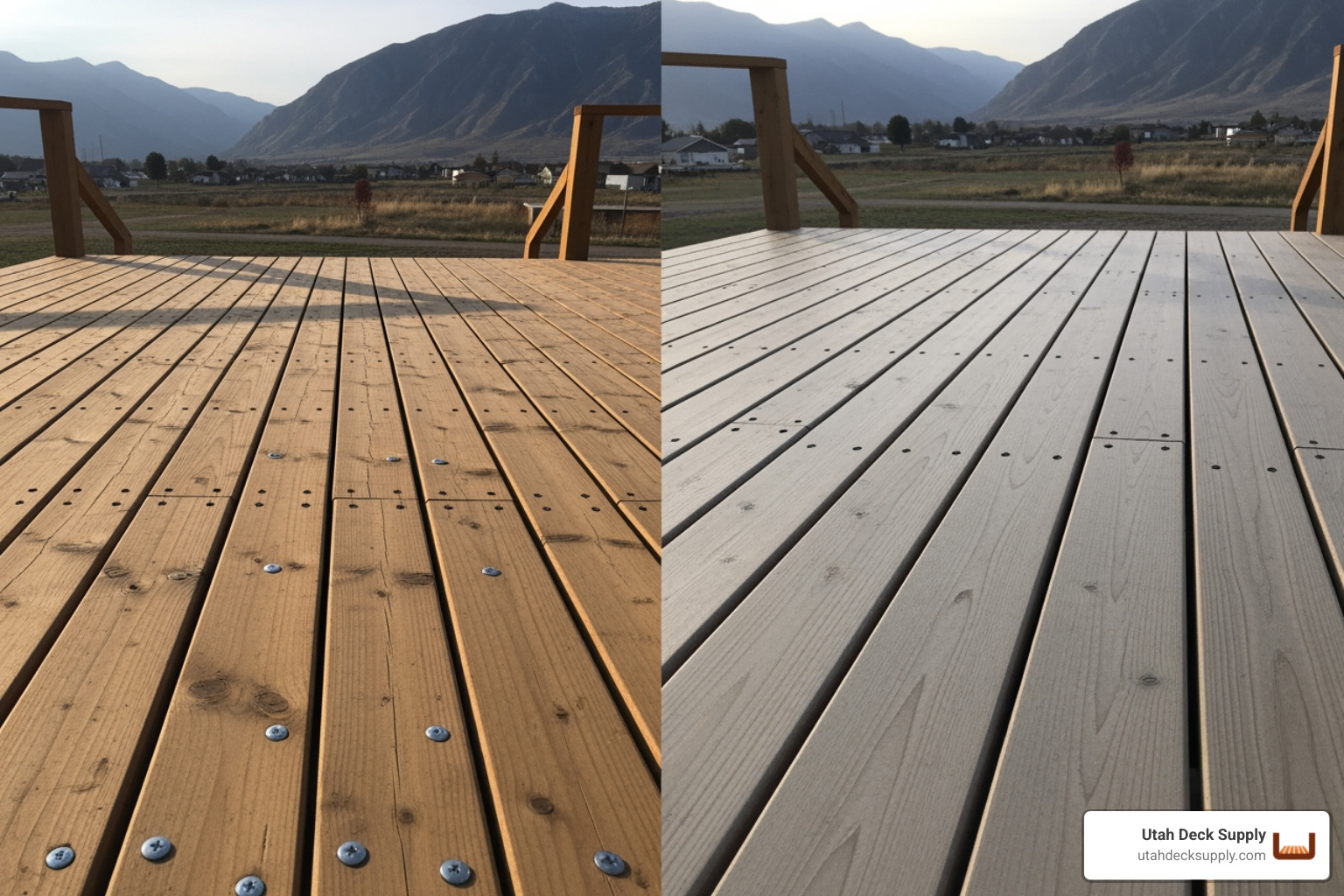
How you attach your deck boards to the frame dramatically impacts the final look. You know what? There’s no single “best” way—it all depends on your budget, material, and desired aesthetic. The choice is between traditional face screws and modern hidden systems.
Face-Down Screws (Visible Fasteners)
The most traditional and budget-friendly option, deck screws are driven through the face of the board into the joist.
- Pros: Strongest hold, easy to install, simple board replacement, and lower cost. Modern screws are often color-matched to composite brands like Trex and TimberTech.
- Cons: Visible screw heads can interrupt the clean look of the deck surface.
- Best For: All decking materials, especially wood. For pressure-treated lumber, use ACQ-approved screws to prevent corrosion.
Hidden Fastener Systems
These systems secure boards from the side or underneath, creating a smooth, screw-free surface for a premium look.
- Pros: Flawless, high-end appearance. Allows for natural board expansion and contraction, which is great for composites in Utah’s climate.
- Cons: More expensive and time-consuming to install. Board replacement can be more difficult.
- Types:
- Hidden Clips: Fit into grooved composite or PVC boards (e.g., CONCEALoc®, EDGELoc®).
- Plug Systems: Use a special screw and a plug made from the same decking material for a perfectly camouflaged finish (e.g., Cortex®).
- Side Fasteners: Installed into the side of the board to pull it tight to the joist (e.g., SIDELoc™).
- Best For: Grooved composite and PVC decking. We carry proprietary systems from Trex, TimberTech, Deckorators, and Fiberon designed for their boards.
When choosing, consider your decking material first. For composite, we often recommend hidden fasteners for the best look. For wood, face screws are a reliable classic. For help finding the right screw, tools like the Fastener Designer App can be very useful.
Railing Systems and Safety Components
Deck railings are a primary safety feature and a huge opportunity for design expression. The right hardware ensures they are both secure and stylish, acting as a safety net and a decorative frame for your outdoor space. Utah building codes are strict about railing height and baluster spacing (no more than a 4″ gap) for good reason.
We offer complete railing systems from top brands like Trex, TimberTech, RDI, Cinch, Fortress, and RailFX in various materials:
- Aluminum: Sleek, modern, and low-maintenance.
- Composite: Matches your decking for a cohesive, low-maintenance look.
- Steel: Strong with an industrial aesthetic.
- Cable Railing: Provides an unobstructed view, perfect for Utah’s scenery.
- Wood: Classic and customizable, but requires more upkeep.
The critical deck hardware for railings includes:
- Post Mounting Hardware: Secures railing posts to the deck. Options include surface mounts, fascia (side) mounts, and heavy-duty structural post anchors that are engineered to meet code for guardrail strength.
- Baluster Connectors: Secure the vertical spindles (balusters) to the rails, ensuring consistent spacing and a strong connection.
- Gate Hardware: If you have a gate, you’ll need specialized hinges and latches for safety and reliability.
- Handrail Brackets: Securely attach handrails to posts or walls for support.
When selecting railing hardware, always prioritize code compliance. After that, focus on the aesthetic and maintenance level that fits your lifestyle. A great railing keeps everyone safe and boosts your deck’s curb appeal.
Lighting and Accessories for Improved Ambiance
The right lighting extends your deck’s usability into the evening and creates a wonderful atmosphere. These deck hardware options add function and a high-end feel, changing your deck into an inviting outdoor living room.
Popular lighting options include:
- Post Cap Lights: Sit atop railing posts for a soft, ambient glow.
- Stair and Step Lights: Crucial for safety, these illuminate steps to prevent falls.
- In-Deck Lighting: Small, flush-mounted lights installed into deck boards for subtle accents.
- Under-Rail Lighting: LED strips that provide a continuous glow along the railing’s perimeter.
You can choose between easy-to-install solar lights or more reliable, consistent low-voltage systems that require wiring. Other accessories, like built-in benches or under-deck drainage systems, also rely on specialized hardware to add function and value to your space.
Choosing, Installing, and Maintaining Your Hardware
Making the right selections upfront and performing simple maintenance will ensure your deck remains a safe and beautiful extension of your home for years to come. Here’s the thing: material choice and regular check-ups are key.
Choosing Materials for Your Deck Hardware
The material of your hardware determines its resistance to corrosion and its overall lifespan, which is critical in a place like Utah with its distinct seasons. Your deck hardware needs to handle everything from snowy winters to hot, dry summers.
Here’s a breakdown of common materials:
| Material Type | Cost | Corrosion Resistance | Best Use Cases |
|---|---|---|---|
| Galvanized Steel | Low | Good (G185/ZMAX® is standard). Can rust if scratched. | The standard for most treated lumber decks and structural connections. Very cost-effective. |
| 304 Stainless Steel | Medium | Excellent. Resists moisture and chemicals in treated wood. | Ideal for decks near pools, hot tubs, or in high-moisture areas. A great upgrade for longevity. |
| 316 Stainless Steel | High | Superior. Best for saltwater or areas with de-icing salts. | Essential for coastal areas. Generally overkill for most Utah decks but offers maximum protection. |
| Coated/Specialty | Varies | Varies by coating. Many modern screws have multi-layer protection. | Color-matched screws for composite decking. Offers better aesthetics and durability than standard galvanized. |
Tools, Resources, and Annual Maintenance
With the right plan and a simple annual check-up, you can keep your deck in top shape. A little prevention goes a long way.
Annual Maintenance Checklist:
- Inspect All Hardware: Check for loose screws, bolts, or connectors. Tighten anything that has come loose.
- Look for Corrosion: Check for rust or corrosion, especially on structural connectors. Replace any heavily corroded hardware. This Deck Inspection Warning Signs Video is a great guide.
- Clean Your Deck: Use appropriate deck cleaners to remove dirt, mildew, and grime that can trap moisture against hardware.
- Check Wood Components: Look for signs of rot or splitting, particularly around connections where moisture can collect.
Having the right Essential Deck Building Supplies from the start makes both building and maintenance easier. At Utah Deck Supply, our experts can guide you through every component you need, from hardware to decking, ensuring your project is a success from day one.