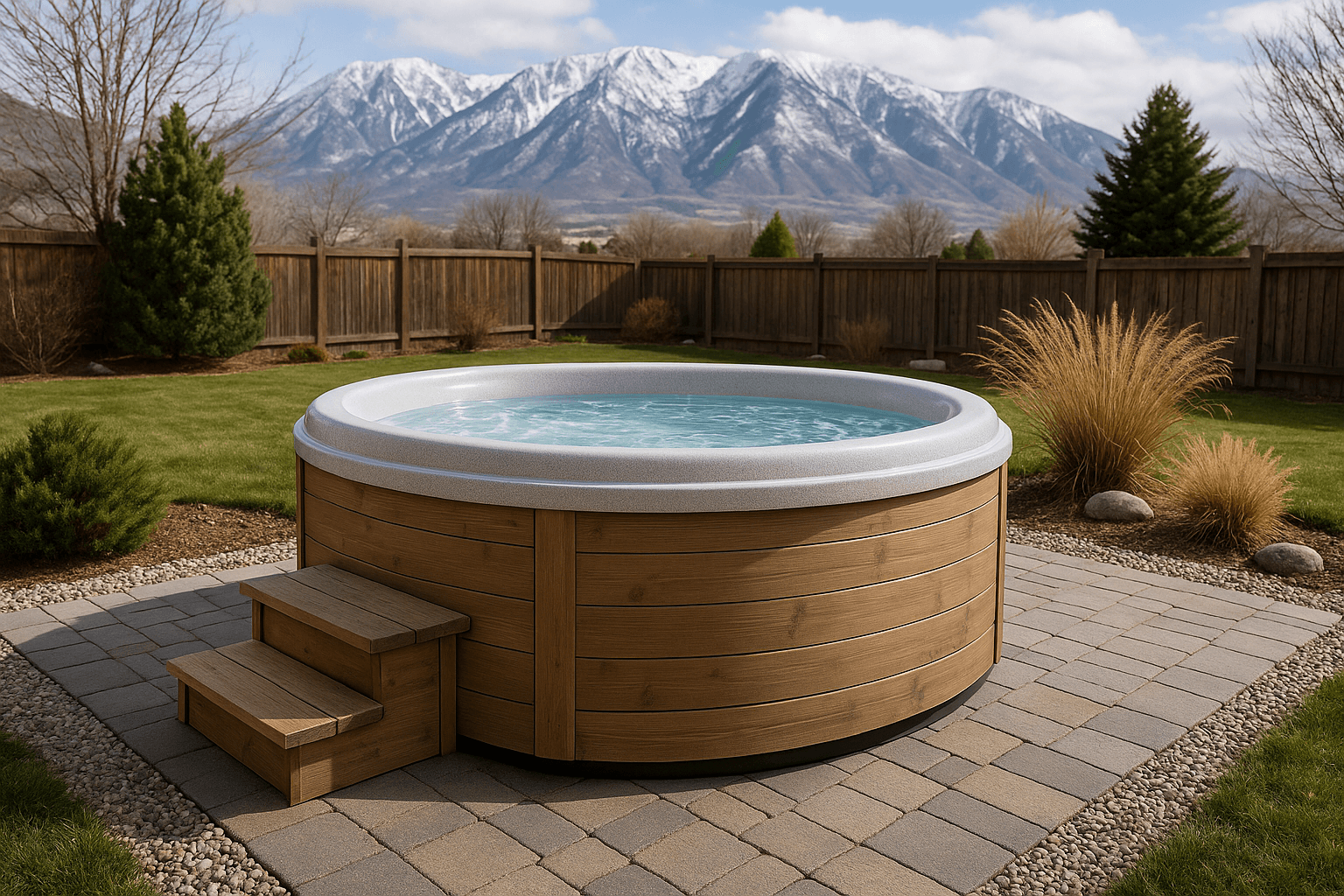
You’re picturing it already: steam rising on a crisp Wasatch evening, string lights humming on the deck, the weight of the day just… falling off. Before that bliss, though, your hot tub needs a base that won’t settle, crack, or flood. The good news? With a plan, a shovel, and a bit of Utah-specific know-how, you can build a rock-solid foundation that lasts. Let me explain how homeowners and contractors around Salt Lake, Davis, and Utah Counties get it right the first time.
First things first: weight, code, and where it sits
Hot tubs are heavy—like small-car heavy. A 7-person tub can push 4,000–5,500 pounds when filled and occupied. That load has to sit on a flat, stable, well-drained base. Local code may call out frost depth, electrical clearances, and setbacks from property lines or slopes. In most of Salt Lake County, you’ll see frost depth around 30 inches; still, check with your city’s building department. And remember, the equipment side of the tub needs access for service—don’t back it into a wall with no room to breathe.
Climate matters, too. Along the Wasatch Front, freeze-thaw cycles chew up weak bases. Clay soils swell, then shrink. Wind can drive snow right where you least want it. Plan for drainage from the start, not afterward when your spa is tilted like a pinball machine.
Pick your base: slab, gravel, pavers, or piers?
There’s more than one way to support a spa. Each has its place:
- Compacted gravel pad: Budget-friendly, fast, forgiving. Great for most backyards if you build it thick, flat, and well-drained.
- Concrete slab: Highest stability and clean look. Ideal for heavy tubs, windy yards, or soft soils. Requires forming and curing time.
- Paver base: Nice finish, modular repairs. Needs careful prep, edging, and compaction.
- Helical piers or Footings: Best under deck installations or sloped sites. Usually a contractor job—strong, precise, and code-friendly.
You know what? The humble gravel pad wins more often than not. It handles Utah’s soil movement better than you’d think, if you build it like a driveway, not a sandbox.
Site smarts: think drainage, sun, and access
Choose a spot that stays naturally dry. Aim for gentle pitch away from the tub—surface water should run off, not toward your equipment panel. If you’re tucking the spa near the house, watch roof runoff and downspouts; they can flood a pad in one storm.
Sun is a mixed bag. Winter sun helps melt snow off the cover. Summer sun can overheat the shell and cook the cover foam. Shade trees are pretty but drop leaves and seeds. A privacy screen or pergola can strike a balance. And don’t forget the path: you’ll carry chemicals, towels, and maybe a tray of drinks—keep that walk short and slip-resistant.
Tools and Materials that make life easier
You don’t need a contractor’s trailer, but solid tools help. We see great results with:
- Plate compactor (Wacker Neuson or rental from Home Depot/Sunbelt)
- Shovels, a 6–8 ft straightedge, string lines, stakes, and a level (a DeWalt laser level is clutch)
- Landscape fabric/geotextile (Mirafi 500X or similar)
- Road base (3/4” minus) and a top layer of angular gravel (washed 3/8” or 1/4” minus)
- Edging: pressure-treated 2×4/2×6 or concrete paver edging
- For slabs: Quikrete 4000 PSI, rebar #3 or #4, or fiber mesh
Local tip: Geneva Rock and regional landscape yards carry reliable road base along the Wasatch Front. At Utah Deck Supply, we can help you size materials and pick the right edging for your layout.
The most common winner: a compacted gravel pad
1) Mark and excavate
Lay out the footprint at least 12 inches larger than the hot tub on all sides. That overbuild matters—edges are where pads fail. Excavate 6–8 inches deep. In heavy clay (common in Davis County), go 10–12 inches and consider a thicker road base layer.
2) Fabric down
Roll out geotextile fabric to separate soil from base rock. It prevents pumping and keeps the pad from sinking after storms. Overlap seams by 12 inches.
3) Build the base in lifts
Add 3–4 inches of 3/4” minus road base. Mist it lightly, then compact until it’s tight and sings under the plate compactor. Repeat with another 3–4 inches. Keep it level. If your yard slopes, you can terrace the cut or retain the downhill edge with treated Lumber staked every 2–3 feet.
4) Top layer and fine-tune
Spread 1–2 inches of angular gravel. Screen it with your straightedge. Check for flat. You’re aiming for dead level under the tub, but the surrounding grade should fall away about 1/8 inch per foot to shed water.
5) Edge and lock it
Install edging so the pad can’t ravel. Treated boards, Steel edging, or paver restraints work. Backfill outside edges and tamp. Stand on it. Jump a little. It shouldn’t squish or ripple.
Small contradiction—gravel “moves,” right? Yes, but not when you compact it in layers, cap it with angular stone, and give it strong edges. Then it behaves.
Concrete slab: clean, durable, and precise
For heavier spas or soft soils, a slab is a safe call. Keep it simple:
- Excavate 6–8 inches. Add 3–4 inches of compacted base rock for drainage and support.
- Form a slab that’s at least the tub footprint plus 12 inches all around—4 inches thick minimum, 6 inches if the soil’s suspect.
- Reinforce with #3 rebar at 16” on center each way or use fiber-reinforced concrete rated 4000 PSI.
- Pour level. Skip heavy slope under the tub itself; water shedding happens around, not under, the base.
- Saw control joints if the pad is large; cure properly before setting the spa.
Pro note for contractors: if the tub sits near a wall, dowel into existing concrete to prevent differential movement. And keep conduit pathways in mind before you pour.
Paver base: good looks, solid bones
The sub-base mirrors the gravel pad: fabric, compacted road base, then 1 inch of screeded bedding sand (or screenings). Lay pavers tight, cut to fit, and edge with spikes. Compact with a plate compactor using a protective mat, then sweep in polymeric sand. It’s a little more finesse, but maintenance is easy and repairs are modular.
Level, drainage, and frost—getting the balance right
Your spa shell and frame need level support across the entire footprint. A tilt creates stress points that void warranties and cause creaks you’ll hear at 10 p.m. That said, the area around your pad should send water away. Think “island in a gentle rain”—flat on top, slopes all around. In freeze seasons, that runoff stops ice sheets from forming at the steps. Simple, but often skipped.
Electrical and access: safety before suds
Most hot tubs on the Wasatch Front run 240V with a GFCI disconnect. NEC requires proper bonding and clearances. Keep the equipment panel accessible—at least 18–24 inches free in front of it. If your run is long, consider upsizing wire to limit voltage drop. And keep that disconnect within sight yet out of splash range. Honestly, a licensed electrician is worth it here; water and power don’t do casual.
Common mistakes we see (and fix)
- Too thin a base: A 2-inch skim of gravel won’t cut it. Build in layers and compact hard.
- No fabric: Soil migrates up, rock migrates down, and your tub sags. Fabric is cheap insurance.
- Ponding at the edges: Grade out a swale. Redirect downspouts.
- Ignoring soil type: Sandy soils in parts of Utah County drain great but need thicker edges; clay in Davis needs thicker base and patience with compaction.
- Rushing the slab: Wet, cold pours weaken concrete. Watch temps and cure times.
After it’s set: easy upkeep that actually helps
Once the spa is placed, check level after the first month and again after your first freeze-thaw season. If a gravel pad settles slightly, pull the skirt, lift with manufacturer-approved methods (never under plumbing), and add screenings to touch up. Keep snow melt Products off acrylic and wood skirts; a plastic shovel and a soft broom are your friends. And yes, rinse dust and grit off the cover—UV plus grit is rough on vinyl.
When a pro makes sense
If your tub sits on a deck, if your yard slopes hard, or if you want helical piers below frost, bring in a contractor. We help builders across Salt Lake, Davis, and Utah Counties size beams, spec brackets, and detail lateral bracing for deck-mounted spas. It’s carpenter math with real consequences, and we take it seriously.
Utah Deck Supply can help you get soaking sooner
Whether you’re a DIY homeowner or a contractor with a tight schedule, we stock the materials and tools you need for a hot tub base that doesn’t budge—road base, geotextile, edging, rebar, and the little things you forget until you need them. Want a sanity check on your plan? Give us a quick call at 385-993-5492, or Request a Free Quote. Tell us where you’re building—Salt Lake County, Davis County, or Utah County—and we’ll help you match the base to your soil, your tub, and your timeline. Then you can get back to the good part: hot water, clear nights, and a quiet grin you don’t have to explain.