Honestly, choosing deck railing is one of those decisions that can completely transform your outdoor space—both in style and safety. With so many options out there, it might feel overwhelming, but with the right guidance, you’ll find the perfect fit for your home, lifestyle, and budget. This guide will walk you through everything you need to know to make a confident, informed choice.
Quick Answer: How to Choose the Right Deck Railing
Choosing the right deck railing is about more than looks; it’s about safety, durability, and finding a style that stands up to Utah’s intense sun and heavy snow. For contractors and DIYers alike, the right railing is essential to creating a perfect outdoor space.
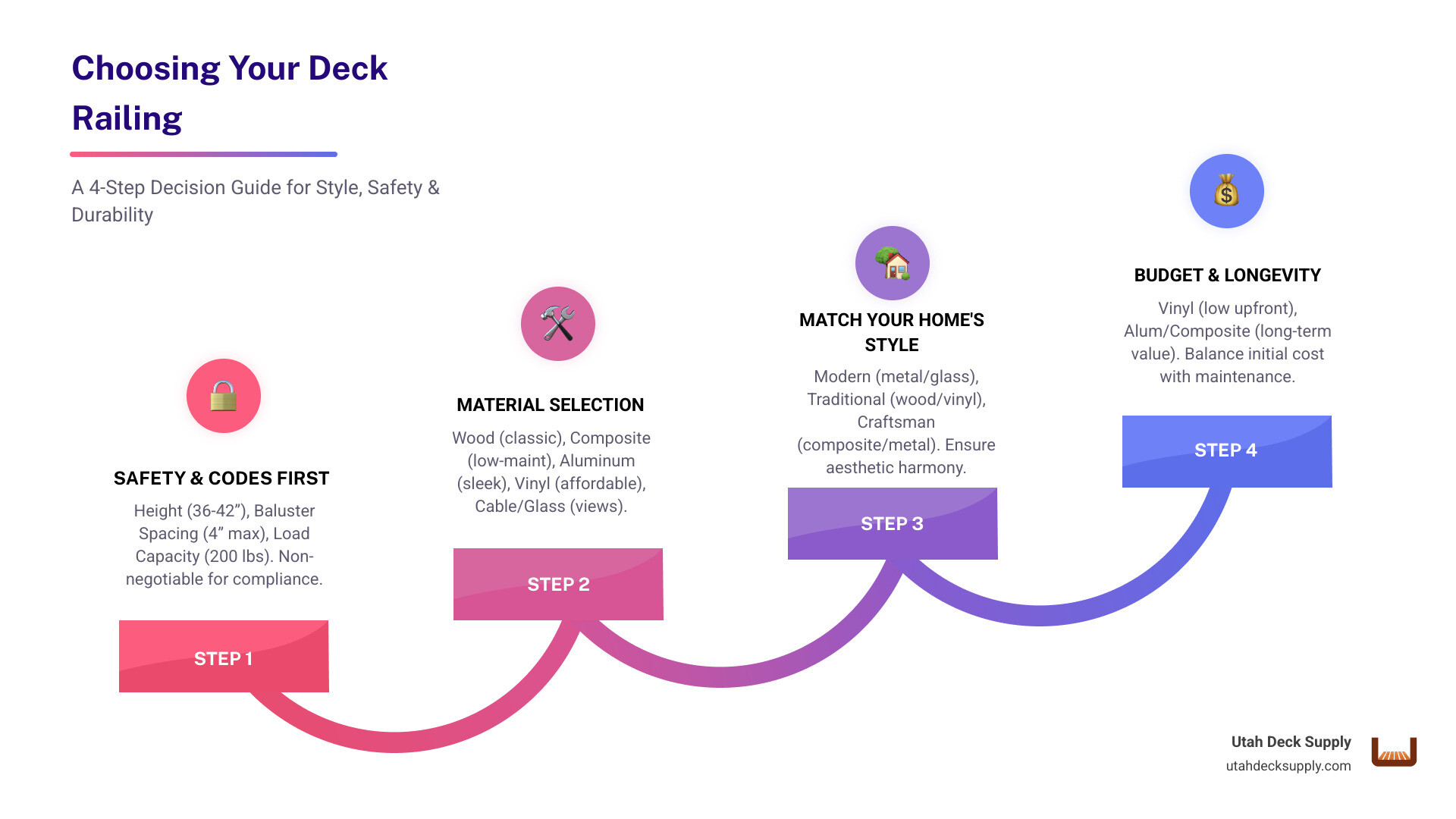
Choosing deck railing comes down to four core factors:
- Safety & Codes – Must be 36-42″ tall, balusters spaced max 4″ apart, able to withstand 200 lbs of force.
- Material – Wood (classic, high maintenance), Composite (low maintenance, durable), Aluminum (rust-proof, sleek), Vinyl (affordable, clean look), Cable/Glass (modern, unobstructed views).
- Style Match – Align with your home’s architecture (modern, craftsman, traditional, etc.).
- Budget & Maintenance – Balance upfront cost with long-term upkeep (vinyl is cheapest upfront, aluminum/composite save money over time).
| Material | Cost | Maintenance | Durability | Best For |
|---|---|---|---|---|
| Wood | $ | High | Moderate | Traditional look, DIY-friendly |
| Vinyl | $ | Very Low | Moderate-High | Budget-conscious, classic styles |
| Composite | $$ | Low | High | Low-maintenance lovers |
| Aluminum | $$$ | Very Low | Very High | Modern, sleek designs |
| Cable/Glass | $$$$ | Low-Moderate | High | Maximizing views, contemporary |
Utah-Specific Tip: Our extreme climate (freeze-thaw cycles, intense UV, temperature swings of 50+ degrees) demands materials that resist fading, warping, and cracking. Aluminum and composite consistently outperform in Wasatch Front conditions.
Why Your Deck Railing Decision Matters More Than You Think
Your deck railing does three critical jobs: it ensures safety, defines your deck’s style, and must survive decades of Utah weather. Most people underestimate how much the railing impacts the final look. A beautiful deck can be let down by the wrong railing, and a stunning glass system might mean more cleaning than you bargained for.
For contractors, the challenges are different: inconsistent inventory at big-box stores, code compliance issues, and tight deadlines. Here’s the thing: Utah’s climate is brutal on outdoor materials. Intense UV rays, freeze-thaw cycles, and dramatic temperature swings demand a railing that won’t fade, crack, or warp. Choosing deck railing that can handle these extremes isn’t optional—it’s essential.
As James Bonham, co-founder of Utah Deck Supply, I spent years at Trex Company seeing how railing systems perform in the real world. Now, I help Utahns choose railings that last, meet code, and fit their budget. I’ll guide you through making the right call for your project.
Key Factors in Choosing Deck Railing
When we talk about choosing deck railing, we’re really talking about a balancing act between safety, style, durability, and cost. Your deck is an extension of your home, and the railing should create a cohesive look that improves your property’s curb appeal, all while standing up to Utah’s harsh weather.
Decoding Safety Codes and Structural Needs
Here’s the thing: safety isn’t optional, it’s the law. When choosing deck railing, meeting local building codes is a critical requirement. Most codes require railings for decks 30 inches or higher above the ground.
- Utah and National Code Basics: While local codes in cities like Salt Lake City or St. George can vary, most follow the International Residential Code (IRC). It’s always best to consult your local building authority or a knowledgeable professional (like us!) to confirm the exact requirements for your project.
- Railing Height and Spacing: Railings must be at least 36 inches tall for residential decks (42 inches for many commercial properties). Balusters (the vertical pickets) must have no more than a 4-inch gap between them—this is the “4-inch sphere rule” to protect small children and pets.
- Structural Strength: Railings must be able to withstand 200 pounds of force applied in any direction. This means your posts and connections must be securely anchored to the deck frame.
Matching Railing to Your Home’s Style and Location
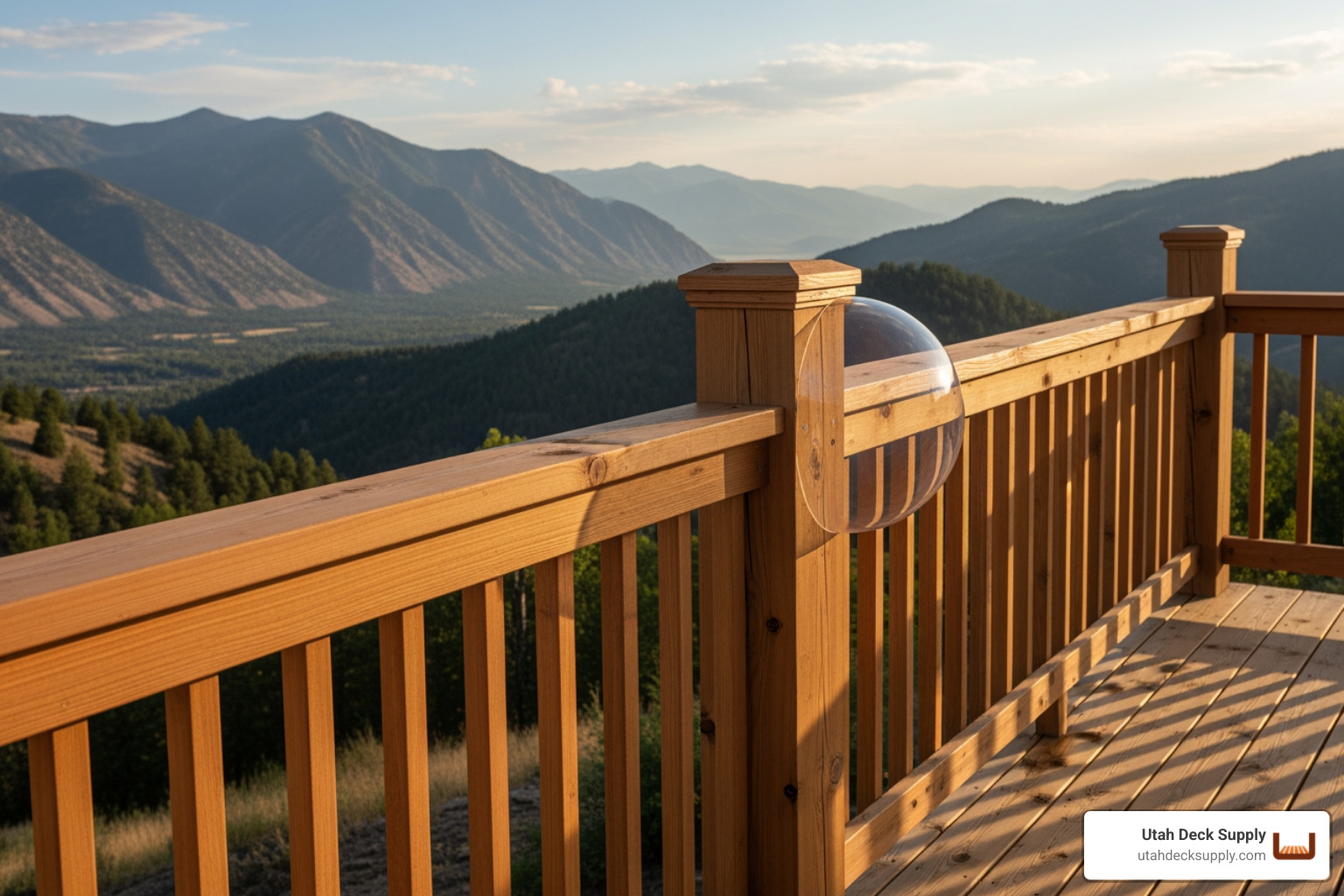
Let me explain why your home’s look matters. Your deck railing is a prominent feature that should complement your home’s architecture for a seamless transition from inside to out.
How to match railing to your home’s architecture:
- Modern Homes: Clean lines and minimalism call for glass, cable, or sleek aluminum railings to maintain an open, contemporary feel.
- Traditional Homes: Classic, symmetrical designs pair well with vinyl or composite railings that offer a timeless, grand profile.
- Craftsman Style: Emphasizes natural materials and sturdy construction. Black metal or substantial composite railings complement this style perfectly.
- Ranch Homes: Low-profile and informal. Slim metal or horizontal cable railings can make the space feel larger and more open.
Why Climate Matters: In Utah, materials must resist intense UV sun to prevent fading and withstand freeze-thaw cycles to prevent cracking. Aluminum and composite are top performers in these conditions.
Color and Finish Tips:
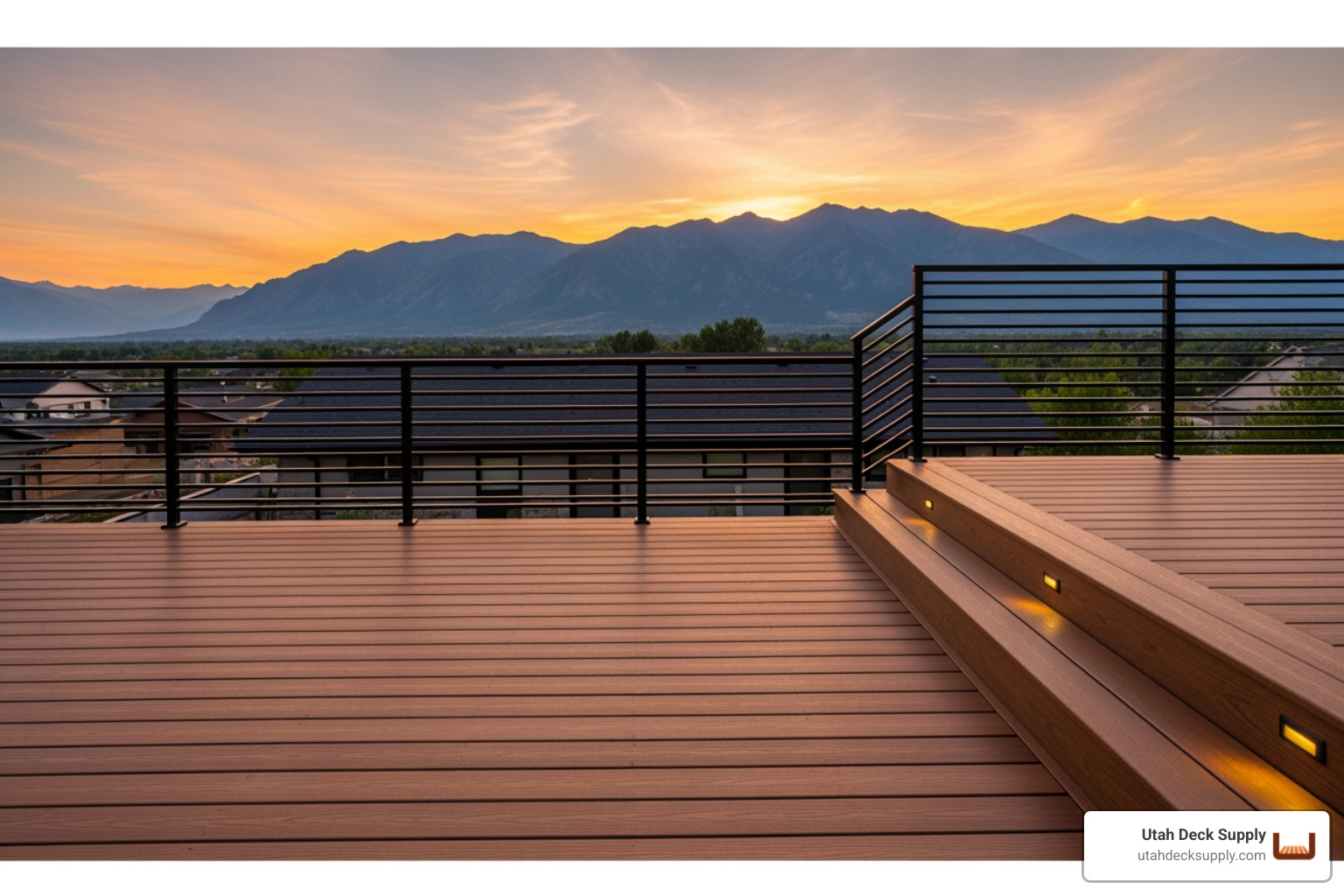
- A dark railing (like black or bronze) tends to recede, making your view the star of the show.
- A white railing creates a classic, crisp contrast that defines the deck’s perimeter.
- Powder-coated aluminum and high-quality composites offer the best fade resistance and durability.
A Head-to-Head Comparison of Deck Railing Materials
Now, let’s dive into the materials. When choosing deck railing, understanding the pros, cons, and maintenance of each option is key to matching your vision with the right product, especially for our demanding Utah weather.
The Low-Maintenance Contenders: Composite, Aluminum & Vinyl
For many Utah homeowners, low maintenance is the top priority. These materials offer a fantastic balance of durability, style, and minimal upkeep, freeing up your weekends to actually enjoy your deck.
- Why they’re a favorite: These materials are engineered to resist rot, insects, fading, and warping. They handle Utah’s UV rays and temperature swings far better than traditional wood.
- Composite: Mimics the look of painted wood without the constant upkeep. It’s engineered for fade resistance and comes in many colors, though darker shades can get hot in direct sun.
- Aluminum: Sleek, modern, and incredibly durable. It’s rust-proof, lightweight, and the powder-coated finish provides excellent resistance to weathering and fading.
- Vinyl: An affordable, low-maintenance option that never needs painting. Modern vinyl is durable and resistant to moisture and fading, typically available in classic white or tan.
You know what? Sometimes, less maintenance is worth every penny. While these options can have a higher upfront cost than wood, the long-term savings on staining, painting, and repairs often make them the smarter investment.
| Material | Upfront Cost | Lifetime Maintenance | Durability | Best For |
|---|---|---|---|---|
| Composite | $$ | Low | High | Low-maintenance lovers |
| Aluminum | $$ | Very Low | Very High | Modern, sleek designs |
| Vinyl | $ | Very Low | Moderate-High | Classic, clean looks |
Classic, Modern & Luxury Options: Wood, Steel, Cable & Glass
Beyond the low-maintenance workhorses, these materials make a distinct aesthetic statement.
- Wood: The traditional choice, offering a natural, customizable look.
- Pros: Most affordable upfront, classic aesthetic, DIY-friendly.
- Cons: High maintenance (requires frequent staining/sealing), susceptible to rot, warping, and splitting in Utah’s climate.
- Steel: A very strong and durable option with a classic, slim profile.
- Pros: Extremely strong, great value, preserves sightlines.
- Cons: Can rust if the finish is compromised, heavier than aluminum.
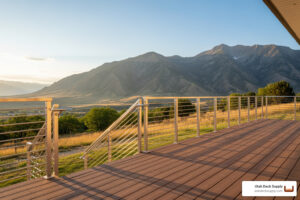
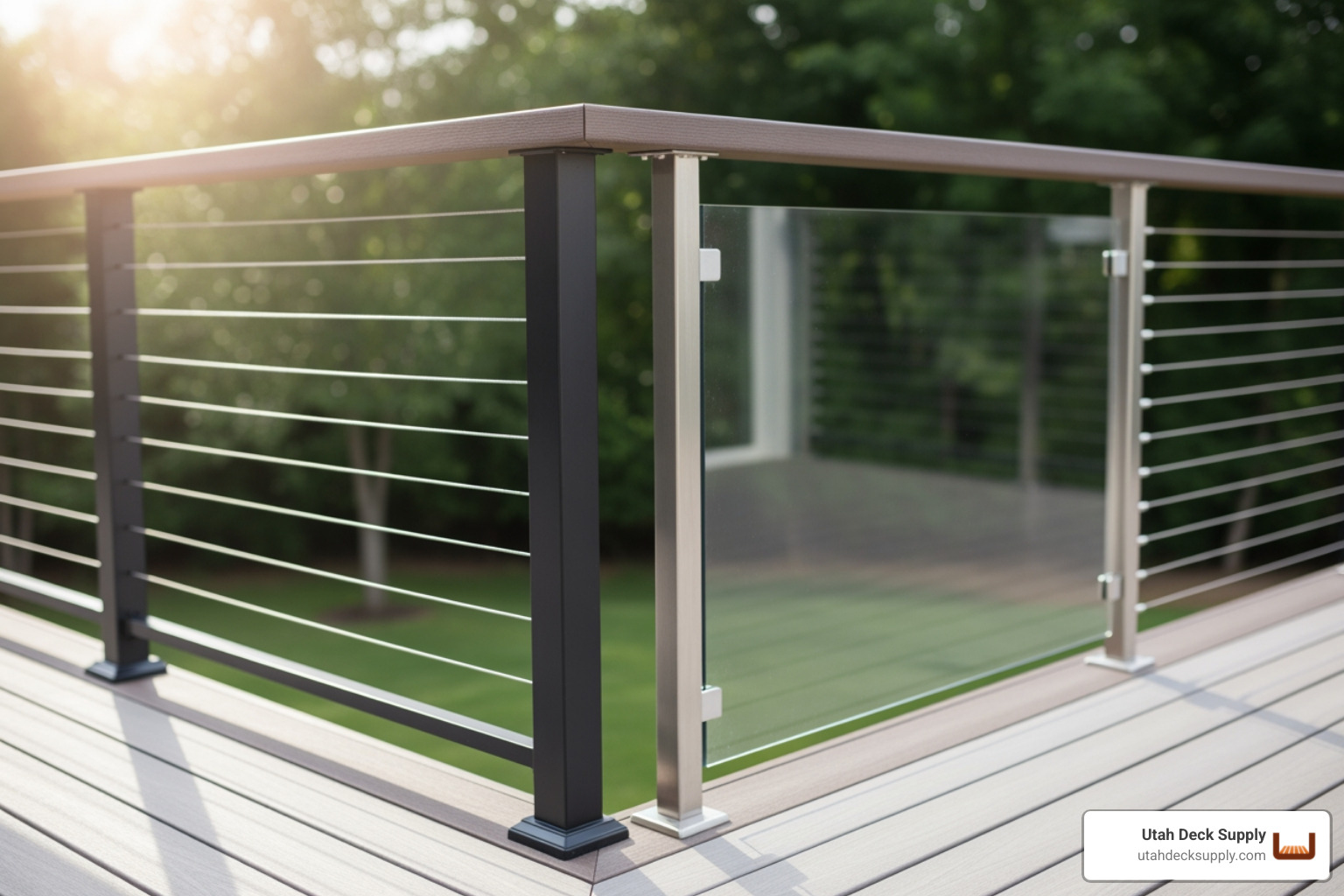
- Cable: A contemporary option for maximizing views with thin, stainless steel cables.
- Pros: Unobstructed views, modern and sleek, very sturdy.
- Cons: Higher cost, requires occasional tension adjustments.
- Glass: The ultimate luxury for breathtaking, completely unobstructed views.
- Pros: Maximum visibility, high-end contemporary look, acts as a windbreak.
- Cons: Highest upfront cost, requires frequent cleaning to look its best.
Emotional cue: Imagine sipping your morning coffee with an unobstructed view of the Wasatch Front. For those priceless Utah vistas, glass or cable railing can truly lift your deck into a world-class viewing platform.
Customization, Installation, and Your Final Choice
Once you’ve narrowed down your material, it’s time to think about installation and the finishing touches that will make your railing uniquely yours.
A DIYer’s Guide to Choosing Deck Railing and Installation
With today’s railing systems, a DIY installation is more achievable than ever, especially for handy homeowners in Lehi, Orem, and South Jordan.
- Which systems are truly DIY-friendly? Aluminum, composite, and vinyl railing systems are often sold in kits with pre-assembled panels and simple bracket systems. They are lightweight and designed for straightforward installation. Wood is also DIY-friendly but requires more precise cutting and finishing to meet code.
- Essential tools and steps for a smooth install:
- Plan & Measure: Carefully measure your layout and plan post locations.
- Choose System: Select a railing system based on your comfort level and material choice.
- Gather Tools: You’ll need basic tools like a tape measure, level, saw, and drill.
- Install Posts: Securely anchor posts to the deck frame.
- Attach Rails & Infill: Install top and bottom rails, followed by balusters, cables, or panels, ensuring everything is level and properly spaced.
- When it’s smart to bring in the pros: Honestly, if you’re dealing with complex angles, stairs, or multi-level decks, or if you’re unsure about structural requirements, hiring a professional is the safest bet. A pro ensures your railing is code-compliant, safe, and beautifully installed. We can help you find experienced railing contractors in your area.
Elevating Your Deck: Functional and Aesthetic Upgrades
Your railing is more than a safety feature—it’s an opportunity to add function and ambiance to your outdoor living space.
- Drink Rail: A simple but game-changing upgrade. Add a deck board to your top rail for a built-in surface for drinks and plates.
- Integrated Lighting: Low-voltage LED lighting adds safety and a high-end feel. Options include post cap lights, under-rail lighting, and stair riser lights.
- Privacy Panels: Integrate decorative panels made of composite or metal to add privacy or a unique design element.
Gates: A must-have for safety if you have children or pets. Ensure any gate is self-closing and self-latching.
Where to see real-life examples and get expert advice in Utah: At Utah Deck Supply, we’re more than a store; we’re your partners in building a better deck. Our team offers expert guidance on materials, codes, and installation. We help homeowners and contractors find the perfect products to match their vision and budget. Ready to bring your vision to life? Explore our showroom gallery for inspiration, check out options from top brands like Trex Aluminum Railings, or visit us in West Jordan to see the products for yourself. Let’s build a deck that’s safe, stylish, and built to last in Utah.