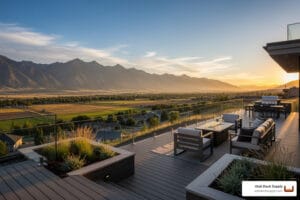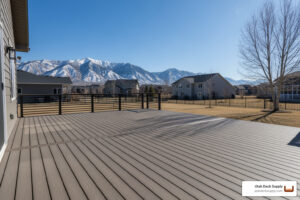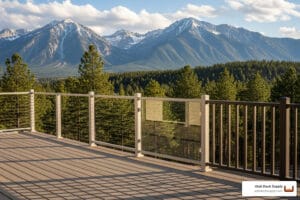
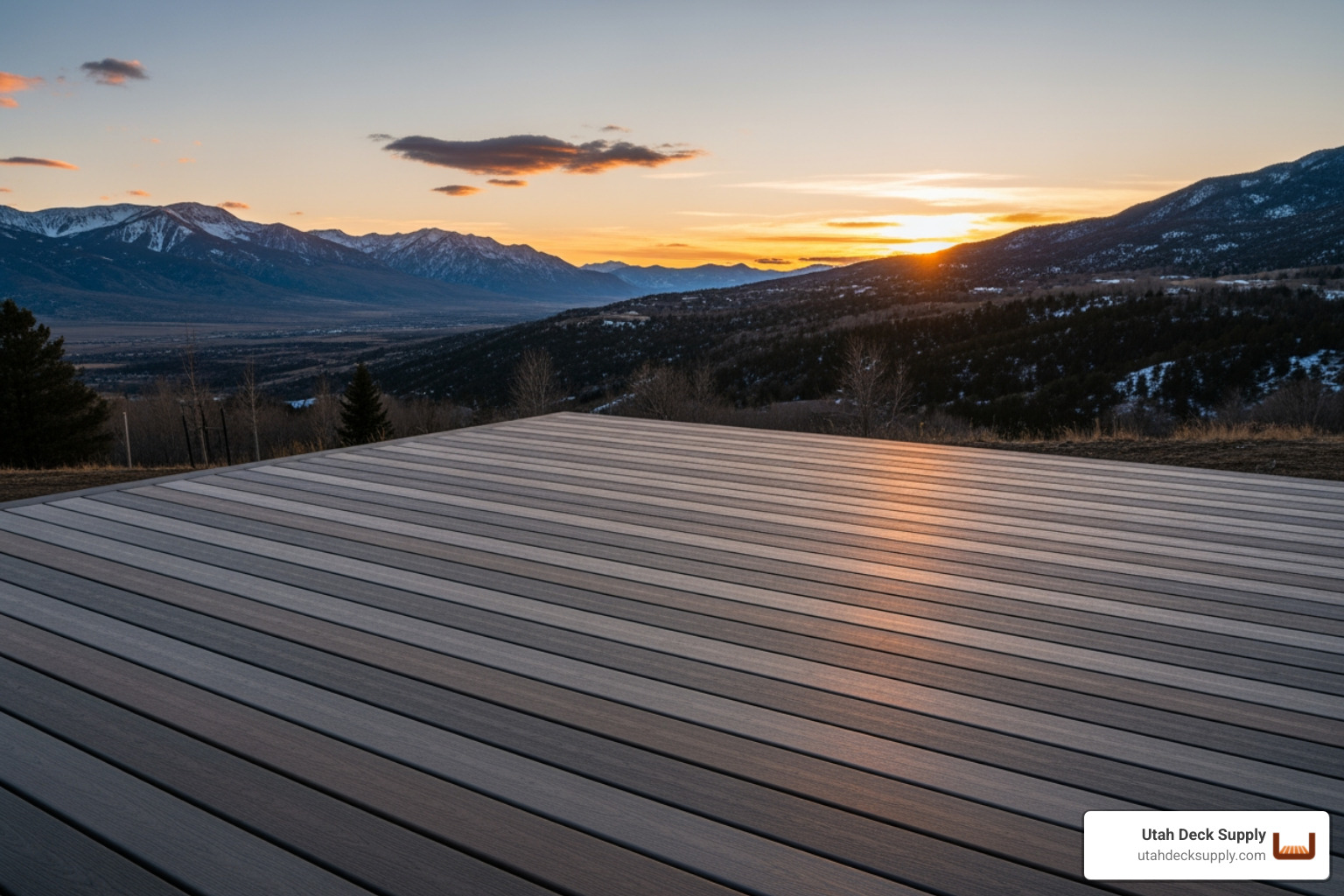
Composite deck board types can completely change how your outdoor space looks, feels, and holds up over time. Honestly, with how far decking technology has come, there’s no reason to settle for a deck that fades fast, warps, or becomes a maintenance headache. Let me explain how today’s composite options stack up so you can choose the best fit for your Utah home and climate.
Starting on a new outdoor project? Choosing the right composite deck board types is the key to creating a beautiful, long-lasting space you’ll love for years to come. With so many options out there, it can feel overwhelming—but don’t worry, we’re here to break it all down so you can make a confident, informed decision for your Utah home.
If you want to go even deeper into how composites are made and why they perform the way they do, resources like the Wood–plastic composite article provide a solid technical background that pairs nicely with the real-world guidance in this article.
What Are the Main Composite Deck Board Types?
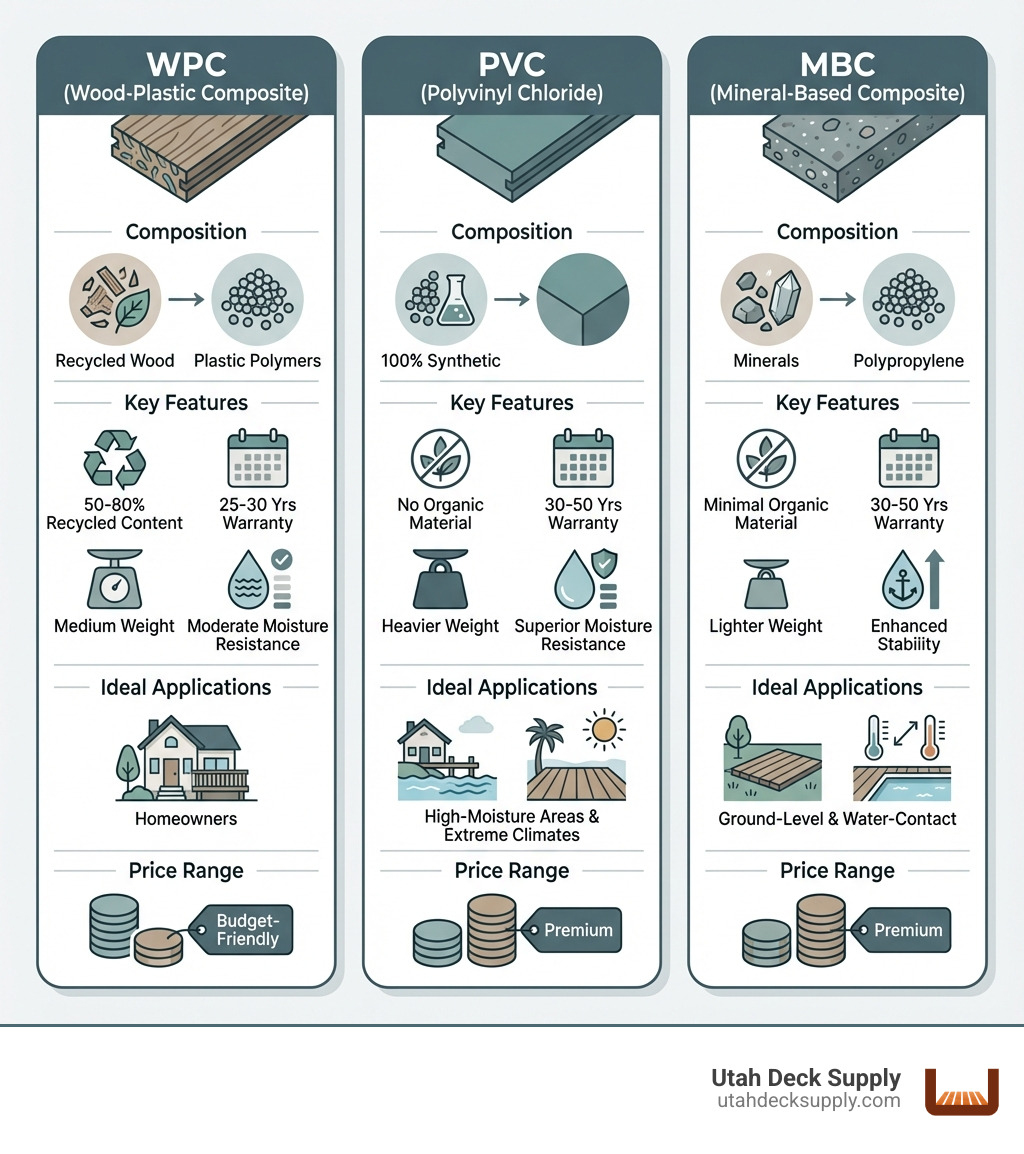
Composite deck boards fall into three main categories, each with distinct characteristics perfect for different needs and budgets.
Wood-Plastic Composite (WPC): Made from recycled wood fibers and plastic polymers, this is the most common and budget-friendly option. It offers a great balance of performance and affordability, with warranties typically lasting 25-30 years.
PVC (Polyvinyl Chloride) Decking: This is a 100% synthetic option with no organic material, making it exceptionally resistant to moisture, mold, and rot. It’s a premium choice for high-moisture areas and comes with the longest warranties, from 30-50 years.
Mineral-Based Composite (MBC): The newest innovation, MBC blends polypropylene with minerals. It’s lighter than WPC and has virtually no thermal expansion, making it incredibly stable in climates with extreme temperature swings, like ours in Utah.
Here’s the thing: the composite decking industry has evolved dramatically. What started as basic wood-plastic blends has transformed into sophisticated engineered materials. That’s great news for Utah homeowners, but it also means there’s more to consider than ever before. Let me explain what really matters when choosing between these composite deck board types—and why getting it right the first time will save you thousands of dollars and years of frustration.
Understanding the Core Composite Decking Categories
Composite decking has evolved far beyond being just a wood alternative. Honestly, the technology is impressive—there’s a solution for every budget, climate, and style. Let me explain the main categories so you can see what makes each one unique and get a handle on the different composite deck board types available.
Wood-Plastic Composite (WPC) Decking
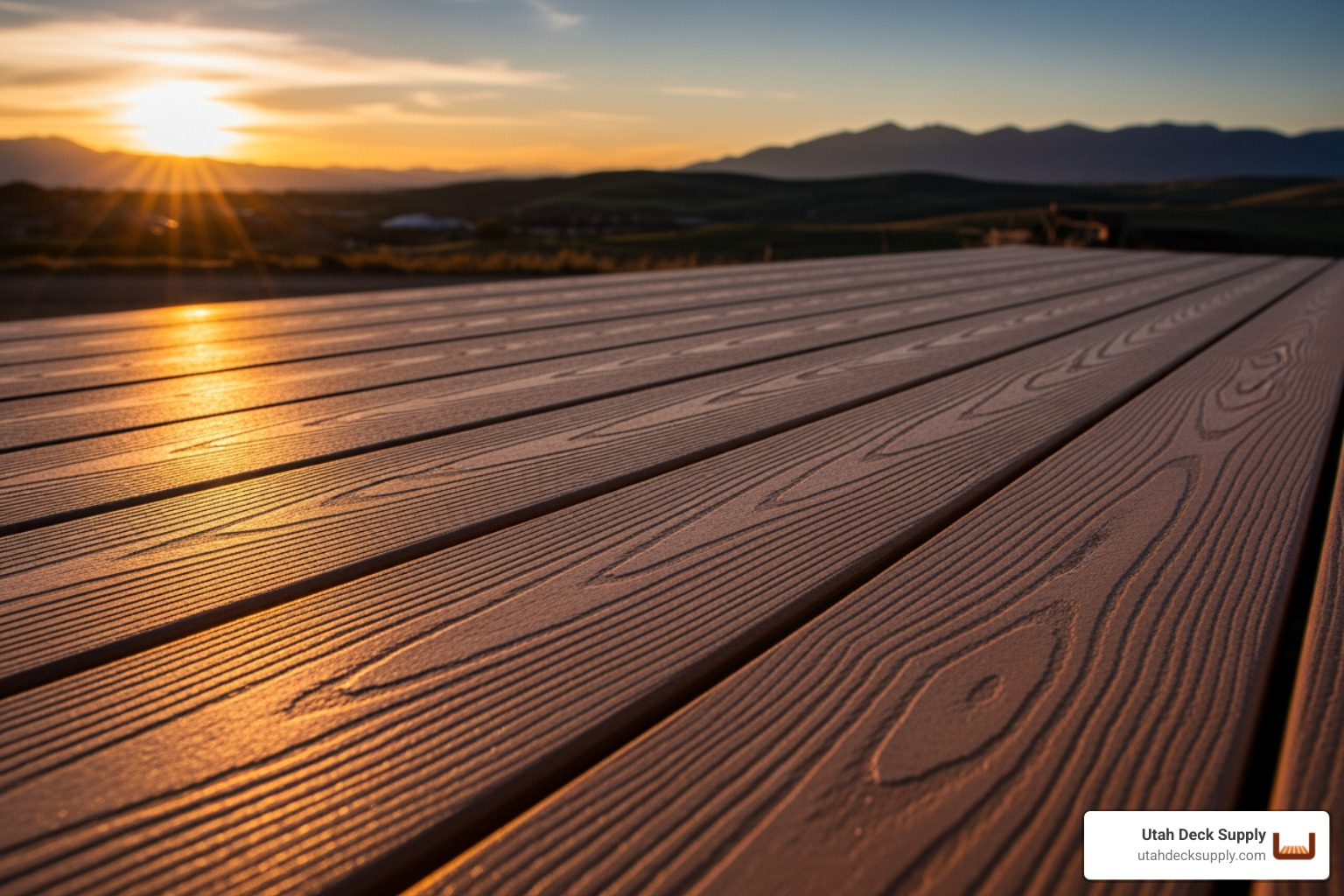
When most people think of composite decking, they’re likely imagining Wood-Plastic Composite (WPC). It’s manufactured from a combination of recycled wood fibers and plastics.
Key points about WPC:
- Composition: A blend of wood fibers (or flour) and plastic binders fused under heat and pressure
- Recycled content: Often includes reclaimed wood and recycled plastics, making it a more sustainable choice than traditional wood
- Workability: Cuts and handles much like wood, so most builders and DIYers feel comfortable working with it
- Performance: Resistant to insects, rot, and splintering, which solves many of the headaches of natural wood decks
This makes WPC a sustainable composite decking option and a more eco-friendly choice compared to traditional wood decking. The blend creates a material that cuts and handles much like wood, making installation familiar for many builders. In terms of durability, WPC decks can be expected to last 25-30 years, significantly longer than traditional wood decks. They are resistant to insects, rot, and splintering, addressing many of the drawbacks of natural wood. WPC is generally the most affordable of the composite deck board types, making it a versatile option for many projects.
If you’re curious about the broader category of these products on a technical level, the Wood–plastic composite entry is a helpful reference to understand how manufacturers around the world engineer these boards.
PVC and Mineral-Based Composite (MBC) Decking
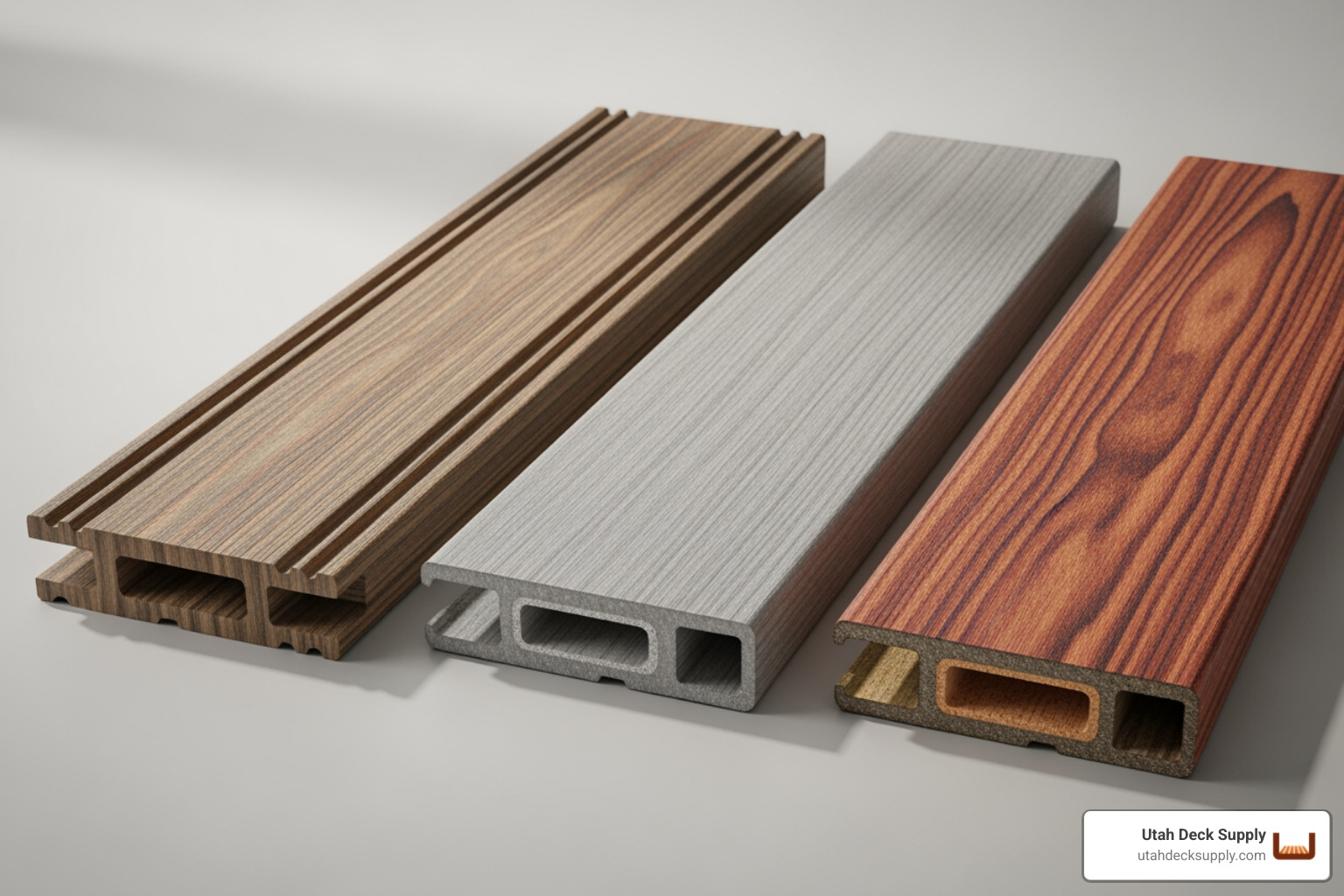
Beyond WPC, innovation has led to even more specialized materials like PVC and Mineral-Based Composite (MBC) decking. These options push the boundaries of performance, especially for challenging climates like ours in Utah.
PVC Decking: This type is 100% synthetic, made entirely from polyvinyl chloride (PVC) with no wood in its core. This gives PVC decking superior moisture resistance, making it virtually impervious to rot, mold, and mildew. PVC decking often comes with the longest warranties, typically ranging from 30 to 50 years. However, it can retain more heat, so choosing lighter colors or products with heat-mitigating technology is a smart move for sunny Utah locations.
Mineral-Based Composite (MBC): This is one of the most advanced composite deck board types. MBC is a mix of polypropylene and minerals, resulting in a material that is up to 35% lighter than WPC with superior strength. A key advantage is its minimal thermal expansion and contraction. This makes it incredibly stable, even in the extreme temperature fluctuations characteristic of Utah’s climate, from hot summer days in Salt Lake City to freezing winter nights in Logan.
Capped vs. Uncapped: The All-Important Protective Shell
One of the most significant advancements in composite decking is the protective shell, which creates the distinction between capped and uncapped decking.
Capped Decking: This is the modern standard. Capped boards feature a composite core encased in a protective polymer shell. This shell acts as a shield, guarding the core against the elements. You’ll find both 3-sided and 4-sided capping options, with 4-sided offering the most complete protection.
The benefits of this shell are immense:
- Stain & Fade Resistance: The non-porous cap prevents spills from staining and contains UV inhibitors to keep the color vibrant under the intense Utah sun.
- Scratch Resistance: The durable surface helps protect against everyday wear and tear.
- Mold & Mildew Prevention: By sealing the core, the cap prevents mold and mildew from taking root.
Uncapped Decking: These are first-generation composites without a protective shell. Their porous nature meant they were susceptible to staining, fading, and mold, requiring more maintenance. The evolution to capped decking was a direct response to these issues, making modern composites a far more durable and low-maintenance choice.
Key Factors for Choosing Your Decking
So, how do you pick the right one for your project? It really comes down to balancing four key factors: performance, aesthetics, maintenance, and budget. You know what? What works for a low-traffic patio in a mild climate might not be the best fit for a high-use deck in Utah’s demanding four-season environment.
Performance, Maintenance, and Longevity
When investing in a new deck, you want it to last, look great, and not demand all your free time for upkeep. This is where the performance of different composite deck board types truly shines.
| Feature | WPC | PVC | MBC |
|---|---|---|---|
| Durability (Lifespan) | 25-30 years | 30-50 years | 40-50 years |
| Maintenance Level | Low | Very Low | Very Low |
| Scratch/Stain Resistance | Good | Excellent | Excellent |
| Heat Retention | Moderate | Higher | Lower |
| Thermal Expansion | Moderate | Higher | Minimal |
- Warranty & Longevity: A key indicator of quality is the warranty, which can range from 25 years for entry-level WPC to 50 years or even lifetime warranties for premium PVC and MBC options. This long lifespan is why composite is often called a “forever deck.”
- Low-Maintenance: This is arguably the biggest draw. Forget sanding and staining. With composite, maintenance is typically just cleaning with soap and water. The protective cap on modern composites is especially effective at resisting rot, mold, and insects.
- Utah Climate Considerations: Our unique climate presents specific challenges:
- UV Exposure: High altitude means intense UV. Fade-resistant capped composites are essential to prevent color loss.
- Freeze-Thaw Cycles: Fluctuating temperatures cause materials to expand and contract. MBC, with its minimal thermal expansion, is particularly well-suited to handle these cycles.
- Heat Retention: Darker colors get hot in the summer sun. Consider lighter colors or products with heat-mitigating technology for a more comfortable surface.
If you want to cross-check performance ideas or learn more about material behavior in outdoor structures, general resources like Deck (building)) can offer additional background alongside the Utah-specific guidance you’ll get from Utah Deck Supply.
Aesthetics, Installation, and Budget
Choosing your deck is about more than just durability; it’s about creating an outdoor space that reflects your style and fits your budget.
Appearance: The aesthetic variety today is impressive. You can find boards that mimic any wood species, with an extensive palette of colors and realistic grain patterns, from rustic to modern.
Installation: While composite handles much like wood, there are key considerations:
- Joist Spacing: Use 16-inch on-center spacing for standard layouts and 12-inch spacing for diagonal patterns to ensure stability.
- Hidden Fasteners: Grooved boards are designed for hidden fastener systems, which provide a clean, screw-free surface.
- Ventilation: Proper airflow is crucial. We recommend at least 3.5 inches of ground clearance to prevent moisture buildup and manage temperature fluctuations.
Budget: While the upfront cost of composite can be higher than wood, consider the long-term value. When you factor in the savings on maintenance, composite often becomes the more economical choice. We often categorize composite deck board types into “Good, Better, Best” tiers to help you find the right fit for your budget:
- Good: Entry-level WPC boards that offer a durable, budget-friendly alternative to wood.
- Better: Solid WPC or entry-level capped PVC boards that provide a great balance of price, aesthetics, and minimal maintenance.
- Best: Premium capped PVC and MBC decking with the longest warranties, most realistic looks, and superior performance features like heat mitigation.
Making the Right Choice for Your Utah Deck
Choosing the right material is the most critical step in ensuring your deck stands the test of time and becomes a cherished part of your home. By understanding these composite deck board types, you can make a confident decision that aligns with your lifestyle and budget. At Utah Deck Supply, we live and breathe decking, and our team has the hands-on experience to guide you through every option in our showroom. See the materials for yourself and let us help you build it right from the start.
Ready to start your project? Give our expert team a call at 385-993-5492 for personalized advice or Request a Free Quote online today.