You’ve got a deck in mind—weekend barbecues, a shady corner for a book, room for the kids to sprawl—and you want it solid. Not fussy, not flimsy. Here’s the thing: great decks in Salt Lake County, Davis County, and Utah County start with the right supplies. The Wasatch sun is bold. Snow loads can be sneaky. We build for both. At Utah Deck Supply, we stock the workhorse Materials and the handsome finishes, so your deck doesn’t just look right—it lasts.
Start with the bones: framing that won’t blink
The frame carries everything—people, planters, even that smoker that weighs way more than it should. Around here, pressure-treated Lumber is the usual hero. Look for 6×6 ground-contact rated posts and #2 or better joists and beams, treated with modern copper-based preservatives. Douglas Fir-Larch and Southern Yellow Pine both work; we’ll help you match spans to your layout.
Prefer something straighter for the long haul? Steel framing (like Fortress Evolution) delivers tight spans, less bounce, and no rot. It costs more up front but stays true through freeze-thaw cycles. Contractors love it for low-maintenance builds; DIYers appreciate that it’s square and stays square.
One more note: Joist spacing matters. Most composites require 16″ on center; go 12″ if you’re laying boards on a diagonal or using narrower boards. A sturdy frame feels different underfoot—quiet, steady, confident.
Footings and posts: the quiet workhorses
Utah’s frost depth averages 30″–36″ along the Wasatch Front, but check with your local building department. Footings should sit below that mark, with clean bell-shaped bases where required. Quikrete 5000, Sonotube forms, a little 3/4″ gravel for drainage—you know the drill. Or ask about helical piers if you want less digging and faster inspections.
Set posts on proper bases, not in the concrete. Simpson Strong-Tie ABU or CBSQ post bases lift wood off the slab, which keeps rot at bay. For sleeves, PostGuard or similar helps when soil tends to stay damp in spring. And yes, use 6×6—not 4×4—for primary posts. Your future self will thank you.
Decking boards that shrug off Utah sun
The altitude here means stronger UV. Boards fade, and some heat up quick. That’s why board choice is more than color.
- Composite: Trex Transcend and Timbertech Terrain are durable, fade-resistant, and easy to clean. Grooved edges pair with hidden clips for a clean surface.
- PVC: TimberTech AZEK runs cooler under bare feet and resists moisture—great near pools and hot tubs.
- Hardwood: Ipe is tough, gorgeous, and dense. It needs pre-drilling and seasonal oil to keep that rich tone.
- Redwood/Cedar: Classic, lightweight, and beautiful when sealed. Needs regular care in our climate.
Light colors stay cooler. Dark boards look sharp but can get toasty by mid-July. Honestly, it’s a style-versus-comfort call—come by and touch sample boards under real light. You’ll feel the difference.
Fasteners that don’t give up
Fasteners are small, but they decide how a deck ages. For the frame, go with Structural screws (GRK RSS or FastenMaster) instead of nails where shear strength matters. At the ledger, use 1/2″ hot-dip galvanized bolts or structural ledger screws—LedgerLOK or similar—plus proper washers and spacing. No shortcuts at the house connection.
For decking, stainless or high-quality coated screws last. Hidden systems like CAMO Edge, Trex Hideaway, or TimberTech CONCEALoc create that clean, fastener-free look. If you face-screw wood, use color-matched screws and keep a tidy pattern. Either way, leave consistent gaps—1/8″ to 3/16″—so boards can breathe when the afternoon wind comes racing off the canyon.
Railings that look sharp and pass inspection
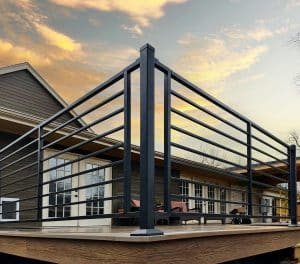
Most single-family decks call for 36″ rail height, with balusters spaced so a 4″ sphere can’t pass through. Stairs need a graspable handrail; many jobs benefit from an ADA-style secondary rail for solid grip.
Aluminum rail (Fortress, Westbury) is a Utah favorite: sturdy, low maintenance, and sleek. Composite rail pairs cleanly with composite decking, and cable rail opens up mountain views. If you’re on a slope or stepping the deck, bring your measurements—we’ll line you up with the right brackets and angle fittings. Little Hardware choices make install day smooth.
Flashing, tape, and water management—boring, essential, lifesaving
Here’s the part folks skip, then regret. Moisture protection keeps rot away and extends the life of your frame. Use peel-and-stick butyl joist tape (like Grace Vycor or similar) on the tops of joists and beams. It blocks water and screws bite better.
At the ledger, layer it right: peel-and-stick behind, metal Z-flashing over the ledger, and proper siding details. Don’t push caulk to do a flashing’s job. For covered outdoor rooms, under-deck drainage like Trex RainEscape channels water away so you can store stuff below without that musty smell.
Lighting, finishes, and the creature comforts
Low-voltage LED lights make evenings safer and warmer. Post-cap lights, recessed stair lights, and slim strip lights under railings look clean and sip power. A simple transformer with a timer keeps things set-and-forget.
Working with wood? Use a quality sealer or stain. Penofin, Messmer’s, or Timber Oil finishes keep color richer and slow UV graying. Clean annually with a gentle deck wash. It’s like sunscreen for lumber—skip it and you’ll see.
Tools that save time (and your back)
DIYers and pros both know: the right tool shortens the day. A 12″ miter saw, a solid impact driver, a torpedo level, and a chalk line handle most tasks. Add a CAMO tool for easy edge fastening and a long 4′ level or laser for stair work. For footings, a two-man auger or a rental mini auger can turn a backbreaker into a morning chore.
Bring a sharp carbide blade for composites and PVC, stainless trim screws for accessories, and a few big clamps. And knee pads—trust us on that one.
Planning, permits, and Utah quirks
Before you set a string line, call 811 to mark utilities. Most cities along the Wasatch Front follow the IRC with local tweaks. Plan for snow load, wind exposure, and guard requirements. We can help you read the fine print.
Span tables matter, especially with diagonal patterns. If you’re running 45°, tighten joist spacing to 12″ on center. Keep stair risers consistent, treads grippy, and guard posts tied in with hardware made for the job—Simpson Strong-Tie makes kits that inspectors like because they’re proven.
You know what? A 15-minute chat up front often saves a Saturday later.
Buy smart: quantities and a little extra
Order 5–10% extra decking for cuts, waste, and the one or two boards you’ll want to replace down the line. Fasteners go faster than you think—grab an extra box. Keep a handful of color-matched screws sealed in a bag with your warranty info. It’s the small stash you’ll thank yourself for next spring.
Why folks along the Wasatch choose Utah Deck Supply
We stock the brands that make sense here: Trex, TimberTech AZEK, Fiberon, Fortress, Westbury, Simpson Strong-Tie, GRK, FastenMaster, CAMO, Quikrete, and more. Need a takeoff from your sketch or plans? We’ll run numbers, suggest spans, and match hardware to code. Contractors lean on us for jobsite delivery and consistent inventory. Homeowners lean on us for straight talk, real samples, and no-pressure help.
And our yard guys? They load carefully—because nothing kills momentum like bent rail or a banded bundle you can’t unstack.
Ready to build? Let’s get your deck moving
If you’re planning a deck anywhere in Salt Lake County, Davis County, or Utah County, we’re here to help—from that first board to the last post cap. Call Utah Deck Supply at 385-993-5492 or Request a Free Quote. Bring your sketch, your inspo photos, or just your questions. We’ll set you up with the essential supplies and a plan that actually works outside—where it counts.