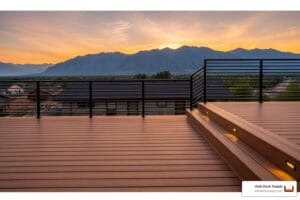
Planning a safe and sturdy outdoor space starts with understanding the technical requirements that keep your structure standing. Navigating deck permit span charts is the most critical step in ensuring your project meets local building codes and passes inspection without a hitch. Let me explain why these numbers are the backbone of your entire build.
Why Deck Permit Span Charts Matter Before You Drive a Single Nail
Deck permit span charts are the foundation of any code-compliant deck build. Get them wrong, and you’re looking at failed inspections, costly redesigns, or worse — an unsafe structure. Get them right, and your permit sails through.
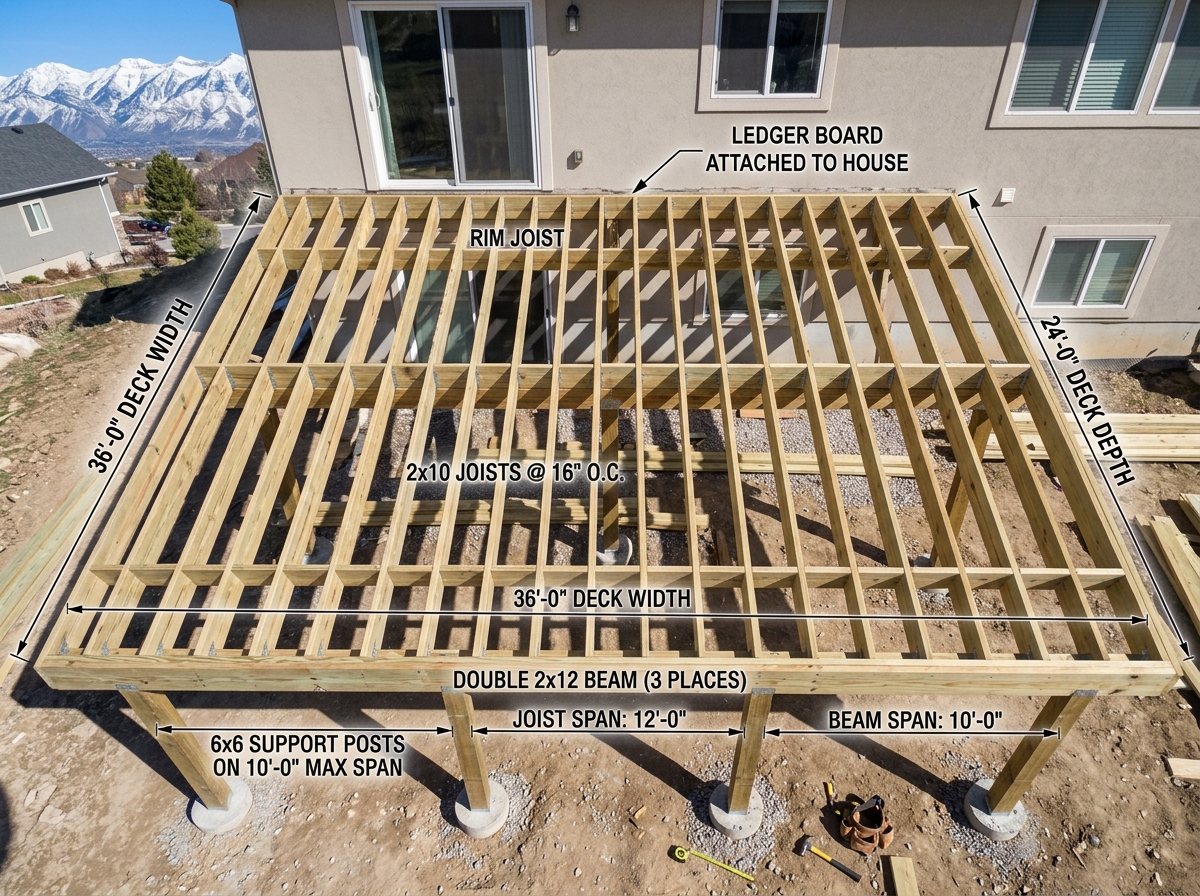
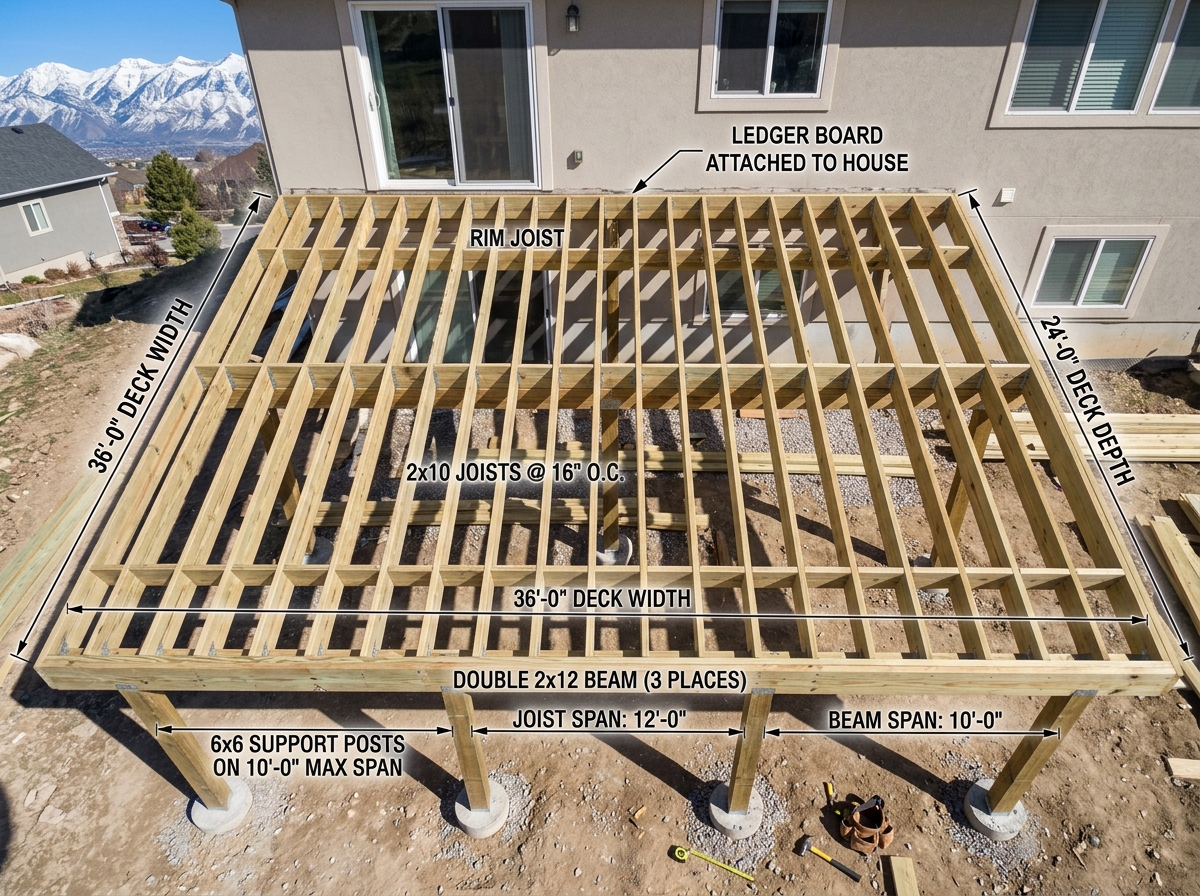
Here’s the quick answer: Deck permit span charts tell you the maximum distance a joist or beam can safely span based on lumber size, species, grade, and spacing. Most residential decks are designed for a total load of 50 psf (40 psf live load + 10 psf dead load). Use the table below as a starting reference:
| Joist Size | 12″ o.c. | 16″ o.c. | 24″ o.c. |
|---|---|---|---|
| 2×6 (Southern Pine) | 9′-11″ | 9′-0″ | 7′-7″ |
| 2×8 (Southern Pine) | 13′-1″ | 11′-10″ | 9′-8″ |
| 2×10 (Southern Pine) | 16′-2″ | 14′-0″ | 11′-5″ |
| 2×12 (Southern Pine) | 18′-0″ | 16′-6″ | 13′-6″ |
Always verify these values with your local building department. Spans vary by species, grade, and local code amendments.
Here’s the thing — undersized joists are one of the most common structural deficiencies flagged during deck inspections. A little time spent reading the right chart before you build saves a lot of headaches at the inspection stage.
Span charts aren’t just a formality. They’re how your local building department confirms your deck can safely hold the weight of people, furniture, and whatever else ends up on it. Without them, your permit application is incomplete — full stop.
Every variable matters: the lumber species you choose, its grade, how far apart you space your joists, and whether you’re building in a high-snow-load area like the Wasatch Front. Miss one factor, and your spans could be dangerously off.
I’m James Bonham, co-owner of Utah Deck Supply and former Trex Company professional, and I’ve spent years helping contractors and DIYers navigate deck permit span charts for real-world builds in Utah’s demanding climate. Let me walk you through everything you need to know to frame your deck right and get your permit approved the first time.
Introduction
Building a deck in Utah—whether you’re in the heart of Salt Lake City or the growing neighborhoods of Eagle Mountain—requires more than just a hammer and some pressure-treated wood. You know what? It requires a permit. Most local jurisdictions, including West Jordan and Provo, require a building permit for any deck attached to a house or any detached deck that sits more than 30 inches above the ground.
To get that permit, you have to prove your deck is structurally sound. This is where deck permit span charts come in. These tables, often derived from the International Residential Code (IRC), dictate how far your wood can “reach” before it needs support. If your joists span too far, the deck will feel bouncy (excessive deflection) or, in extreme cases, suffer structural failure.
Understanding Joist Spacing and Material Grades
When you look at a Lumber Span Chart for Decks: Joists & Beams – Engineer Fix, you’ll notice that the “allowable span” changes based on several factors.
- Lumber Species: Not all wood is created equal. Southern Pine is incredibly strong and common in many charts, while Douglas Fir-Larch (common in the West) and Western Cedar have different strength ratings.
- Lumber Grade: Most residential deck plans assume No. 2 grade lumber. If you accidentally buy a lower grade, your deck might not meet the requirements of the span chart you submitted with your permit.
- On-Center (o.c.) Spacing: This is the distance from the center of one joist to the center of the next. Standard spacings are 12″, 16″, and 24″. The closer the joists, the further they can span.
Pro Tip: If you are using composite decking like Trex or TimberTech, most manufacturers require 16″ o.c. spacing for straight boards and 12″ o.c. for diagonal patterns. Navigating these variables is the “legal” side of building. You can learn more about the paperwork in our guide on more info about deck permits.
How to Read deck permit span charts for Beams
Beams (sometimes called girders) are the heavy hitters that support your joists. Reading a Deck Beam & Header Span Table | Decks.com is slightly different than reading a joist chart.
Beams are sized based on the tributary area—which is a fancy way of saying “how much joist weight is this beam carrying?” If your joists span 12 feet from the house to the beam, the beam is essentially carrying half that load (6 feet). This is known as the effective span.
Most residential beams are “multi-ply,” meaning they are made of two or three boards nailed together (e.g., a 2-ply 2×10 or a 3-ply 2×12). Adding a third ply significantly increases the distance the beam can span between posts, which might allow you to have fewer footings in your yard.
Mastering deck permit span charts for Standard Maximum Spans
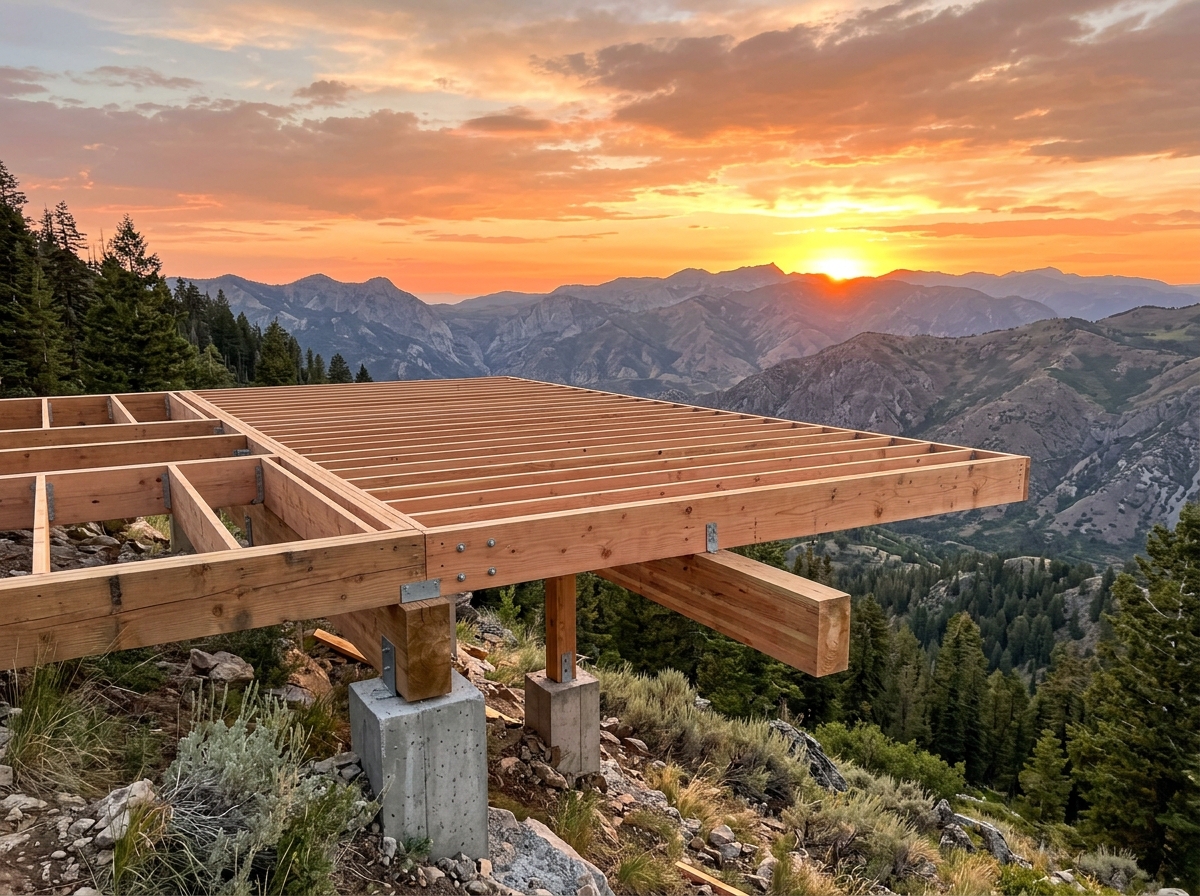
To master deck permit span charts, you need to understand the loads. Standard residential code requires decks to support a 40 psf live load (people and furniture) and a 10 psf dead load (the weight of the wood and decking itself). In many Utah locations like Logan or Park City, you may also have to account for much higher snow loads, which will shorten these allowable spans significantly.
Calculating Your Maximum Joist Span
The “span” is the clear distance between two points of bearing—for example, from the ledger board on your house to the center of the beam.
- 2×8 Joists: At 16″ o.c., these typically span around 11′ to 12′.
- 2×10 Joists: At 16″ o.c., these typically span around 14′ to 15′.
- 2×12 Joists: At 16″ o.c., these can often reach 16′ to 18′.
What about Cantilevers? A cantilever is the portion of the joist that hangs past the beam. Code usually limits this to 1/4 of the actual back-span. For example, if your joists span 12 feet from the house to the beam, you can generally cantilever them up to 3 feet past the beam. When framing, you’ll need the right essential hardware for joists, like G90 galvanized hangers, to ensure those spans stay secure at the connection points.
Honestly, Utah’s geography creates unique challenges. In St. George, you aren’t worried about five feet of snow, but in Sandy or Draper, you certainly are.
- Frost Depth: Your footings must reach below the frost line to prevent the deck from “heaving.” In the Salt Lake Valley, this is typically 30 inches, but it can be deeper in mountain areas.
- Snow Loads: If your local jurisdiction has a ground snow load of 50 psf or higher, the standard deck permit span charts in the IRC might not apply. You’ll need to use adjusted tables that account for the extra weight.
Before you dig, make sure you understand the footing requirements for your specific soil type and city.
Avoiding Common Mistakes and Finalizing Your Permit
One of the biggest mistakes we see at Utah Deck Supply is builders ignoring the Wet Service Factor. Because decks are outdoors, the wood gets wet. This weakens the lumber slightly compared to indoor floor joists. Code-compliant span charts already have this “reduction” built-in, but if you’re using a chart meant for indoor flooring, your deck will be undersized.
Another common pitfall is failing to plan for Lateral Load Connections. Modern codes require the deck to be “tied” to the house’s floor joists in at least two (and sometimes four) locations using tension ties to prevent the deck from pulling away from the structure. Honestly, it’s these little details that trip people up during the final inspection. Following a deck safety checklist during the build is the best way to ensure you don’t have to tear anything apart later.
When Prescriptive Tables Aren’t Enough
Sometimes, the standard Deck Joist Sizing and Span Tables Reference | National Deck Authority just won’t cut it. You will likely need a licensed engineer if:
- You are installing a hot tub (which requires a 100 psf load capacity).
- The deck is more than 10-12 feet off the ground.
- You are building a multi-level deck with complex load paths.
In these cases, we often recommend looking into alternative materials. Steel framing or LVL (Laminated Veneer Lumber) joists can span much further than traditional pressure-treated wood. For instance, a steel joist can often span 20+ feet, allowing for a completely open patio space underneath your deck without a forest of posts.
Essential Hardware for Code Compliance
Your permit isn’t just about the wood; it’s about how the wood is held together. To meet code in cities like Lehi or American Fork, you’ll need:
- Ledger Bolts: Gone are the days of just using random lag screws. You need code-approved structural screw options like LedgerLoks or TimberLoks, spaced according to the span of your joists.
- Flashing: You must install deck flashing (metal or vinyl) behind the ledger board to keep water from rotting your house’s rim joist.
- Post-to-Beam Connectors: The beam shouldn’t just sit on the post; it needs to be mechanically fastened with an approved post-cap.
You know what? Most people find that visiting our showroom in West Jordan helps clear up the confusion. Seeing the hardware and the wood sizes in person makes the numbers on the deck permit span charts finally click. Honestly, getting your permit approved doesn’t have to be a headache if you have the right support and materials. If you’re ready to start your project or need a hand navigating these charts, give us a call at 385-993-5492 or Request a Free Quote today!