Deck material cost can make or break your project budget, but it doesn’t have to be a mystery. In this guide, we’ll walk through real-world numbers, smart material choices, and Utah-specific tips so you can plan confidently and avoid expensive surprises.
Planning your dream deck is exciting, but understanding the budget is crucial. The final deck material cost can vary widely based on your choices, so let’s break down the expenses to help you build a beautiful outdoor space without any financial surprises. Honestly, getting this right from the start makes the whole process smoother.
Deck Material Cost: A Quick Overview
Deck material cost typically ranges from $30 to $100+ per square foot (materials and labor combined), depending on the materials you choose:
| Material Type | Cost Per Square Foot | Lifespan | Maintenance Level |
|---|---|---|---|
| Pressure-Treated Wood | $2-$5 (materials only) | 15-30 years | High (annual staining/sealing) |
| Cedar/Redwood | $3-$12 (materials only) | 15-20 years | Medium (periodic sealing) |
| Composite Decking | $6-$22 (materials only) | 25-50 years | Low (occasional cleaning) |
| PVC/Vinyl | $8-$20 (materials only) | 25-50+ years | Very Low (soap and water) |
| Aluminum | $15-$20 (materials only) | 30-60 years | Very Low (minimal) |
Total installed costs for a standard 320 sq. ft. deck typically run:
- Basic pressure-treated: $4,000-$10,000
- Mid-range composite: $12,000-$20,000
- Premium materials: $20,000-$40,000+
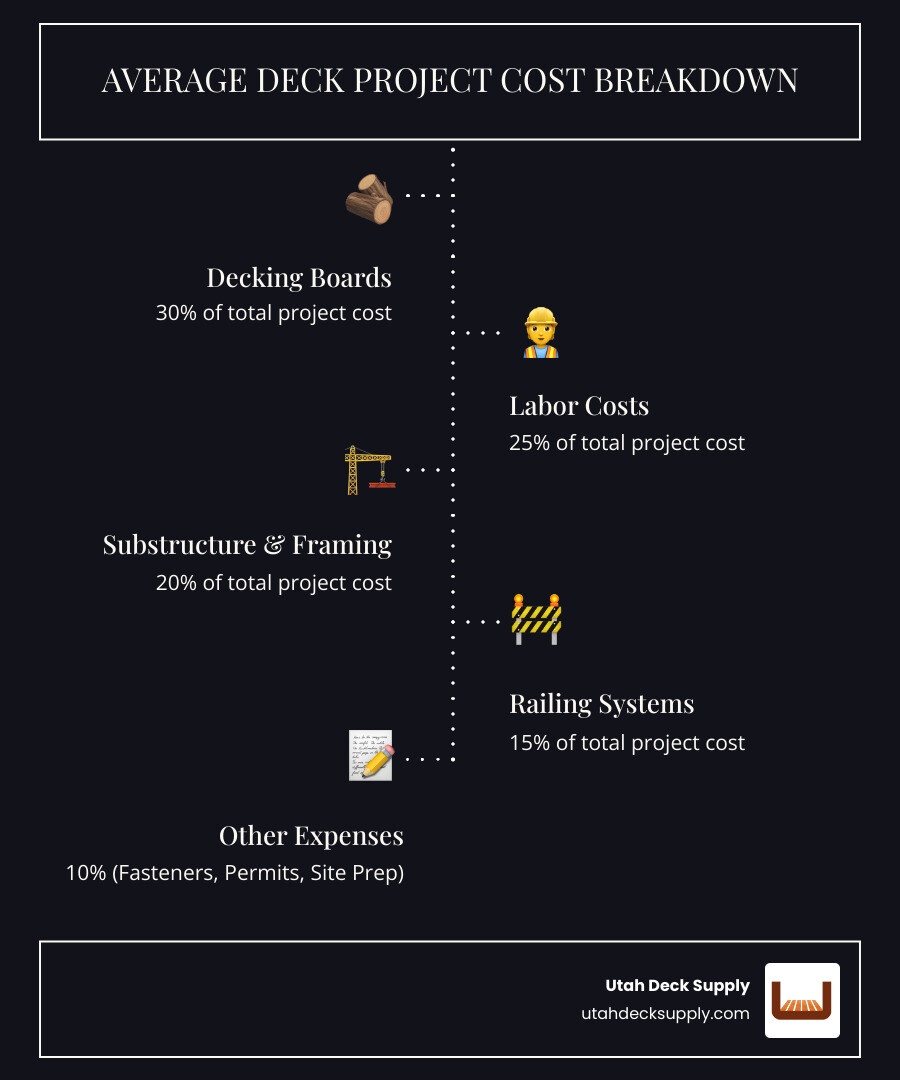
These figures include more than just decking boards. You’ll also need to budget for the substructure (joists, beams), railings, stairs, fasteners, labor, and permits. Here’s the thing: most homeowners focus only on the board price, but labor and framing often make up 40-60% of your total project cost.
You know what? The cheapest upfront option isn’t always the best value. Composite decking costs more initially but can save you money over time because it requires almost no maintenance. This is especially true in Utah, where our intense UV exposure and freeze-thaw cycles are brutal on decking materials.
I’m James Bonham, co-founder of Utah Deck Supply, and I’ve spent years in the industry learning what performs best in our unique climate. Let me walk you through everything you need to know to budget smart and build a deck that lasts.
Glossary for deck material cost:
Breaking Down Your Deck Material Cost: From Boards to Budgets
When we talk about the total deck material cost, it’s more than just the boards you walk on. Understanding each component, from the foundation to the finishing touches, is key to accurate budgeting.
Comparing Decking Options: Upfront vs. Long-Term Value
Choosing your decking material is the most significant decision, impacting both upfront cost and long-term satisfaction. Let’s explore the most popular choices for Utah homeowners.
Pressure-Treated Wood
The go-to for budget-conscious projects, this wood is chemically treated to resist rot and insects.
- Pros: Most affordable, readily available, can be stained or painted.
- Cons: Requires annual maintenance (cleaning, sanding, sealing); prone to warping, cracking, and splintering.
- Cost per square foot (materials only): $2-$5.
- Lifespan: 15-30 years with diligent maintenance.
Cedar & Redwood
These natural woods offer beautiful aesthetics and inherent resistance to rot and insects. Cedar is more common in Utah.
- Pros: Natural beauty, naturally insect and decay resistant, stable.
- Cons: Higher cost than pressure-treated, requires regular sealing to maintain color, can dent easily.
- Cost per square foot (materials only): Cedar is $3-$8, Redwood is $7-$12.
- Lifespan: 15-20 years with proper care.
Composite Decking
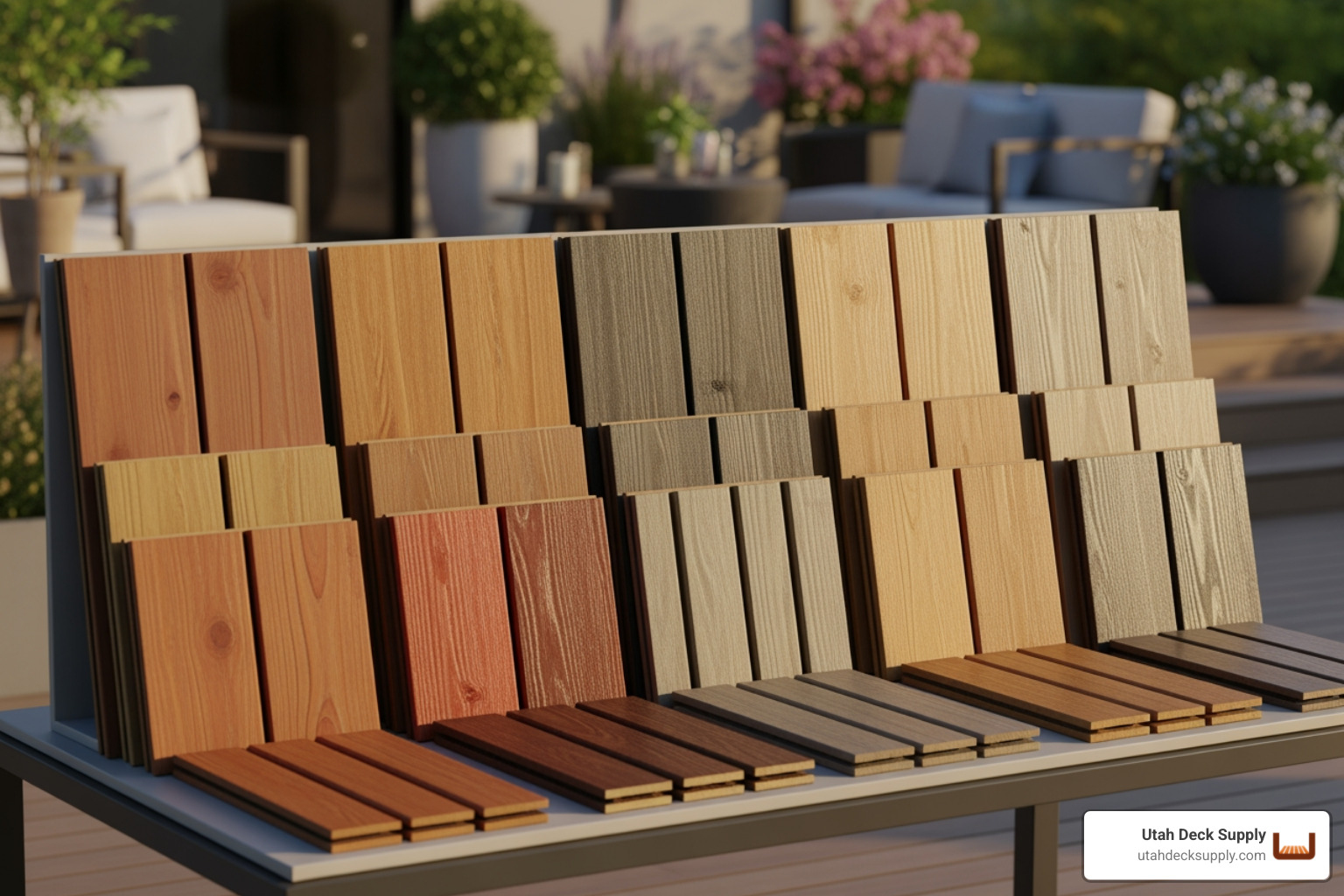
A popular choice in Utah, composite decking blends recycled wood fibers and plastics. We stock top brands like Trex, TimberTech, Deckorators, and Fiberon.
- Pros: Extremely low maintenance, resistant to rot, insects, and fading, wide range of colors, excellent durability.
- Cons: Higher upfront cost, can get hot in direct sun, can be difficult to repair.
- Cost per square foot (materials only): $6-$22.
- Lifespan: 25-50 years, with extensive warranties.
PVC Decking
Also known as vinyl, PVC is 100% synthetic plastic, offering ultimate low maintenance and durability.
- Pros: Virtually maintenance-free, impervious to moisture and insects, highly fade and stain-resistant.
- Cons: High upfront cost, can feel less rigid, may get hot in direct sunlight.
- Cost per square foot (materials only): $8-$20.
- Lifespan: 25-50+ years.
Hardwood (Ipe, Tigerwood, Mahogany)
Exotic hardwoods like Ipe are super-premium products, offering unparalleled density and a luxurious look.
- Pros: Extremely dense and durable, naturally resistant to rot and fire, long lifespan.
- Cons: Very high cost, difficult to install (requires special tools), heavy.
- Cost per square foot (materials only): $10-$20 for Ipe.
- Lifespan: 25-50+ years.
Aluminum Decking
A less common but extremely durable option that doesn’t mimic wood.
- Pros: Lightweight, fire-resistant, impervious to rot and moisture, can create a watertight surface below.
- Cons: High cost, can be noisy, gets hot in the sun, limited aesthetic options.
- Cost per square foot (materials only): $15-$20.
- Lifespan: 30-60 years.
For a deeper dive, check out our guide: Decking Materials Compared: Pros and Cons.
| Material Type | Upfront Cost/Sq. Ft. (Materials Only) | Average Lifespan | Annual Maintenance |
|---|---|---|---|
| Pressure-Treated Wood | $2-$5 | 15-30 years | High (clean, sand, stain/seal) |
| Cedar | $3-$8 | 15-20 years | Medium (clean, seal/stain) |
| Redwood | $7-$12 | 15-20 years | Medium (clean, seal/stain) |
| Composite Decking | $6-$22 | 25-50 years | Low (occasional cleaning) |
| PVC Decking | $8-$20 | 25-50+ years | Very Low (soap & water) |
| Hardwood (Ipe) | $10-$20 | 25-50+ years | Low (seal annually to retain color) |
| Aluminum | $15-$20 | 30-60 years | Very Low (minimal) |
The Complete Deck Material Cost Breakdown
Beyond the boards, other components significantly impact your budget.
Substructure (Framing Lumber & Footings)
This is the hidden hero providing structural integrity. In Utah, proper footing depth is crucial to avoid frost heave. The size, height, and material choice dictate framing needs. Substructure materials often account for around 20% of the total material cost.
Fasteners & Hardware
Don’t skimp here! Quality deck hardware like joist hangers, structural screws, and deck screws is essential for safety. Hidden fastener systems offer a clean look but can be more expensive.
Labor Costs
This is often the largest single expense, ranging from $8 to $22 per square foot. Costs vary by location, contractor experience, and deck complexity. A DIY approach saves on labor but requires time, skill, and tools. For more, see our guide: DIY vs. Professional Deck Installation: Which is Right for You?
Permit Fees & Building Codes
Before starting, you’ll need permits from your local Utah municipality. Fees can range from a few hundred to over $1,800. Ignoring permits can lead to fines or demolition. Learn more here: Deck Building Permits and Regulations: Navigating the Red Tape.
Removal of Old Materials & Site Preparation
Factor in demolition and removal costs if replacing an old deck. New builds may require excavation or grading, especially on Utah’s uneven terrain. You can estimate costs with a decking cost calculator.
Railing, Stairs, and Features: The Finishing Touches
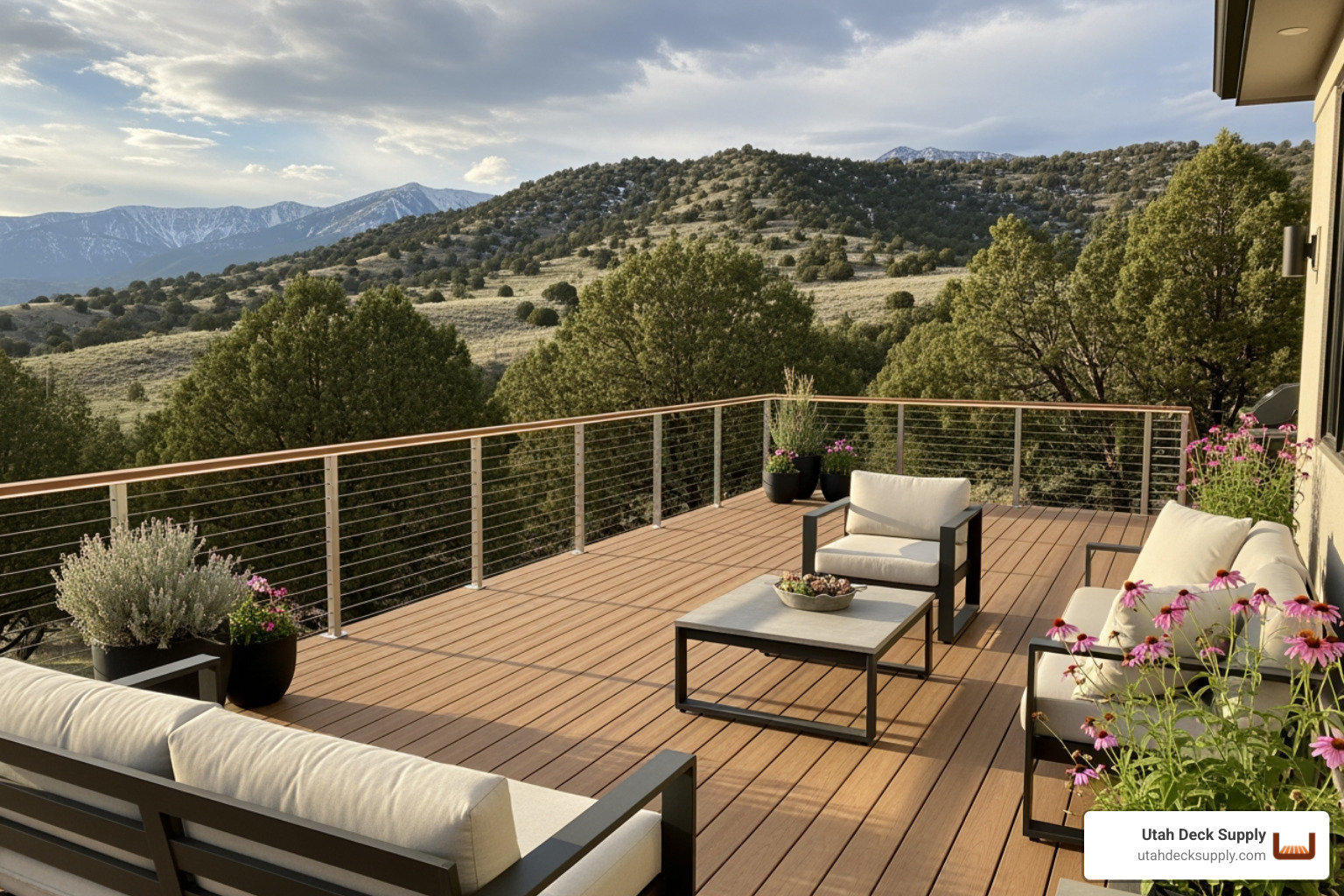
Once the main structure is in place, the details bring your outdoor space to life. Railings, stairs, and other features improve aesthetics but also impact the overall deck material cost.
Railing Costs and Options
Railings are essential for safety and define your deck’s style. Costs vary dramatically by material.
Wood Railings:
- Cost: $30-$80 per linear foot (materials); $75-$95 installed.
- Pros: Classic look, paintable/stainable.
- Cons: Requires regular maintenance, prone to rot.
Composite Railings:
- Cost: $125-$175 per linear foot installed.
- Pros: Low maintenance, durable, various styles. We carry Trex Railing.
- Cons: Higher upfront cost than wood.
Aluminum Railings:
- Cost: $50-$150 per linear foot (materials); $150-$200 installed.
- Pros: Extremely durable, low maintenance, sleek modern look. We offer quality aluminum deck railing options like Fortress Railing AL13 Aluminum.
- Cons: More expensive than wood.
Glass Railings:
- Cost: $65-$250 per linear foot (materials); $200-$500 installed.
- Pros: Unobstructed views, modern aesthetic.
- Cons: High cost, requires frequent cleaning.
Cable Railings:
- Cost: $250-$500 per linear foot installed.
- Pros: Contemporary look, excellent views.
- Cons: High cost, complex installation.
For a comprehensive overview, see our Ultimate Guide to Choosing the Perfect Deck Railing System.
Deck Stairs
Stairs are a functional necessity and a significant cost factor, typically running $100 to $500 per step. For a cohesive look, your stairs should match your decking and railing materials.
Additional Features and Covered Options
Lift your deck into an outdoor oasis with added features, but remember to budget for them.
- Built-in Seating: Adds a custom look and convenience.
- Deck Lighting: Essential for evening ambiance and safety ($50-$300 per fixture).
- Outdoor Kitchens: A major upgrade, costing $4,200 to $20,500+.
- Pergolas and Covers: Extend your deck’s usability. Pergola kits offer shade, while a full roof ($3,000-$10,000) or screened enclosure ($8,000-$25,000) provides protection from Utah’s elements and can increase your deck’s lifespan.
Smart Budgeting for Your Utah Deck Project
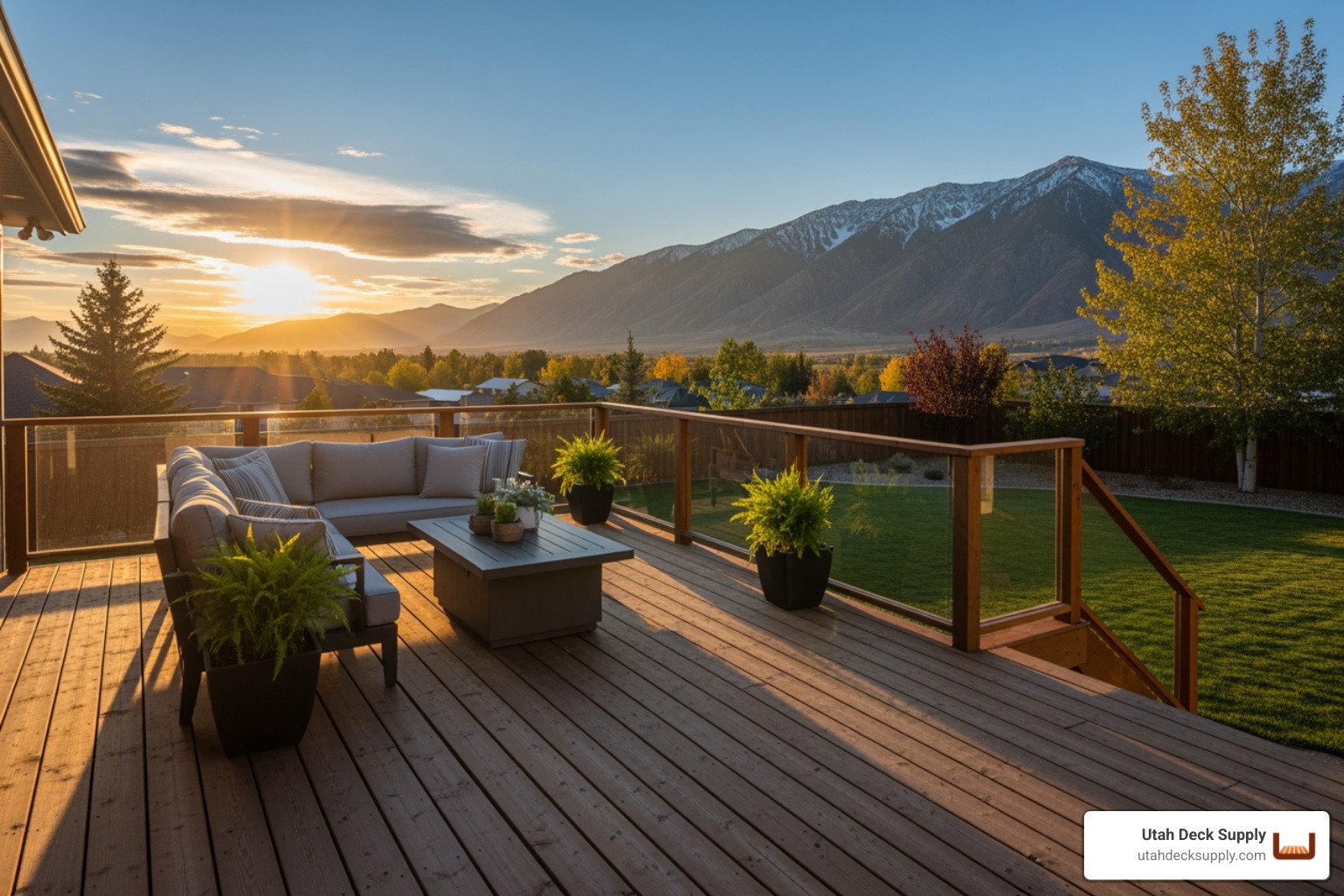
Building a deck in Utah comes with unique considerations. Our diverse landscapes and climate play a crucial role in your deck material cost and project success. At Utah Deck Supply, we understand these nuances and are here to help.
Factors Influencing Your Final Price
Several elements can sway your deck’s final price tag.
- Location and Landscape: While our material pricing is consistent across Utah, labor costs can be higher in urban centers like Salt Lake City. A deck on a steep Draper hillside will also be more complex and expensive than one on a flat Lehi lot.
- Utah’s Climate: Intense summer UV and winter freeze-thaw cycles demand durable, weather-resistant materials. This makes low-maintenance composite and PVC decking excellent long-term choices here. Proper footings below the frost line are also non-negotiable.
- Contractor Choice: Experienced contractors may charge more, but their efficiency and knowledge of local codes can prevent costly mistakes. Always get multiple quotes from licensed, insured professionals.
- DIY vs. Professional: A DIY approach can save on labor, but complex designs often benefit from a pro. A poorly built deck is a safety hazard. For a detailed comparison, explore our article: DIY vs. Professional Deck Installation: Which is Right for You?.
- Deck Size and Complexity: Bigger and more intricate decks cost more. Simple rectangular decks are most economical, while curves, multi-level designs, and stairs increase material and labor costs.
Maximizing Your Investment and Long-Term Deck Material Cost
A deck is an investment in your home and lifestyle. Understanding the long-term implications of your material choices is key to maximizing that value.
Return on Investment and Home Value
A well-built deck extends your living space and boosts curb appeal, offering a good return on investment. It’s a desirable feature that can increase your home’s value. Learn more in Adding Value to Your Home: The Benefits of a New Deck.
Maintenance Costs: The Hidden Factor
This is where upfront deck material cost tells only half the story.
- Wood Decks: Require annual cleaning and sealing, costing time and money. Neglect can lead to expensive restoration.
- Composite/PVC Decks: Need only an occasional wash with soap and water. This virtually eliminates recurring maintenance costs, saving you significant money over the deck’s lifespan and often offsetting the higher initial price. For tips, see The Ultimate Guide to Deck Maintenance.
Repairs vs. Full Replacement
Minor repairs might cost $700-$2,600, but a full replacement can run $4,000-$16,000+. Choosing durable materials upfront reduces the likelihood of needing major repairs or early replacement.
Sustainable Decking Options
For eco-conscious homeowners, many composite brands like Trex use 95% recycled materials. If you prefer wood, look for FSC-certified products to ensure responsible sourcing. You can explore a wide range of deck material options to find what fits your vision.
Your Next Steps to Building the Perfect Deck
Navigating deck material cost can feel overwhelming, but we’re here to help.
- Create a Budget: Outline all potential costs (materials, labor, permits, features) and add a 10-20% contingency.
- Explore Materials: Weigh upfront cost against long-term maintenance, keeping Utah’s climate in mind.
- Visit Our Showroom: The best way to decide is to see and feel the materials yourself. At our Utah Deck Supply showroom, you can compare top brands side-by-side.
- Seek Expert Advice: Our team provides knowledgeable guidance on materials, codes, and installation best practices to fit your budget and vision.
Building a new deck is a fantastic way to improve your outdoor living space. We’re here to make that process as smooth as possible. Check out our full range of decking products online or stop by.
Here’s the thing: getting expert advice can save you time and money in the long run. For personalized guidance on your project, give our team a call at 385-993-5492 or Request a Free Quote today.