
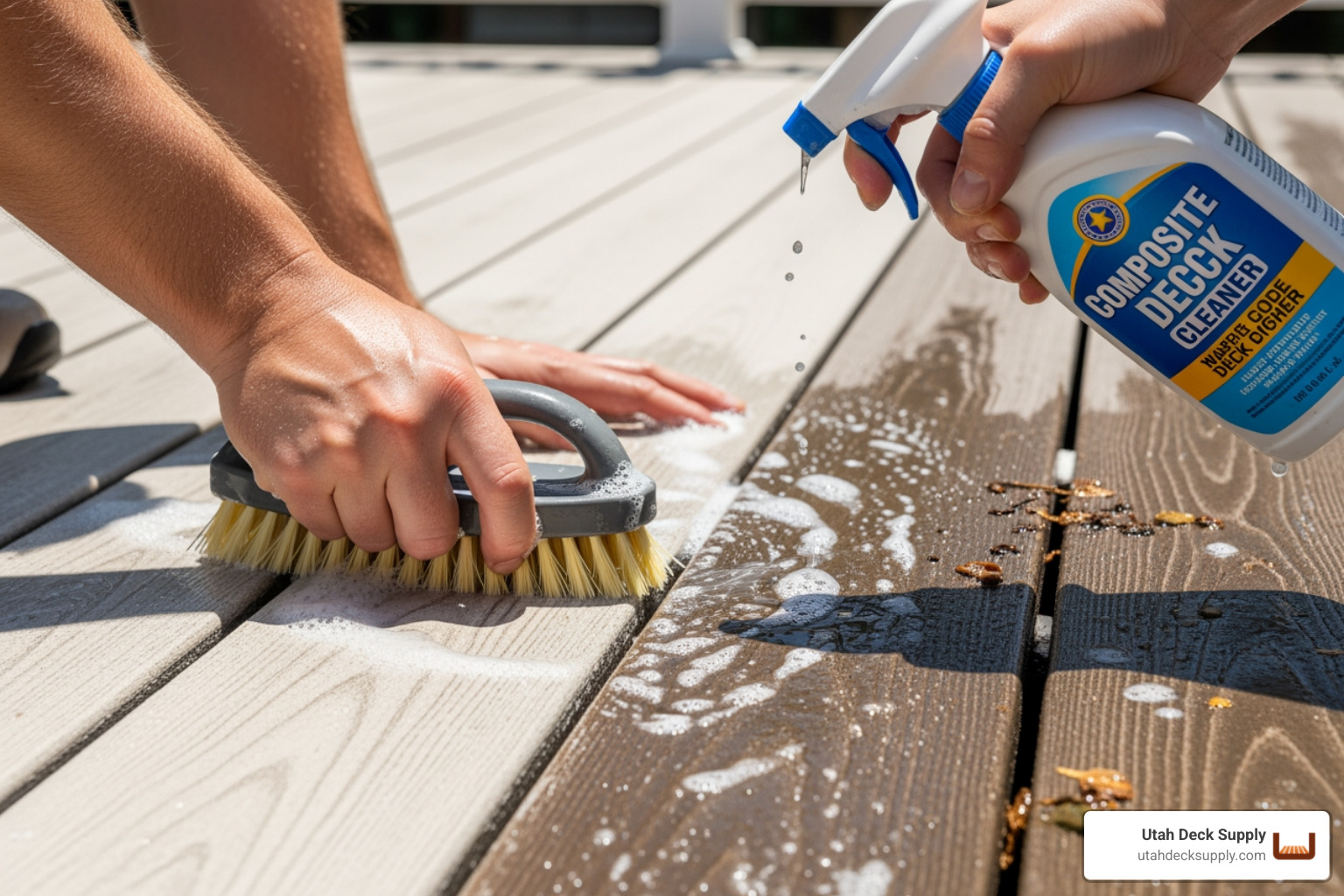
Your deck is the heart of your outdoor living space, a stage for family barbecues, quiet morning coffees, and relaxing evenings. While low-maintenance composite decking is designed for durability, it still needs regular care to fend off dirt, grime, and mildew. This guide will walk you through everything you need to know to keep your composite deck looking brand new, ensuring it remains a beautiful and safe place for making memories.
A Quick Guide to Cleaning Your Composite Deck
Composite deck cleaner is essential for maintaining your outdoor space, removing the dirt, mold, and stains that build up over time. While composite decking is low-maintenance, periodic cleaning is necessary to preserve its appearance and prevent buildup.
Essential Supplies:
- Manufacturer-approved composite deck cleaner
- Soft-bristle deck brush with a long handle
- Garden hose with a spray nozzle
- Bucket
- Protective gloves and eyewear
Basic Process:
- Clear and sweep the deck.
- Mix the cleaner as directed.
- Apply the solution to a small section.
- Scrub gently with the grain.
- Rinse thoroughly before the solution dries.
- Let the deck air dry completely.
Cleaning Frequency: Plan for a deep clean at least twice a year (spring and fall), with spot-cleaning as needed.
As co-founder of Utah Deck Supply, I’ve spent years helping homeowners maintain their composite decks. Whether you’re dealing with everyday grime or stubborn mold, using the right composite deck cleaner and method makes all the difference.
Understanding Your Composite Deck and Why It Needs Cleaning
Composite decking, an engineered blend of wood fibers and recycled plastics, is a smart investment that resists rot, insects, and splintering. However, even these durable materials need regular cleaning. Your deck is constantly exposed to the elements, leading to an accumulation of pollen, leaves, and dirt. This organic matter creates a biofilm, which becomes a food source for mold and mildew.
While mold grows on the surface rather than in the material, it can cause stains if left unchecked. Regular cleaning with a proper composite deck cleaner removes these contaminants, protecting your deck’s appearance and your investment. It’s about keeping your deck a safe, welcoming place for your family.
Common Issues Affecting Composite Decks
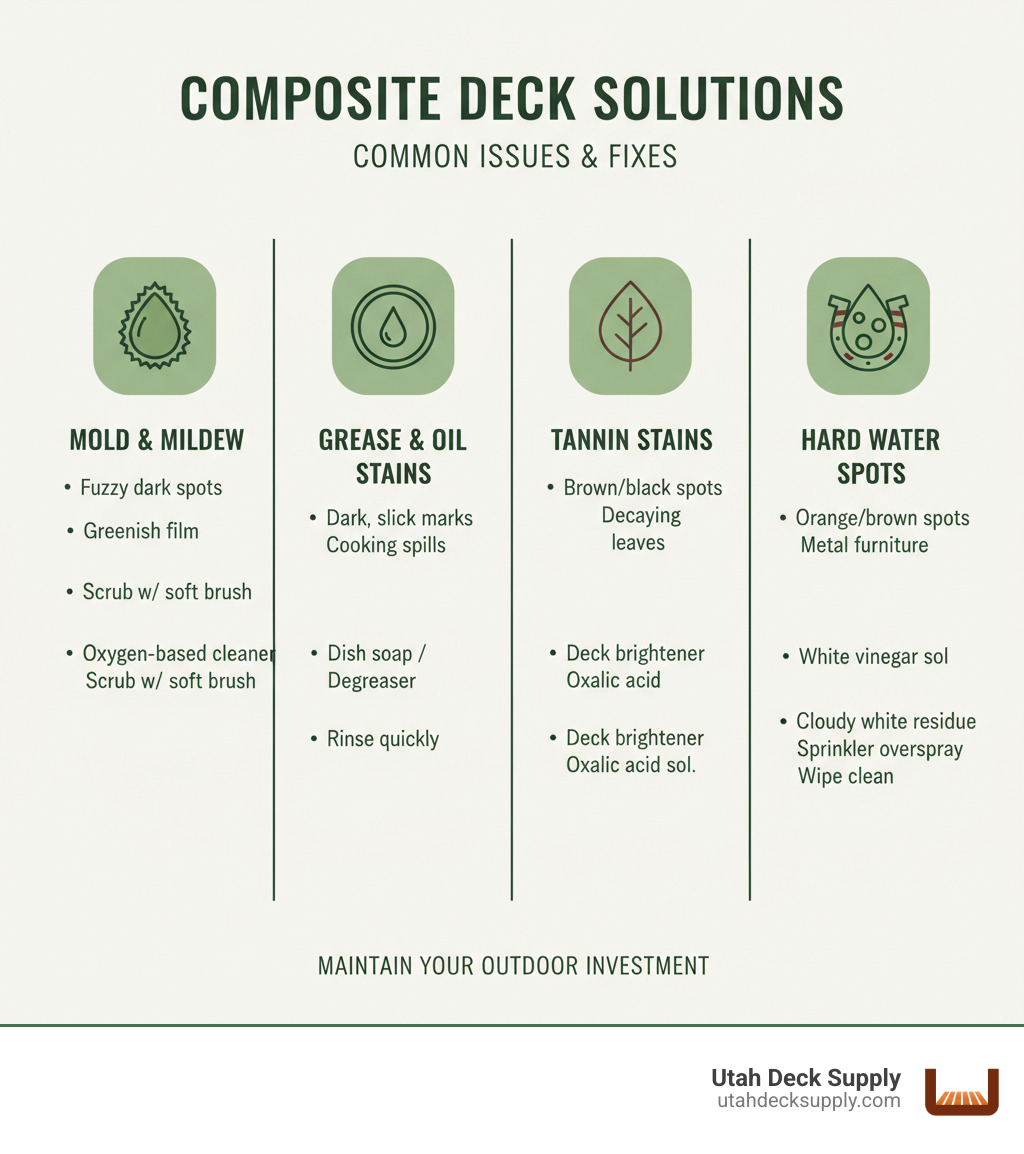
Understanding what you’re up against makes cleaning much easier. Here are the most common culprits:
- Mold and mildew spots: Green, black, or pinkish patches in damp, shaded areas.
- Grease and oil spills: Splatters from barbecues that can leave dark, stubborn stains.
- Tannin stains from leaves: Bluish-black or brown marks left by wet leaves and acorns.
- Rust marks from furniture: Orange-brown stains from wet metal items.
- Hard water spots: White, chalky mineral deposits from sprinklers.
- General dirt and grime: A dulling layer from foot traffic and dust.
- Pollen accumulation: A yellow film that provides food for mold.
Dedicated Cleaners vs. Homemade Solutions
You can choose between commercial composite deck cleaner products and DIY solutions. Commercial cleaners are specifically formulated with biodegradable ingredients like sodium percarbonate (oxygen-based) or oxalic acid (brightener) to break down stains without harming your deck. Critically, using a manufacturer-approved cleaner protects your warranty.
DIY solutions like white vinegar and baking soda are inexpensive and can work for light cleaning. The chemical reaction between baking soda and vinegar helps lift dirt. However, be cautious. Harsh chemicals like pure bleach can damage composite decking, and using the wrong homemade mix could void your warranty. The golden rule is to always check your deck manufacturer’s guidelines before applying any cleaning solution.
| Feature | Commercial Composite Deck Cleaners | DIY Solutions (e.g., vinegar & baking soda) |
|---|---|---|
| Effectiveness | Formulated for specific composite stains (mold, grease, tannins) | Good for general dirt and light stains; less effective on stubborn issues |
| Safety | Tested for composite materials; often biodegradable | Ingredients known; potential for material damage if not careful with ratios |
| Cost | Higher upfront cost per bottle | Very low cost, uses common household items |
| Warranty Compliance | Generally approved by manufacturers | May void warranty if not explicitly approved or if damage occurs |
| Ingredients | Specific active compounds (sodium percarbonate, oxalic acid) | Common household items (vinegar, baking soda, dish soap) |
| Ease of Use | Clear instructions, targeted application | Requires careful mixing and understanding of chemical reactions |
At Utah Deck Supply, we recommend sticking with cleaners designed for composite decking to protect your investment and keep your warranty intact.
Choosing the Right Composite Deck Cleaner & Tools
Proper preparation makes cleaning more efficient and safe. Before you start, gather your supplies and prep the area.

Preparation and Safety:
- Clear the Deck: Remove all furniture, grills, planters, and rugs.
- Sweep Away Debris: Use a broom or leaf blower to clear loose leaves and dirt. Use a putty knife to clean out gaps between boards.
- Protect Landscaping: Lightly spray nearby plants with water before you start and rinse them again after you finish. Consider using plastic sheeting for extra protection.
- Gear Up: Always wear protective eyewear, chemical-resistant gloves, and non-slip footwear. Read the cleaner’s label for specific safety instructions.
What is the best composite deck cleaner for my needs?
There is no single “best” composite deck cleaner; the right choice depends on the stain and your deck manufacturer’s recommendations. Following their guidelines is crucial to protect your deck and its warranty.
Recommended Cleaner Types for Composite Decks:
- General Dirt & Grime: pH-neutral formulas or mild oxygen-based cleaners are perfect for routine upkeep.
- Mold & Mildew: Oxygen-based cleaners (containing sodium percarbonate) are a safe and effective choice. Bleach-based cleaners are powerful but should be used with caution and tested first, as they can lighten the deck’s color.
- Tannins, Rust & Hard Water Stains: Deck brighteners containing oxalic or phosphoric acid are specially designed to tackle these specific issues.
- Grease & Oil: Use a dedicated degreasing agent or a specialized oil stain remover for the best results.
Different composite brands have different care requirements. If you’re unsure, our team at Utah Deck Supply can help you find the right product for your specific deck.
Essential Tools for the Job
Having the right tools makes the job much easier. You will need:
- Soft-Bristle Deck Brush: A long-handled brush is essential for scrubbing without scratching the composite surface. Never use a metal-bristle brush.
- Bucket: A standard five-gallon bucket is perfect for mixing your cleaning solution.
- Garden Hose with Spray Nozzle: Necessary for pre-rinsing and thorough final rinsing. A fan-tip setting is ideal.
- Putty Knife: Useful for clearing stubborn debris from between deck boards.
- Low-Pressure Power Washer (Optional): Can be used for rinsing on some decks, but requires extreme caution. A garden hose is a safer alternative for most homeowners.
The Ultimate Step-by-Step Cleaning Guide
With your supplies ready and your deck prepped, it’s time to clean. For best results, clean on an overcast day or during cooler parts of the day to prevent the composite deck cleaner from drying too quickly. A dried-on solution can leave a stubborn film that requires re-cleaning.

Step 1: Prepare and Pre-Rinse the Deck
First, clear all furniture, planters, and rugs from the deck. Next, thoroughly sweep away all loose debris, paying special attention to corners and the gaps between boards. A putty knife is great for removing gunk trapped in these crevices. Once the deck is swept, give the entire surface a light spray with your garden hose to loosen surface dirt and wet any nearby plants for protection.
Step 2: Mix and Apply the Cleaner
Always read and follow the manufacturer’s instructions for your composite deck cleaner. Mix the solution in a bucket or garden sprayer according to the recommended dilution ratio. To prevent the cleaner from drying, work in small, manageable sections (e.g., 10×10 feet).
Apply the solution generously to one section and let it sit for 5 to 15 minutes. This dwell time allows the cleaner to break down dirt and grime. Keep the surface wet; if it starts to dry, lightly mist it with water.
Step 3: Scrub the Surface
Using your soft-bristle brush, scrub the deck with gentle, even pressure. Always scrub in the direction of the board’s grain to clean the texture effectively and avoid streaking. You don’t need to apply excessive force; let the cleaner and the brush do the work. Apply a little more effort to heavily soiled spots if needed.
Step 4: Rinse and Dry Thoroughly
This is the most critical step. As soon as you finish scrubbing a section, rinse it thoroughly with your garden hose before the solution can dry. Dried cleaner leaves a film that is difficult to remove. Rinse until no more suds are visible.
If your manufacturer approves it, you can use a pressure washer on a low setting with a fan-tip nozzle for rinsing, keeping it at least 8-12 inches from the surface. After rinsing the deck, also rinse any nearby siding, windows, or plants that may have gotten overspray.
Finally, let the deck air dry completely before moving furniture back. You can use a leaf blower to speed up drying and prevent water spots. Repeat these steps section by section until your entire deck is clean.
Tackling Tough Stains & Common Problems
Sometimes, a general cleaning isn’t enough for tough stains from grease, rust, or leaves. With the right approach, however, most stains can be removed from your composite deck.
Always test any specialized cleaner on a small, inconspicuous area first to ensure it doesn’t discolor your decking. Improper techniques, like using a high-pressure washer setting or the wrong chemicals, can cause permanent damage and may void your deck’s warranty.

Using a Specialized Composite Deck Cleaner for Stubborn Stains
Grease and Oil Stains: For fresh spills, immediately use warm, soapy water (mild dish soap works well) and a soft brush. For set-in stains, you’ll need a commercial degreaser or a specialized product like Pour-N-Restore, which is designed to pull oil out of porous surfaces. For brands like Trex, spills must be cleaned within seven days to maintain the stain warranty.
Rust Stains: These marks from metal furniture or tools can be treated with a composite deck cleaner that acts as a brightener, specifically one containing oxalic or phosphoric acid. Apply as directed, scrub gently, and rinse thoroughly.
Tannin and Leaf Stains: The dark spots from wet leaves are best removed with a deck brightener containing oxalic acid. The best defense is prevention: sweep your deck regularly, especially in the fall.
Mold and Mildew Removal: For persistent mold, an oxygen-based cleaner is your safest bet as it’s less likely to affect your deck’s color. Bleach-based cleaners are also effective but require caution. Always test first, and if you proceed, apply it evenly across the entire deck to avoid a patchy appearance. For detailed guidance on mold, Trex provides a Mold Technical Bulletin.
Addressing Other Common Issues
Hard Water Spots: The chalky white spots common in Utah can often be removed with a simple white vinegar solution. Apply, let it sit for a few minutes, scrub, and rinse.
Scuffs and Scratches: Light scuffs may fade over time with exposure to the elements. Never sand composite decking, as this will cause permanent damage and void your warranty. For deep scratches, board replacement may be necessary.
Static Electricity: In Utah’s dry climate, static can build up. Products like ACL Staticide can be applied to the deck surface to reduce shocks.
Chalk Lines: Most colored chalks are permanent. If you must use a chalk line for a project, use only purple or white dust-off marking chalk, as other colors (especially red) can be impossible to remove.
Concrete Dust: If construction is happening nearby, cover your deck. If dust settles on the surface, a product like Sakrete Concrete Dissolver can be used to remove it without damaging the boards.
Long-Term Care: Maintenance and Prevention
Regular maintenance keeps your composite deck looking its best and prevents larger issues from developing. A few simple habits can keep your deck in top condition year after year.
Seasonal Cleaning Schedule
We recommend a thorough cleaning with a composite deck cleaner at least twice a year: once in the spring and once in the fall.
- Spring Cleaning: This post-winter clean removes the grime and mildew that accumulated over the wet months, preparing your deck for the outdoor season.
- Fall Cleaning: Clearing away fallen leaves and debris before winter prevents tannin stains and mold growth, making your spring cleanup much easier.
For best results, clean when temperatures are consistently above 55°F to ensure cleaning solutions work effectively and the deck dries properly.
Proactive Maintenance Tips
The secret to a pristine deck is consistent care. Follow these tips to minimize deep cleaning efforts:
- Sweep Regularly: A quick sweep with a broom or leaf blower once a week prevents the buildup of dirt, pollen, and leaves that feed mold.
- Clean Spills Immediately: Act fast on grease, oil, and food spills. A quick rinse and wash with soapy water can prevent a permanent stain. For some brands, prompt cleanup is required to maintain the stain warranty.
- Use Grill Mats: Place a mat under your barbecue to catch grease splatters and protect your deck surface.
- Protect from Furniture: Add felt pads or rubber caps to metal furniture legs to prevent scratches. Be cautious with rubber-backed mats, as they can trap moisture and cause discoloration; lift them periodically to let the deck breathe.
- Handle Winter Weather Wisely: When removing snow, always use a plastic shovel, never a metal one, which can scratch the deck and void your warranty. For ice, calcium chloride or rock salt is generally safe. Rinse away any residue in the spring.
Frequently Asked Questions about Composite Deck Cleaning
Homeowners often ask us similar questions about caring for their composite decks. Here are answers to some of the most common ones.
Can I use a pressure washer on my composite deck?
Yes, but with extreme caution, as improper use can cause irreversible damage and void your warranty. A garden hose and soft-bristle brush are always the safest option.
If you choose to use a pressure washer, you must follow these rules:
- Check Manufacturer Guidelines: First and foremost, confirm your specific decking brand allows pressure washing and at what maximum PSI.
- Use a Fan-Tip Nozzle ONLY: Never use a concentrated or rotating nozzle.
- Keep Pressure Low: Stay below the manufacturer’s recommended PSI (typically 1500-3100 PSI). When in doubt, stay under 1500 PSI.
- Maintain Distance: Keep the nozzle at least 8-12 inches from the deck surface.
- Sweep, Don’t Blast: Use broad, sweeping motions in the direction of the grain.
- Avoid on Older Decks: Never use a pressure washer on older, uncapped composite decking unless explicitly approved by the manufacturer.
How often should I clean my composite deck?
A thorough deep clean is recommended at least twice a year, ideally in the spring and fall. This removes seasonal pollen, dirt, and debris that can lead to mold. Between deep cleans, regular sweeping and spot-cleaning spills as they occur will significantly reduce the amount of work needed and keep your deck looking great year-round.
What’s the most common mistake people make when cleaning their deck?
The most common and frustrating mistake is letting the cleaning solution dry on the deck surface. This happens when cleaning on a hot, sunny day or by trying to tackle too large an area at once. The dried soap leaves behind a film or streaks that are very difficult to remove, forcing you to clean the area all over again.
To avoid this, always:
- Work in small, manageable sections.
- Clean on an overcast day or during cooler morning/evening hours.
- Rinse each section thoroughly and immediately after scrubbing.
Keep Your Deck in Top Shape with the Right Supplies
Your deck is where life unfolds—the backdrop for family celebrations and quiet evenings watching the sunset over the Wasatch Mountains. Regular cleaning is a simple way to protect this investment and keep your composite deck looking its best for years to come.
By now, you know that using the right techniques and a manufacturer-approved composite deck cleaner makes all the difference. Whether you’re dealing with seasonal grime or a stubborn grease stain, you have the knowledge to handle it confidently.
At Utah Deck Supply, we are passionate about helping our customers create and maintain beautiful outdoor spaces. We’re not just a supplier; we’re your partners in outdoor living. Our expert team in West Jordan offers personalized recommendations based on your specific deck material and cleaning needs, taking the guesswork out of maintenance.
Our well-stocked inventory means you can get the premium composite deck cleaner, brushes, and other supplies you need today. We focus exclusively on decking, so our knowledge runs deep. Don’t let dirt and stains detract from your outdoor oasis. Visit our West Jordan showroom or contact our team for guidance. We’re here to help you find the best supplies to keep your deck shining season after season.