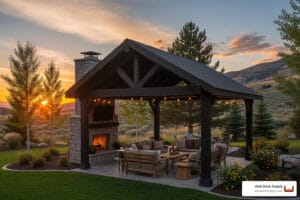
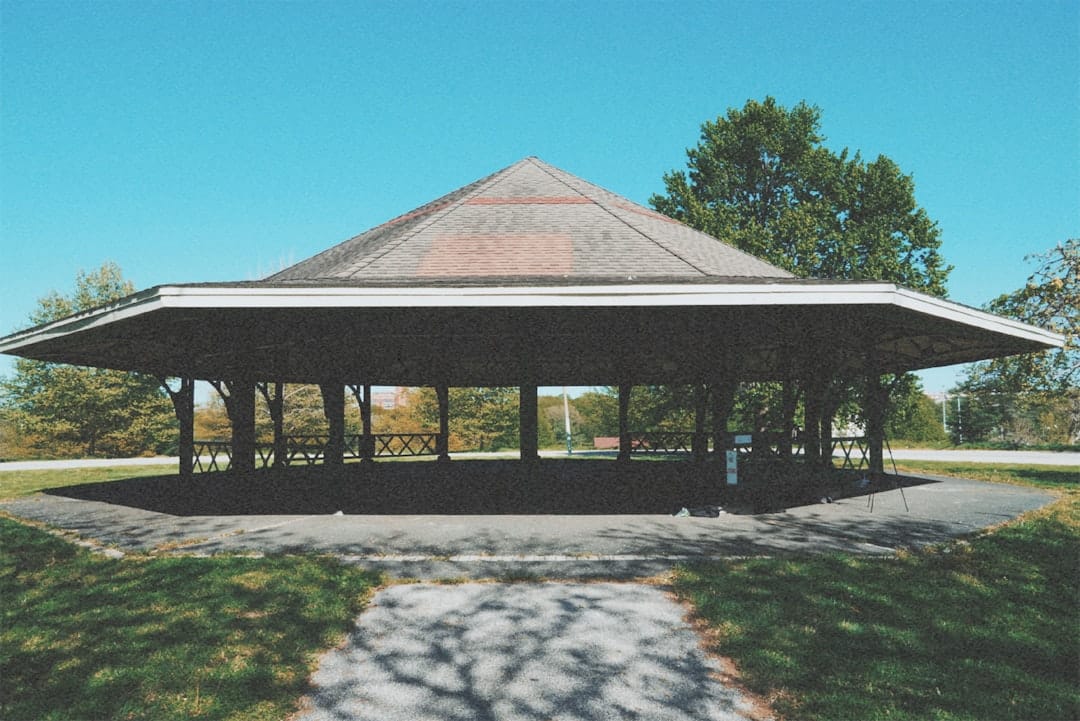
A covered pavilion is a versatile, roofed outdoor structure with open sides, offering shelter from the elements while maintaining a connection to your surroundings. This unique design provides the perfect balance of protection and openness, allowing you to enjoy fresh air and scenic views without being exposed to harsh sun or rain. More than just a functional shelter, a well-designed pavilion can become an architectural focal point, creating an inviting space for everything from quiet relaxation to lively gatherings.
Key features of a covered pavilion:
- Solid roof – Complete protection from sun, rain, and snow
- Open sides – Unobstructed views and natural ventilation
- Rectangular shape – Efficient use of space for furniture and activities
- Post-supported design – No load-bearing walls required
- Typical sizes – Range from 10’x10′ for intimate spaces to 20’x20′ or larger for events
Whether you’re hosting a summer barbecue, sheltering from an unexpected afternoon thunderstorm, or creating a year-round outdoor dining space, a covered pavilion delivers best versatility. Unlike pergolas that offer only partial shade through slatted roofs, or gazebos that typically feature enclosed railings and octagonal shapes, pavilions provide complete overhead protection while keeping sides open for maximum airflow and connection to your landscape.
The appeal is clear in the numbers: homeowners who add a covered patio can increase their property value by 8-10 percent, according to real estate data. Installation costs for a roof over a patio average around $6,500, ranging from $4,500 to $11,000 depending on size and materials. For those seeking ready-to-assemble solutions, pre-cut pavilion kits start around $2,000 for smaller standard models, while larger customized structures with premium features can reach $5,000 and beyond.
From commercial park pavilions seating 50-150 people to backyard structures perfect for covering a dining table or hot tub, these versatile shelters adapt to virtually any outdoor need. They excel in Utah’s demanding climate—providing shade during intense summer UV exposure, shelter during spring and fall rain, and a dry gathering spot even when snow is falling.
I’m James Bonham, co-founder of Utah Deck Supply, and after years working with Trex Company and now serving Utah contractors and homeowners, I’ve seen how the right covered pavilion transforms outdoor spaces into true extensions of the home. Whether you’re selecting a rental pavilion for a special event or building a permanent structure that will serve your family for decades, understanding your options and requirements is the first step toward success.
Defining the Pavilion: Your Ultimate Outdoor Shelter
At its heart, a covered pavilion is a beautifully simple concept: a sturdy roof held up by posts, creating shelter without walls. Picture yourself relaxing under solid protection from Utah’s intense summer sun or an unexpected afternoon thunderstorm, all while feeling the breeze flow freely around you. This open-sided design transforms pavilions into more than just functional structures—they become architectural focal points that draw the eye and invite people to gather.
The pavilion tradition runs deep in American outdoor living. Sometimes called “summerhouses” in classic garden design, these charming structures have graced backyards for generations. They create those picture-perfect scenes where families share meals, friends celebrate milestones, and quiet moments of relaxation happen naturally. Today, they’re more popular than ever among Utah homeowners looking to genuinely extend their living space beyond four walls.
Pavilion vs. Gazebo vs. Pergola: What’s the Difference?
While these three outdoor structures often get lumped together in conversation, they each bring something unique to your backyard. Understanding what sets them apart will help you choose the right fit for your space and lifestyle.
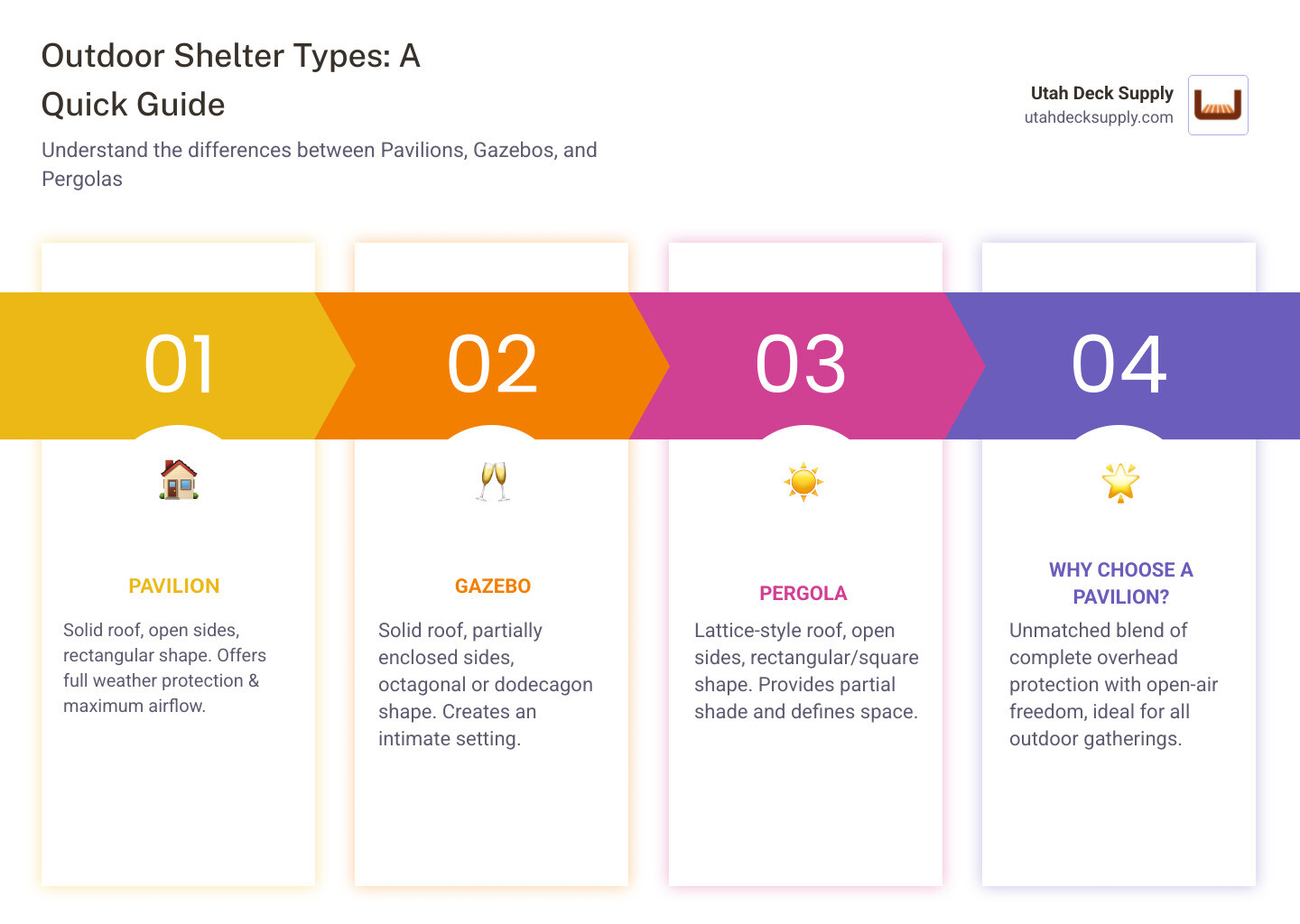
Pavilions feature a solid roof that provides complete overhead protection—no worrying about rain, snow, or harsh UV rays. Their open sides maintain that airy outdoor feel while the typical rectangular shape makes furniture arrangement straightforward. You’ll get full weather protection without feeling boxed in, making pavilions ideal for dining areas, outdoor kitchens, or poolside lounging.
Gazebos, on the other hand, usually sport an octagonal or dodecagon (twelve-sided) shape that creates a more intimate, enclosed feeling. While they also have solid roofs, gazebos typically include partial walls or railings around the perimeter. This makes them perfect for creating cozy conversation nooks or romantic garden retreats where you want that sense of being nestled into the landscape.
Pergolas take a different approach entirely with their distinctive lattice-style roof made of spaced slats or crossbeams. Instead of full coverage, they offer dappled shade and filtered sunlight—beautiful for growing climbing vines but not much help during a rainstorm. Their open design works wonderfully for defining outdoor spaces while maintaining that completely open-air experience. If you’re considering a pergola for your yard, our Complete Guide to Choosing the Perfect Pergola Kit walks through all your options.
The bottom line? If you need real weather protection with maximum versatility, a covered pavilion delivers. For more intimate settings with defined boundaries, gazebos shine. And when you want decorative shade without overhead cover, pergolas fit the bill perfectly. Each has earned its place in outdoor design—it just depends on what matters most for your backyard vision.
The Core Benefits of a Covered Pavilion
Beyond the obvious shelter from sun and storms, pavilions bring surprising value to your property and lifestyle. Increased usability tops the list—suddenly your backyard works even when the weather doesn’t cooperate. That summer barbecue doesn’t get cancelled because of afternoon clouds, and fall gatherings extend comfortably into cooler evenings.
The weather protection goes both ways too. Yes, you stay dry during rain, but you also gain crucial shade during Utah’s intense summer heat. This makes your outdoor space genuinely comfortable rather than just theoretically available. Your pavilion also defines your outdoor space in a way that feels intentional—it anchors your backyard design and gives purpose to areas that might otherwise go unused.
From a practical standpoint, pavilions create a natural entertainment hub where people instinctively gather. There’s something about a sheltered space that draws folks together, whether it’s for weekend cookouts, holiday celebrations, or just casual evenings with neighbors. The improved aesthetics add curb appeal and visual interest that lift your entire property’s look.
And here’s the financial bonus: adding quality outdoor structures like pavilions can increase your property value substantially. When you’re ready to sell, buyers see a move-in-ready entertainment space that extends the home’s functional square footage. It’s an investment that pays back in daily enjoyment and eventual resale value.
For deeper insights into why quality outdoor structures make such a difference, check out our article on 10 Reasons Why High-Quality Pergola Kits Are a Must-Have—many of the same principles apply to pavilions.
Defining the Pavilion: Your Ultimate Outdoor Shelter
Think of a covered pavilion as your backyard’s answer to the perfect outdoor room. It’s a roofed structure supported by sturdy posts, with open sides that let the breeze flow through while keeping you completely protected from whatever weather Utah throws your way. Whether it’s the intense summer sun, an unexpected afternoon shower, or even a gentle snowfall, you stay dry and comfortable underneath.
What makes pavilions so special is that balance between shelter and openness. You’re not boxed in by walls—you still get those beautiful mountain views and fresh air—but you have a solid roof overhead providing complete protection. This makes them absolutely ideal for outdoor dining areas, family gatherings, or creating a dedicated space for your backyard activities.
A covered pavilion typically features a solid roof that shields you from sun, rain, and snow—no gaps or slats here, just full coverage. The open sides mean you’re never cut off from your surroundings, enjoying unobstructed views and natural ventilation that keeps things comfortable even on warm days. Most pavilions come in a rectangular shape, which makes the most efficient use of space for arranging furniture, setting up dining tables, or creating distinct activity zones.
The post-supported design is wonderfully straightforward—you don’t need load-bearing walls, just strong corner posts that hold up the roof structure. This keeps things open and airy while maintaining excellent stability. When it comes to sizing, you’ll find options ranging from cozy 10’x10′ pavilions perfect for intimate seating areas or hot tub coverage, all the way up to spacious 20’x20′ structures (or even larger) that can comfortably host wedding receptions or big family reunions.
The beauty of this design is its versatility. At Utah Deck Supply, we’ve helped homeowners create everything from poolside cabanas to covered outdoor kitchens, and the pavilion structure adapts beautifully to whatever vision you have in mind. It becomes an architectural focal point that draws people outside and transforms how you use your backyard throughout the year.
Why Covered Pavilions Are Perfect for Utah Outdoor Living
Whether you’re hosting a summer barbecue, sheltering from an unexpected afternoon thunderstorm, or creating a year-round outdoor dining space, a covered pavilion delivers best versatility. Unlike pergolas that offer only partial shade through slatted roofs, or gazebos that typically feature enclosed railings and octagonal shapes, pavilions provide complete overhead protection while keeping sides open for maximum airflow and connection to your landscape.
The appeal is clear in the numbers: homeowners who add a covered patio can increase their property value by 8-10 percent, according to real estate data. Installation costs for a roof over a patio average around $6,500, ranging from $4,500 to $11,000 depending on size and materials. For those seeking ready-to-assemble solutions, pre-cut pavilion kits start around $2,000 for smaller standard models, while larger customized structures with premium features can reach $5,000 and beyond.
From commercial park pavilions seating 50-150 people to backyard structures perfect for covering a dining table or hot tub, these versatile shelters adapt to virtually any outdoor need. They excel in Utah’s demanding climate—providing shade during intense summer UV exposure, shelter during spring and fall rain, and a dry gathering spot even when snow is falling.
I’m James Bonham, co-founder of Utah Deck Supply, and after years working with Trex Company and now serving Utah contractors and homeowners, I’ve seen how the right covered pavilion transforms outdoor spaces into true extensions of the home. Whether you’re selecting a rental pavilion for a special event or building a permanent structure that will serve your family for decades, understanding your options and requirements is the first step toward success.
Pavilion vs. Gazebo vs. Pergola: What’s the Difference?
While often grouped together, pavilions, gazebos, and pergolas each offer unique characteristics that make them suitable for different outdoor needs. Understanding these distinctions is crucial when planning your outdoor oasis.
| Feature | Pavilion “`
The user wants to research for an extensive guide about “covered pavilion” for SEO purposes, following a strict structure and specific instructions. I will now compile the research into the article format as requested.
A covered pavilion is a roofed outdoor structure with open sides, typically supported by posts, that provides shelter from sun and rain while maintaining airflow and scenic views. Pavilions are ideal for outdoor gatherings, dining areas, and recreational spaces, offering full weather protection without the enclosed feel of a traditional building.
Key features of a covered pavilion:
- Solid roof – Complete protection from sun, rain, and snow
- Open sides – Unobstructed views and natural ventilation
- Rectangular shape – Efficient use of space for furniture and activities
- Post-supported design – No load-bearing walls required
- Typical sizes – Range from 10’x10′ for intimate spaces to 20’x20′ or larger for events
Why Covered Pavilions Are Perfect for Utah Outdoor Living
Whether you’re hosting a summer barbecue, sheltering from an unexpected afternoon thunderstorm, or creating a year-round outdoor dining space, a covered pavilion delivers best versatility. Unlike pergolas that offer only partial shade through slatted roofs, or gazebos that typically feature enclosed railings and octagonal shapes, pavilions provide complete overhead protection while keeping sides open for maximum airflow and connection to your landscape.
The appeal is clear in the numbers: homeowners who add a covered patio can increase their property value by 8-10 percent, according to real estate data. Installation costs for a roof over a patio average around $6,500, ranging from $4,500 to $11,000 depending on size and materials. For those seeking ready-to-assemble solutions, pre-cut pavilion kits start around $2,000 for smaller standard models, while larger customized structures with premium features can reach $5,000 and beyond.
From commercial park pavilions seating 50-150 people to backyard structures perfect for covering a dining table or hot tub, these versatile shelters adapt to virtually any outdoor need. They excel in Utah’s demanding climate—providing shade during intense summer UV exposure, shelter during spring and fall rain, and a dry gathering spot even when snow is falling.
I’m James Bonham, co-founder of Utah Deck Supply, and after years working with Trex Company and now serving Utah contractors and homeowners, I’ve seen how the right covered pavilion transforms outdoor spaces into true extensions of the home. Whether you’re selecting a rental pavilion for a special event or building a permanent structure that will serve your family for decades, understanding your options and requirements is the first step toward success.
Defining the Pavilion: Your Ultimate Outdoor Shelter
At its heart, a covered pavilion is an neat and functional outdoor structure designed to provide shelter without sacrificing the open-air experience. Imagine a sturdy roof supported by posts, offering full protection from the sun’s harsh rays or an unexpected rain shower, while allowing the breeze to flow freely through its open sides. This design makes pavilions a fantastic focal point for any garden or backyard, blending architectural beauty with practical utility.
The tradition of the pavilion, sometimes referred to as a “summerhouse,” dates back decades in American garden art, creating charming scenes for relaxation and entertaining. Today, they continue to be a popular choice for homeowners in Utah looking to extend their living space outdoors.
Pavilion vs. Gazebo vs. Pergola: What’s the Difference?
While often grouped together, pavilions, gazebos, and pergolas each offer unique characteristics that make them suitable for different outdoor needs. Understanding these distinctions is crucial when planning your outdoor oasis.
| Feature | Pavilion