
Choosing materials for your outdoor space should be as thoughtful as the memories you’ll make there. If you want durability without the environmental compromise, eco-friendly composite decking offers a smart, sustainable path. Before we dive into the details, here’s how composite turns waste into beautiful, long-lasting decks.
Why Eco-friendly Composite Decking Matters More Than Ever
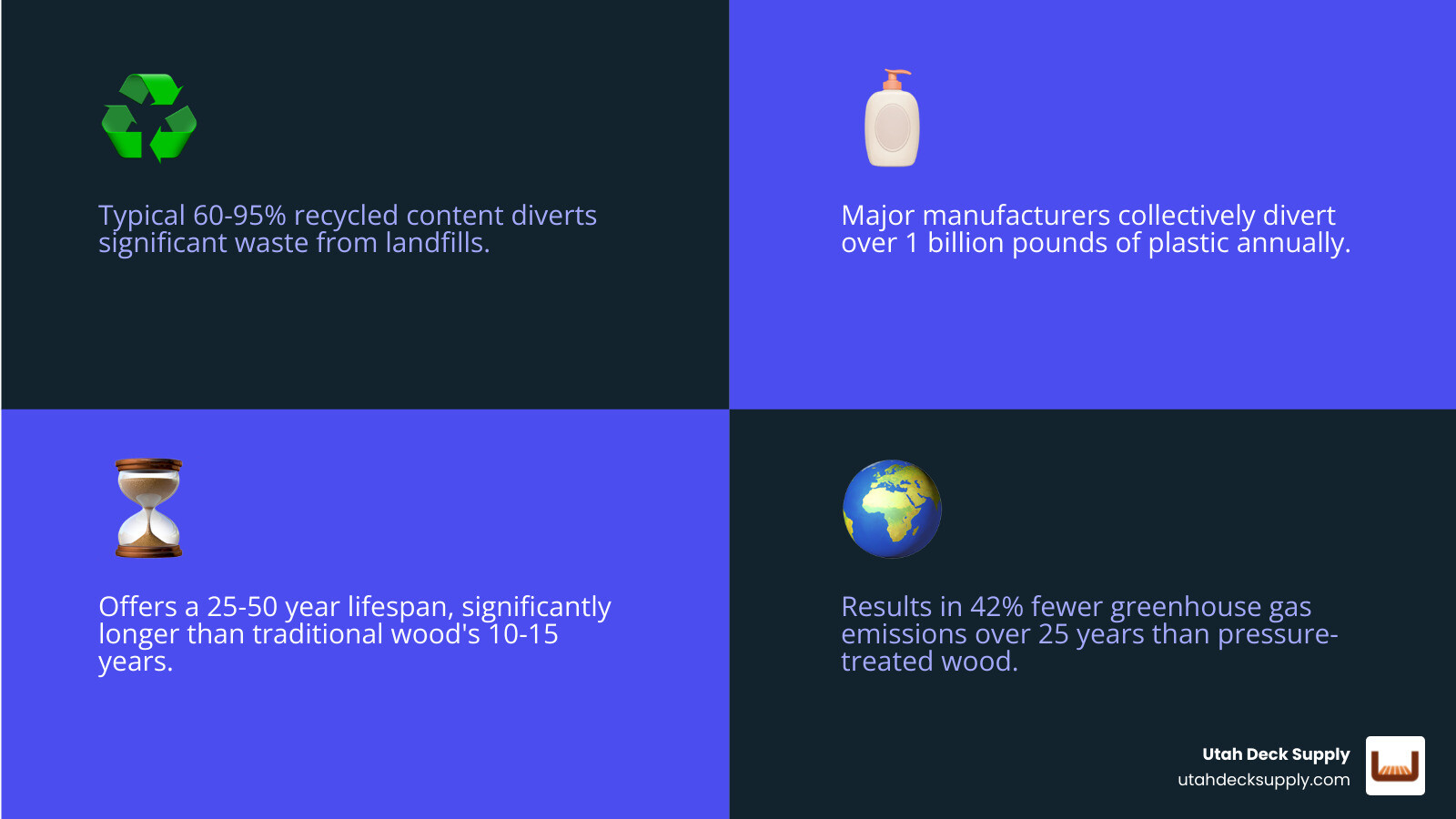
Eco-friendly composite decking offers a sustainable alternative to traditional wood by using recycled materialstypically 60% to 95% recycled plastic and reclaimed woodwhile delivering superior durability and requiring minimal maintenance over a 25+ year lifespan. Here’s what makes it a green choice:
- Recycled Content: Diverts millions of pounds of plastic film, bags, and wood waste from landfills annually
- No Deforestation: Uses reclaimed wood fibers instead of cutting down new trees
- Lower Carbon Footprint: 26-89% lower lifecycle emissions compared to wood decking
- Zero Chemical Treatments: No harmful stains, sealants, or pressure-treated preservatives needed
- Long Lifespan: Lasts 2-5 times longer than wood, reducing replacement waste
Every year, billions of pounds of plastic waste and wood scraps end up in landfillsor worse, our oceans and forests. At the same time, homeowners and contractors are tired of the endless cycle of sanding, staining, and replacing rotted wood decks. Eco-friendly composite decking solves both problems at once.
The numbers tell a compelling story. Trex alone has recycled over 5.5 billion pounds of plastic film since its founding, diverting roughly 1 billion pounds annually from landfills. TimberTech has saved 4 million trees since 2001 and incorporated 2.6 billion pounds of waste into products since 2019. MoistureShield builds boards with 95% recycled contentincluding 100% recycled woodand diverts 125 million pounds of material from landfills every year.
But recycled content is just the beginning. When you factor in the full lifecyclefrom manufacturing to disposalcomposite decking dramatically outperforms traditional lumber. Studies show Trex decking produces 42% fewer greenhouse gas emissions and 86% less acidification compared to pressure-treated wood over 25 years. TimberTech’s Advanced PVC decking has a 26% lower carbon footprint than pine and an 89% lower footprint than Brazilian Ipe.
The reality is simple: choosing eco-friendly composite decking means you’re not just building a deckyou’re actively keeping plastic out of oceans, saving trees from being cut down, and reducing the toxic chemicals that leach into soil and water from treated lumber.
I’m James Bonham, co-founder of Utah Deck Supply, and during my years at Trex Companyone of the world’s leading composite manufacturersI saw how eco-friendly composite decking transforms waste into durable, beautiful outdoor spaces. Now, at our specialized showroom in Utah, I help contractors and homeowners select sustainable decking that stands up to our extreme climate while making a real environmental impact.
What Makes Eco-friendly Composite Decking a Green Choice?
Choosing eco-friendly composite decking means diverting waste from landfills, saving trees, and reducing harmful chemical treatments, all while building a deck that outlasts traditional wood by decades. Instead of ending up in landfills or oceans, recycled plastics and reclaimed wood are transformed into durable, beautiful boards that can handle Utah’s weather. This represents a fundamental shift in how we think about building materials.
Understanding the Materials in Eco-friendly Composite Decking
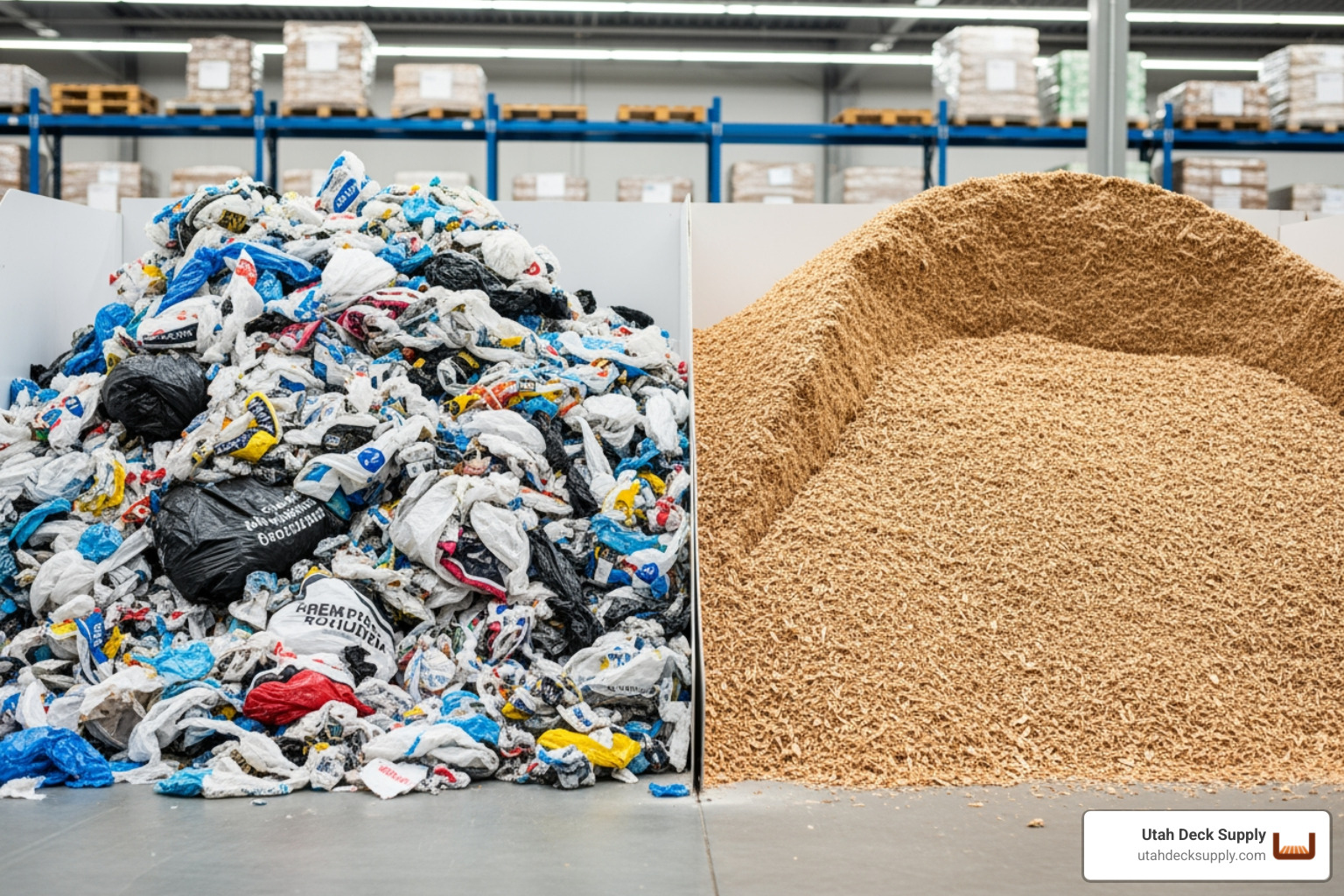
The magic of composite decking is its blend of reclaimed wood fibers and recycled plastics. Quality eco-friendly composite decking contains 60% to 95% recycled materials, with some brands hitting the 95% mark, meaning almost nothing comes from virgin resources.
The reclaimed wood fibers are sawdust and scraps rescued from industrial waste streams. Some manufacturers use 100% recycled wood fiber, meaning no trees were cut down for your deck boards.
The recycled plastics are equally important. The Healthy Building Network recommends products with high post-consumer recycled content, especially high-density polyethylene (HDPE) and low-density polyethylene (LDPE). These come from milk jugs, detergent bottles, and grocery bags.
Trex alone recycles about 1 billion pounds of plastic film annually—materials that would otherwise clog landfills. Understanding that your deck is keeping millions of pounds of waste out of landfills while giving you a product that lasts 25-50 years makes the choice clear. Learn more in our guide on Benefits of choosing recycled plastic decking.
How Manufacturing Contributes to Sustainability
Leading manufacturers design their processes with sustainability at the core. Many use closed-loop water filtration systems that recycle approximately 97% of water used in production. Some companies reuse 99% of their internal scrap, turning production offcuts back into new boards, often with ISO14001 compliance for environmental management.
Modern facilities also optimize energy use, resulting in a significantly lower carbon footprint than traditional wood decking. Another benefit is reduced VOCs (volatile organic compounds), as composite decking requires no chemical sealants, stains, or paints. This improves air quality for your family and your neighborhood.
These practices align with the principles of sustainability, balancing environmental protection with long-term thinking. You can explore more about this on More on sustainability’s importance. Visit our showroom to see how different brands stack up on environmental performance.
Composite vs. Traditional Wood: A Lifecycle Comparison
When comparing eco-friendly composite decking to traditional wood, the long-term environmental and practical differences are striking. It’s about understanding the entire journey, from production to performance over decades of use.
Durability and Longevity
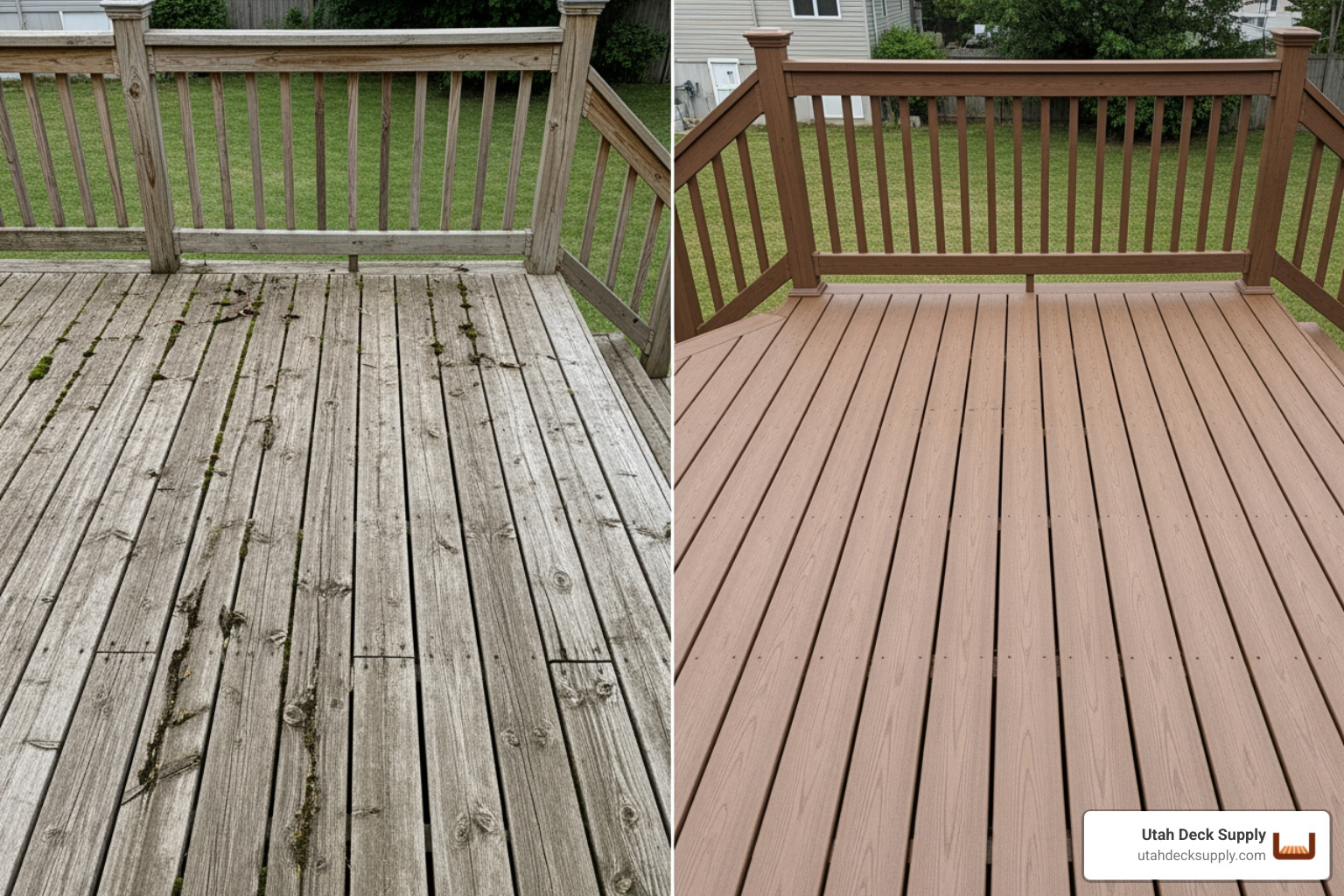
Composite decking’s incredible lifespan and minimal maintenance directly translate to a lower environmental impact. Composite decks typically last 25 to 50 years, backed by impressive manufacturer warranties. For example, Trex offers 25-year limited residential warranties, while some premium lines boast 50-year warranties.
In contrast, traditional wood decks usually last 10-15 years, even with diligent maintenance. Achieving a longer life with wood requires significant upkeep and often involves exotic hardwoods with a larger environmental footprint. Composite’s longevity comes from its resistance to rot, insects, warping, and splintering. Brands like MoistureShield have proven their durability with zero structural field failures in over 30 years. This inherent resistance eliminates the need for harmful chemical treatments.
Many eco-friendly composite decking products also include fade and stain warranties, ensuring your deck retains its beauty for decades with only simple cleaning, reducing chemical runoff. For more insights, see our article on Maximizing your decks lifespan: Tips for durable decking.
The Long-Term Impact of Eco-friendly Composite Decking
The long-term environmental impact of composite is significantly lower than wood. A huge win is that no chemical sealants, stains, or paints are needed. Traditional wood decks require regular treatments containing VOCs that can leach into soil and groundwater. Composite decking only needs a simple soap-and-water cleanup.
Lifecycle assessments show composite has a smaller carbon footprint. Trex decking results in 42% fewer greenhouse gas emissions over 25 years compared to pressure-treated lumber. TimberTech Advanced PVC decking has a 26% lower lifecycle carbon footprint than pine and an 89% lower footprint than Brazilian Ipe.
Environmental benefits also include reduced acidification and other pollutants. Trex decking shows 86% less acidification and 54% less smog compared to pressure-treated lumber over 25 years. By lasting longer, composite decks also generate less waste. A single composite deck can outlast two or three wood decks, dramatically reducing landfill contributions.
Considering the full picture, eco-friendly composite decking is the clear winner for the environmentally conscious homeowner. For maintenance advice, visit our guide on Deck maintenance tips: Keeping your investment in top shape. To weigh your options further, see our comparison at Composite decking vs wood: Which is best?.
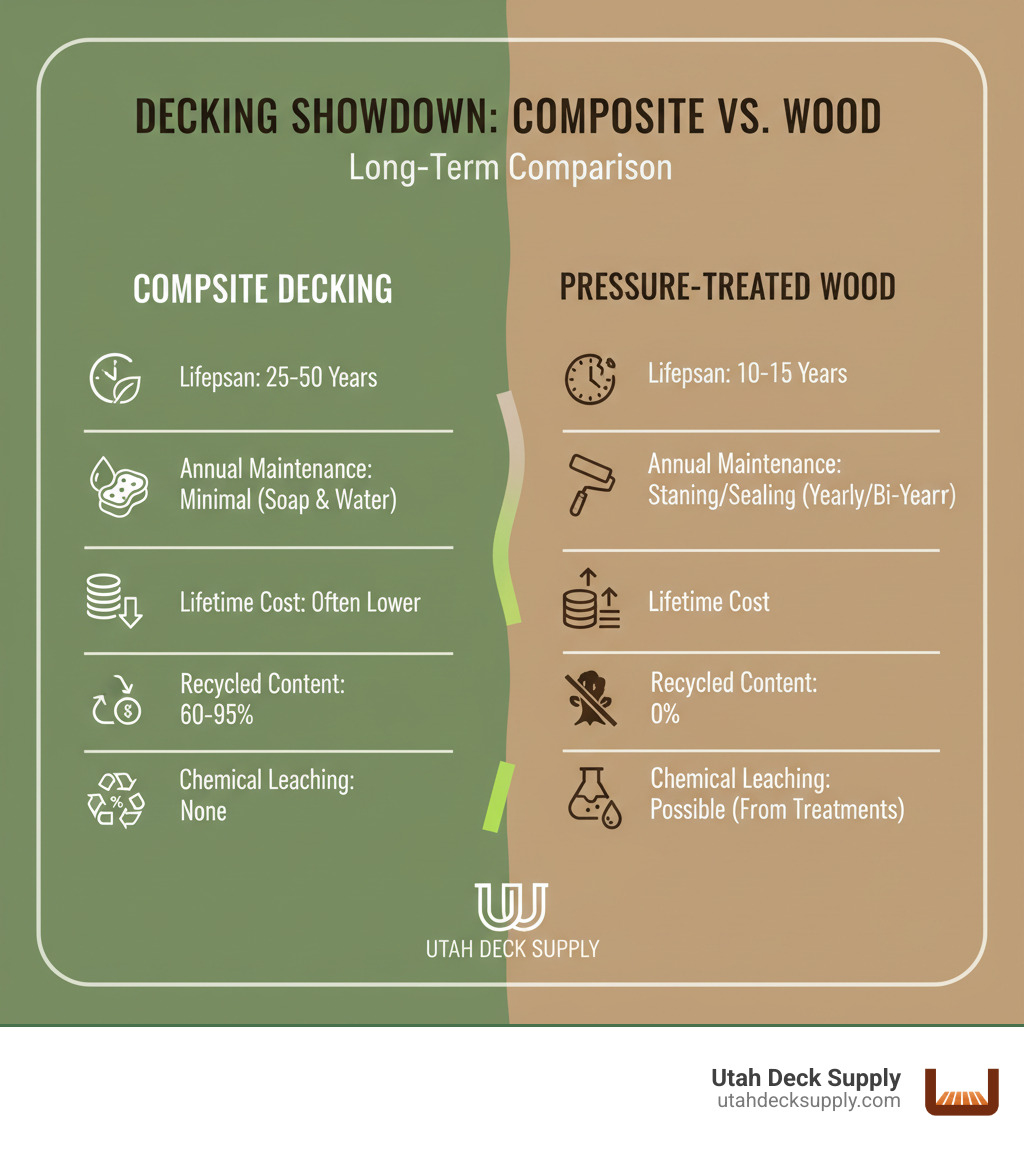
| Feature | Eco-friendly Composite Decking | Pressure-Treated Wood Decking |
|---|---|---|
| Lifespan | 25-50 years | 10-15 years |
| Annual Maintenance | Minimal (soap & water) | Staining/sealing (yearly/bi-yearly) |
| Lifetime Cost | Often lower (due to low maintenance) | Higher (due to maintenance & replacement) |
| Recycled Content | 60-95% | 0% |
| Chemical Leaching | None | Possible (from treatments) |
| GHG Emissions (25 yrs) | Significantly Lower | Higher (e.g., 42% more for Trex vs. PT) |
| Deforestation Impact | None (uses reclaimed wood) | High |
How to Choose a Truly Sustainable Decking Option
Not all eco-friendly composite decking is created equal. Knowing what to look for helps you separate genuine sustainability from clever marketing. Some products are far greener than others, so let’s break down how to spot the real deal.
Types of Green Composite Decking
Understanding the different types helps you match the right product to your priorities.
- Capped composite decking is the industry gold standard. A protective polymer shell wraps the core, creating a barrier against moisture, stains, and UV damage. This extends the deck’s lifespan to 50 years or more, which is the ultimate form of sustainability.
- Uncapped composite decking is a more budget-friendly option. While still a major upgrade from wood, it’s more vulnerable to fading and staining over time and may require more cleaning.
- PVC decking contains no wood fibers, making it exceptionally resistant to moisture and mold. Brands like TimberTech’s Advanced PVC line have a low lifecycle carbon footprint and often stay cooler to the touch, which is ideal for Utah’s hot summers.
Each type has its place, depending on your needs and budget. For a deeper dive, check out our The ultimate guide to PVC decking.
Certifications and Company Initiatives
A manufacturer’s commitment to sustainability is revealed through its certifications and programs.
- Recycled Content Verification: Look for clear statements on recycled content, especially post-consumer content (from household waste), which has a greater environmental impact. The Healthy Building Network recommends products with over 80% post-consumer content.
- Company Transparency: Reputable manufacturers share sustainability reports with measurable results. Vague claims are a red flag.
- LEED Contributions: Many composite products can help your project earn LEED (Leadership in Energy and Environmental Design) points. Trex products can contribute up to four points, and TimberTech’s parent company, AZEK, actively supports LEED projects. Learn more at Learn about LEED certification.
- Manufacturer Recycling Programs: Initiatives like TimberTech’s FULL-CIRCLE program and Trex’s NexTrex Recycling Challenge create a circular economy by collecting materials for reuse.
- End-of-Life Options: Leading manufacturers are now designing for recyclability and implementing take-back programs. Ask about these options when choosing a product.
At Utah Deck Supply, we’ve done the homework for you, stocking products from companies with proven environmental track records. For comprehensive guidance, visit The ultimate guide to choosing composite decking.
Frequently Asked Questions about Green Decking
Utah homeowners often ask great questions about making smart, sustainable choices. Here are answers to the most common ones about eco-friendly composite decking.
What percentage of recycled material is best?
Look for the highest possible percentage of recycled content—ideally over 80% and up to 95%. Top brands like MoistureShield and NewTechWood achieve this 95% mark. Also, prioritize products with high post-consumer content (from household waste like milk jugs), as recommended by the Healthy Building Network (HBN). This shows a true commitment to diverting waste from landfills and oceans.
Can composite decking be recycled at the end of its life?
The answer is getting better every year. While older composites were difficult to recycle, the industry is improving rapidly. Leading manufacturers are now designing for recyclability and creating take-back programs. For example, AZEK (TimberTech’s parent company) has a “FULL-CIRCLE” program to keep its products out of landfills. As technology advances, recycling options will become even more accessible.
Does “eco-friendly” mean more expensive?
The upfront cost of eco-friendly composite decking can be higher than pressure-treated pine, but the total cost of ownership is often lower. When you factor in the savings from zero staining, sealing, or board replacements over a 25+ year lifespan, composite decking becomes a smart financial investment. You save money on materials and labor year after year, making it the more economical choice in the long run.
Conclusion: Build a Better Backyard for a Better Planet
Building a deck is about creating a space for lasting memories. When you choose eco-friendly composite decking, you ensure that space is as good for the planet as it is for your family. The choice is clear: select materials with high recycled content and a 25+ year lifespan to avoid the endless cycle of waste, deforestation, and chemical treatments associated with traditional wood.
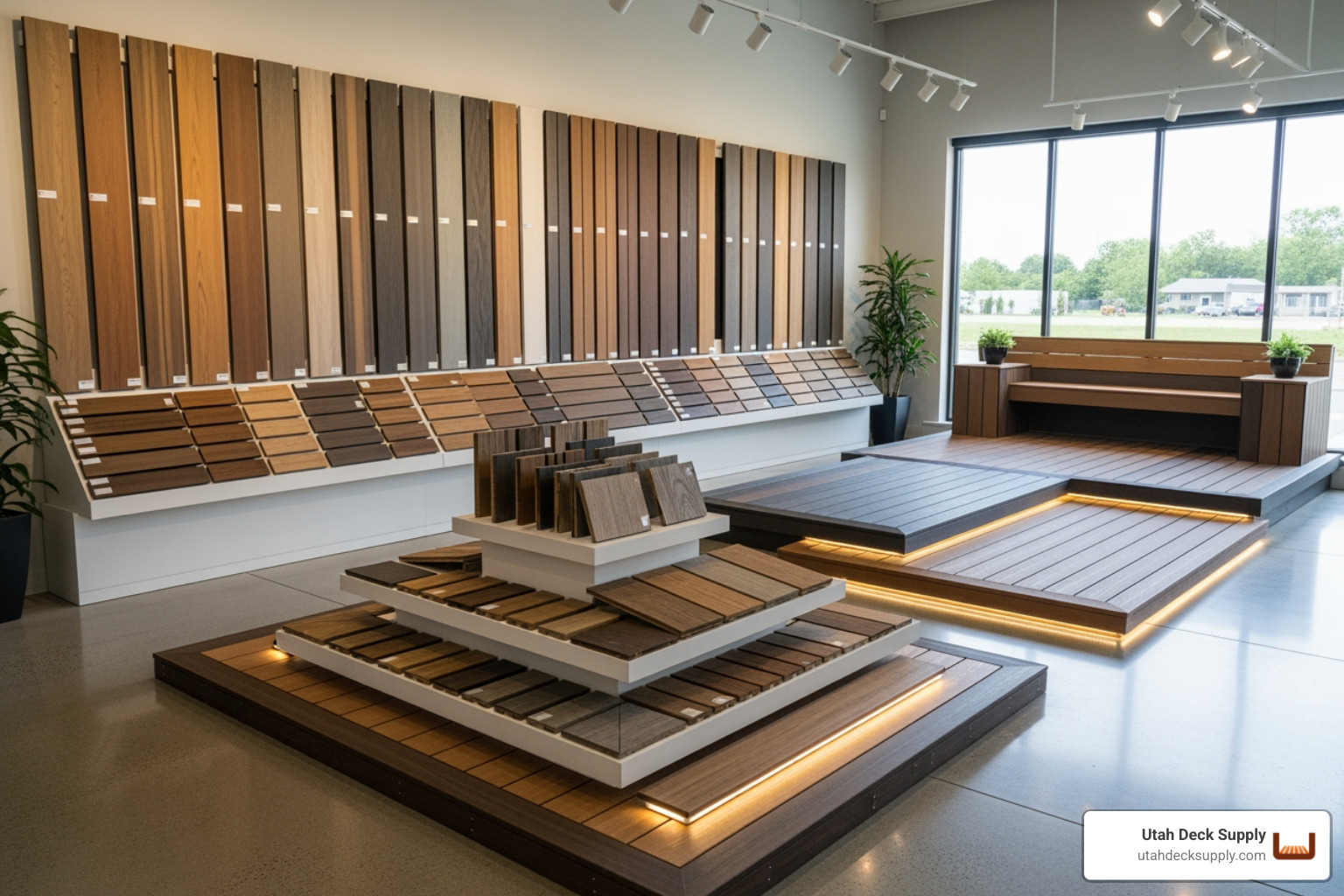
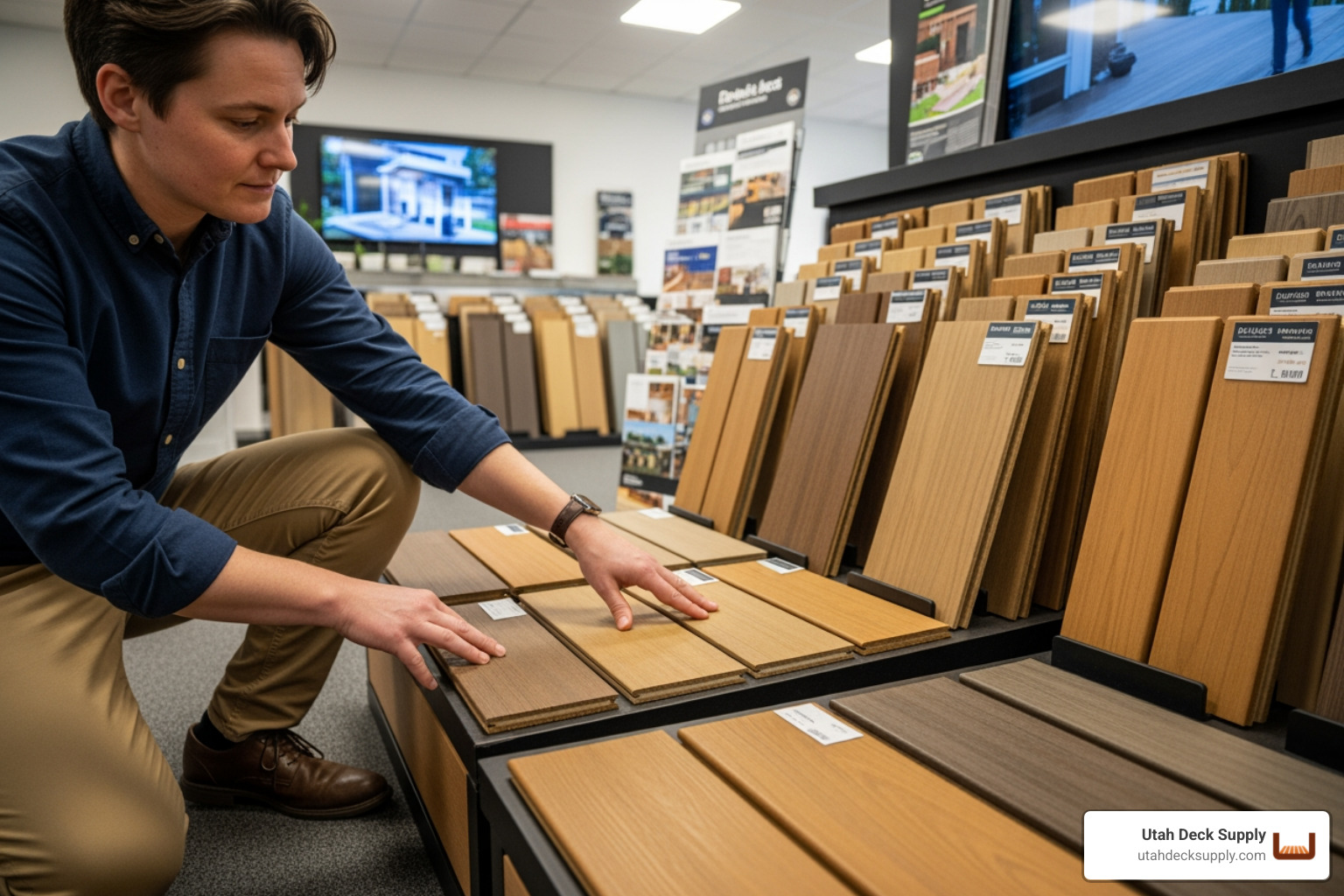
Utah’s climate demands materials that can withstand scorching sun and harsh freezes. At Utah Deck Supply, we specialize in products that perform beautifully in our unique conditions while meeting high environmental standards. Our West Jordan showroom lets you see and feel the quality, compare options in natural light, and get honest answers from true experts.
James and Justin founded our company to provide the expert guidance that big-box stores lack. When you visit us, you partner with specialists who care about your project’s success and its environmental impact.
Ready to create a beautiful, durable, and sustainable outdoor space? Visit our showroom to explore the best green decking options. We’ll help you select the perfect materials for your vision and budget, so we can build a better backyard—and a better planet—together. See what’s in store by checking out our Explore our showroom gallery.