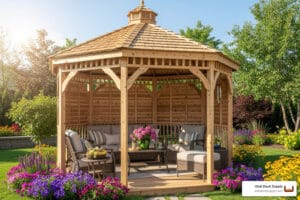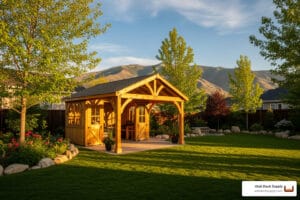
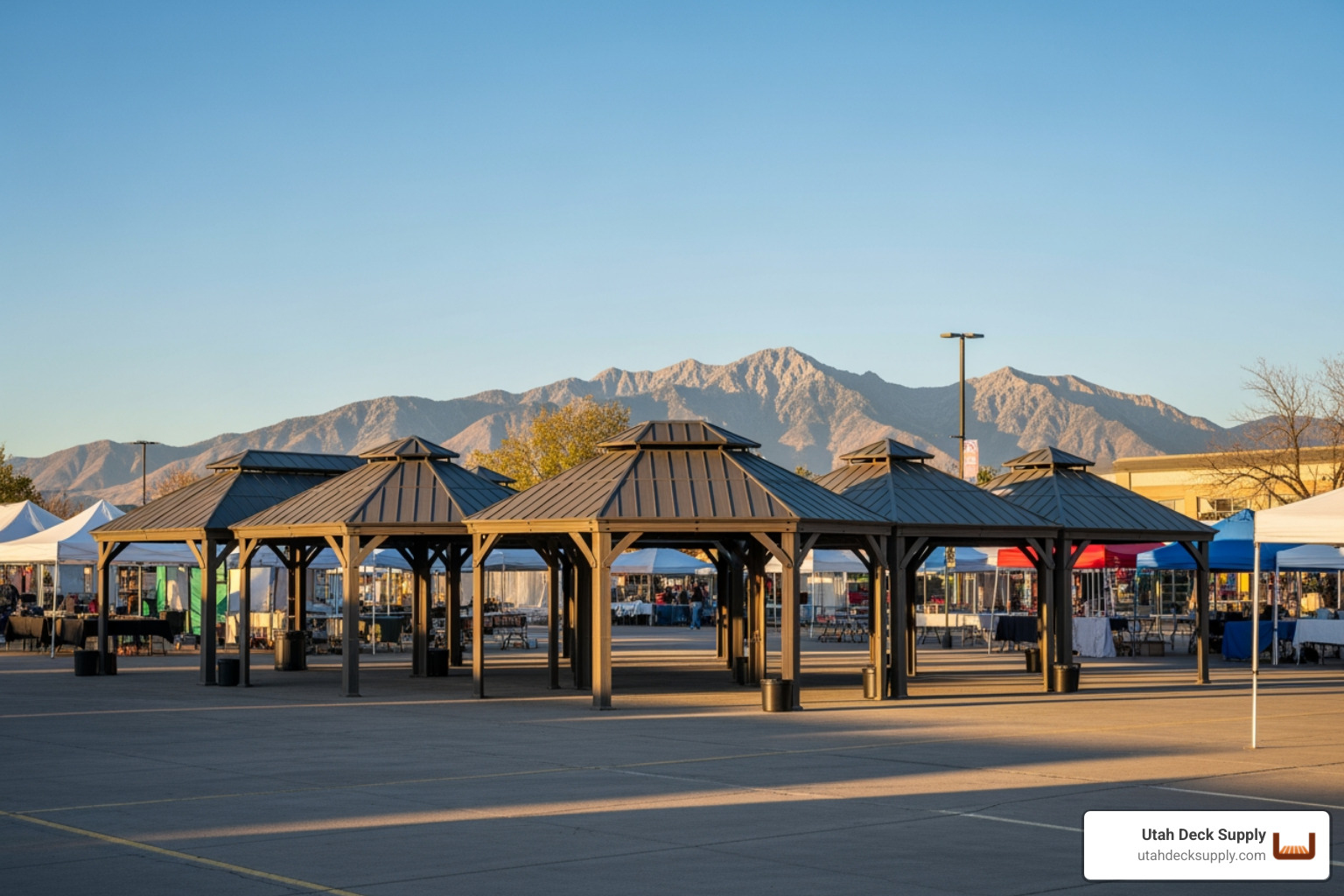
Honestly, trying to host a large outdoor gathering with two separate gazebos often leads to a “gap of doom” where rain pours through and guests get soaked. You know what? You can fix that easily with gazebo joining kits, which allow you to create a massive, unified sheltered space for any event.
Introduction
Let me explain how these simple accessories can transform your outdoor setup into a professional-grade venue. When you are hosting a backyard graduation in Provo or setting up a vendor booth in downtown Salt Lake, space is your most valuable commodity. But simply pushing two gazebos together doesn’t cut it. Without the right hardware, you end up with a structural nightmare and a literal waterfall between the frames the moment a Utah mountain shower rolls in. According to National Weather Service data, Utah’s microclimates can produce sudden downpours that catch even the best hosts off guard.
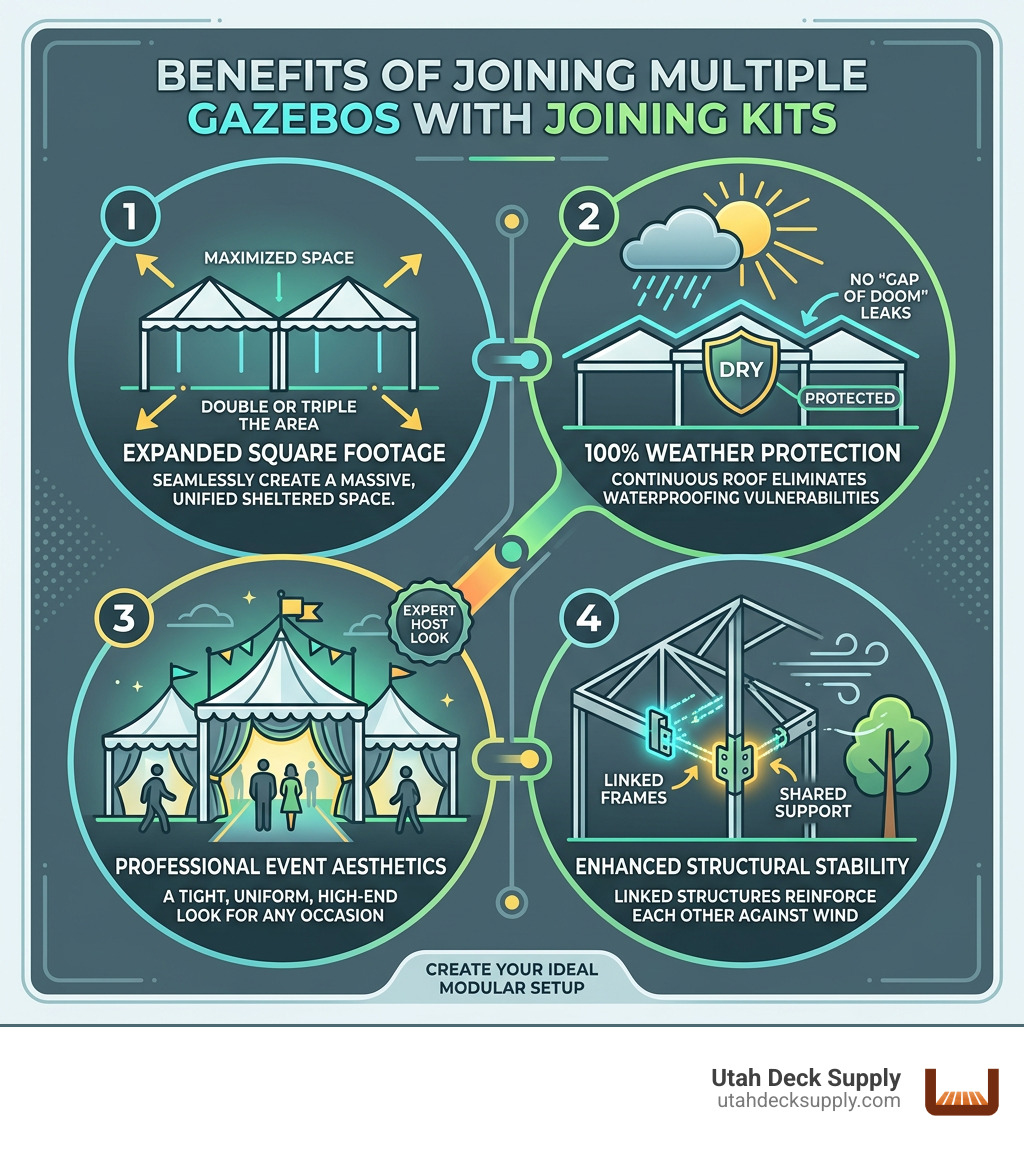
By using gazebo joining kits, you aren’t just placing two tents next to each other; you are creating a singular, modular structure. This setup provides:
- Expanded Space: Seamlessly double or triple your square footage.
- Weather Protection: No more “gap of doom” leaks.
- Professional Aesthetics: A tight, uniform look that screams “expert host.”
- Structural Stability: Linked frames support one another against wind gusts.
The Ultimate Guide to Gazebo Joining Kits
Choosing the right kit depends entirely on your frame type and how permanent you want the setup to be. Most kits focus on two areas: the “skeleton” (the metal frame) and the “skin” (the fabric canopy).
Comparison of Joining Methods
| Method | Best For | Frame Type | Ease of Use |
|---|---|---|---|
| Joining Clamps | Structural Rigidity | 40mm/50mm Hex or Square | High |
| Zipped Strips | Waterproofing Walls | Heavy Duty Pop-ups | Moderate |
| Velcro Straps | Quick Temporary Joins | Trader Steel Frames | Very High |
| Gutter Kits | Water Management | All Models | Essential |
Types of Gazebo Joining Kits: From Clamps to Velcro
Let me explain the specific hardware you’ll encounter. Honestly, the “best” kit is the one that actually fits your leg profile.
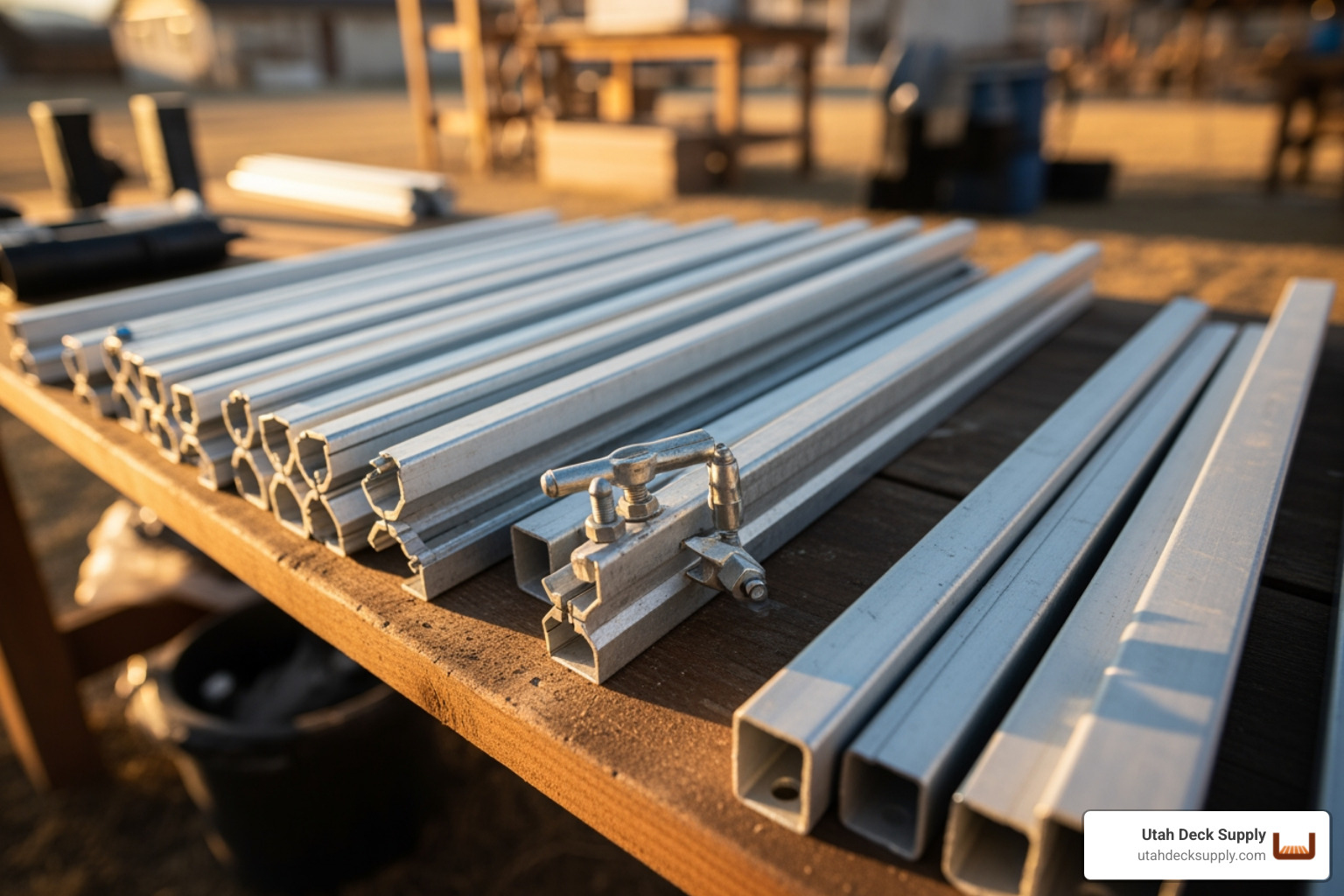
- Joining Clamps: These are the heavy lifters. They usually come in pairs and “sandwich” the legs of two adjacent gazebos. You’ll find specific versions for Aluminium 40 HEX Series (circular fittings for hexagonal legs) and Extreme 40 Series (square fittings for square legs). Prices for a pair of quality clamps usually start around £14.99.
- Zipped Fabric Strips: If you use side walls, these are a game-changer. Instead of having a gap between two walls, these 10cm wide strips zip directly into the existing sidewalls of both gazebos. They often include cutouts for rain gutters to pass through.
- Velcro Joining Straps: These are the “quick-fix” kings. Perfect for mild weather, they wrap around the legs to reduce movement.
- Modular Connecting Kits: High-end kits like the Canopro Elite series often bundle brackets and sidewall pieces together for a factory-finished look.
Compatibility and Sizing for Different Models
Size matters. A gutter kit for a 3m gazebo won’t span the distance of a 6m unit. Here’s what to look for based on common Utah setups:
- 3m Gutter Kits: Standard for most backyard pop-ups; typically priced around £29.99.
- 4.5m and 6m Kits: Essential for larger commercial shelters, ranging from £39.99 to £49.99.
- Frame Material: Steel frames often use different clamp tolerances than aluminum. If you are using a Top 10 Pop-up Gazebo Kit for Your Backyard, check if the manufacturer offers brand-specific hardware.
- The “Frankenstein” Setup: Trying to join a gazebo from one brand to another? It’s possible, but you’ll likely need universal velcro straps rather than precision-engineered clamps. For more on different structures, check out our Gazebo Kits page.
How to Install Gazebo Joining Kits for a Seamless Finish
Ready to build your “Mega-Zebo”? Follow these steps for a professional result:
- Alignment Planning: Set up both gazebos and position them so the legs are touching (or as close as the footplates allow).
- Bracket Attachment: Place your joining clamps at the top and bottom of the legs. Tighten the screw system until the frames feel like a single unit.
- Install the Gutter: Before the roof is fully tensioned, hook the rain gutter into the valance of both gazebos. Ensure it has a slight slope toward one end for drainage.
- Zip the Strips: If using walls, zip the joining strips to the edges of the side walls.
- Tensioning: Adjust all velcro and zips to ensure there are no sagging pockets where water can collect.
Common Mistake to Avoid: Never join gazebos on uneven ground without adjusting the leg heights first. If the frames aren’t level, the joining clamps will be under constant stress and might snap. For more setup tips, see our Step-by-Step Guide to Gazebo Setup.
Maximizing Your Outdoor Investment
At Utah Deck Supply, we see a lot of DIYers try to “rig” their own solutions. While we love the creativity, the Utah climate—with its sudden wind gusts in Herriman and heavy snow in Logan—requires something more robust. As Utah’s “Deck Super Store,” we provide the professional-grade hardware that big-box stores often overlook.
Using professional gazebo joining kits ensures your investment lasts more than one season. When you connect structures properly, you distribute the wind load across multiple weighted points, making the entire setup safer for your family and guests. If you’re still weighing your options, our Ultimate Guide to Choosing the Best Portable Gazebo Kits can help you pick the right base units to start with.
Integrating Rain Gutters for Superior Water Management
Here’s the thing: the join between two gazebos is basically a funnel for rainwater. Without a gutter, you’re creating a “wet zone” right in the middle of your party.
- How they work: Most gutters use velcro or hooks to attach to the inside of the roof valance.
- Materials: Look for heavy-duty PVC or coated polyester.
- Efficiency: A properly installed gutter will channel water to the outer edges of the structure, keeping the interior 100% dry.
Essential Accessories for Stability and Safety
Joining two gazebos creates a larger “sail” area for the wind to catch. You must increase your anchoring accordingly.
- Leg Weights: We recommend at least 20kg H-shaped steel weights for each leg, especially at the corners.
- Tie-Down Kits: Use heavy-duty ratchets rather than simple nylon ropes.
- Infill Kits: These fill the small gaps between the frames for a truly airtight feel.
- Permanent vs. Temporary: While most gazebo joining kits are for temporary events, some high-end brackets can be used for semi-permanent seasonal setups. However, always check local codes if you’re building something more lasting. Check our Gazebo Kits section for permanent wood or metal options.
Honestly, whether you are a weekend warrior or a professional event planner, the right hardware makes all the difference in creating a cohesive outdoor space. If you are ready to expand your backyard oasis or need expert advice on the best materials for the Utah climate, give us a call at 385-993-5492 or Request a Free Quote today.