Are you dreaming of turning your backyard into a true retreat? Choosing the right outdoor living materials is the key to creating a space that’s not only beautiful, but also built to last—so you can spend more time relaxing and less time worrying about upkeep. In this guide, we’ll break down everything you need to know to pick the perfect materials for your outdoor project, from the ground up.
Why Choosing the Right Outdoor Living Materials Matters
When you’re ready to transform your backyard, understanding outdoor living materials is your first step. The right choice means the difference between a space that lasts for decades and one that needs constant repair.
Quick Material Selection Guide:
| Project Type | Top Material Choices | Key Benefits |
|---|---|---|
| Patios & Walkways | Natural stone, concrete pavers, brick | Durable, attractive, variety of styles |
| Decking | Composite, PVC, pressure-treated lumber | Low maintenance, long-lasting, wide color range |
| Railings | Cable, metal, composite, glass | Safety, style, minimal upkeep |
| Ground Cover | Mulch, gravel, crushed stone | Weed control, moisture retention, finished look |
| Structures | Pergola kits, gazebo kits | Shade, defined spaces, increased home value |
Here’s the thing: the materials you pick affect everything from your budget to your weekend free time. Composite decking might cost more upfront than wood, but you won’t be staining it every few years. Natural stone looks amazing and lasts forever, but installation takes skill. Concrete pavers offer a great middle ground—attractive, durable, and DIY-friendly.
You know what? The right materials also depend heavily on where you live. Utah’s extreme temperature swings, intense UV exposure, and freeze-thaw cycles demand materials that can handle serious climate stress. A deck that works in a mild climate might crack and warp here along the Wasatch Front.
I’m James Bonham, co-founder of Utah Deck Supply. I spent years at Trex Company learning the ins and outs of high-performance outdoor living materials before opening Utah’s premier specialized decking and outdoor living superstore. I’ve helped hundreds of contractors and homeowners make these choices to create spaces that look great and stand the test of time.
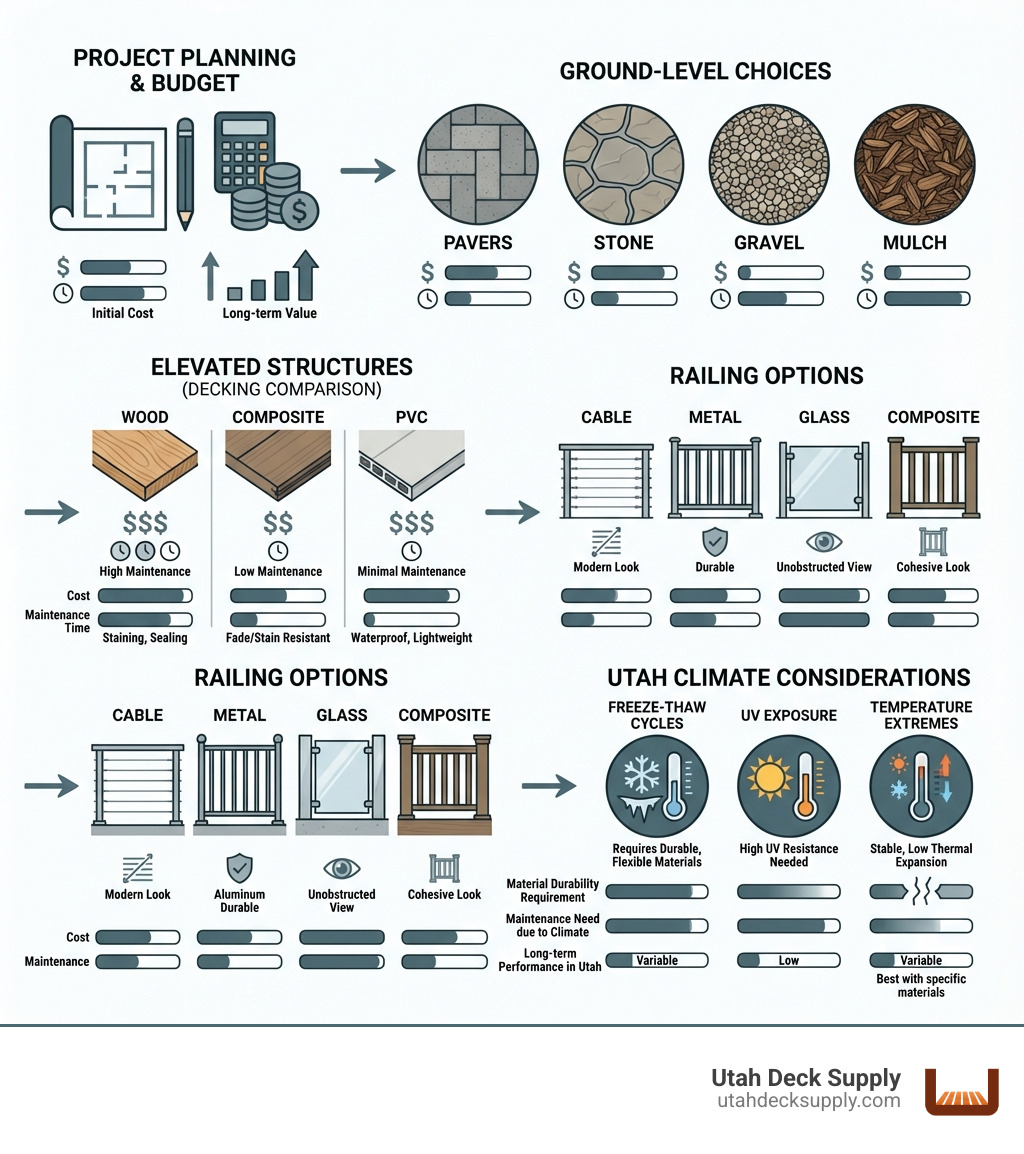
Let me explain something that surprises a lot of first-time builders: your material choices will affect your outdoor space for the next 20 to 50 years. Pick the wrong decking, and you’re looking at constant staining and board replacement. Choose pavers without proper base prep, and you’ll deal with shifting and weeds. Honestly, I’ve seen too many homeowners spend thousands fixing problems that were avoidable from the start.
For professional contractors, the stakes are even higher. Your reputation depends on delivering projects that perform. One callback for premature fading can cost you more than the profit on the entire job.
Material selection impacts:
- Maintenance time and cost – Wood needs annual maintenance; composite needs occasional washing.
- Longevity – Quality materials last 25+ years vs. 10-15 for basic options.
- Property value – High-end outdoor spaces can return 70-80% of their investment.
- Climate performance – Utah’s weather destroys materials not built for it.
- Installation complexity – Some materials require professional installation.
- Total project cost – Lower upfront cost often means higher lifetime expenses.
The good news? Once you understand the basic categories of outdoor living materials and how they perform, the decision becomes straightforward. You’ll know exactly which materials match your budget, maintenance tolerance, and design vision.
Ground-Level Foundations: Hardscape and Landscaping Materials
Changing your backyard often begins at ground level. Hardscaping materials like patios and walkways define your living areas, while landscaping elements like ground covers add the finishing touch. Choosing the right foundation is paramount for beauty and longevity, especially in Utah’s climate.
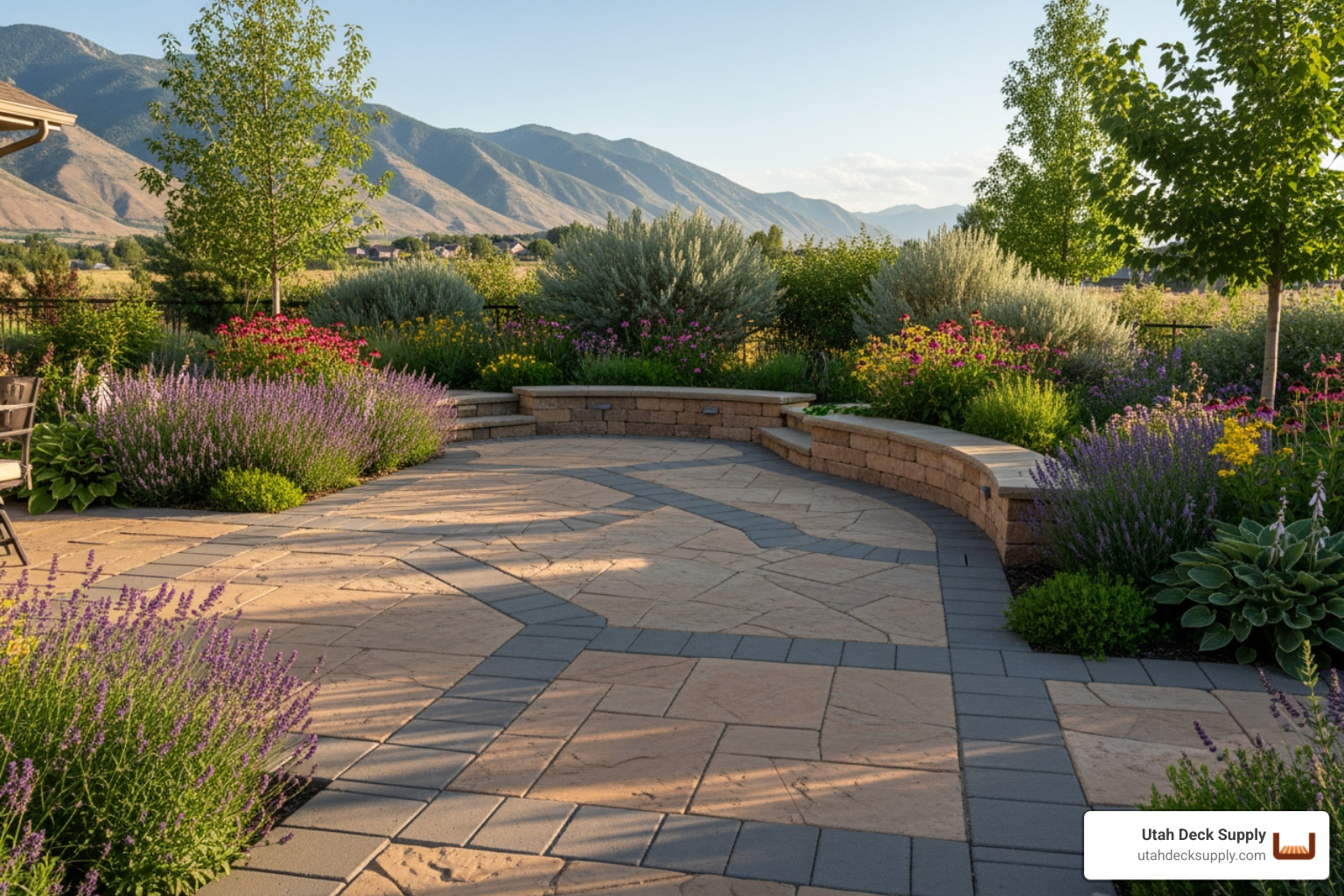
Comparing Patio & Walkway Materials:
When creating patios and walkways, you have several great outdoor living materials to choose from. Let’s look at the pros and cons of the most popular options.
1. Natural Stone: From bluestone to slate, natural stone offers timeless beauty and will likely outlast your home if properly installed.
- Pros: Extremely durable, unique aesthetic, long lifespan.
- Cons: Higher upfront cost, requires professional installation, may need periodic sealing.
2. Concrete Pavers: These modular units are a popular and versatile choice, mimicking everything from brick to natural stone.
- Pros: Versatile designs, individual units can be replaced, good durability, more affordable than stone. Permeable options help manage rainwater runoff.
- Cons: Can shift if not properly installed, weeds can grow between joints.
3. Poured Concrete: For a sleek, modern look, poured concrete offers a continuous surface that can be stamped or stained.
- Pros: Cost-effective, very durable, low maintenance.
- Cons: Can crack over time, repairs can be difficult and unsightly.
4. Brick: A classic material that brings traditional charm to any outdoor space.
- Pros: Timeless look, excellent durability, good traction.
- Cons: Limited color options, can be more expensive than concrete pavers.
Your choice will come down to four key factors: durability against Utah’s freeze-thaw cycles, your tolerance for maintenance, your budget (including installation and long-term upkeep), and the aesthetic that complements your home.
We’re seeing a growing interest in permeable concrete pavers, which allow rainwater to filter back into the soil. This is a fantastic choice for environmentally conscious homeowners looking to manage water effectively.
| Material | Cost (per sq ft, installed) | Durability | Maintenance | Aesthetic Variety |
|---|---|---|---|---|
| Natural Stone | High | Excellent | Moderate | High (unique) |
| Concrete Pavers | Moderate to High | Very Good | Moderate | Very High |
| Poured Concrete | Low to Moderate | Good | Low | Moderate |
| Brick | Moderate to High | Very Good | Moderate | Low to Moderate |
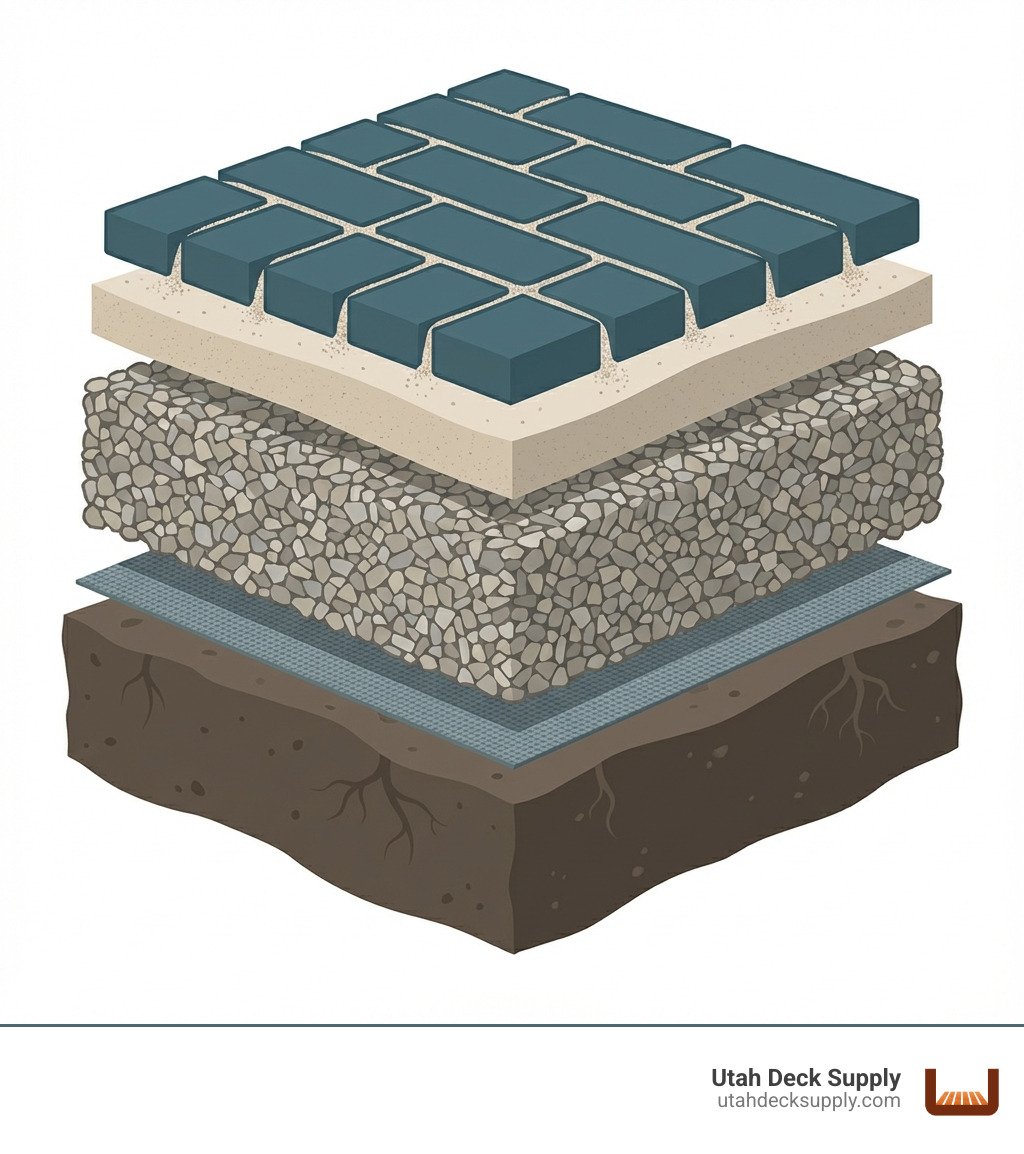
Proper installation is key for any hardscape. This involves excavating, laying a geotextile fabric, installing a compacted gravel base, and adding a sand bed before placing the pavers or stones.
Choosing Ground Covers:
Ground covers play a vital role in soil health, weed suppression, and overall appearance.
Organic Ground Covers (Mulch & Compost)
Organic mulches are heroes for healthy landscapes. They improve soil health as they decompose, suppress weeds by blocking sunlight, and retain moisture—reducing watering needs by up to 50% in dry spells, a huge benefit in Utah.
Inorganic Ground Covers (Gravel & Crushed Stone)
These materials provide a permanent, durable backbone for landscapes. For comprehensive technical guidance, this gravel and crushed stone buying guide provides excellent information.
- Gravel & Crushed Stone: Incredibly versatile for pathways, drainage, and xeriscaping. Angular crushed stone locks together for stable foundations, while smooth pea gravel is comfortable for walking.
- Pavers & Natural Stone: Also serve as excellent ground covers for defining areas or creating low-maintenance borders.
When planning, a cubic yard of most landscaping materials covers about 100 square feet at 2-3 inches deep. If you’re still weighing your options, our guide on Deck vs. Patio: Choosing the Right Outdoor Space for You can offer further clarity.
Liftd Escapes: Decking, Railing, and Overhead Structures
Once your ground-level foundations are set, it’s time to think about liftd spaces. Decking, railing systems, and pergolas transform your backyard into an inviting extension of your home and often become the focal point of your outdoor oasis.
The Great Debate: Wood vs. Composite vs. PVC Decking
Choosing the right decking material is one of the most significant decisions for your outdoor space. It impacts aesthetics, maintenance, and long-term enjoyment. For a deep dive into one of the most popular options, see The Ultimate Guide to Choosing Composite Decking.
1. Wood Decking: The classic choice, offering natural warmth and a timeless look.
- Pros: Natural aesthetic, often lower upfront cost.
- Cons: High maintenance (annual staining/sealing), prone to rot, splintering, and insect damage, shorter lifespan (10-15 years).
2. Composite Decking: A blend of wood fibers and recycled plastics with a durable protective shell.
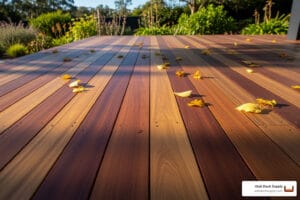
- Pros: Low maintenance (no staining/sealing), highly resistant to rot, insects, fading, and staining, long lifespan (25+ years), many color/grain options.
- Cons: Higher initial cost than wood, can get hot in direct sun.
3. PVC Decking: Made entirely from plastic, offering the ultimate in low maintenance.
- Pros: Extremely low maintenance, highly resistant to moisture, mold, and scratches.
- Cons: Highest initial cost, can feel less “natural” than wood or composite.
While wood has a lower upfront cost, its long-term cost quickly surpasses composite or PVC when you factor in annual maintenance—both in money and time. For more comparisons, check out our articles: Composite Decking vs. Wood: Which is Best?, The Ultimate Guide to PVC Decking, and Best Lumber for Durable Decks.
Finishing Touches: Railing Systems, Pergolas, and Furniture
These elements improve safety, comfort, and style, truly completing your outdoor living experience.
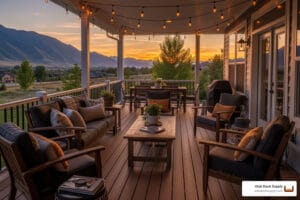
Railing Systems: Railings are a crucial design and safety element. We offer a wide range of styles:
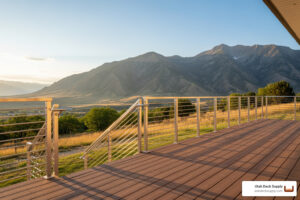
- Cable Railing: Modern aesthetic with an unobstructed view.
- Metal Railing: Durable and strong, with options like Fortress Steel and Aluminum.
- Composite Railing: Offers a cohesive look with composite decking and minimal upkeep.
- Glass Railing: Provides a completely open view, perfect for Utah’s landscapes.
- The Ultimate Guide to Choosing the Perfect Deck Railing System can help you explore all the options.
Pergolas and Gazebos: These overhead structures provide shade and define outdoor “rooms.”
- Pergola & Gazebo Kits: Available in wood, vinyl, or metal, these kits are a DIY-friendly way to add shade and structure. Learn more in our guide, Master Your Backyard: The Ultimate Guide to DIY Pergola Kits.
- Shade Mesh: Integrating high-performance shade mesh like SunTex 80® blocks 80-90% of the sun’s heat and glare, protecting furniture from UV damage.
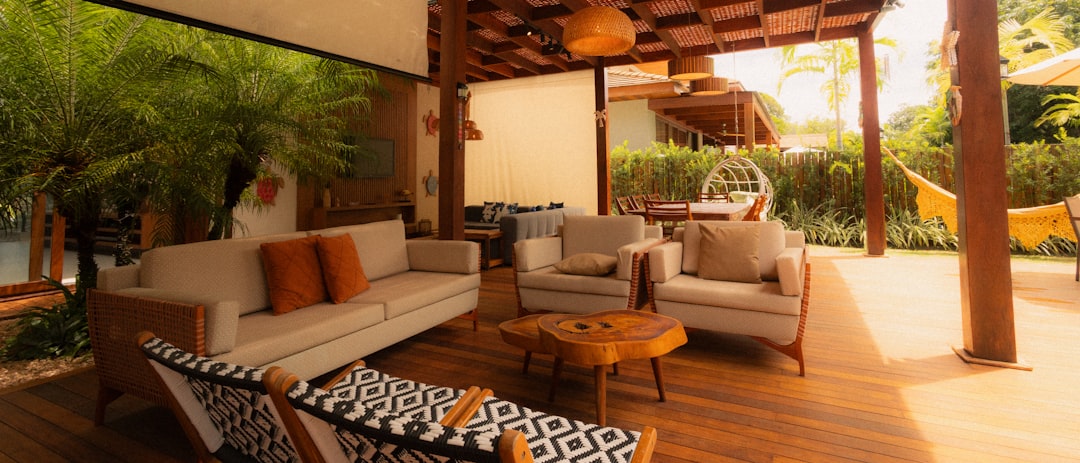
Outdoor Furniture: Your furniture materials need to be as resilient as your deck.
- Recycled Plastic Lumber (e.g., POLYWOOD): A fantastic option for durability and sustainability. Made from recycled plastic, it’s weather-resistant, easy to clean, and won’t fade, backed by a 20-year warranty.
- Cast Aluminum: Lightweight, durable, and rust-resistant, making it a popular choice for dining sets.
- Marine Grade Polymer (MGP): A durable, recyclable material that resists warping and fading, making it highly suitable for outdoor use.
Your Guide to Selecting the Best Outdoor Living Materials
Choosing the right outdoor living materials is about balancing your dream space with practical considerations that ensure its longevity. At Utah Deck Supply, we pride ourselves on helping homeowners and contractors steer these choices with expert guidance custom to our unique Utah environment.
Factoring in Climate, Maintenance, and Your Budget
Let’s get down to the nitty-gritty. Utah’s climate is no joke. When selecting materials, you must account for these key factors:
- Freeze-Thaw Cycles: Water seeps into cracks, freezes, and expands, breaking down materials over time. Proper drainage and material choice are non-negotiable.
- UV Exposure: Our high altitude means intense UV radiation that causes fading. Look for materials with built-in UV inhibitors, like capped composite decking or POLYWOOD furniture.
- Low-Maintenance Choices: Do you want to relax or do chores? Low-maintenance materials like composite and PVC decking save you countless hours compared to wood. Our Low Maintenance Deck Boards Guide has more.
- Upfront vs. Lifetime Cost: Don’t just look at the sticker price. A cheaper material might cost more in the long run. Composite decking’s higher upfront cost is often offset by decades of minimal maintenance expenses.
- DIY vs. Professional Installation: Your skill level matters. While some kits are DIY-friendly, complex projects often benefit from a pro to ensure safety and longevity. Our article DIY vs. Professional Deck Installation can help you decide.
The best outdoor living materials for your project will perform well in Utah, fit your maintenance tolerance, and align with your total budget.
Creating Your Dream Space and Boosting Property Value
Your outdoor space is an investment in your lifestyle and your property’s value. A well-designed outdoor living area can significantly improve curb appeal and offer a substantial return on investment.
Think about how you want to use your space—for dining, lounging, or cooking—and choose materials that help define these functional zones and create the aesthetic you desire. High-quality materials and thoughtful design make a lasting impression and are highly sought after by potential home buyers.
At Utah Deck Supply, we are dedicated to helping you create a functional and beautiful outdoor area that adds lasting value. As Utah’s “Deck Super Store,” we offer unparalleled expertise and a deep, in-stock inventory of top brands like Trex, TimberTech, Deckorators, and Fiberon. We also carry complete railing systems, hardware, footings, and pergola kits.
We serve homeowners and contractors across Salt Lake City, West Jordan, Ogden, Provo, St. George, and beyond, providing the better expertise, materials, and support you won’t find at big-box stores. Our team offers in-person guidance on materials, codes, and installation best practices to ensure you get maximum value from your investment. Your dream outdoor space is within reach, and we’re here to help you build it right.
To start planning, explore our full range of products to get started.