Why Smart Material Choices Matter More Than Rock-Bottom Prices
Affordable deck materials are easier to find than most homeowners think, but choosing the right one means balancing upfront cost, long-term durability, and maintenance. You know what? The cheapest board at the lumberyard isn’t always the smartest buy if you’re replacing it in five years or spending every summer sanding and staining.
Quick Answer: Top Affordable Deck Materials
| Material | Cost per Sq. Ft. | Lifespan | Maintenance Level |
|---|---|---|---|
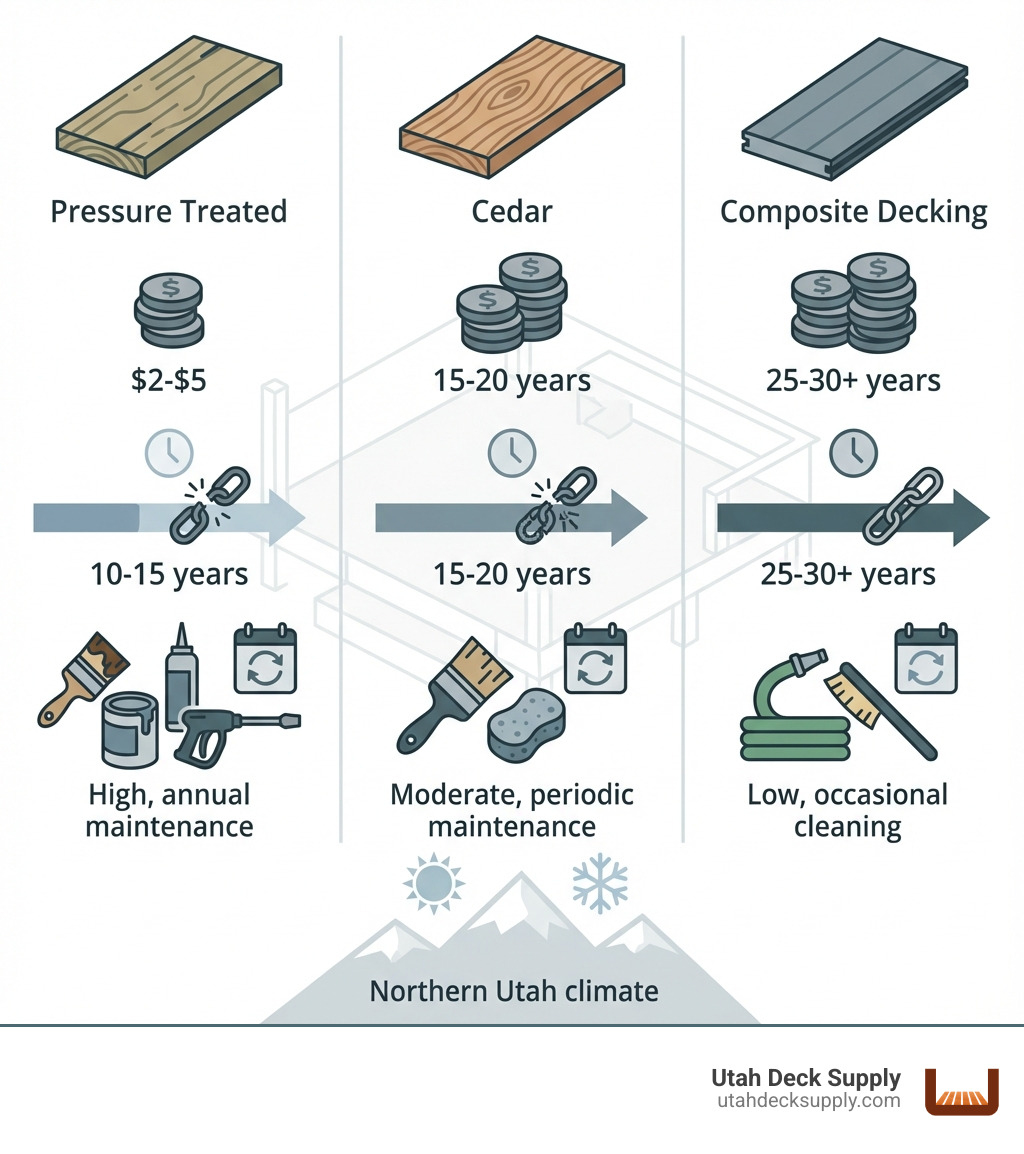
| Pressure-Treated Wood | $2–$5 | 10–15 years | High (annual staining/sealing) |
| Cedar Wood | $3–$8 | 15–20 years | Moderate (periodic treatment) |
| Entry-Level Composite | $4–$7 | 25–30+ years | Low (occasional cleaning) |
Here’s the thing: building a deck is one of the best investments you can make in your home’s outdoor living space and resale value. But most homeowners start by asking the wrong question—”What’s the cheapest deck board?”—instead of “What gives me the best value over time?”
Let me explain. A pressure-treated deck might cost $2 per square foot upfront, but if you’re spending $400 every year on stain, sealer, and your own labor, that “cheap” deck gets expensive fast. Meanwhile, an entry-level composite at $5 per square foot needs almost no maintenance and can last three decades. The math changes everything.
The research backs this up. According to multiple industry sources, pressure-treated lumber remains the most budget-friendly option at around $2.25–$5 per square foot, while cedar sits in the middle at $3–$8, and starter composite decking ranges from $4–$7. But those numbers only tell part of the story—you also need to factor in lifespan, climate resistance, and the hidden costs of permits, labor, fasteners, and ongoing upkeep.
Honestly, Utah’s extreme climate makes material choice even more critical. Intense summer sun, freeze-thaw cycles, and low humidity can wreak havoc on the wrong decking. That’s why we’re here to help you cut through the noise.
I’m James Bonham, co-founder of Utah Deck Supply and a former product specialist at Trex Company, where I spent years helping contractors and homeowners steer affordable deck materials. At Utah Deck Supply, we’ve made it our mission to take the guesswork out of deck building by offering expert guidance, hands-on material comparisons in our showroom, and real-world advice custom to Utah’s unique conditions.
Affordable deck materials word roundup:
A Head-to-Head Look at Affordable Deck Materials
When we talk about affordable deck materials, we’re not just looking for the lowest price tag. We’re looking for the best bang for your buck—materials that offer a great balance of initial cost, durability, and manageable maintenance. Let’s explore the top contenders.
Pressure-Treated Wood: The Undisputed Budget King
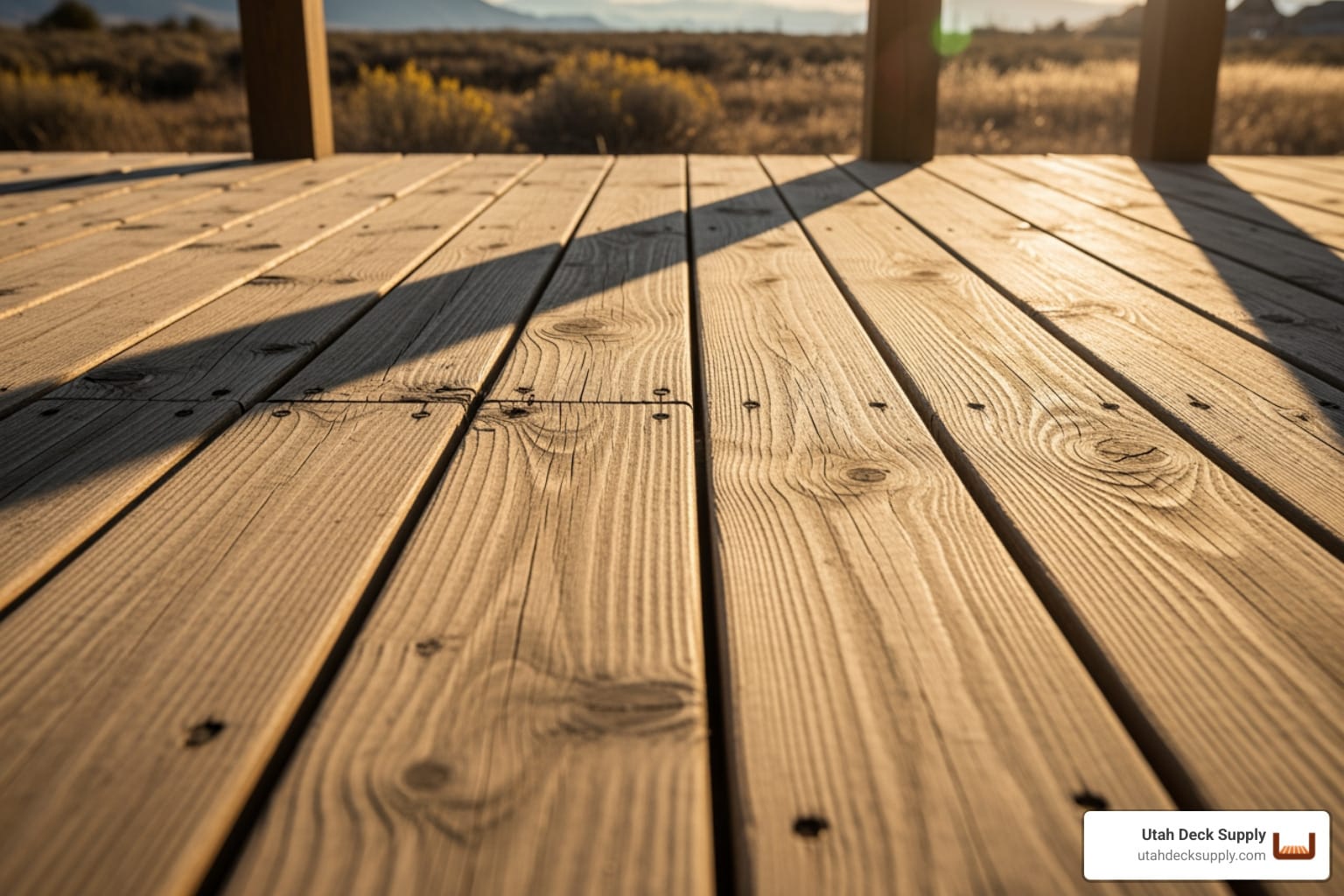
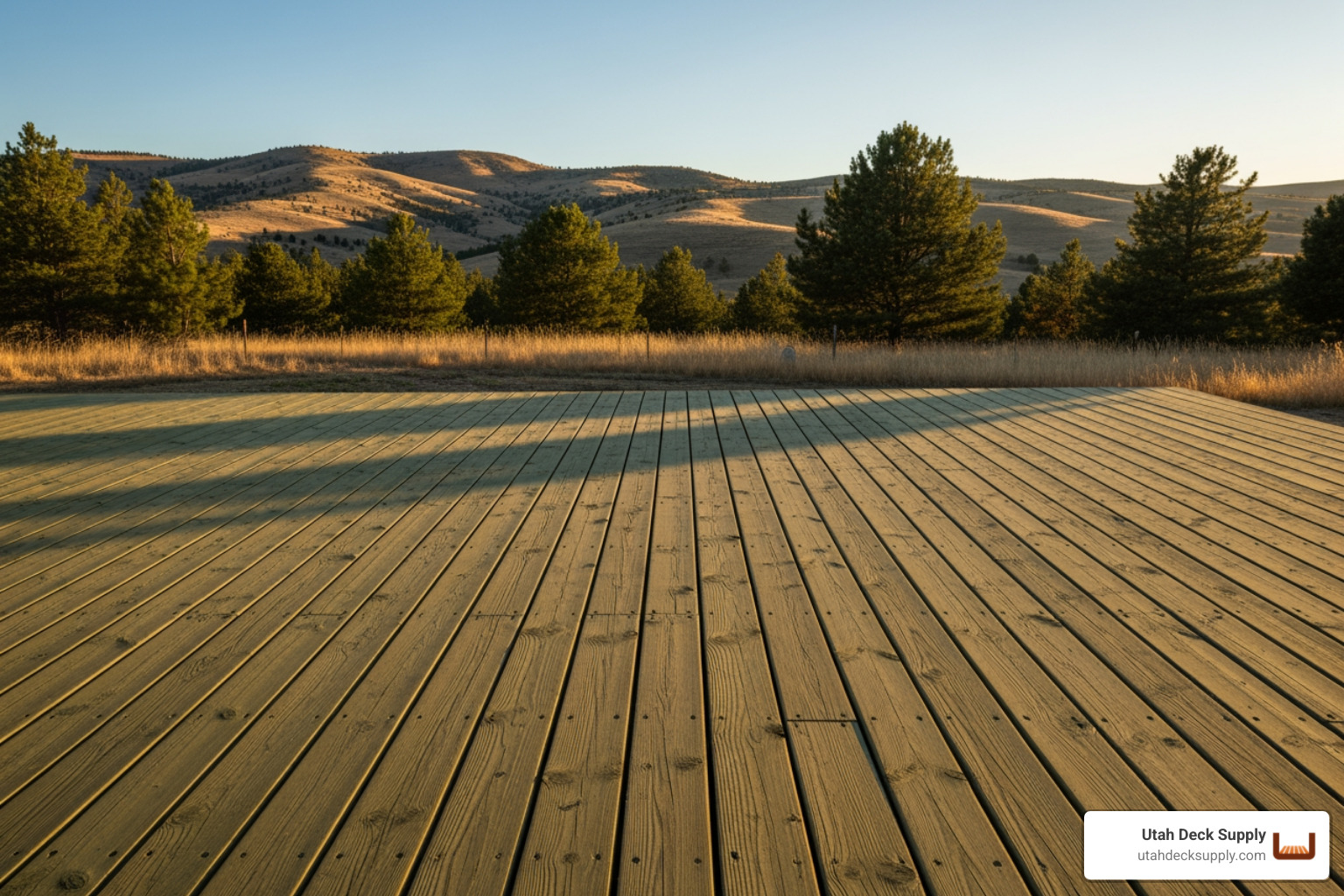
If upfront cost is your main concern, pressure-treated (PT) wood is the top choice, starting at just $2-$5 per square foot. While a PT deck can last 10-15 years, this longevity depends on significant maintenance. It requires annual washing and sanding, plus sealing or staining every few years to prevent warping, cracking, and rot, especially in Utah’s climate.
- Pros: Lowest initial cost, readily available, resists rot and insects due to chemical treatment.
- Cons: High maintenance, prone to warping and cracking, contains chemicals, and has a less premium look.
Pressure-treated wood is treated with chemicals to resist rot, insects, and moisture, making it durable and perfect for outdoor use. For more in-depth information, you can explore What is pressure-treated lumber? and our own The Ultimate Guide to Softwood Decking.
Cedar Wood: The Natural, Mid-Range Beauty
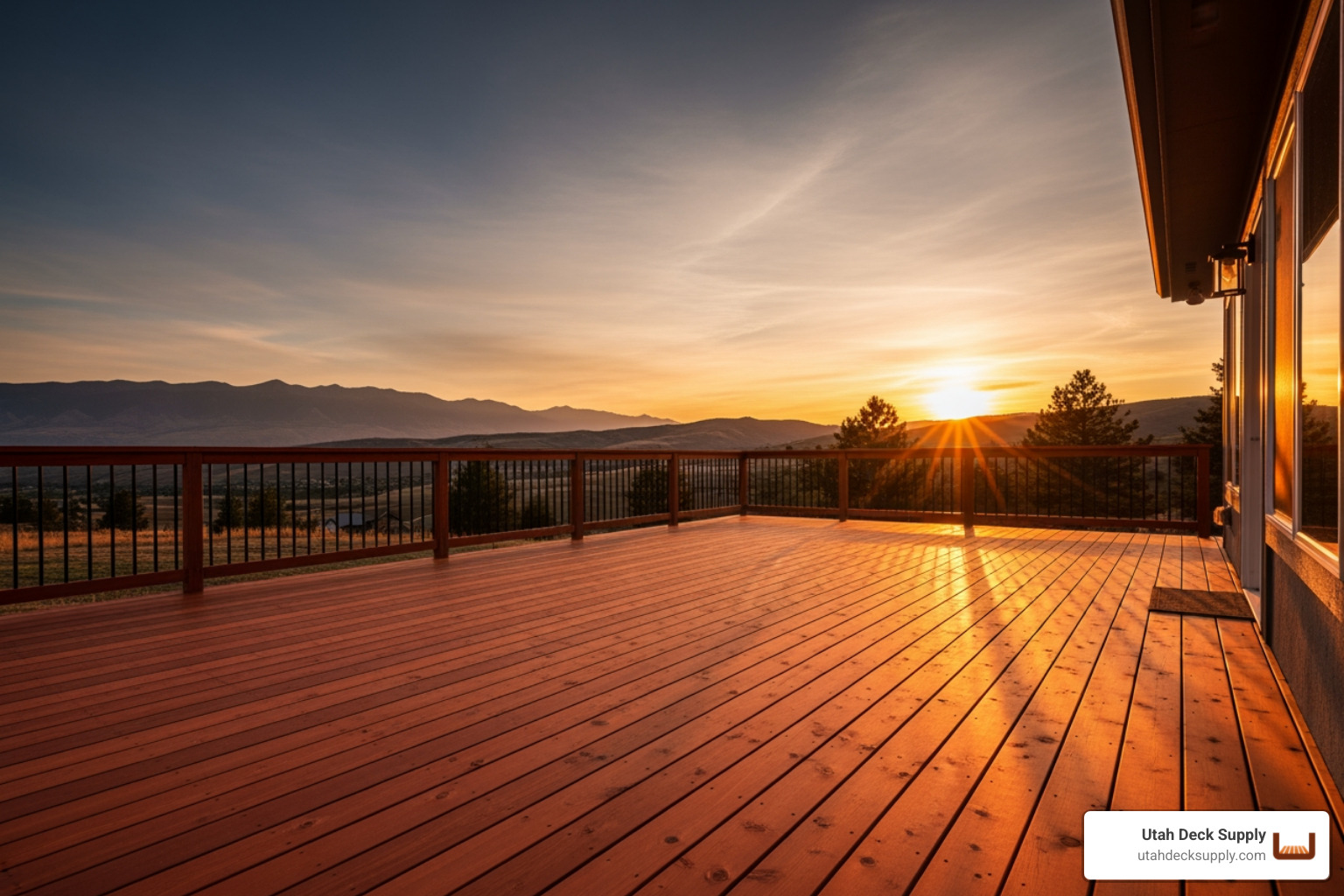
Cedar offers a step up with its beautiful, rich reddish tones and natural grain. It costs a bit more than PT wood, at $3-$8 per square foot, but it’s naturally resistant to insects and decay without chemical treatments. A cedar deck can last 15-20 years with moderate maintenance. To maintain its color and prevent UV damage, it needs periodic sealing. Left untreated, it weathers to a silvery-gray.
- Pros: Natural beauty and aroma, inherently resistant to pests, lightweight and easy to work with.
- Cons: Softer wood (prone to dents), requires sealing to maintain color, costs more than PT wood.
For more insights into this beautiful wood, check out the Benefits of Cedar Decking for Your Outdoor Space and our guide to the Best Decking Lumber for Outdoor Living Projects.
Entry-Level Composite: Low-Maintenance on a Budget
For homeowners seeking durability with minimal upkeep, entry-level composite is a fantastic choice. It blends wood fibers with recycled plastic to resist rot, insects, and moisture. The biggest advantage is its low maintenance—no sanding, staining, or sealing is ever needed, just occasional cleaning. While the upfront cost is higher at $4-$7 per square foot, its impressive 25-30+ year lifespan and near-zero maintenance costs offer incredible long-term value.
- Pros: Very low maintenance, long lifespan with warranties, eco-friendly (often made from recycled materials), consistent appearance.
- Cons: Higher initial cost, can get hot in direct sun, may not feel like real wood.
To learn more about how composite stacks up, visit our Composite Decking vs Wood: Which is Best? guide and find The Benefits of Composite Decking: Durability and Sustainability.
Beyond the Price Tag: Maximizing Value on Your Deck Project
Choosing affordable deck materials isn’t just about the price you pay at checkout; it’s about the true cost over the life of your deck. Let’s dig into what that means and how you can save money effectively.
Calculating the True Cost of Affordable Deck Materials
While a wood deck seems cheaper upfront, the annual cost of maintenance—around $400 for a typical wood deck—adds up. In contrast, a composite deck might cost less than $10 to clean annually. Over a decade, the maintenance savings on composite can easily offset its higher initial price. The material price is only one piece of the puzzle. Here are other hidden costs to factor in:
- Labor: Typically the largest single expense, often accounting for two-thirds of the total project cost.
- Permits: Required in most Utah cities. Skipping this can lead to fines. Learn more about Deck Building Permits and Regulations: Navigating the Red Tape.
- Site Preparation: Demolition of an old deck, excavation, and grading.
- Fasteners & Hardware: Screws, hangers, and other hardware. Composite may require specialized fasteners. Explore our Deck Hardware: Complete Guide.
- Waste & Transportation: Account for material waste and delivery fees.
Here’s a quick comparison of the true cost implications over a decade:
| Material | Upfront Cost/Sq. Ft. (Materials) | Avg. Lifespan | Estimated 10-Year Maintenance Cost (400 sq ft deck) | Total Estimated 10-Year Cost (Materials + Maintenance) |
|---|---|---|---|---|
| Pressure-Treated Wood | $2-$5 | 10-15 years | $4,000 ($400/year) | $4,800 – $6,000 |
| Cedar Wood | $3-$8 | 15-20 years | $2,000 ($200/year est.) | $3,200 – $5,200 |
| Entry-Level Composite | $4-$7 | 25-30+ years | $100 (<$10/year) | $1,700 – $2,900 |
Note: Table compares material and maintenance costs for a 400 sq ft deck over 10 years. Labor and other costs are not included.
Smart Money-Saving Tips for Your Deck Build
Beyond choosing the right material, there are several savvy strategies to keep your deck project within budget.
- Design Simplicity: A rectangular deck is cheaper than one with curves or multiple levels, as it reduces material waste and labor time.
- Deck Size Optimization: Build for your needs. A well-designed smaller deck is more affordable and just as enjoyable.
- Off-Season Shopping: Shop in the fall or winter. You might find discounts as suppliers clear inventory.
- DIY Labor: Doing the work yourself, from demolition to installation, can save thousands since labor is a huge part of the cost. We offer a wealth of resources, including our DIY Decking: A Step-by-Step Guide.
- Pallet Wood Drawbacks: While pallet wood seems free, it’s not recommended. It’s often treated with unsafe chemicals, isn’t durable for outdoor use, and requires immense labor to process.
For more ideas on enhancing your space affordably, check out Budget-Friendly Deck Upgrades: Enhancing Your Space Affordably.
Here are 3 quick tips to keep costs down:
- Keep the design rectangular. Simplicity is your friend for both materials and labor.
- Build low to the ground to avoid railing costs. If your deck is less than 30 inches off the ground, you might not need a railing, depending on local codes.
- Do your own demolition. Tearing down an old deck is hard work but requires minimal skill and can save substantial labor costs.
How to Choose the Best Affordable Deck Materials for You
So, how do you make the ultimate decision for your home in Utah? Let’s recap our top affordable deck materials:
- Pressure-Treated Wood: The king of low upfront cost, but demands consistent maintenance.
- Cedar Wood: A naturally beautiful option with moderate cost and maintenance.
- Entry-Level Composite: Higher initial cost, but offers superior durability and incredibly low maintenance. A smart long-term investment.
The ‘best’ material depends on your priorities:
- Budget: Balance upfront cost with long-term maintenance expenses.
- Lifestyle: Do you prefer the look of real wood, or the convenience of low maintenance?
- Longevity: A long-term home justifies a more durable, low-maintenance material.
In Utah’s climate, with its intense sun and freeze-thaw cycles, capped composite materials often perform best, resisting fading and warping better than wood. The ‘best’ material is a personal choice. At Utah Deck Supply, our experts help you weigh these options in person. We’ll provide guidance custom to your budget, style, and our local climate. We invite you to Come visit our decking showroom to see the materials for yourself and make a confident decision for your home.