Choosing the right porch decking material is the most important decision you’ll make for your outdoor space, directly impacting its longevity, appearance, and the time you spend enjoying it. The best option for your home depends on your budget, maintenance preferences, and Utah’s demanding climate. Here’s a quick breakdown to help you decide:
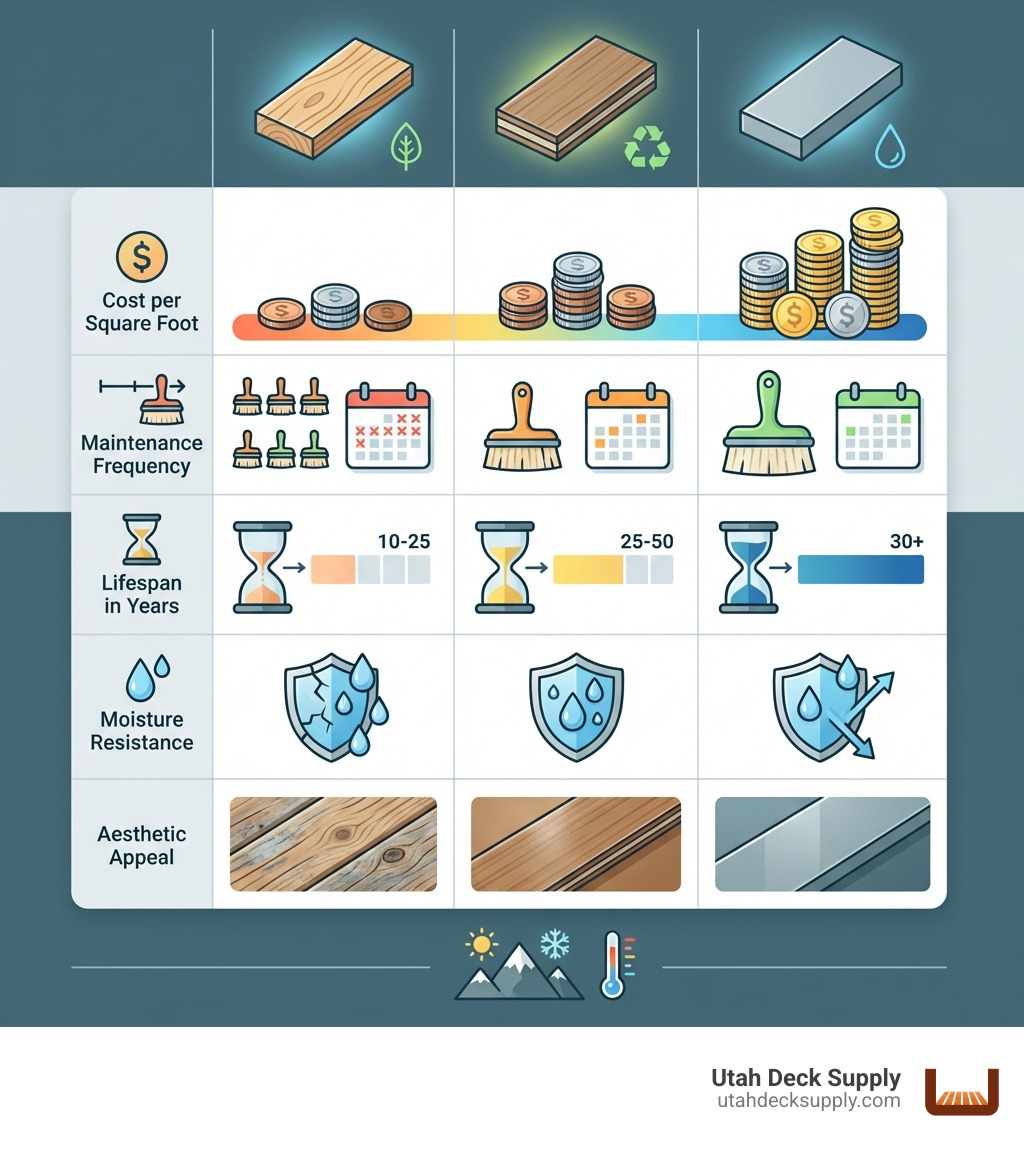
- Pressure-Treated Wood: Most affordable upfront ($1.20–$2/sq ft), but requires annual sealing and lasts 10–15 years
- Cedar/Redwood: Natural beauty and decay resistance ($2–$4/sq ft), needs periodic sealing, lasts 20–25+ years
- Composite Decking: Low-maintenance wood-plastic blend ($1.75–$4.75/sq ft), resists fading and rot, lasts 25–50 years
- PVC Decking: Premium synthetic option ($4–$7/sq ft), virtually maintenance-free, highly moisture-resistant, lasts 30+ years
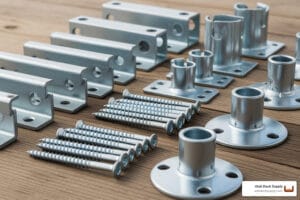
- Aluminum/Specialty: Durable and fire-resistant ($2.50–$10/sq ft), but can retain heat and has limited aesthetic appeal
You know what? The truth is that every decking material has tradeoffs. Wood offers timeless charm but demands regular upkeep. Composites deliver durability and convenience at a higher initial cost. PVC and aluminum push performance to the limit but come with premium price tags. And here’s the thing: in Utah’s extreme climate—scorching summers, snowy winters, and dramatic moisture swings—your material choice isn’t just about looks. It’s about how your porch will hold up over decades and how much time you’ll spend maintaining it versus enjoying it.
I’m James Bonham, co-founder of Utah Deck Supply, and I spent years at Trex Company learning the ins and outs of high-performance decking systems before opening Utah’s premier specialized decking superstore. Whether you’re a contractor managing multiple crews or a DIY homeowner tackling your first build, understanding porch decking material options is the foundation of a successful project.
Porch decking material terminology:
Comparing the Top Porch Decking Material Choices
When it comes to selecting the perfect porch decking material, we’re really talking about balancing aesthetics, durability, maintenance, and budget. Each option brings its own set of advantages and considerations, especially when facing Utah’s unique climate challenges. Let’s explore the main contenders.
Traditional Wood: Natural Beauty and Its Demands
There’s an undeniable allure to natural wood. It offers a classic, timeless aesthetic that many homeowners adore, and its initial cost is often lower than synthetic alternatives. But let’s be honest, that natural beauty comes with a commitment.
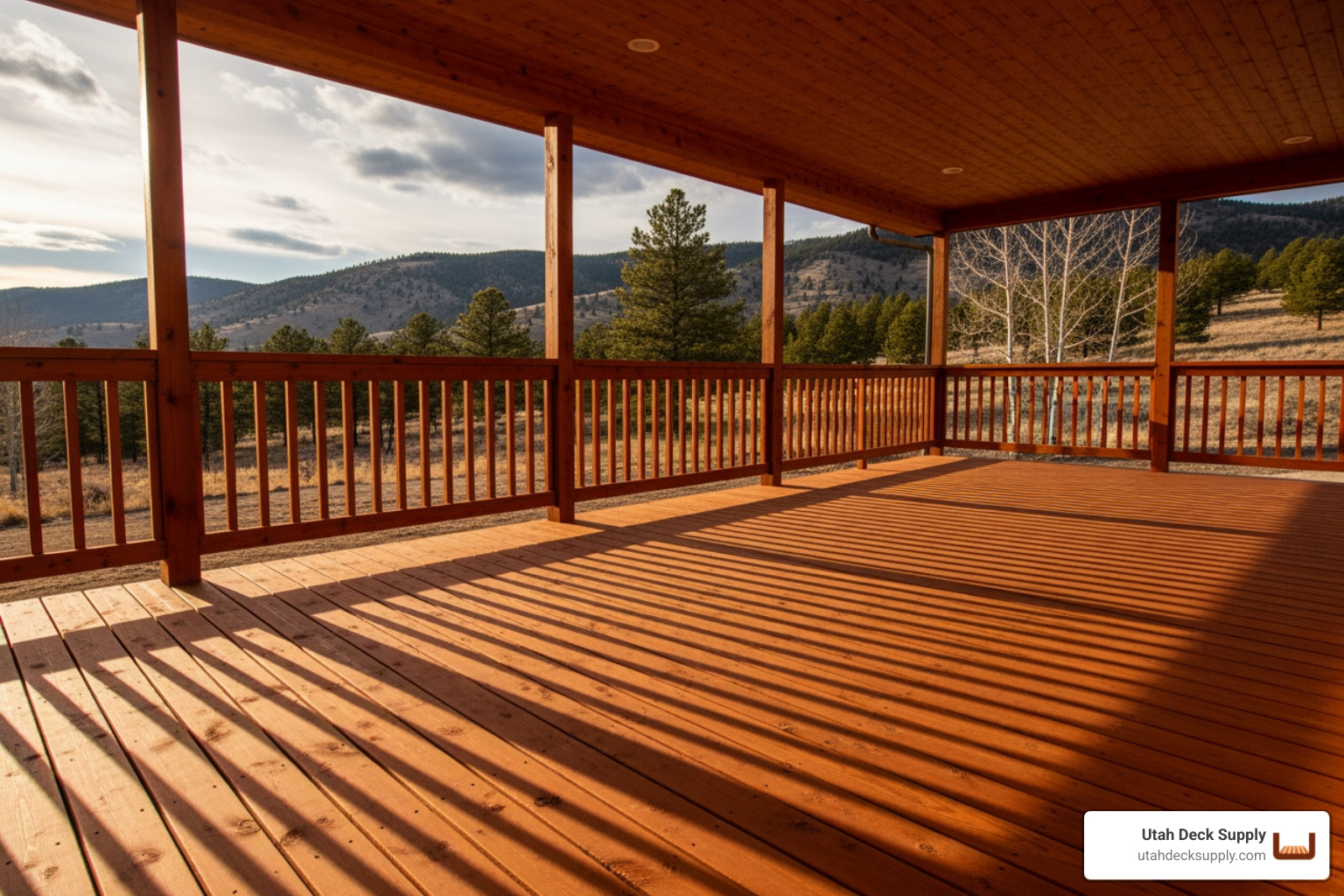
- Options: Our most common wood choices for decks include pressure-treated wood, cedar, and redwood. Pressure-treated lumber is often made of pine infused with chemicals to make it moisture- and insect-resistant, making it a budget-friendly option for structural elements and decking alike. Cedar and redwood are naturally resistant to rot, decay, and insects, offering a distinct beauty. For a deeper dive into wood types, check out our Ultimate Guide to Choosing the Best Wood for Your Deck.
- Natural, timeless aesthetic: The warmth and character of real wood are hard to replicate. The grain patterns and natural color variations create a unique look.
- Lower initial cost: Typically, traditional wood options like pressure-treated lumber are the most affordable upfront, costing around $1.20-$2 per square foot uninstalled. Cedar and redwood are a bit more, usually $2-$4 per square foot.
- Requires regular maintenance (sealing, staining): This is where the “demands” part comes in. Wood decks need consistent care. On average, homeowners spend between $4 and $9 per square foot annually just to maintain the beauty and appearance of wood decking. This includes cleaning, staining, and sealing every 1-3 years. Failing to do so in Utah’s intense sun and dry climate can lead to rapid deterioration.
- Lifespan: With diligent upkeep, pressure-treated wood can last up to 30 years, though many decks need replacement after 10-15 years. Cedar can last around 20 years, while redwood, being denser, can last more than 25 years. However, this longevity is heavily dependent on diligent maintenance.
- Susceptible to rot and splintering: Without proper sealing, wood is vulnerable to moisture, leading to rot, warping, and cracking. And let’s not forget the dreaded splinters!
- Great for those who love the look and feel of real wood: If you enjoy the hands-on aspect of home maintenance and prefer the authentic feel of wood, this is a fantastic choice. Just be prepared for the work. For more insights on selecting lumber, This Old House offers a great guide: How to Select the Best Lumber for Your Deck.
Composite Decking: The Balanced, Modern Option
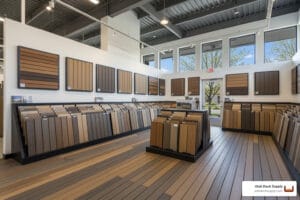
Composite decking has truly revolutionized outdoor living, offering a fantastic middle ground between traditional wood and fully synthetic materials. It’s what we often recommend to homeowners and contractors looking for a blend of aesthetics and practicality in Ogden, Sandy, Lehi, and across Utah.
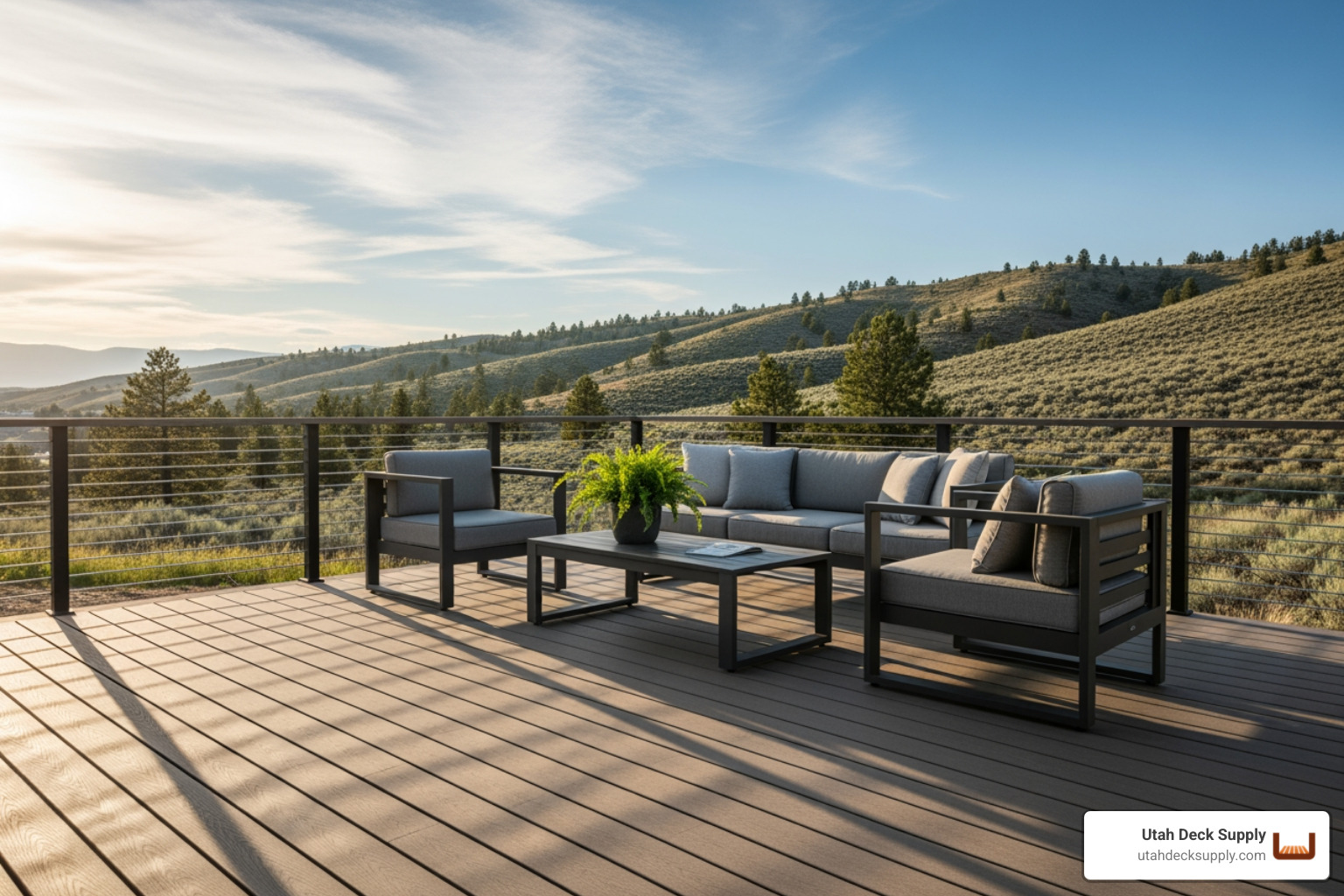
- Made from a wood-plastic blend: Composite boards combine recycled wood fibers and plastic, creating a material that inherits benefits from both. This blend makes it incredibly durable.
- Low maintenance (just soap and water cleaning): This is often the biggest selling point. Forget the endless cycle of sanding, staining, and sealing! Composite decks only need occasional cleaning with soap and water to keep them looking great. This means more time enjoying your porch and less time working on it.
- Durable and fade/stain resistant: Modern composite decking is engineered to resist scratching, staining, and mold. Many brands feature a protective cap that wraps around the entire board, shielding it from moisture and UV rays. This is crucial for Utah’s high UV index, ensuring colors resist fading for decades.
- Higher upfront cost, but lower maintenance over time: While the initial investment for composite decking is higher than wood (typically $1.75-$4.75 per square foot uninstalled), the long-term savings on maintenance products and labor are significant. Over its lifespan, composite often proves to be the more cost-effective choice.
- Lifespan: Composite decking boasts an impressive lifespan of 25 to 50 years, far outlasting traditional wood with minimal effort. Warranties often range from 10 years to a lifetime, speaking to their durability.
- No splinters, no need for annual sealing: Say goodbye to splinters and the annual ritual of sealing! This is a huge win, especially for families with kids and pets.
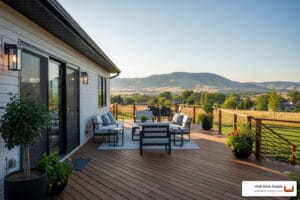
- Wide range of colors and textures: From rich, deep browns to modern grays, composite decking offers a vast array of aesthetic options that mimic natural wood grain patterns. You can even find multi-width boards and wire-brushed finishes to achieve a custom look.
- Comparison to wood: Our article Composite Decking vs Wood: Which is Best? dives deep into this comparison. Consumer Reports also offers excellent insights on composite decking’s benefits and drawbacks, noting its superior stain resistance from common spills: Best Composite Decking of 2026, Tested by Experts.
PVC & Other Synthetics: Peak Performance and Longevity
For those who demand the absolute highest performance and lowest maintenance, PVC and other fully synthetic decking materials are the champions. These are truly built to withstand anything Utah’s weather can throw at them.
- 100% synthetic material: Unlike composite, PVC decking contains no wood fibers. It’s made from polyvinyl chloride, making it impervious to moisture, mold, and mildew. This is particularly beneficial in humid areas or for decks near pools and hot tubs.
- Highest durability and moisture resistance: PVC is highly resistant to moisture, rot, decay, and insect damage. It won’t splinter, warp, or crack, making it incredibly resilient.
- Mold and mildew resistant: Because there’s no organic content, PVC decking is the best choice for mold and mildew resistance, a major plus for shaded porches or areas with consistent moisture.
- Highest initial cost, but minimal upkeep: PVC decking often has the highest upfront cost, ranging from $4-$7 per square foot uninstalled. However, its maintenance is virtually non-existent, requiring only occasional washing with soap and water. This translates to significant long-term savings and peace of mind.
- Lightweight and cooler-touch options available: Some advanced PVC decking can be up to 30% lighter than competitive products, making installation easier. Innovations like SunComfortable™ Technology can keep PVC decking up to 35°F cooler than traditional options, a welcome feature during Utah’s hot summers.
- Lifespan: Solid vinyl decks should last a lifetime, while PVC-cap products can last about 30 years or more. Some manufacturers offer limited lifetime product warranties and extensive fade and stain warranties (up to 50 years!).
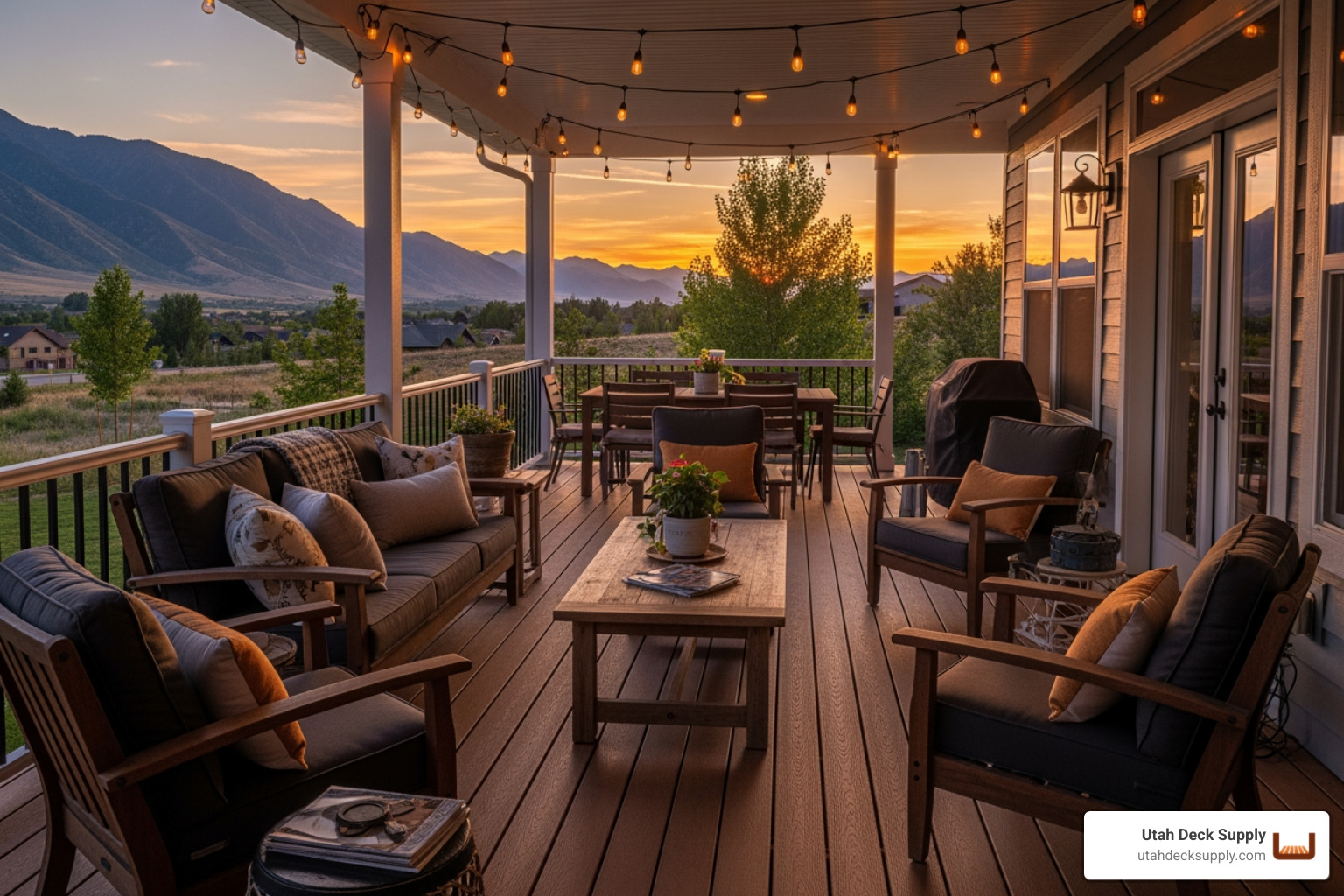
- Ideal for Utah’s sun, snow, and moisture swings: Given our region’s intense UV exposure, heavy snow loads, and freeze-thaw cycles, PVC’s superior resistance to fading, moisture, and extreme temperatures makes it an exceptional choice for longevity and performance.
- Sustainability: Many modern PVC decking options are made with a majority of recycled material, including hard-to-recycle plastics. Programs like the AZEK Full-Circle PVC Recycling Program collect scraps from job sites to be recycled into new material, diverting waste from landfills. We cover more in our Ultimate Guide to PVC Decking.
Key Factors in Your Decking Decision
Choosing the right porch decking material isn’t just about picking a color; it’s about making an investment in your home and lifestyle. Here are the critical factors we guide our customers through at Utah Deck Supply.
Balancing Cost, Maintenance, and Lifespan for your porch decking material
This is often the core of the decision-making process. While initial cost is important, we always emphasize looking at the full picture.
| Material | Initial Cost/sq ft | Annual Maintenance Cost | Average Lifespan |
|---|---|---|---|
| Wood | $-$$ | $$ | 15-25 years |
| Composite | $$-$$$ | $ | 25-50 years |
| PVC | $$$ | $ | 30+ years |
- Consider long-term value, not just upfront investment: As you can see from the table, wood might be cheaper initially, but its ongoing maintenance costs quickly add up. Pressure-treated wood decks will likely need replacement after 10-15 years, and cedar/redwood after 20-25 years. Compare this to composite (25-50 years) and PVC (30+ years to a lifetime) with minimal upkeep. The money saved on stains, sealants, and repairs over decades can easily offset the higher initial price of synthetics. This concept of long-term value is crucial for any homeowner in Salt Lake City, Provo, or St. George.
- Maintenance time: Do you want to spend weekends staining, or relaxing?: Honestly, this is a lifestyle question. If you love outdoor projects and the smell of fresh stain, wood might be for you. If your weekends are precious and you’d rather be enjoying your family on your porch, then low-maintenance options are a clear winner. Our guide on Low Maintenance Deck Boards: The Ultimate Guide for Homeowners explores this further.
- Replacement costs: Cheaper now, or cheaper over decades?: A material that lasts 50 years versus one that lasts 15 means you’re building a deck once, not three or four times. This significantly impacts your long-term budget and home value.
Climate, Sustainability, and Design Considerations for your porch decking material
Utah’s climate is a force to be reckoned with. Our high altitude means intense UV radiation, our winters bring significant snow, and our summers can be scorching. These factors heavily influence which porch decking material will perform best.
- Utah’s unique climate: sun, snow, and moisture: Materials need to withstand extreme temperature fluctuations, from below freezing to over 100°F. This means avoiding materials prone to cracking, warping, or fading under such stress.
- Moisture resistance is key for longevity: Whether it’s melting snow, spring rains, or even accidental spills, moisture is the enemy of many decking materials. Excellent moisture resistance prevents rot, mold, and structural issues, especially important in places like Cottonwood Heights or Sandy where decks are exposed to all elements. Our article on Decking Materials That Withstand the Elements: Weather Resistant Options provides more details.
- Sustainability: Look for recycled content and FSC-certified lumber: For eco-conscious homeowners, the environmental impact of their decking choice is a significant factor. Many composite and PVC products incorporate recycled materials, diverting waste from landfills. If opting for wood, look for FSC-certified lumber, which ensures the wood is sustainably sourced. We dig into this in our Eco-Friendly Decking Solutions: Sustainable Choices for Your Home.
- Aesthetic options: color variety, textures, board widths: Your porch is an extension of your home’s style. Do you envision a rustic, natural look, or a sleek, modern design?
- Wood: Offers natural variations, but color consistency can be a challenge unless regularly stained.
- Composite: Provides a vast palette of colors, realistic wood grain textures, and options for multi-width or narrow boards to create unique patterns.
- PVC: Known for consistent colors, high-definition grain patterns, and often a more contemporary feel.
The aesthetic possibilities are endless, allowing you to perfectly match your home’s architecture and your personal taste.
Conclusion: Your Next Steps to a Perfect Porch
Honestly, the best porch decking material is the one that fits your budget, lifestyle, and design dreams. Whether you’re drawn to the classic charm of wood or the easy-living appeal of composites and synthetics, making an informed choice means more time enjoying your porch and less time worrying about it. To see these materials up close or get expert advice for your project, call our team at 385-993-5492 or Request a Free Quote online today.