Deck waterproofing materials are the unsung heroes of any outdoor living space, especially here in Utah where the weather can go from blazing sun to snow in a heartbeat. Protecting your deck from the elements isn’t just about looks—it’s about safety, longevity, and making sure your investment stands the test of time. So, how do you choose the right solution for your unique space?
Quick Guide to Deck Waterproofing Materials
Choosing the right protection can add decades to your deck’s lifespan, which is critical in Utah’s extreme climate. Here’s a quick look at the main types of deck waterproofing materials available to protect your outdoor space from water damage, rot, and costly repairs.
| Material Type | Best For | Lifespan | DIY Friendly? |
|---|---|---|---|
| Sealants & Coatings | Wood decks | 1-3 years | Yes |
| Vinyl/PVC Membranes | Decks over living space | 15-25+ years | No (professional install) |
| Under-Deck Drainage | Creating dry space below | 20+ years | Some systems |
| Composite/PVC Decking | New construction | 25+ years | Yes |
| Joist Tape | Protecting framing | Deck lifetime | Yes |
Why Protecting Your Deck Matters
You know what? A deck without proper waterproofing is a future repair project waiting to happen. Water infiltration leads to wood rot, structural damage, and mold growth—problems that cost thousands more to fix than to prevent. Here in Utah, our climate is especially tough on decks. The intense cycle of UV exposure, freezing temperatures, and moisture accelerates deterioration faster than almost anywhere else.
Most people focus on the deck boards, but the real damage happens underneath to the joists, beams, and ledger board. A proper waterproofing system protects both the surface and the structure. I’m James Bonham, co-founder of Utah Deck Supply, and after years at Trex Company, I’ve seen how the right deck waterproofing materials can turn a five-year deck into a twenty-five-year deck. I’m here to help you make that happen.
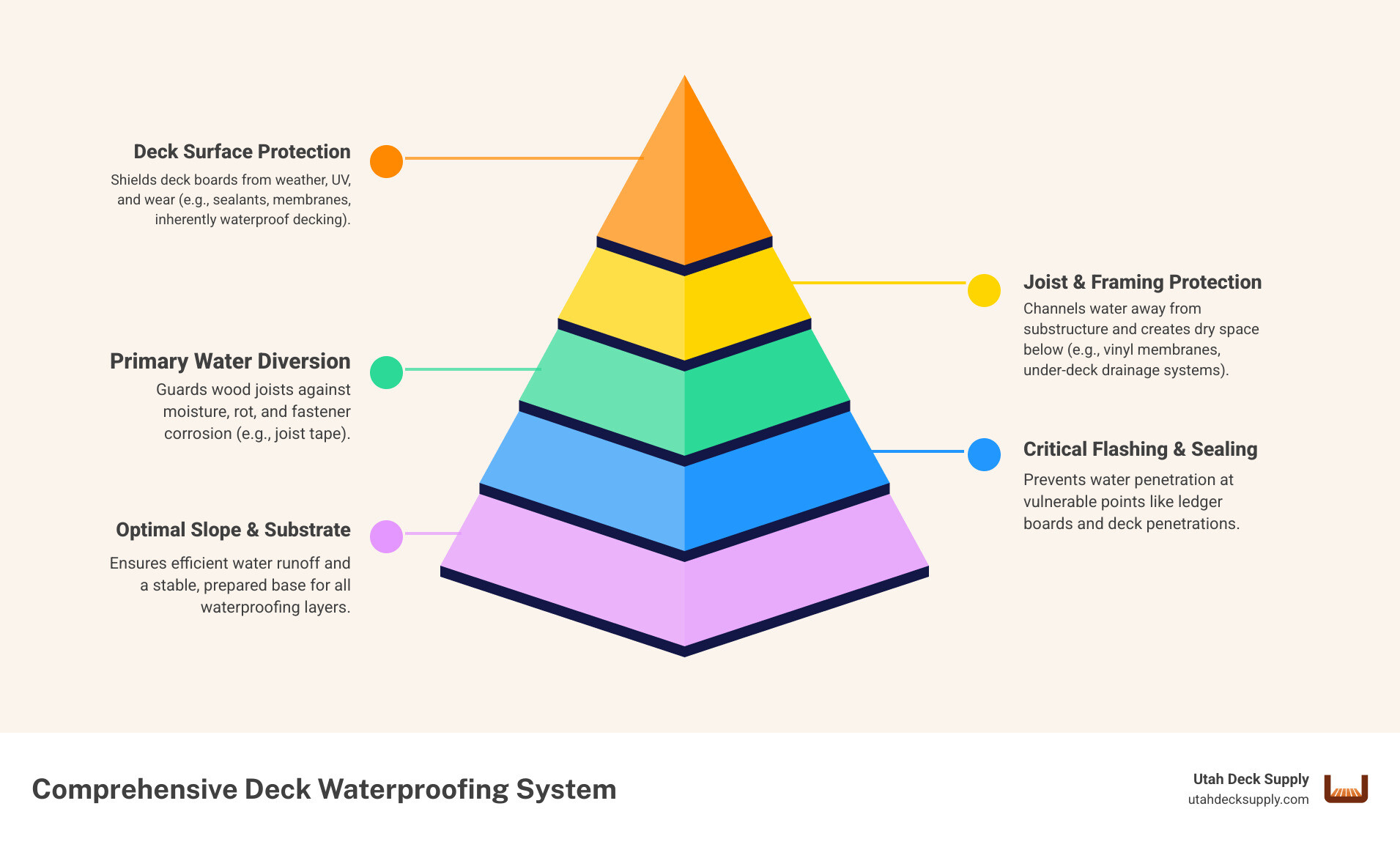
Key terms for deck waterproofing materials:
A Deep Dive into Deck Waterproofing Materials and Systems
Choosing the best protection starts with understanding what’s out there. Honestly, the terms can get confusing, but it boils down to two main approaches: applying a protective layer to your deck surface or building with materials that are inherently water-resistant. Let me explain the most common types.
Surface-Level Protection: Sealants and Coatings
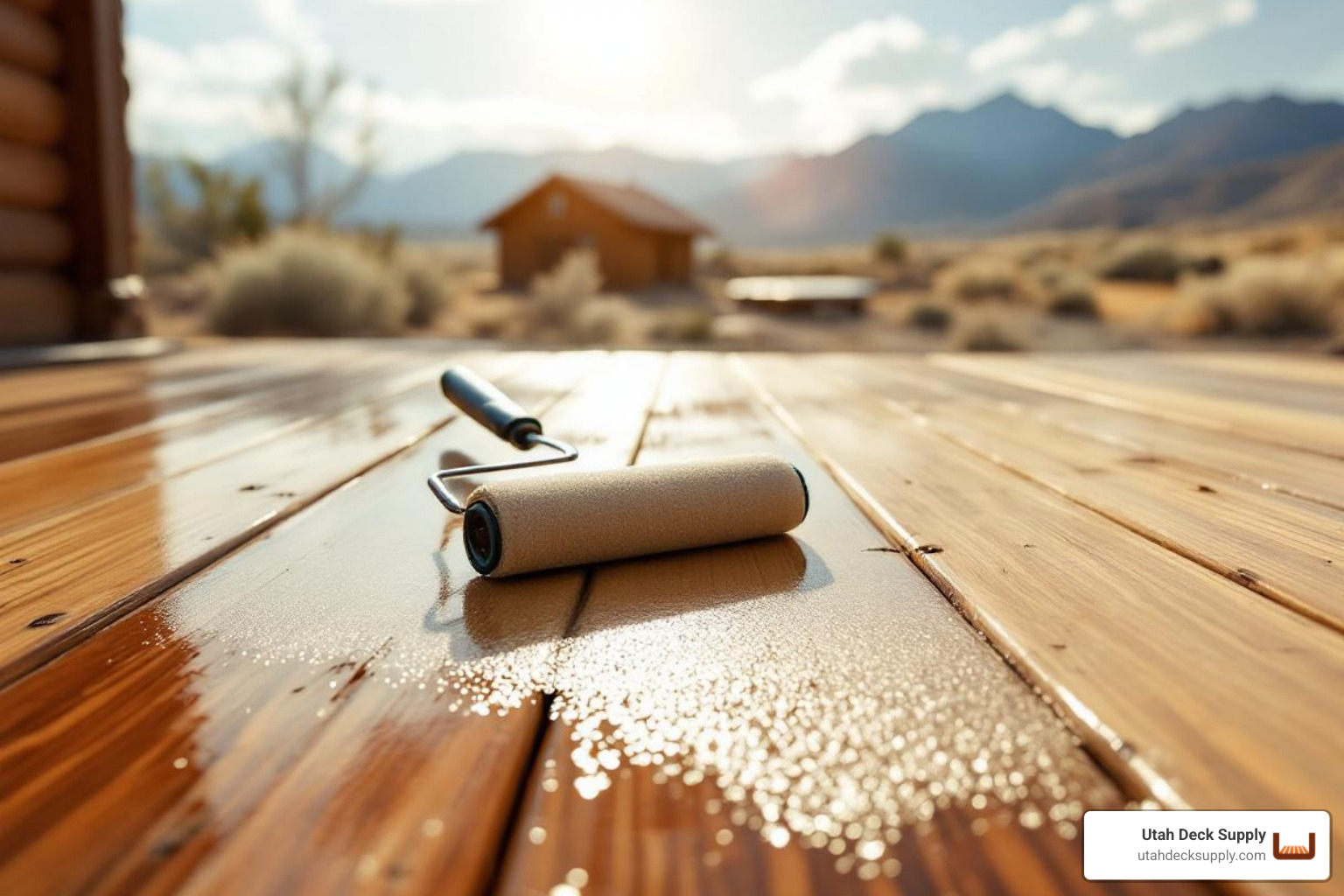
This is the classic method for protecting traditional wood decks. Think of it as a protective jacket for your lumber that repels water and prevents moisture absorption. While you can’t 100% waterproof wood, proper sealing significantly extends its life.
- Pros: DIY-friendly, affordable upfront, and can improve the look of the wood.
- Cons: Offers limited waterproofing and requires regular maintenance. You’ll need to reseal every 1-3 years, especially in Utah’s harsh climate.
- Application: The process involves cleaning the deck, sanding if needed, and applying the product evenly. It’s best to work in moderate temperatures (50-90°F) and avoid direct sun or rain.
- Types: You can choose between water-based sealers (easier cleanup) and oil-based sealers (often more durable). Popular options include stains that add color and clear sealers focused purely on protection.
For more on this topic, check out our guide on Deck Staining and Finishing: Enhancing Beauty and Durability.
Comprehensive Coverage: Waterproof Membranes
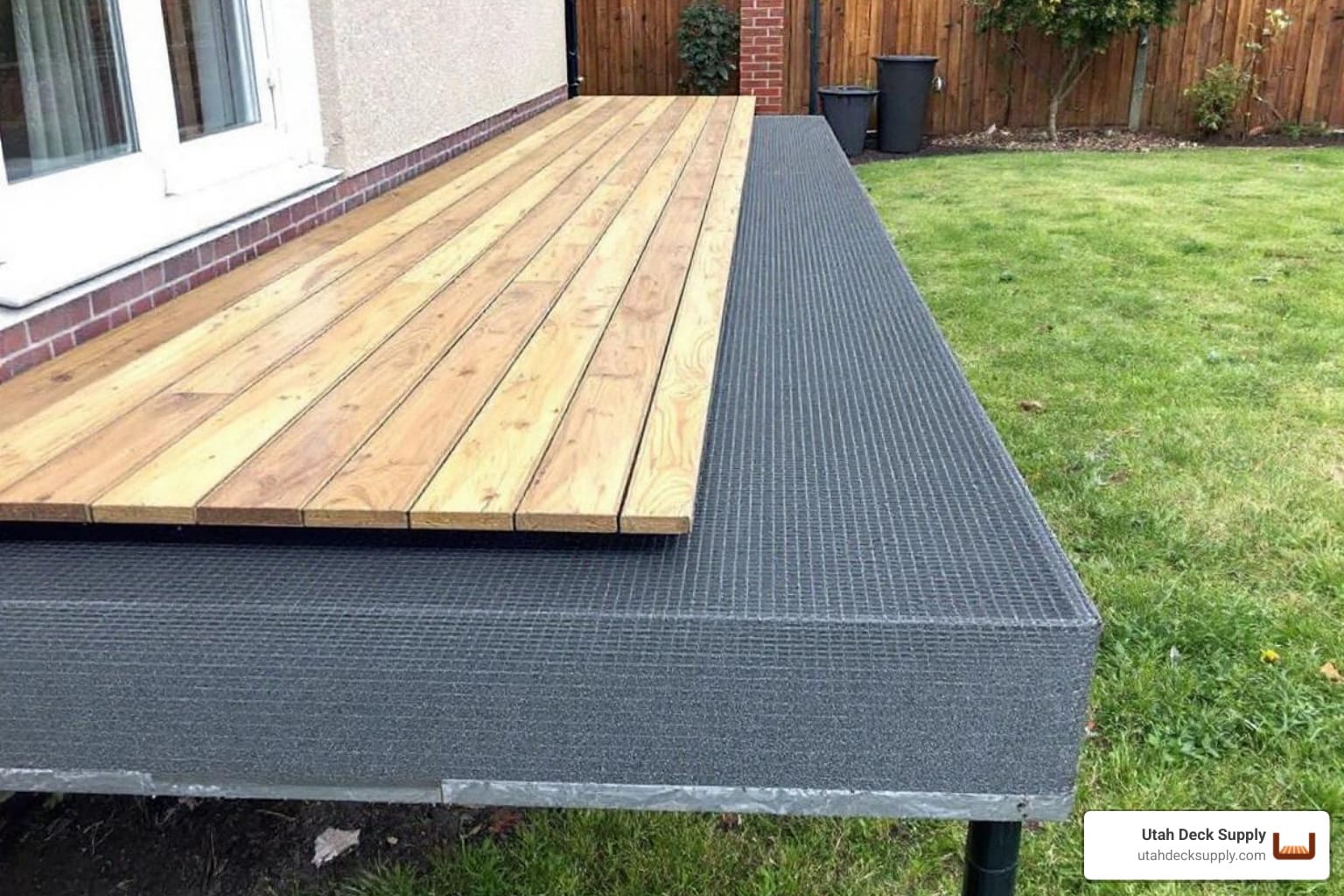
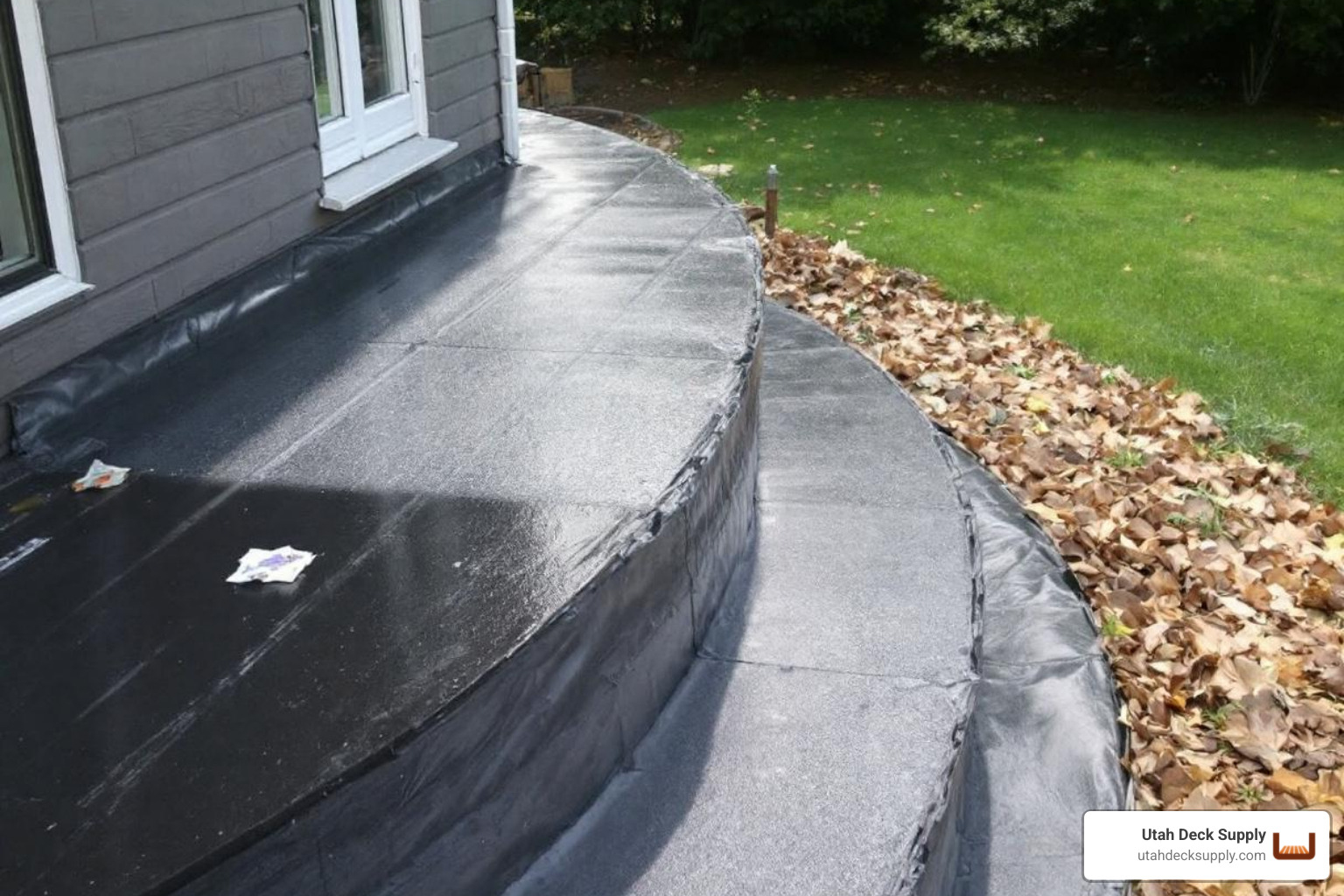
For decks over living spaces or garages where a completely dry area below is essential, waterproof membranes are the gold standard. These systems create a continuous, impenetrable barrier.
- Types of Membranes:
- Vinyl/PVC Membranes: Products like Duradek and Tufdek are durable, walkable PVC sheets that are professionally installed to create a watertight surface with a lifespan of 15-25+ years.
- Liquid-Applied Membranes: These are painted or sprayed on, often with fiberglass reinforcement, to form a seamless, flexible barrier that’s great for complex shapes or under-tile applications.
- Peel-and-Stick Membranes: These self-adhering sheets are applied to the deck substrate to prevent water migration.
- Joist & Flashing Tape: These are critical components. Butyl joist tape is applied to the tops of joists and beams to seal around screws and prevent wood rot in the substructure, extending the frame’s life.
- Pros: Superior waterproofing, long-lasting (15-25+ years), and durable enough for heavy foot traffic.
- Cons: Higher upfront cost and typically require professional installation to ensure warranty coverage.
Under-Deck Drainage Systems
Want to use the space under your liftd deck? An under-deck drainage system is a clever solution that catches water dripping through the deck boards and channels it away, creating a dry, usable patio or storage area below.
- How they work: These systems use a series of sloped panels or troughs installed between the joists. They collect water and direct it to a gutter, keeping the area underneath dry.
- Pros: Creates a functional outdoor living space, protects the substructure from moisture, and can be installed on new or existing decks. Some systems are DIY-friendly.
- Cons: It’s a drainage solution, not a surface waterproofer (water still passes between boards). The gutters require occasional cleaning to prevent clogs.
Inherently Water-Resistant Decking Materials: PVC vs. Composite
Instead of protecting your deck from water, you can build it with materials that don’t mind getting wet. Modern PVC and composite decking are engineered to resist moisture, rot, and insects, which dramatically reduces maintenance.
- PVC Decking: Made entirely of plastic, PVC decking is exceptionally resistant to water, mold, and rot. Brands like TimberTech offer advanced PVC options.
- Capped Composite Decking: This material blends wood fibers and plastic, then wraps it in a protective polymer shell. This “cap” provides excellent resistance to moisture, stains, and fading. We carry top brands like Trex, TimberTech, Deckorators, and Fiberon.
- Do you need to seal them? No. The boards themselves don’t require sealing. However, it’s still a best practice to use joist tape to protect the wood substructure underneath.
| Feature | Wood Decking | Capped Composite Decking | PVC Decking |
|---|---|---|---|
| Waterproofing | Water-resistant (requires sealants) | Highly water-resistant | Extremely water-resistant |
| Maintenance | High (annual cleaning, 1-3 year reseal) | Low (periodic cleaning) | Very Low (periodic cleaning) |
| Cost (Materials) | Lowest upfront | Moderate to High | High |
| Lifespan | 10-15 years (with maintenance) | 25-30+ years | 25-50+ years |
| Sealing Required? | Yes | No | No |
For a deeper dive, explore our guides on Composite vs Wood Decks: Which is Right for You? and the Ultimate Guide to PVC Decking.
Making the Right Choice: Installation, Maintenance, and Costs
Now that you know the “what,” let’s talk about the “how” and “how much.” The best material in the world won’t work if it’s installed incorrectly, and the true cost goes beyond the initial price tag. A little planning here saves major headaches later.
Best Practices for a Leak-Proof Installation
A successful waterproofing job is all in the details. Missing one of these steps can compromise the entire system.
- Substrate Preparation: The surface must be clean, dry, and smooth before applying any membrane or coating. Any damage must be repaired first.
- Proper Slope: A deck should slope away from the house (a minimum of ¼ inch per foot) to ensure water drains properly and doesn’t pool.
- Flashing: This is non-negotiable. Use metal or self-adhering flashing tape at all wall-to-deck connections and on ledger boards to create a continuous barrier.
- Sealing Penetrations: Every screw and post is a potential leak point. Joist tape is perfect for this, as it self-seals around fasteners to block water.
- Joist Protection: Always apply joist tape to the tops of your wooden joists and beams before installing deck boards. This simple step prevents rot and dramatically extends the life of your deck’s frame.
- Professional vs. DIY: While applying sealants can be a DIY job, complex systems like vinyl membranes require professional installation by trained dealers to ensure performance and warranty coverage.
Can Existing Decks Be Waterproofed?
Yes! For wood decks, it involves cleaning, repairing damage, and applying a sealant. For a more robust solution, you can remove the old deck boards to install a membrane or an under-deck drainage system.
Long-Term Care and Cost Analysis
Your budget and tolerance for maintenance are huge factors. A cheaper upfront option might cost you more in time and money down the road.
Maintenance & Lifespan:
- Sealants: High maintenance. Expect to reseal every 1-3 years.
- Membranes: Very low maintenance. Last 15-25+ years with just periodic cleaning.
- Under-Deck Drainage: Low maintenance. Just keep gutters clear of debris.
- Composite & PVC Decking: Lowest maintenance. No sealing needed, and they last 25-50+ years.
Initial Cost vs. Long-Term Value:
- Sealants: Lowest upfront cost ($500-$1,200 for an average deck), but costs add up with reapplication.
- Membranes: Higher initial cost due to materials and professional labor, but often more cost-effective long-term due to longevity and low maintenance.
- Composite & PVC: Highest upfront material cost, but their near-zero maintenance and long warranties provide the best long-term value and lowest cost of ownership.
Warranty & Quality:
Always check the warranty. Reputable manufacturers offer written warranties, which often require professional installation for systems like membranes. Some brands, like Tufdek, even use third-party agencies like Intertek for quality testing, giving you extra peace of mind.
Choosing the right waterproofing is a balance of your deck’s design, your budget, and how much time you want to spend on upkeep. Whether you’re resealing a classic wood deck or building a new, maintenance-free oasis with composite boards, the experts at Utah Deck Supply can guide you to the perfect solution. For expert guidance custom to your specific project, give our team a call at 385-993-5492. Ready to get started? Request a Free Quote today.