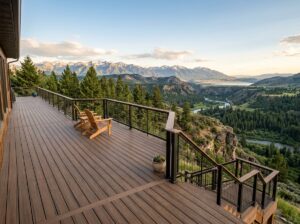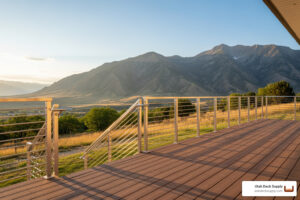
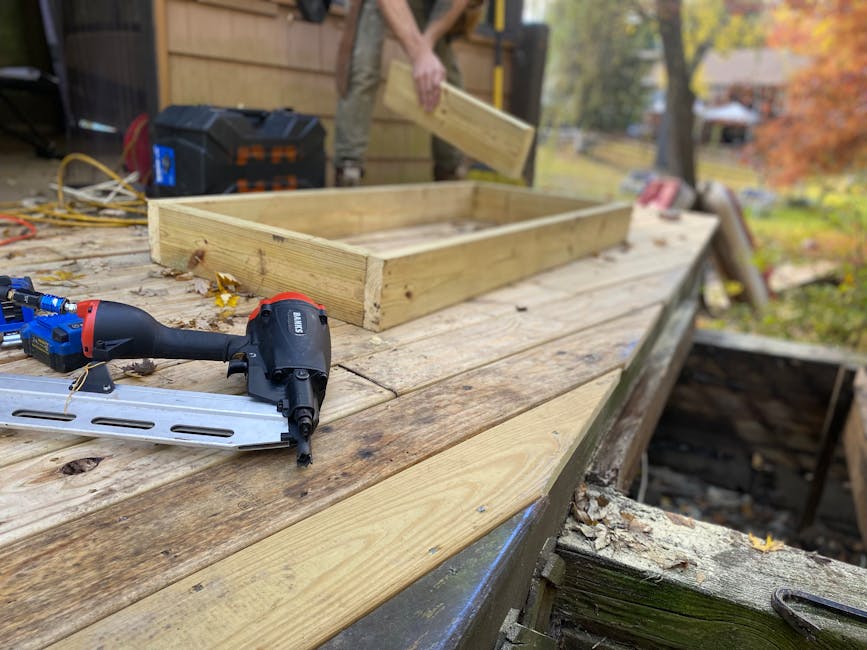
Building a deck can completely transform your outdoor living space, but getting started can feel overwhelming. This comprehensive deck construction guide is designed to walk you through every step, from the initial plans to the final safety checks, ensuring you build a beautiful, durable, and code-compliant deck. Honestly, with the right knowledge and materials, you can create the backyard oasis you’ve always dreamed of.
Why Every Deck Project Needs a Solid Construction Roadmap
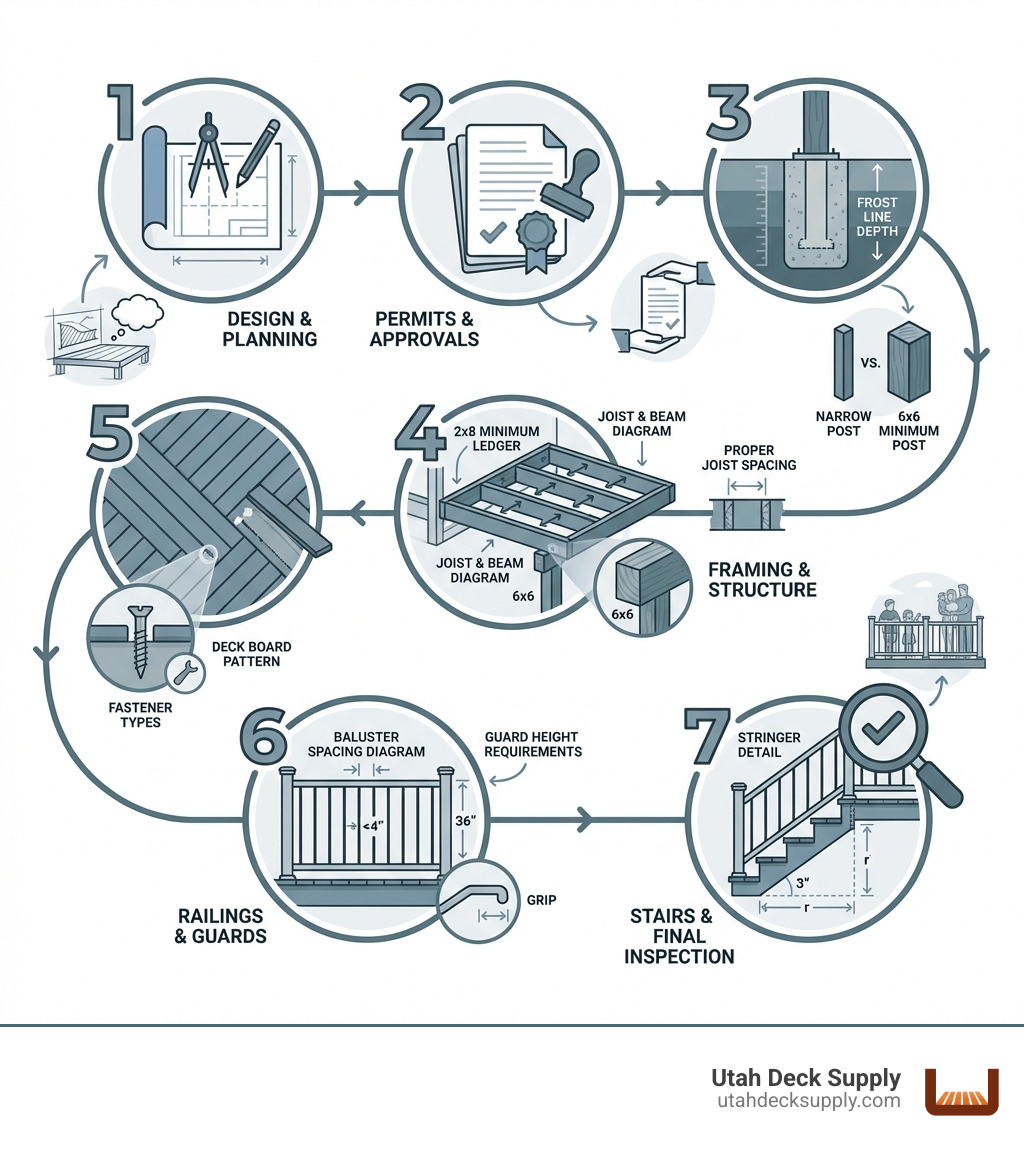
A complete deck construction guide covers:
- Planning and Permits – Designing for your space and understanding local rules.
- Foundation Work – Installing footings and setting posts correctly.
- Framing – Attaching ledgers, sizing beams and joists, and ensuring stability.
- Surface Installation – Installing decking with proper spacing.
- Safety Features – Building code-compliant stairs and guardrails.
- Final Inspections – Verifying structural integrity.
You know what? Building a deck isn’t just about following steps—it’s about understanding why each component matters. The stakes are high. Decks that aren’t built to code can fail inspections, require expensive repairs, or worse—become safety hazards. This is especially true along the Wasatch Front, where our unique climate puts extra stress on outdoor structures.
Let me explain the core principle: every deck is a load path. Weight from people and snow travels from the decking to joists, then to beams, posts, and finally into the ground through footings. If any part of this system is weak, the entire structure is compromised.
As James Bonham, co-founder of Utah Deck Supply with years of hands-on experience at Trex Company, I’ve seen how a comprehensive deck construction guide makes the difference between a smooth build and a costly mistake. My team and I use this same knowledge daily to help contractors and DIYers steer everything from material selection to code compliance for Utah’s unique conditions.
Quick deck construction guide definitions:
Deck Permits, Design, and Material Selection
Before you swing a hammer, planning is paramount. For a deeper dive, check out our Planning Your Dream Deck: Budgeting and Design Tips.
Permit Requirements:
In Utah, a permit is generally required if your deck is attached to the house or its surface is over 30 inches above the ground. Some small, detached decks (under 108 sq. ft.) may be exempt. Always verify with your local building department, as codes vary. Before digging, call utility companies to locate underground lines. For more details, read our guide on Deck Permits and Regulations: Navigating the Legalities.
Choosing Materials:
Your material choice impacts appearance, longevity, and maintenance. We carry everything from traditional lumber to advanced composites like Trex, TimberTech, Deckorators, and Fiberon.
- Wood Decking: Pressure-treated lumber, redwood, and cedar are classic choices. For low-maintenance wood, consider tropical hardwoods like Ipe. All lumber must be grade-marked.
- Composite/PVC Decking: These offer excellent durability and minimal maintenance, resisting rot, splinters, and insects. They now account for nearly half of the market.
Our Composite Decking vs Wood: Which is Best? article can help you decide.
| Feature | Wood Decking | Composite/PVC Decking |
|---|---|---|
| Durability | Good, but susceptible to rot and weathering; requires regular sealing. | Excellent; resists rot, insects, splinters, and fading. |
| Maintenance | High; requires annual cleaning and staining/sealing. | Low; requires occasional cleaning with soap and water. |
| Cost | Lower upfront cost. | Higher upfront cost, but lower long-term maintenance costs. |
| Aesthetics | Natural wood look; can be stained. | Wide range of colors and textures, often mimicking wood. |
Fasteners & Flashing:
Modern treated lumber is corrosive. You must use hot-dipped galvanized (ASTM A 153), stainless steel, silicon bronze, or copper fasteners. Flashing is also critical to prevent water from getting behind the ledger board and into your house. Use corrosion-resistant metal or an approved non-metallic material.
Understanding the Deck’s Anatomy and Load Path
To build a sturdy deck, you need to know its core components:
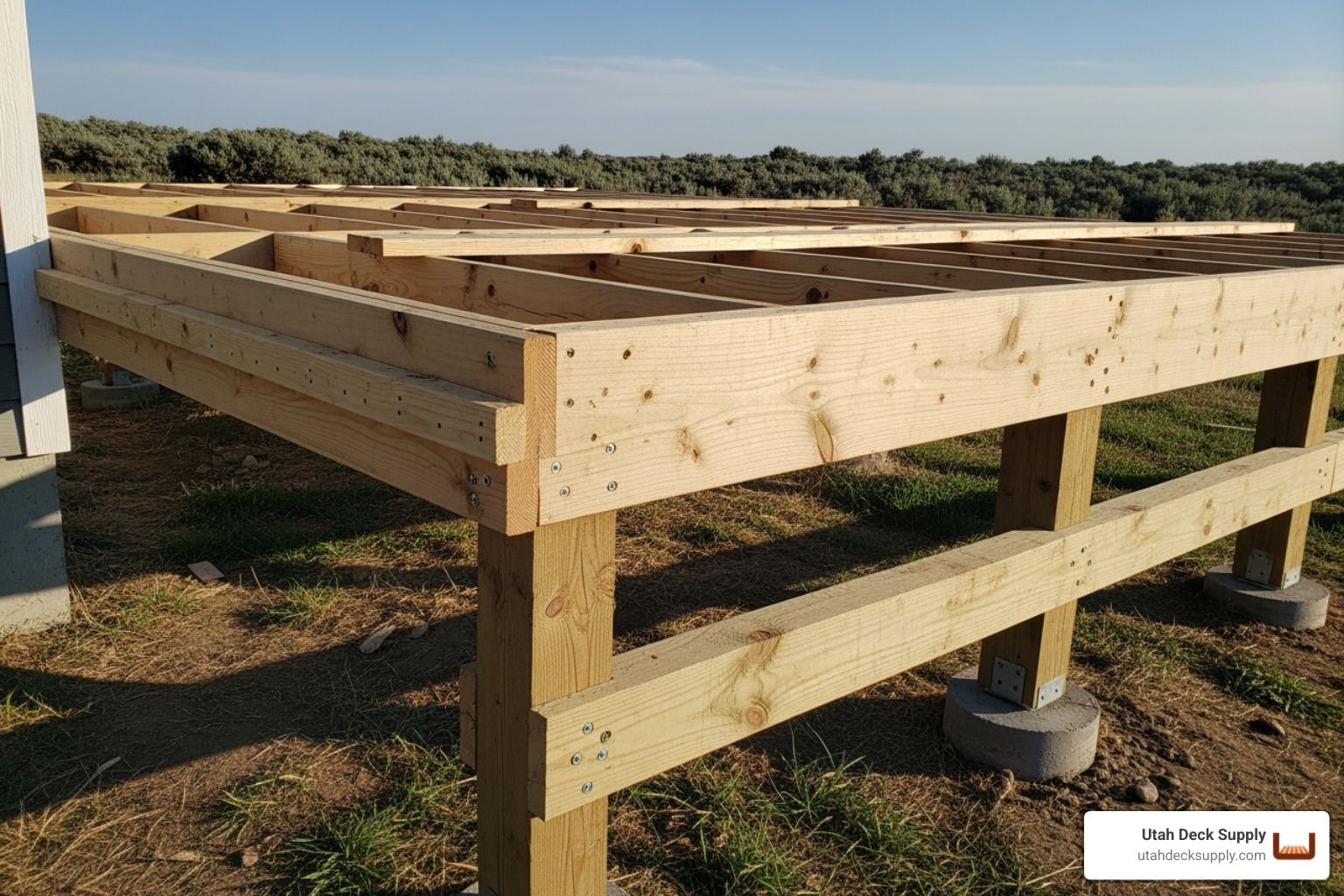
- Footings: Concrete foundations that transfer the deck’s weight to the ground, extending below the frost line.
- Posts: Vertical supports (6×6 or larger) that hold up the beams.
- Beams: Horizontal members that support the joists.
- Joists: Horizontal members that support the decking.
- Ledger Board: A board attaching the deck to the house, supporting one end of the joists.
- Decking: The surface you walk on.
- Railings (Guards): Safety barriers for liftd decks.
Understanding how these parts transfer loads (from decking to joists, to beams, to posts, to footings) is key to sizing each component correctly and ensuring a safe structure.
The Ultimate Deck Construction Guide: From Footings to Framing
Now that we’ve covered planning, let’s build the deck’s structural core. This is where precision truly matters. For a general overview, our Deck Building 101: From Concept to Completion is a great resource.
Building a Solid Foundation: Footings, Posts, and Beams
The foundation is the groundwork for your entire deck. Get this wrong, and the whole structure is at risk.
Footing Types and Sizing:
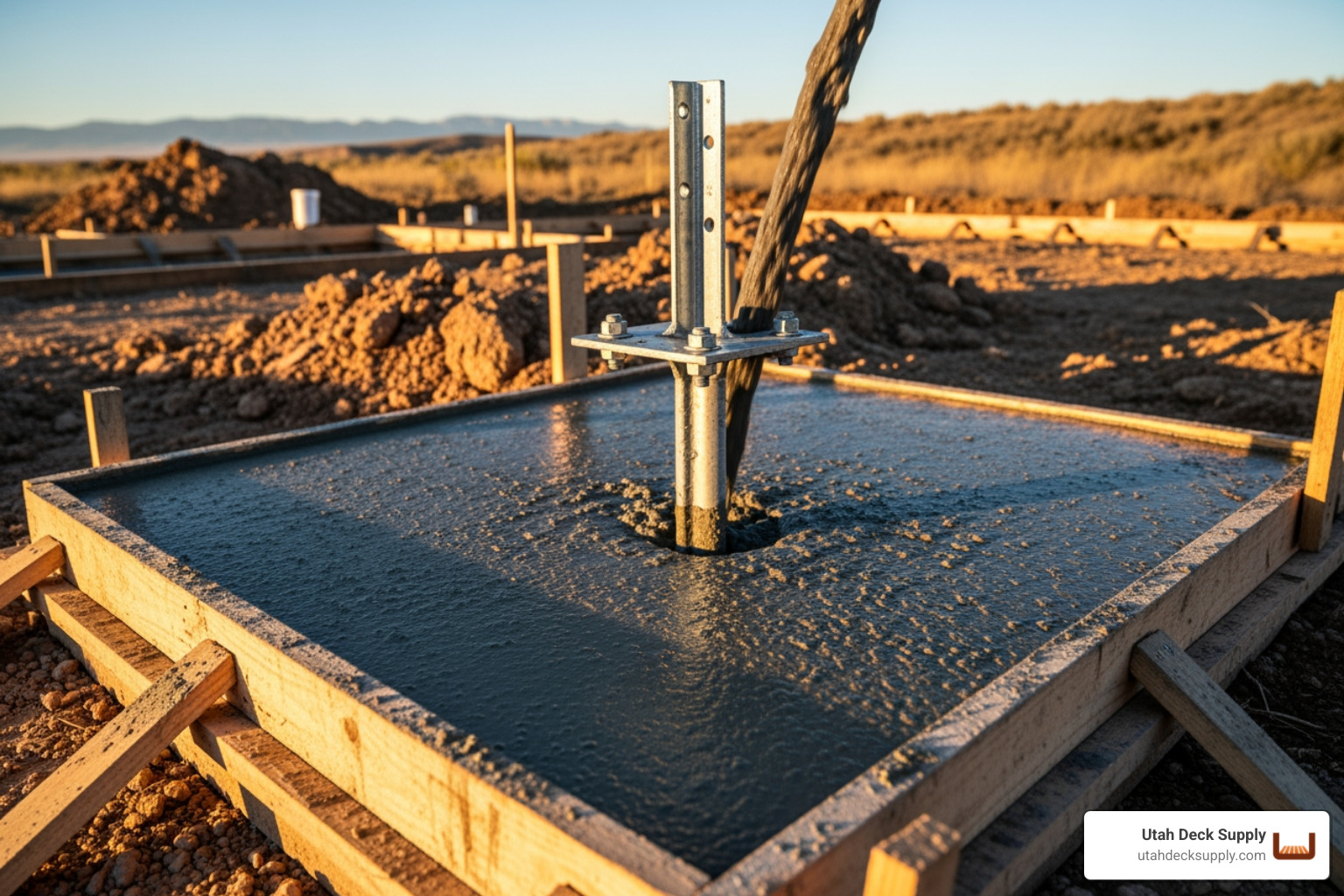
In Utah, concrete pier footings are standard. They must rest on undisturbed soil below the frost line (often 24 inches or deeper in Northern Utah) to prevent frost heave. Footing size depends on the load it supports and the soil’s bearing capacity (typically assumed at 1,500 psf). We recommend a minimum 2,500 PSI concrete mix and rebar for added strength.
Post Requirements:
- Size: All deck posts must be 6×6 nominal or larger for stability.
- Attachment: Posts must be centered on footings and anchored with metal post bases set in the concrete. Always field-treat cut ends of pressure-treated posts with a wood preservative.
Beam Assembly and Connection to Posts:
Beams support the joists and transfer their load to the posts. Their size depends on joist span and post spacing; always consult prescriptive span tables from resources like the Prescriptive Residential Wood Deck Construction Guide.
- Assembly: Beams are often “built-up” from multiple plies of lumber (e.g., two 2x10s) fastened together.
- Connection: Beams must have at least 1-1/2″ of solid bearing on top of posts. This is achieved by resting the beam on a notched 6×6 post or using approved metal post caps. Never simply bolt a beam to the side of a post. Find what you need in our Deck Hardware: Complete Guide.
Assembling the Deck Frame: A Key Part of this Deck Construction Guide
With the foundation set, it’s time to build the deck’s skeleton.
Ledger Board Requirements:
The ledger board is the critical link between your deck and house. Do not cut corners here.
- Size: The ledger must be a minimum of 2×8 lumber.
- Attachment: Remove siding to attach the ledger directly to the house’s band joist. Install corrosion-resistant flashing over the ledger to direct water away. Use ½” diameter lag screws or bolts with washers, staggering them to prevent splitting the wood. Spacing depends on joist span.
- Prohibited Attachments: Never attach a ledger to brick/stone veneer, hollow masonry, or cantilevers like bay windows. For homes with I-joists, a free-standing deck is often the safest solution.
Joist Sizing and Spans:
Joists directly support the decking. Their size (e.g., 2×8, 2×10) and spacing (12″, 16″, or 24″ on-center) depend on the wood type and span length. Always use span tables to determine the correct size. Composite decking may require tighter joist spacing (e.g., 12″ on-center for angled patterns).
Joist Hangers and Connections:
When joists are flush with a beam or ledger, use galvanized or stainless steel joist hangers. They must be the correct size for the joist and installed with specified structural nails, not deck screws.
Lateral Load Resistance and Bracing:
A deck needs anchoring to resist side-to-side forces. For attached decks, at least two hold-down tension devices (rated for 1,500 lbs) are required to connect the deck frame to the house’s structure. Free-standing decks require diagonal bracing between posts and beams for stability.
Finishing Touches: Decking, Stairs, and Safety Railings
With the frame complete, it’s time to add the decking surface, stairs, and railings. This is where aesthetics meet safety, turning a structure into an inviting outdoor space.
Installing Decking and Building Safe Stairs
This stage is all about the details that make your deck functional and beautiful.
Decking Installation:
We stock a huge variety of decking at Utah Deck Supply, from wood to top composite brands like Trex, TimberTech, and Deckorators.
- Spacing: Proper spacing is crucial for drainage and expansion. For wood, use a 1/8″ gap. For composites, follow manufacturer guidelines, typically 3/16″ side-to-side and end-to-end, and 1/4″ against structures.
- Fasteners: For wood, use two #8 screws or 8d threaded nails per joist. For composites, choose between color-matched surface screws or hidden fasteners for a clean look. Keep fasteners at least 5/8″ from board ends and edges.
Building Safe Stairs:
Stairs must be built to exact standards to prevent falls.
- Stringers: Use a minimum of 2×12 lumber. If the total vertical rise exceeds 12 feet, an intermediate landing is required.
- Dimensions: For safety and comfort, follow these rules:
- Riser Height: Max 7-3/4 inches.
- Tread Depth: Min 10 inches.
- Width: Min 36 inches.
- Headroom: Min 6′-8″ clearance.
- Handrails: Required for stairs with 4 or more risers. The handrail height must be between 34 and 38 inches, measured from the tread nosing. It must be continuous and graspable (typically 1-1/4″ to 2-5/8″ in diameter).
Find what you need from our list of Essential Deck Building Supplies.
Your Deck Construction Guide to Code-Compliant Guards
Guards (or railings) are vital safety features on liftd decks.
- When Required: A guard is required if the deck surface is more than 30 inches above the ground.
- Guard Height: The minimum height is 36 inches. However, if the deck is more than 5′-11″ above grade, the guard must be at least 42 inches high.
- Guard Post Attachment: This is a common failure point. Posts must be a minimum of 4×4 and securely bolted to the deck’s rim joist or joists—never just notched. Posts must be able to resist a 200 lb point load.
- Baluster Spacing (4-Inch Sphere Rule): Openings between balusters cannot allow a 4-inch sphere to pass through. This prevents children from falling through. On stairs, the opening in the triangle formed by the tread, riser, and bottom rail must not pass a 6-inch sphere.
At Utah Deck Supply, we offer expert guidance on these codes and a huge selection of Deck Railing Options: Safety and Style Combined to help you build a safe, beautiful, and compliant deck.
Building a deck is a significant undertaking, but with this comprehensive deck construction guide and the right support, you can achieve a stunning outdoor space. We know Utah’s building codes and climate, and we’re here to help.
Ready to start your project? Our team of experts at Utah Deck Supply is ready to provide personalized advice and help you select the best materials from our extensive inventory. Don’t hesitate to give us a call at 385-993-5492, or simply Request a Free Quote to get started today!