Quick Guide: Top Garden Decking Materials at a Glance
Choosing the perfect garden decking materials is the first step to creating an outdoor oasis for relaxing, entertaining, and enjoying the beauty of your surroundings. With so many options on the market, from classic wood to modern composites, making the right choice can feel overwhelming. This guide will break down the pros, cons, costs, and key features of the most popular decking materials to help you build a deck that you’ll love for years to come.
Here’s what you need to know about the most popular garden decking materials:
| Material Type | Best For | Typical Lifespan | Maintenance Level |
|---|---|---|---|
| Pressure-Treated Wood | Budget-conscious projects | 10-15 years | High (annual staining/sealing) |
| Cedar/Redwood | Natural beauty enthusiasts | 20+ years | Moderate (regular maintenance) |
| Composite (Capped) | Low-maintenance durability | 25-50 years | Very Low (occasional cleaning) |
| PVC (Vinyl) | Maximum performance | 25-50+ years | Minimal (soap and water) |
| Hardwoods (Ipe) | Premium natural look | 40+ years | Moderate (periodic oiling) |
Key Takeaway: Composite and PVC decking offer the best long-term value despite higher upfront costs, while pressure-treated wood remains the most affordable initial option but requires significant ongoing maintenance.
Why Your Decking Material Choice Matters More Than You Think
You know what? The decking material you choose today will impact your weekends for decades to come. Pick traditional wood and you’re signing up for annual staining sessions. Go with composite or PVC and you’ll spend more time enjoying your deck than maintaining it.
The truth is, Utah’s extreme climate—intense summer sun, heavy winter snow, and dramatic temperature swings—makes material selection even more critical. A deck that performs beautifully in a milder region might crack, fade, or warp after just a few Wasatch Front winters.
Modern garden decking materials have come a long way, but not all brands are equal. Some fade quickly under Utah’s intense UV exposure, while cheaper options can flex or sag. As James Bonham, co-founder of Utah Deck Supply with years of hands-on experience at Trex Company, I’ve seen how the right garden decking materials can transform outdoor spaces while the wrong choice leads to costly repairs. Our team helps contractors and homeowners steer Utah’s unique climate to select materials that deliver decades of reliable performance.
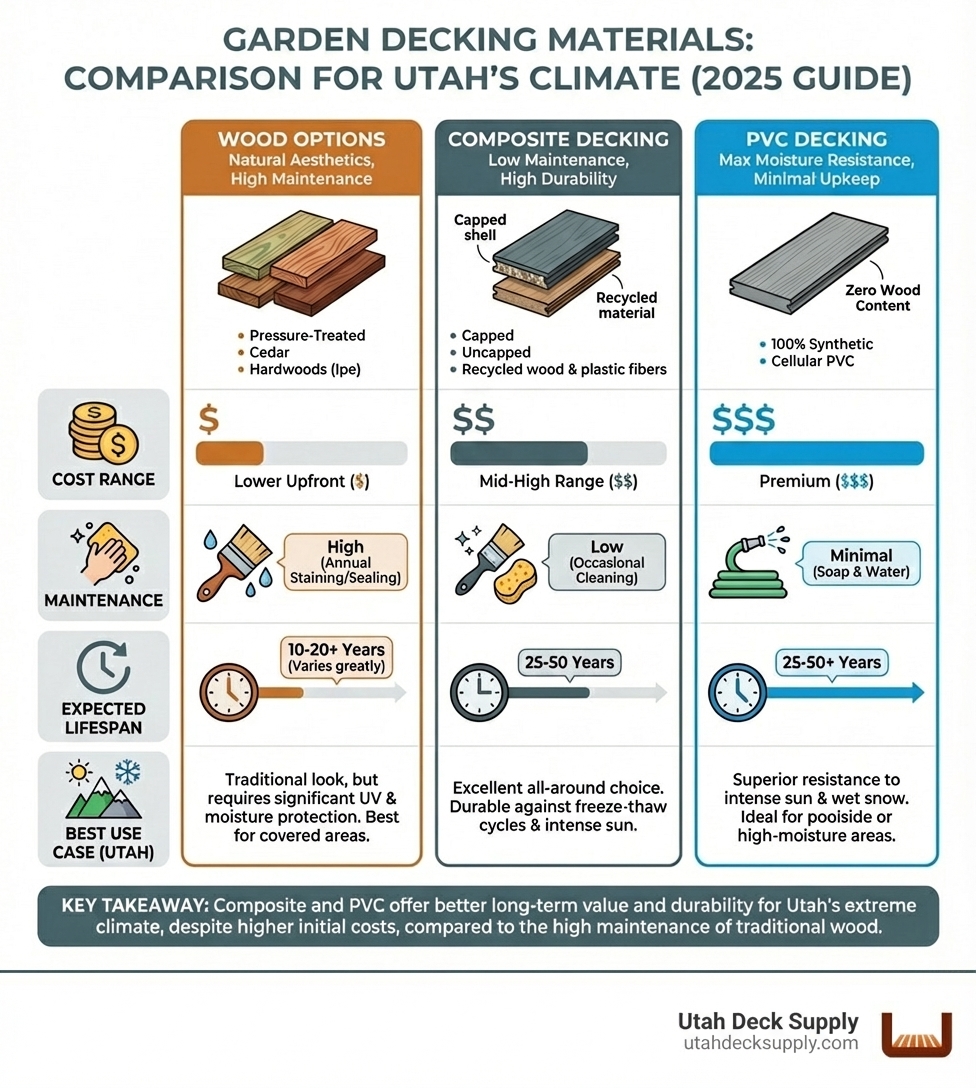
A Deep Dive into Garden Decking Materials
Here’s the thing, the “best” material really depends on your priorities. Let’s break down the top contenders to see which one aligns with your budget, lifestyle, and vision for your outdoor space.
The Timeless Appeal of Wood Decking
Wood offers a natural warmth and classic aesthetic that many homeowners adore. But not all wood is created equal. The main options for wood garden decking materials are pressure-treated lumber, cedar, and exotic hardwoods like Ipe, each with unique characteristics.
Pressure-Treated Lumber: This is the most budget-friendly option, consisting of pine that has been chemically treated to resist insects and rot. While affordable upfront, it requires significant ongoing maintenance. For a deeper dive, check out The Ultimate Guide to Pressure-Treated Decking.
- Pros:
- Affordable Upfront: The lowest initial cost for a deck.
- Readily Available: Easy to find at most lumber yards, including our Lumber selection.
- Easy to Work With: Cuts and installs like traditional wood.
- Cons:
- High Maintenance: Requires annual staining and sealing to prevent splinters and decay.
- Prone to Damage: Can warp, crack, and splinter in Utah’s dry, sunny climate.
- Shorter Lifespan: Typically lasts only 10-15 years.
Cedar: A step up from pressure-treated lumber, cedar has a beautiful reddish tone and is naturally resistant to insects and decay. Learn more in Benefits of Cedar Decking for Your Outdoor Space.
- Pros:
- Natural Resistance: Inherently resistant to decay and insects.
- Aesthetic Appeal: Beautiful grain that weathers to a soft gray if left untreated.
- Cons:
- Moderate Maintenance: Still needs annual sealing to maintain its color and reach its 20+ year lifespan.
- Soft Surface: Prone to scratches and dents.
- Higher Cost: More expensive than pressure-treated wood.
Hardwoods (e.g., Ipe): For a luxurious and highly durable wood option, exotic hardwoods like Ipe are exceptional. These dense woods are incredibly strong and naturally resistant to rot, insects, and even fire.
- Pros:
- Exceptional Durability: Can last 40 years or more.
- Stunning Aesthetics: Rich, deep colors and a fine grain.
- Cons:
- Most Expensive Wood: A premium material with a high upfront cost.
- Difficult to Install: Requires specialized tools and pre-drilling.
- Maintenance for Color: Needs periodic oiling to maintain its rich color.
For a comprehensive look at all wood options, our Ultimate Guide to Timber Decking and Choosing the Right Wood for Your Dream Deck are great resources.
The Modern Workhorse: Composite Decking
Composite decking is a game-changer, offering the look of wood without the relentless maintenance. It’s an engineered material made from recycled wood fibers and plastic, making it an eco-friendly choice. Brands like Trex use up to 95% recycled materials.
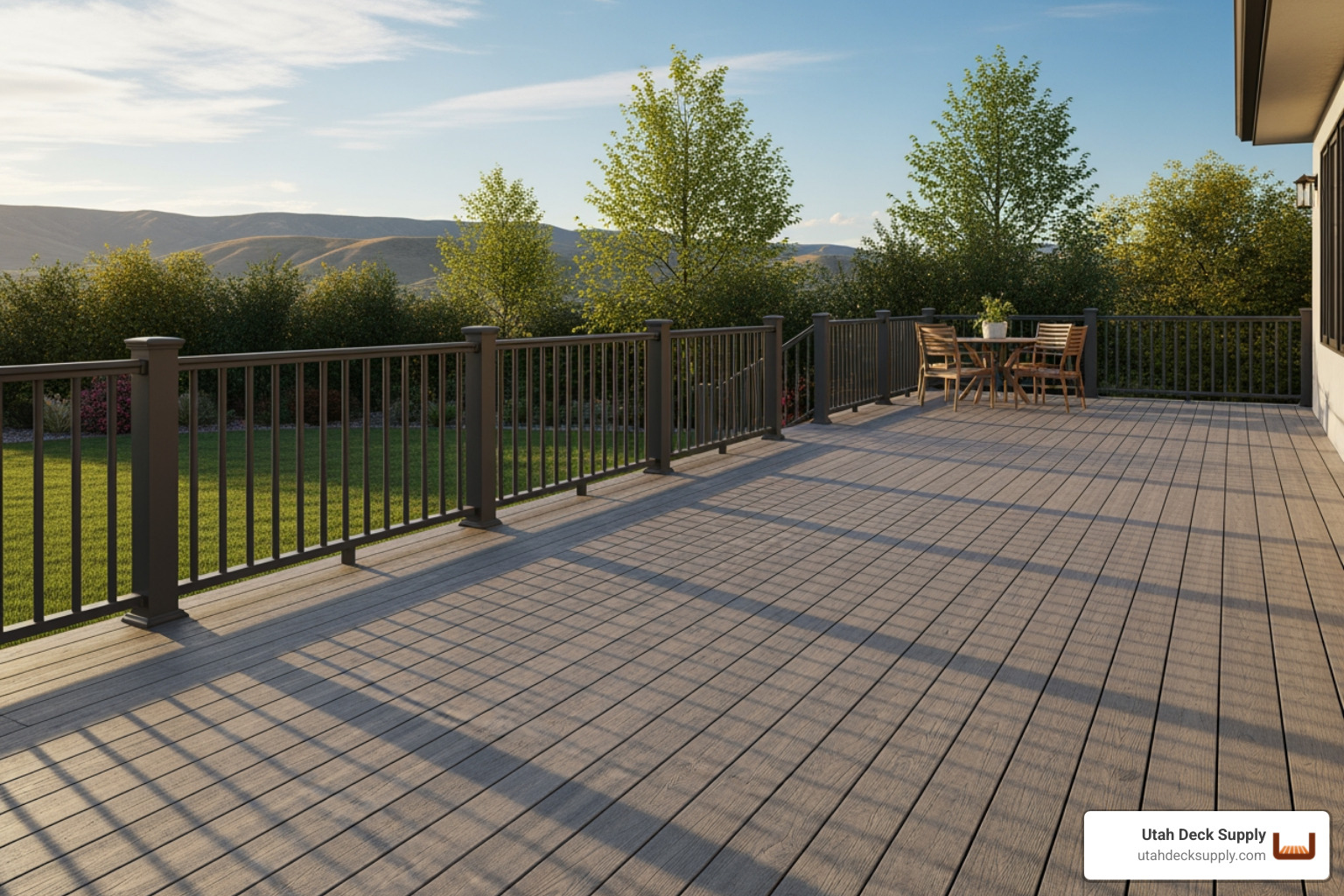
- Pros:
- Low Maintenance: Never needs sanding, staining, or painting. Just occasional cleaning.
- Durability & Lifespan: Resists rot, insects, and weathering, lasting 25-50 years.
- Aesthetics: Comes in a wide variety of colors and realistic wood-grain patterns.
- Splinter-Free: Safe for bare feet and pets.
- Warranties: Backed by robust 25- to 50-year warranties.
- Cons:
- Higher Upfront Cost: More expensive initially than pressure-treated wood.
- Heat Retention: Darker colors can get hot, though new options like Trex Transcend Lineage are engineered to stay cooler.
Capped vs. Uncapped Composite: This is a crucial distinction. Uncapped composites are an older technology prone to staining and mold. We don’t recommend them. Capped composites have a protective polymer shell, making them highly resistant to stains, scratches, and fading. This is the modern standard offered by top brands like Trex Decking, TimberTech, and Fiberon, and it’s essential for Utah’s climate. Learn more in our Ultimate Guide to Choosing Composite Decking.
The Premium Option: PVC Decking
PVC (Polyvinyl Chloride) decking is a fully synthetic material with no wood fibers. This makes it the ultimate choice for moisture resistance and low maintenance, representing the peak of synthetic garden decking materials.
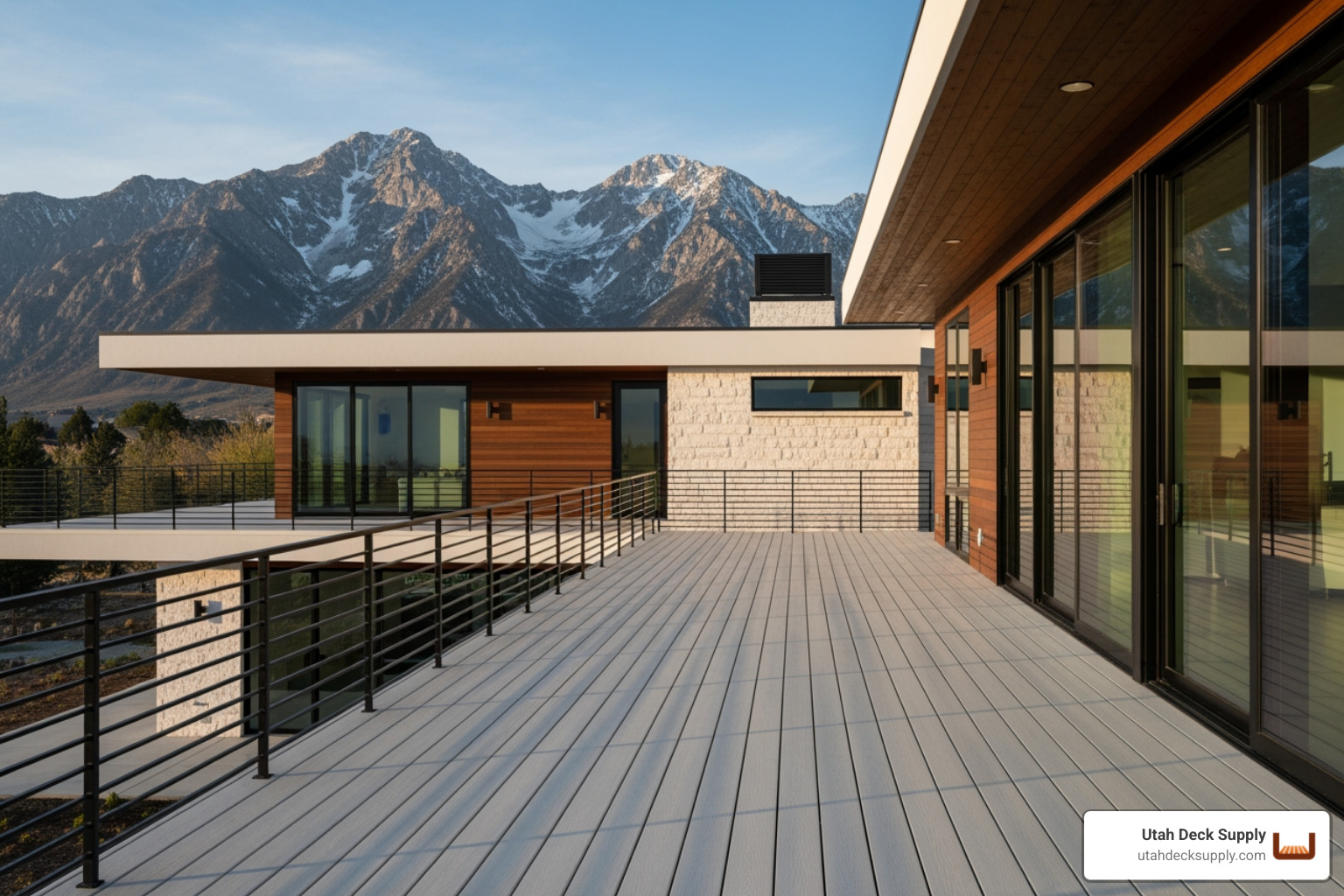
- Pros:
- Completely Waterproof: Impervious to moisture, rot, mold, and insects.
- Minimal Maintenance: Requires only simple cleaning with soap and water.
- Exceptional Lifespan: Lasts 25-50+ years, often with limited lifetime warranties.
- Lightweight: Lighter than wood or composite, which can simplify installation.
- Cooler to the Touch: Advanced PVC like TimberTech Advanced PVC stays cooler in the sun.
- Fire Resistance: Many products offer excellent Class A fire ratings.
- Cons:
- Highest Upfront Cost: Typically the most expensive option.
- Aesthetic: While realistic, some may find it looks less natural than high-end composites or real wood.
For a comprehensive look, explore The Ultimate Guide to PVC Decking and compare it to other options in this decking materials overview.
How to Choose the Best Decking for Your Home
So, how do you make the final call? It comes down to balancing three key areas: cost, durability, and your personal lifestyle. Honestly, there’s no single right answer, but we can guide you to the perfect choice for your project.
Comparing Your Garden Decking Materials: Cost vs. Long-Term Value
The sticker price of garden decking materials doesn’t tell the whole story. Let me explain. Wood decking has the lowest upfront cost but requires expensive and time-consuming annual maintenance (staining, sealing). Over its shorter 10-15 year lifespan, these costs add up. In contrast, composite and PVC decking have a higher initial price but save you money and time in the long run. With lifespans of 25-50+ years and only needing occasional cleaning, they offer superior long-term value and a better return on your investment. A low-maintenance deck is also a strong selling point for your home. For a detailed breakdown, see our Decking Materials Compared: Pros and Cons guide.
| Material | Upfront Cost (per sq ft) | Average Lifespan | Annual Maintenance Cost | Long-Term Value |
|---|---|---|---|---|
| Wood (PT) | $3 – $6 | 10 – 15 years | $150 – $400+ (materials & labor for stain/seal) | Lower |
| Wood (Cedar) | $9 – $11.50 | 20+ years | $150 – $400+ (materials & labor for stain/seal) | Moderate |
| Wood (Ipe) | $15 – $20+ | 40+ years | $100 – $300 (oiling) | High |
| Composite | $5 – $13 | 25 – 50 years | $20 – $50 (cleaning supplies) | High |
| PVC | $12 – $26+ | 25 – 50+ years | $10 – $30 (cleaning supplies) | Very High |
Note: Costs are estimates and can vary based on market, specific product lines, and installation complexity.
Durability and Maintenance in Utah’s Climate
Utah’s climate, with its intense sun, heavy snow, and freeze-thaw cycles, is a true test for any outdoor material. Choosing garden decking materials that can withstand these extremes is paramount.
- Weather & UV Resistance: Wood is vulnerable to moisture and UV damage, requiring constant care. Capped composite and PVC are engineered to resist these elements, backed by long fade and stain warranties—crucial under Utah’s high-altitude sun.
- Snow & Temperature Swings: While all decks get slick, composite and PVC handle freeze-thaw cycles without splitting like wood can. You can safely use rock salt or calcium chloride on them.
- Heat & Fire Safety: Darker decking gets hot, but innovative products like Trex Transcend Lineage are engineered to stay cooler. For fire-prone areas, many PVC and composite products offer a Class A Flame Spread Rating and are WUI-compliant, a feature wood lacks.
- Warranties & Cleaning: Wood has minimal warranties. Composites and PVC come with 25- to 50-year (or lifetime) warranties. Cleaning is simple: soap and water for synthetics versus annual sanding and sealing for wood.
For more insights, check out our guides on Weather-Resistant Options and Low Maintenance Deck Boards.
Final Factors to Consider Before You Buy
Beyond the technical specs, your final choice comes down to these key personal and practical factors:
- Budget (Upfront vs. Long-Term): Don’t just look at the initial price. A higher upfront cost for composite or PVC often means significant long-term savings.
- Lifestyle: Be honest—do you enjoy annual maintenance projects, or would you rather just relax on your deck? Your answer points you to either wood or a low-maintenance alternative.
- Aesthetic Preference: Do you prefer the unique character of real wood or the consistent color and clean lines of synthetics? Choose what best complements your home’s style.
- Eco-Friendliness: If sustainability is key, look at composites made from up to 95% recycled materials or PVC with recycled content.
- Expert Guidance from Utah Deck Supply: This is where we shine. Visit our West Jordan showroom to see and feel the materials yourself. Our team offers expert advice custom to Utah’s climate, helping you choose from our in-stock inventory of Decking Materials. We serve homeowners and contractors across the Wasatch Front and beyond.
For a comprehensive guide to all these factors, take a look at The Ultimate Guide to Choosing the Perfect Deck Material: A Comprehensive Guide.
Ready to Build Your Dream Deck?
We hope this deep dive into garden decking materials has clarified your options and brought you closer to making the right choice for your outdoor space. Whether you prioritize the natural charm of wood, the low-maintenance durability of composite, or the ultimate performance of PVC, we have the materials and expertise to bring your vision to life.
Don’t settle for anything less than the best for your Utah home. Visit our showroom, speak with our experts, and let us help you select the perfect decking that will stand up to our unique climate and provide years of enjoyment.
Explore our full range of garden decking materials and accessories today: Decking Materials