
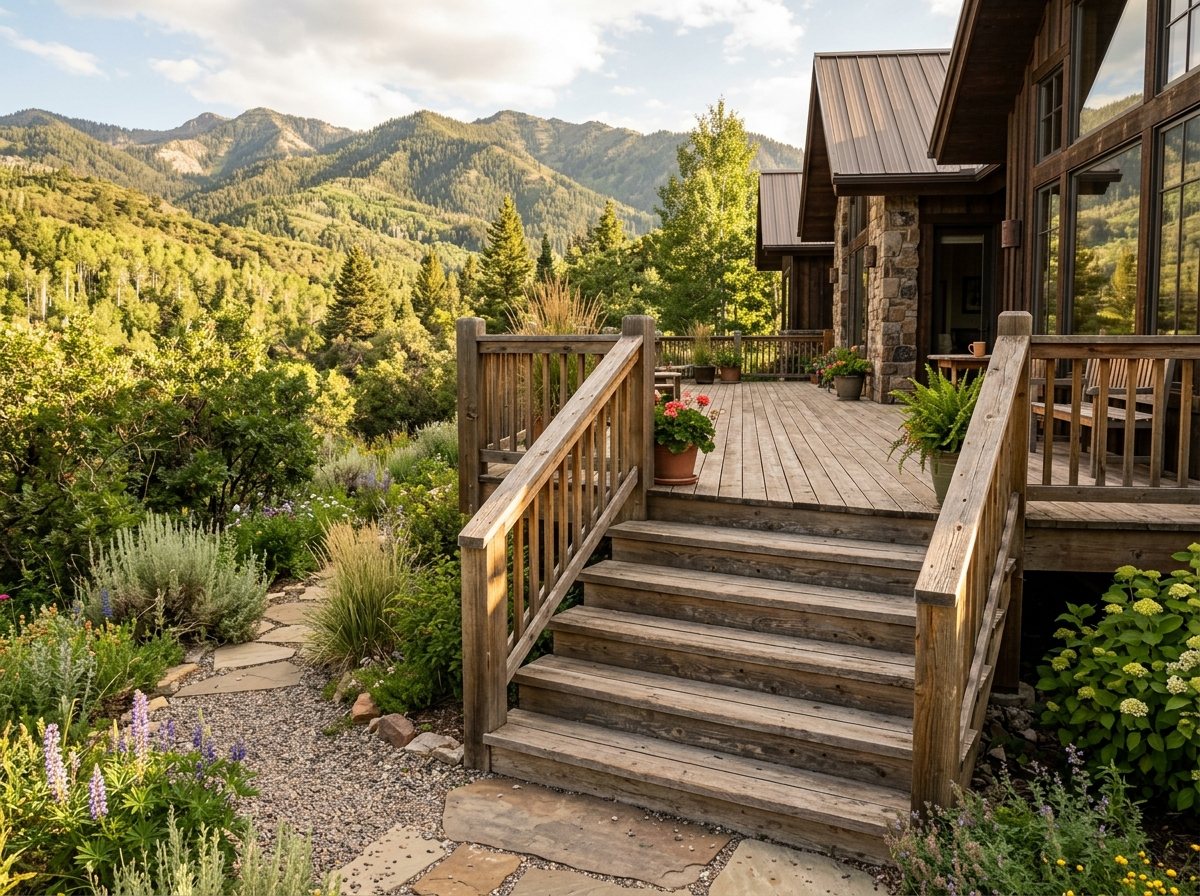
If you’re wondering how to build wooden outdoor steps that are safe, durable, and good-looking, you’re in the right place. Honestly, this project is very doable for a careful DIYer, but the difference between sturdy stairs and frustrating rework usually comes down to smart planning, precise measurements, and using the right materials from the start.
Why Your Outdoor Steps Are More Important Than You Think
Building a functional and beautiful entryway is one of the most rewarding DIY projects you can tackle for your home. Honestly, learning how to build wooden outdoor steps is less about brute force and more about the precision of your measurements and the quality of your measurements and the quality of your materials. Get those two things right, and the rest follows naturally.

Here’s the quick answer — building wooden outdoor steps comes down to these core steps:
- Measure your total rise (height from ground to deck or porch)
- Calculate riser height and number of steps (aim for 6.5–8 inches per riser)
- Choose rot-resistant lumber (pressure-treated pine, cedar, or redwood)
- Mark and cut your stringers using a framing square
- Attach stringers to your deck’s rim joist using joist hangers or stringer connectors
- Install risers and treads, leaving small gaps for drainage
- Seal or stain the finished steps to protect against weather and wear
You know what? Most people underestimate this project — not because it’s too hard, but because they skip the planning phase. A small measurement error early on compounds fast. One source notes that a 1/4-inch variance per step can snowball into a 3-inch error across 12 steps. That’s the difference between safe, code-compliant stairs and a wobbly liability.
Let me explain why this matters: outdoor steps are a structural element, not just a cosmetic one. They need to handle daily foot traffic, Utah’s freeze-thaw cycles, and the weight of everyone from your kids to contractors carrying heavy loads. Done right, wooden steps add curb appeal, improve access, and last for decades.
I’m James Bonham, co-founder of Utah Deck Supply and a former Trex Company professional with hands-on experience helping contractors and DIYers understand exactly how to build wooden outdoor steps that hold up in Utah’s demanding climate. In the sections below, I’ll walk you through every step — from calculating dimensions to final finishing — so you can build with confidence.

How to Build Wooden Outdoor Steps: A Step-by-Step Guide
Building stairs isn’t just about nailing boards together; it’s about creating a safe, ergonomic transition between levels. Whether you are connecting a high-elevation deck to a patio in Salt Lake City or building a simple set of porch steps in Provo, the fundamentals remain the same.
Before you pick up a saw, you need to choose the right foundation. For most outdoor projects, best-lumber-for-durable-decks/ is the first place to look. In our experience, the wood you choose dictates how much maintenance you’ll be doing three years from now.
| Wood Type | Durability | Maintenance | Best Use Case |
|---|---|---|---|
| Pressure-Treated Pine | High (Rot/Insect resistant) | Requires annual sealing | Budget-friendly, structural stringers |
| Western Red Cedar | Medium-High (Natural oils) | Moderate staining needed | High-end aesthetic, cooler to the touch |
| Redwood | High (Natural resistance) | Moderate staining needed | Luxury finishes, very stable |
Honestly, if you’re a beginner, this Beginner’s Guide to Building Sturdy Steps (Construction Basics) is a great companion to this guide. It emphasizes that success isn’t just about the final look—it’s about tracking every measurement to ensure rock-solid stability.
Measuring and Calculating Your Stair Dimensions
Here’s the thing: you cannot guess your stair dimensions. You need to find your Total Rise, which is the vertical distance from the top of the deck (including the thickness of the decking) to the ground or landing pad.
- Total Rise: Measure from the deck surface to the ground. Let’s say it’s 35 inches.
- Number of Steps: Divide the total rise by the “ideal” riser height (usually 7 inches). 35 ÷ 7 = 5 steps.
- Unit Rise: If your number isn’t even, divide the total rise by the number of steps to get the exact riser height.
- Unit Run: This is the depth of the step. Code usually requires at least 10 inches, but 11 inches is the gold standard for comfort.
According to How to Build Deck Stairs – This Old House, the difference between your largest and smallest riser height cannot exceed 3/8 of an inch. If one step is taller than the others, it becomes a major trip hazard. Always check deck-building-permits-and-regulations-navigating-the-red-tape/ for local Utah requirements, as some municipalities have specific rules for egress.
Selecting the Best Lumber and Hardware
For the “skeleton” of your stairs (the stringers), you must use 2×12 pressure-treated lumber. Anything smaller won’t have the structural integrity left after you cut the notches. For the treads—the part you actually step on—we recommend 5/4 deck boards or 2×6 lumber.
When it comes to hardware, don’t skimp. Utah’s climate is brutal on fasteners. You need corrosion-resistant deck screws and structural screws for attaching the stringers to the deck.
We also strongly recommend using joist hangers or specialized stair stringer connectors. These provide a mechanical connection that is far superior to just “toenailing” screws through the wood. You can find everything you need in our deck-hardware-complete-guide/.
Cutting and Marking Stringers for Your How to Build Wooden Outdoor Steps

This is the most technical part of learning how to build wooden outdoor steps. You’ll need a framing square and a set of “stair gauges” (small brass knobs that clamp onto the square).
- Marking: Set one gauge on the square at your riser height and the other at your tread depth. Lay the square on the 2×12 and trace the notches.
- The “Bottom Step” Rule: This is a pro tip. You must subtract the thickness of the tread material from the very bottom of the stringer. If you don’t, your first step will be too high once you add the wood on top!
- Cutting: Use a circular saw to cut the notches, but stop just before the corner. If you over-cut, you weaken the stringer by up to 40%. Finish the corner with a handsaw for a clean, strong joint.
For more on the specific tools you’ll need, check our list of essential-deck-building-supplies/. Once your first stringer is cut, use it as a template for the others. Most stairs require stringers spaced no more than 16 inches apart. If you’re building 36-inch wide stairs, you’ll need three stringers. This is a core part of our diy-decking-a-step-by-step-guide/.
Assembling Treads and Risers for a Sturdy Finish
Now that your stringers are mounted and level, it’s time to “skin” the stairs.
- Install Risers First: These are the vertical boards. They help square up the stringers and add significant strength.
- Install Treads: We suggest using two 2×6 boards or 5/4 boards per step. This leaves a small gap (about 1/4 inch) between them for water drainage—crucial for preventing rot in snowy Utah winters.
- Overhang: Your treads should overhang the risers by about 1 inch. This looks professional and provides more surface area for your foot.
Using structural screws ensures that your steps won’t start squeaking or wobbling after a season of use. If you’re a beginner, our diy-decking-easy-steps-for-beginners/ guide has more tips on getting these connections tight and level.
Essential Safety and Code Compliance Tips
Safety isn’t just a suggestion; it’s the law. In places like West Jordan and Salt Lake City, inspectors look for very specific things:
- Width: Stairs should be at least 36 inches wide.
- Handrails: If you have four or more risers, you generally need a handrail.
- Baluster Spacing: If you have a railing, the “4-inch rule” applies—a 4-inch sphere should not be able to pass through any part of the railing.
- Stability: Use footings at the base of the stairs. Never let your stringers sit directly on the dirt; they should rest on a concrete pad or pressure-treated “sleeper” boards.
Reviewing deck-safety-ensuring-a-secure-and-enjoyable-space/ is a great way to double-check your work. For more on the aesthetic side of safety, our guide on railing-the-stairs-everything-you-need-to-know-about-deck-stair-railings/ covers the best materials for Utah homes.
Maintaining Your How to Build Wooden Outdoor Steps for Longevity
You’ve done the hard work; now you need to protect it. Unfinished wood absorbs 30% more water and can swell significantly.
- Drying Time: If you used “wet” pressure-treated lumber, wait several weeks or even months for it to dry before staining.
- Sealing: Apply a high-quality UV-resistant sealer or stain. This prevents the wood from cracking under the intense Utah sun.
- Inspection: Once a year, check for loose fasteners or signs of rot, especially where the stringers meet the ground.
For a deep dive into material longevity, read the-ultimate-guide-to-choosing-the-best-wood-for-your-deck/ or choosing-the-right-wood-for-your-dream-deck/.
Conclusion
Learning how to build wooden outdoor steps is a rite of passage for many Utah homeowners. It’s a project that combines math, muscle, and a bit of artistry. Whether you’re building a simple path to your garden in Layton or a grand entrance to your deck in Draper, the key is using the right materials and not rushing the layout.
Honestly, the biggest mistake we see isn’t a lack of skill—it’s using the wrong wood or hardware from a big-box store that isn’t rated for our specific mountain climate. At Utah Deck Supply, we’re here to make sure that doesn’t happen. From Salt Lake City to St. George, we provide the expert guidance and professional-grade hardware you need to get the job done right the first time.
You know what? You don’t have to figure this out alone. If you’re stuck on a stair calculation or unsure which lumber grade is best for your Ogden backyard, stop by our West Jordan showroom. We’ve got the inventory in stock and the expertise to help you build something that lasts.
Building your own stairs is a major milestone, but you don’t have to do it alone. For expert advice on materials or to see our inventory in person, Request a Free Quote today.