
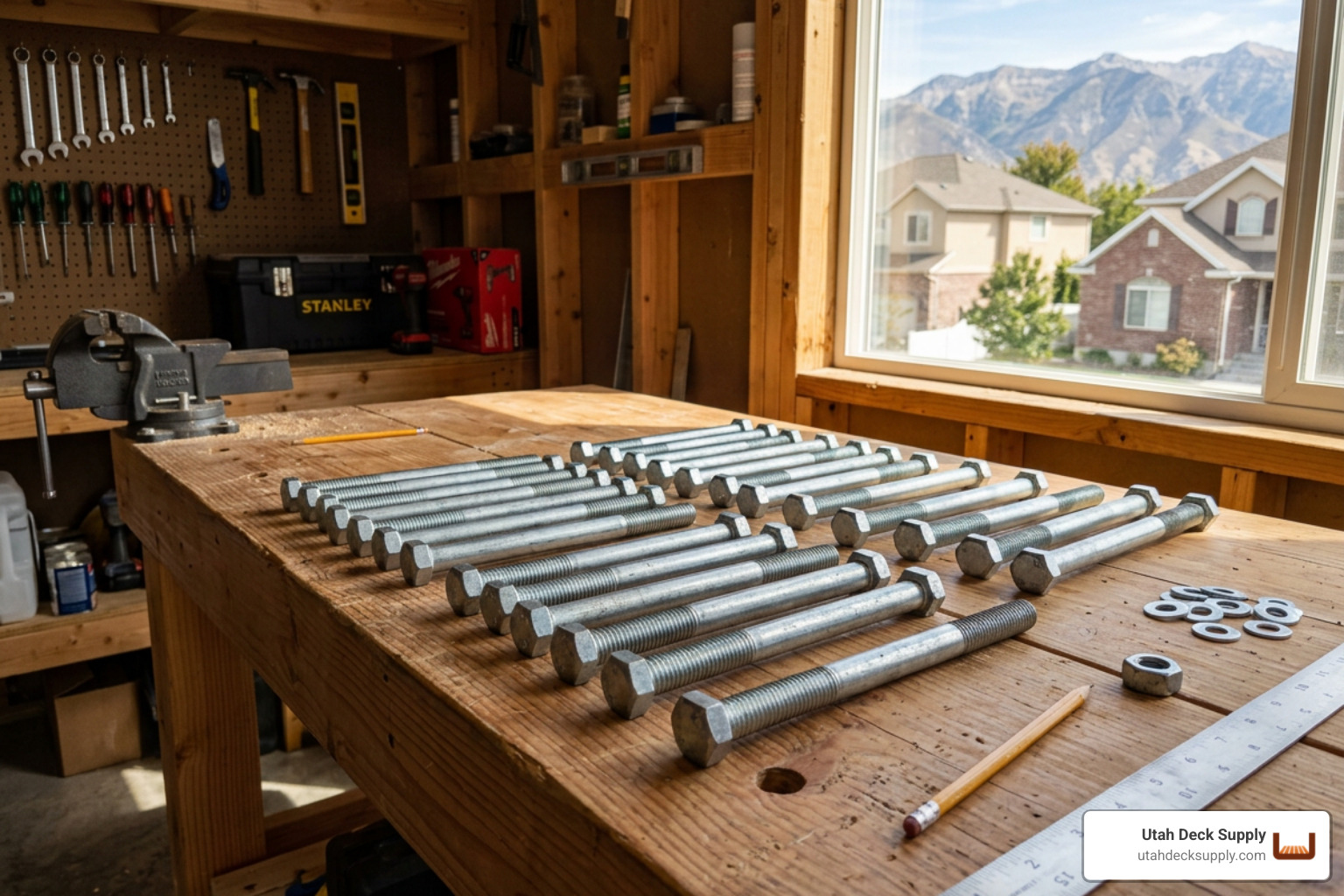
Understanding the Power of the 24 Inch Lag Screw
When you’re tackling massive timber frames or securing heavy machinery, a standard wood screw just won’t cut it. Honestly, for those truly oversized structural tasks, nothing provides the sheer gripping power and reach of a 24 inch lag screw. Let me explain why these heavy-duty fasteners are the backbone of serious construction projects.
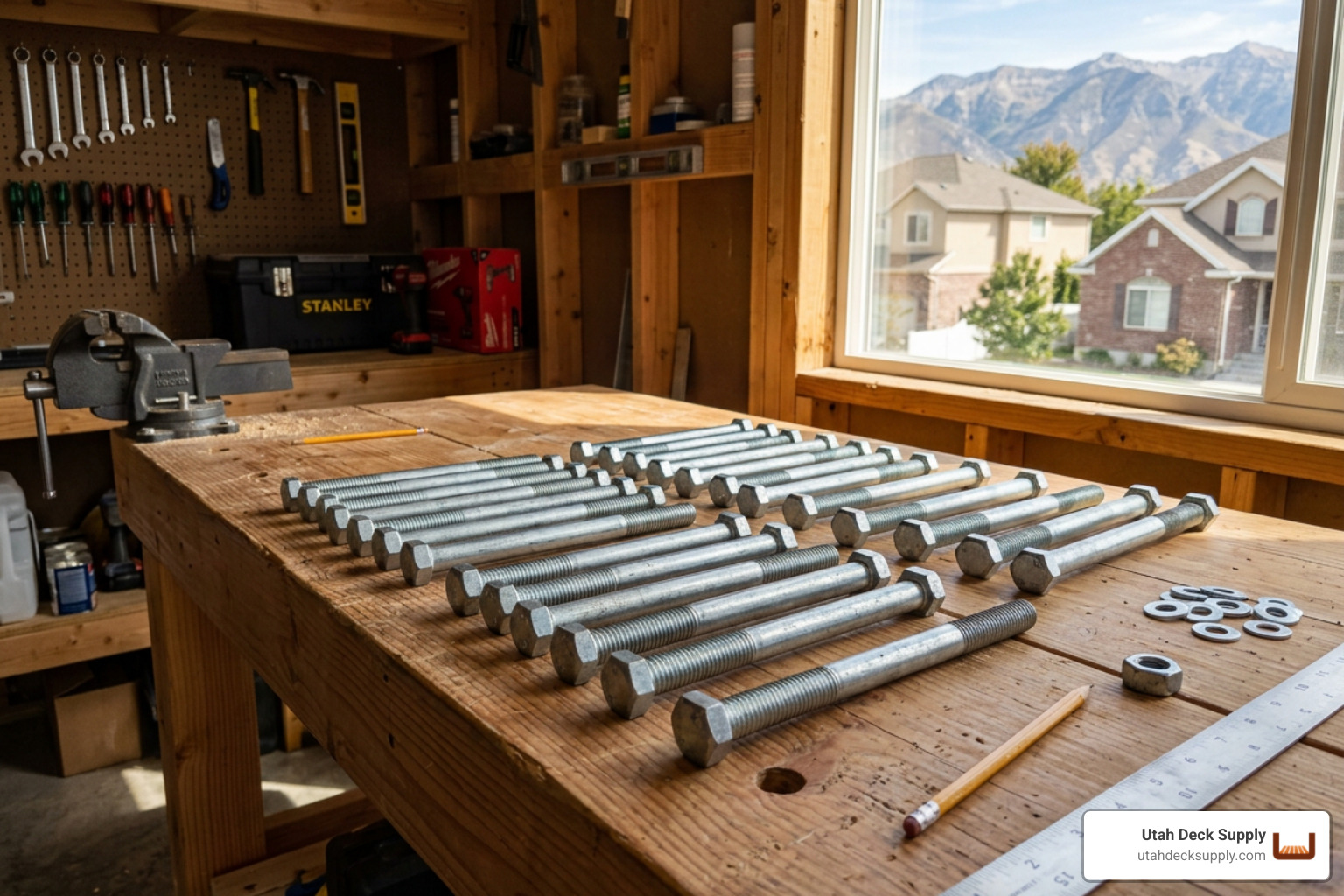
When we talk about heavy-duty fastening, the 24 inch lag screw is the heavyweight champion. Often referred to interchangeably as lag bolts, coach screws, or heavy wood screws, these fasteners are designed for applications where a standard screw would simply snap or fail to reach the necessary depth. For more context on how these fit into a broader project, check out our Deck Hardware Complete Guide.
What is a 24 inch lag screw?
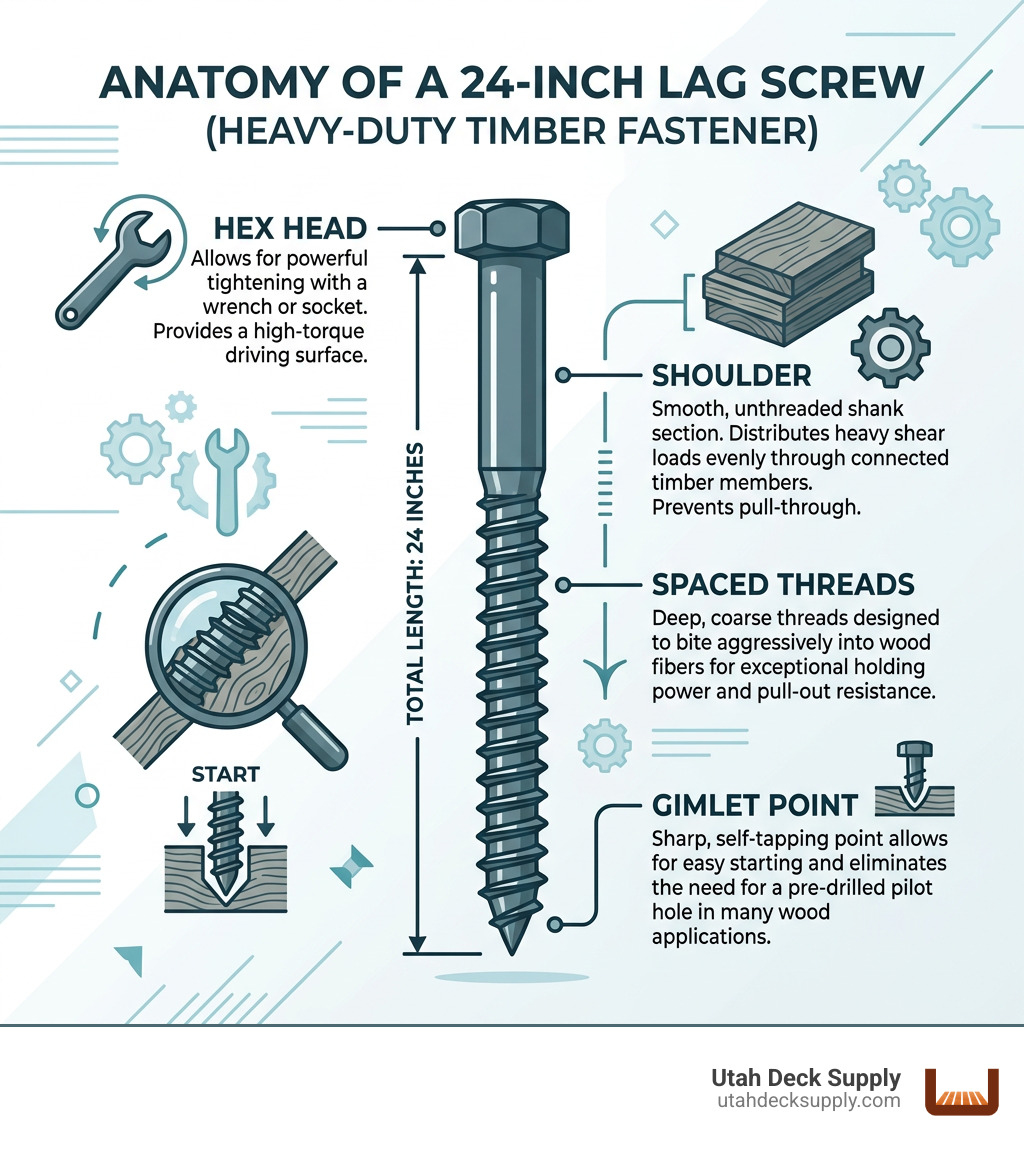
At its core, a 24 inch lag screw is a full-bodied bolt featuring a sharp, gimlet point and spaced threads designed to bite deep into wood fibers. Unlike a standard bolt that requires a nut, a lag screw creates its own mating threads in the wood.
Key characteristics include:
- Hex Drive: Designed to be driven with a wrench or socket, allowing for the high torque necessary to sink a two-foot fastener.
- Partial Threading: Most 24-inch variants feature a smooth shoulder near the head. For example, a 3/4″ x 24″ bolt often has only 5 inches of thread. This allows the screw to pull two pieces of lumber tightly together by spinning freely in the first piece while grabbing the second.
- Large Diameter: Common stock includes 1/2″ and 3/4″ diameters, providing massive shear strength.
- Material: Typically forged from low carbon steel, these are available at Utah Deck Supply in various finishes to match your specific environmental needs.
Primary Uses in Heavy Construction
You won’t find these in a birdhouse project. These are structural beasts. We see them most often in:
- Lumber Framing: Joining massive 12×12 or larger timbers in custom pavilions or log homes.
- Machinery Mounting: Securing heavy industrial equipment feet to thick wood subfloors to prevent vibration and shifting.
- Timber Trusses: Acting as the primary connection point for decorative or structural roof trusses.
- Masonry Anchoring: When paired with lag shields (die-cast zinc alloy inserts), these screws can anchor heavy structures into concrete, brick, or mortar joints.
- Heavy Carpentry: Any application where standard Essential Deck Building Supplies like 6-inch structural screws just aren’t long enough to reach the main support member.
Technical Specifications and Installation of the 24 inch lag screw
Choosing the right finish is just as important as the size. In Utah, our climate ranges from the dry heat of St. George to the heavy snow and road salt of Salt Lake City and Ogden. Selecting the wrong coating can lead to “bleeding” on your wood or, worse, structural failure due to corrosion.
| Finish | Best For | Corrosion Resistance |
|---|---|---|
| Zinc Plated | Indoor use, machinery mounting, dry framing | Moderate |
| Hot Dip Galvanized (HDG) | Outdoor decks, pergolas, treated lumber | High (A153 Spec) |
| Stainless Steel 316 | Marine environments, high-moisture areas | Maximum |
Materials, Finishes, and Safety Standards
Most 24 inch lag screw options are manufactured from low carbon steel to meet ASME B18.2.1 and SAE J429 standards. If you are working on a commercial project, ensuring your fasteners are RoHS compliant is often a requirement.
For outdoor projects in the Salt Lake Valley or Provo, we strongly recommend Hot Dip Galvanized (HDG) screws. These are treated per the A153 specification, providing a thick, sacrificial layer of zinc that stands up to the chemicals found in pressure-treated lumber.
A Note on Safety: Many steel fasteners fall under California’s Prop 65. You may see warnings regarding lead exposure. For more information on these safety standards, you can visit www.P65Warnings.ca.gov.
Key Dimensions for a 24 inch lag screw
When planning your pre-drilling, you need to know the exact physical footprint of the bolt. Here are the common specs for a 3/4″ diameter, 24-inch HDG lag screw:
- Width Across Flats: 1-1/8″ (This is your wrench/socket size).
- Head Height: Between 0.455″ and 0.524″.
- Shoulder Diameter: 0.729″ to 0.768″.
- Thread Pitch: 4.5 threads per inch.
- Shoulder Length: Minimum 0.375″, though on a 24-inch bolt, the unthreaded shank usually makes up the majority of the length.
Pro Installation and Tooling Tips
Installing a two-foot-long screw isn’t as simple as “aim and fire.” If you don’t follow the right steps, you risk splitting your expensive timber or snapping the head off the bolt.
- Predrilling is Mandatory: You must drill a pilot hole. For the threaded portion, the hole should be roughly 60-75% of the bolt’s shank diameter. For the unthreaded shoulder, the hole should be the same diameter as the shank. Check our Deck Installation Guide for more on structural connections.
- Use the Right Driver: A 1/2″ x 24″ lag screw typically requires a 3/4″ driver. For the 3/4″ diameter bolts, you’ll need a 1-1/8″ socket.
- Wrenching: While an impact wrench can get the bolt started, many pros prefer finishing the last few turns with a long-handled ratchet to “feel” the torque and ensure the wood pieces are drawing tightly together.
- Washers: Always use a flat washer (like a USS flat washer) under the head. This prevents the hex head from crushing the wood fibers and embedding itself into the timber under load.
Choosing the Right Fastener for Your Next Project
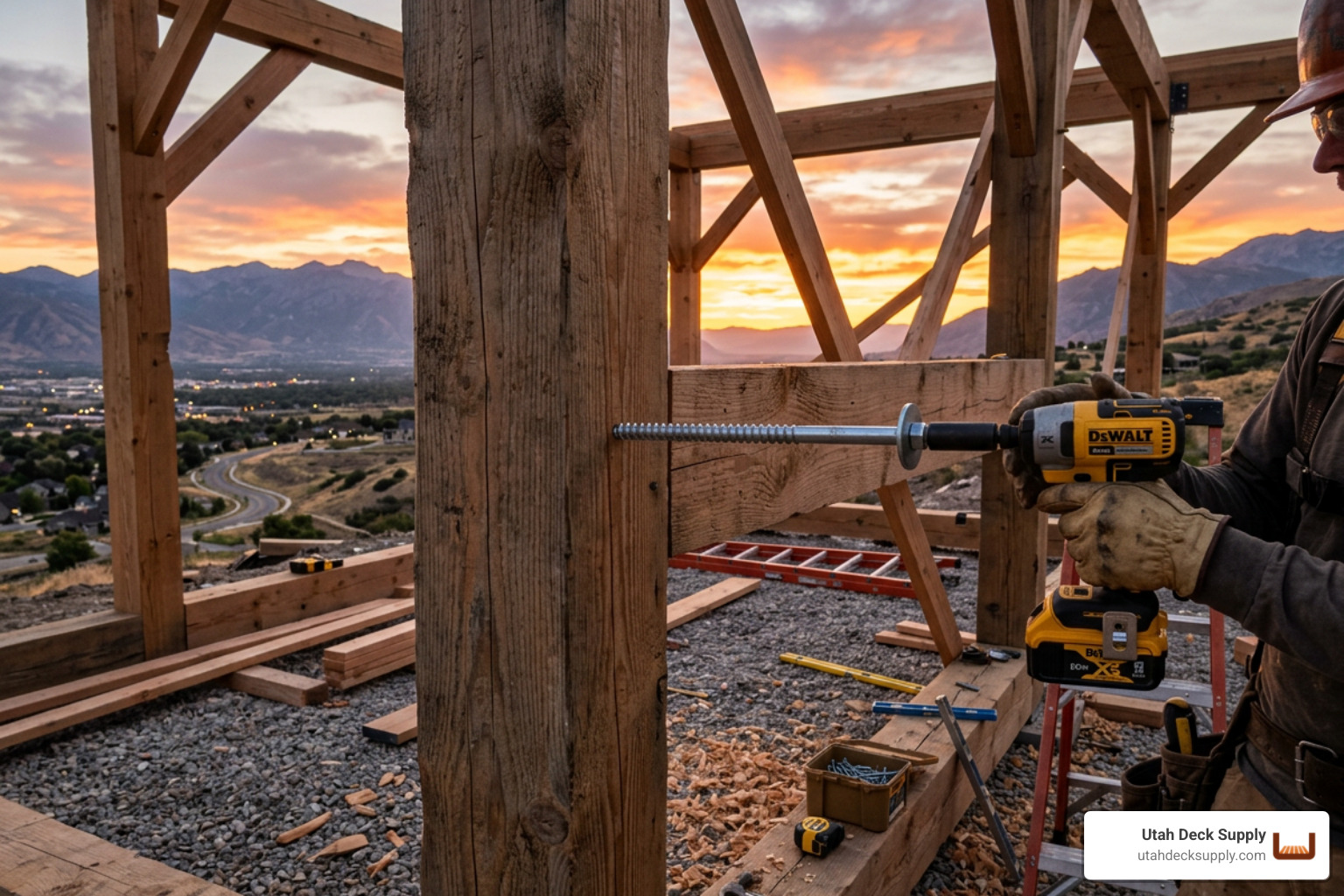
While the 24 inch lag screw is a classic, modern engineering has introduced some alternatives that might be faster for certain applications. At Utah Deck Supply, we keep a massive inventory of Hardware so you can compare these options in person at our showrooms in West Jordan or Saratoga Springs.
Comparing Lag Screws to Modern Alternatives
Sometimes, a lag screw is overkill, or perhaps you want to avoid the hassle of predrilling.
- SDS Heavy-Duty Screws: Simpson Strong-Tie Structural Screws like the SDS series feature a Type-17 point. This point acts like a drill bit, allowing for installation without a pilot hole. However, these usually max out at shorter lengths and smaller diameters (0.250″) compared to the massive 3/4″ lag bolt.
- Ground Screws: If you are looking to avoid concrete Footings, ground screws (ICC-ES ESR-4226) are a “greener” alternative. They function similarly to a giant lag screw for the earth, creating a compaction zone in the soil to support decks and pergolas.
- Joist Hangers: For standard framing, Joist Hangers and specialized connector screws are often more efficient than lagging every joint.
Pricing and Availability Because of their size and weight, 24-inch lag screws are often sold in smaller quantities or bulk cartons.
- A carton of five 1/2″ x 24″ zinc screws weighs about 8.5 lbs and costs around $64.49.
- If you’re doing a large timber project in Lehi or Eagle Mountain, buying a bulk box of 25 (which weighs a whopping 75 lbs for the 3/4″ size) can save you 10-20% through bulk discounts.
You know what? Getting the right hardware the first time saves you hours of frustration and ensures your structure stands the test of time. Honestly, there is nothing worse than being three-quarters of the way through a project in Logan or St. George and realizing your fasteners aren’t up to code or aren’t long enough to bite into the structural heart of the build.
Whether you need a single 24 inch lag screw for a machinery mount or a pallet of hot dip galvanized bolts for a custom pavilion, we have the expertise to get you squared away. If you have questions about which fastener is right for your specific Utah climate or building code, give us a call at 385-993-5492 or Request a Free Quote today.