Deck material comparison might not sound exciting at first, but if you’re about to invest thousands of dollars into a new outdoor space, it absolutely matters. In this guide, we’ll walk through the real-world differences between wood, composite, and PVC so you can feel confident you’re choosing the right deck for your Utah home. Honestly, by the end, you’ll have a clear sense of which option fits your budget, maintenance tolerance, and backyard dreams.
Building a new deck is about creating an outdoor oasis, but choosing the right material can feel overwhelming. This ultimate deck material comparison will break down the top contenders—wood, composite, and PVC—to help you find the perfect match for your home, budget, and lifestyle. Let’s find the best foundation for your future backyard memories.
Quick-Reference Deck Material Comparison
When you’re imagining your dream deck, the material you choose shapes everything from your upfront cost to your weekend maintenance chores. Here’s a quick breakdown to get you started:
| Material | Upfront Cost | Lifespan | Maintenance Level | Best For |
|---|---|---|---|---|
| Pressure-Treated Wood | Lowest ($3-$6/sq ft) | 10-15 years | High (annual staining/sealing) | Budget-conscious, DIY-friendly projects |
| Cedar/Redwood | Moderate ($9-$11.50/sq ft) | 15-20 years | Moderate (regular sealing) | Natural beauty lovers willing to maintain |
| Composite Decking | Mid-High ($5-$13/sq ft) | 25-50 years | Low (occasional cleaning) | Balance of performance and value |
| PVC Decking | Highest ($11.82-$26.34/sq ft) | 50+ years | Minimal (simple wash) | Maximum durability, poolside, high-moisture areas |
Let me explain why this matters so much, especially in Utah. The right material impacts your long-term costs, maintenance burden, and how well it handles our state’s extreme temperature swings and intense UV exposure.
I’m James Bonham, co-founder of Utah Deck Supply. After years at Trex Company, a leading composite manufacturer, I’ve helped hundreds of homeowners and contractors choose the right material. My goal is to give you the real-world insights you need to pick the perfect fit for your project, budget, and lifestyle.
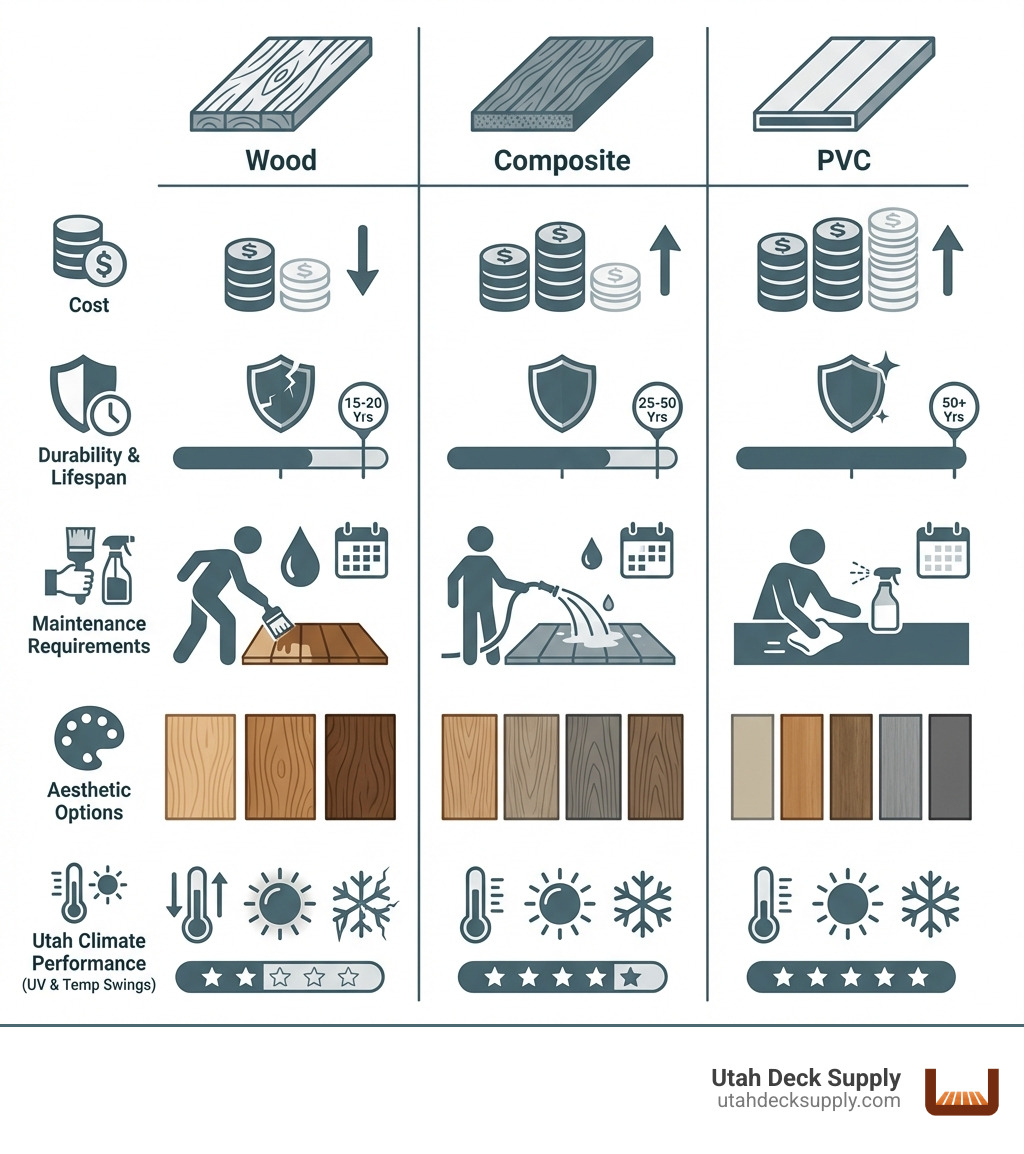
The Main Event: A Head-to-Head Look at Decking Materials
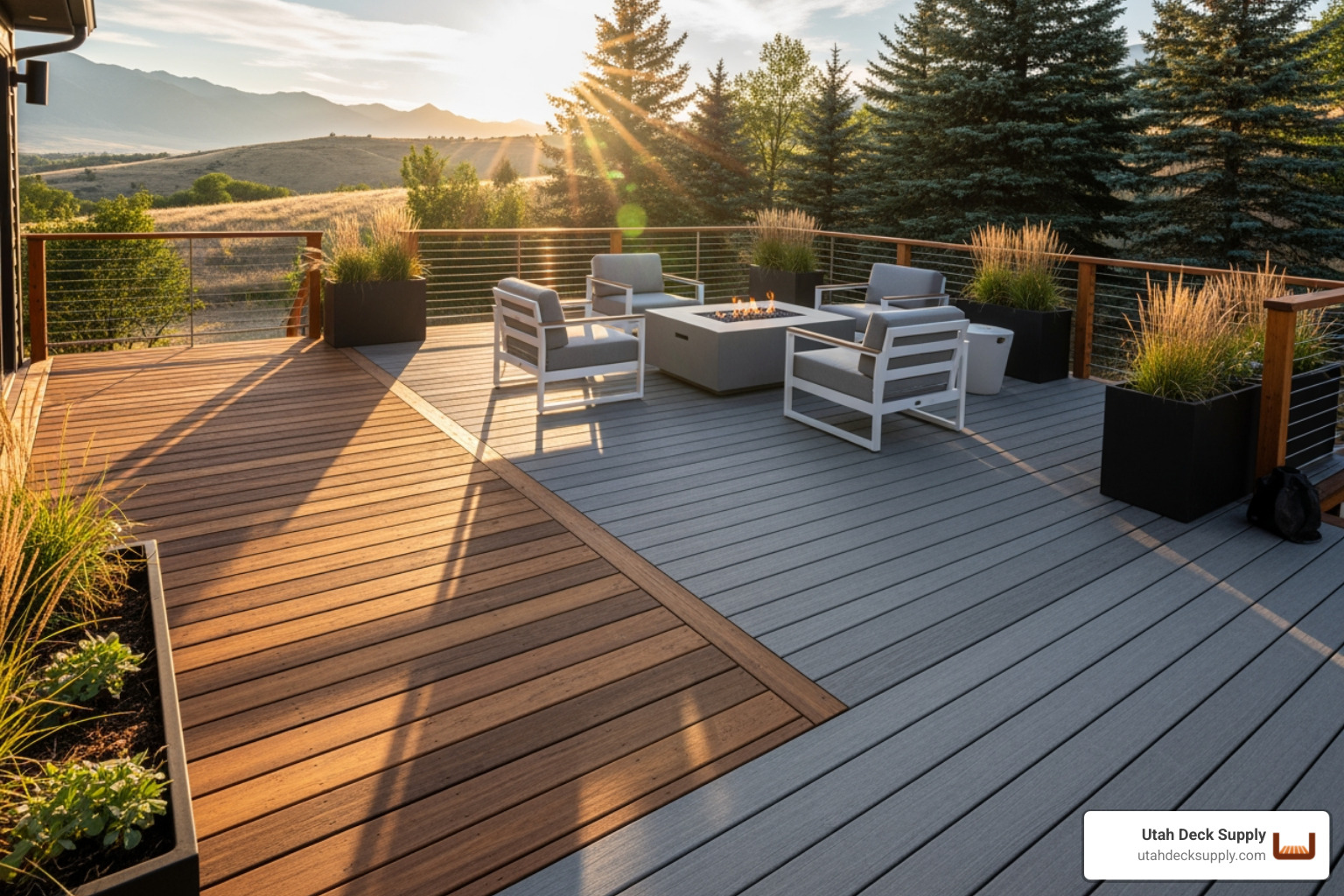
Let’s explore the main contenders in this ultimate deck material comparison: wood, composite, and PVC. Each has a distinct personality, and we’re here to help you weigh the options for your home. For a broader overview, check out our Decking Materials Compared: Pros and Cons. If you want a neutral, high-level background on what decking actually is, you can also review the general overview of deck construction) on Wikipedia.
Classic Wood Decking: Timeless Beauty and Natural Charm
Wood offers an undeniable natural aesthetic that many Utah homeowners cherish. It connects an outdoor space to our state’s rugged landscape.
Pros of Wood Decking:
- Natural Beauty: Blends with natural surroundings and can be stained or painted any color.
- Affordable Upfront: The most budget-friendly option for initial material costs.
- DIY-Friendly: Easy to cut and work with for weekend projects.
- Versatile: Options like pressure-treated pine, cedar, and redwood offer different looks and natural resistance.
Cons of Wood Decking:
- High Maintenance: Requires annual cleaning, sanding, and sealing to prevent weathering and decay.
- Shorter Lifespan: Pressure-treated wood typically lasts 10-15 years.
- Splinter Risk: Can splinter with age, posing a risk to bare feet.
- Vulnerable to Elements: Prone to warping, cracking, and rot if not maintained, especially in Utah’s climate.
For those who love the authentic feel of wood and are prepared for the maintenance, it remains a viable choice. Find more in The Ultimate Guide to Choosing Wood Deck Boards.
Modern Composite Decking: A deck material comparison for the Low-Maintenance Champion
Composite decking is an engineered blend of wood fibers and recycled plastics, offering the look of wood without the constant upkeep. It’s a game-changer in the deck material comparison.
Pros of Composite Decking:
- Low Maintenance: No sanding, staining, or sealing needed. Just an occasional wash.
- Durable & Long-Lasting: Resists rot, insects, and mold. Can last 25-50 years.
- Splinter-Free & Safe: Safer for families with kids and pets.
- Fade & Stain Resistant: Modern capped composites have a protective shell that resists UV rays and spills.
- Eco-Friendly: Many brands use up to 95% recycled materials.
Cons of Composite Decking:
- Higher Initial Cost: More expensive upfront than wood, but savings on maintenance add up.
- Heat Retention: Darker boards can get hot in direct sunlight.
- Repair Difficulty: Damaged boards usually need full replacement rather than a simple patch.
We recommend capped composite decking, which has a protective polymer shell for superior performance against scratches, stains, and fading. For more details, explore The Ultimate Guide to Choosing Composite Decking and this neutral background on composite lumber.
Premium PVC Decking: The Pinnacle of Durability
PVC (Polyvinyl Chloride) decking contains no wood fibers, making it 100% plastic. It stands out in a deck material comparison for its unparalleled durability and minimal upkeep.
Pros of PVC Decking:
- Highest Durability: Engineered to last over 50 years, resisting rot, mold, and insects.
- Completely Waterproof: The best choice for pools, docks, or high-moisture areas.
- Minimal Maintenance: Requires only occasional cleaning. No staining or sealing, ever.
- Lightweight: Easier to handle during installation than wood or composite.
- Superior Resistance: Often more scratch-resistant than composite and can have Class A fire ratings.
Cons of PVC Decking:
- Highest Upfront Cost: The most expensive option, but its longevity can make it cost-effective over decades.
- Aesthetic Feel: While greatly improved, some find it looks less natural than high-end composites or real wood.
If you want the ultimate “set it and forget it” deck, PVC is your champion. Learn more in The Ultimate Guide to PVC Decking.
The Ultimate Deck Material Comparison: Key Factors to Decide
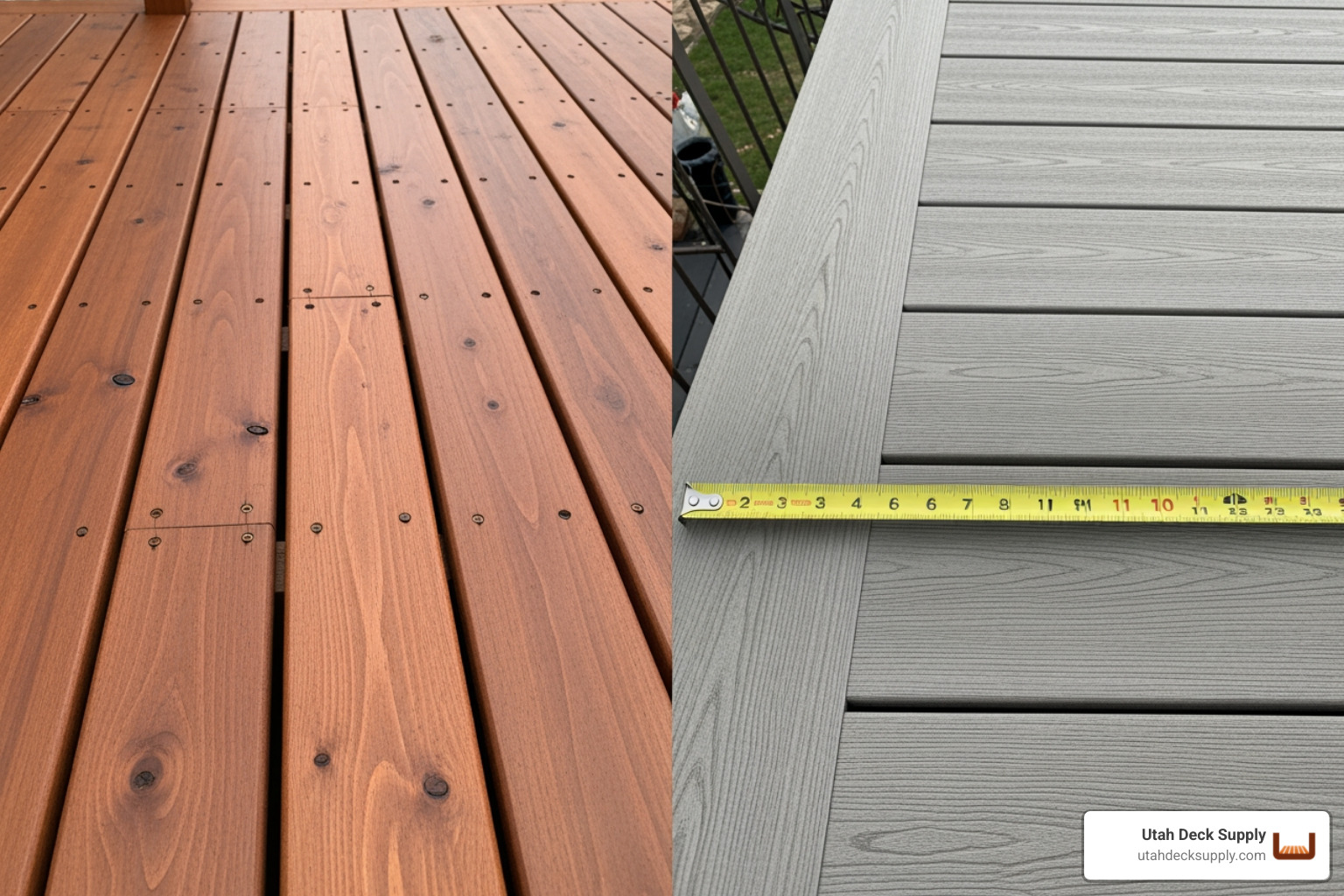
Choosing the right material is about what makes sense for your life, budget, and home. When we guide customers through this deck material comparison, we focus on a few key factors, especially for Utah’s unique climate. For materials that stand up to our local conditions, explore Decking Materials That Withstand the Elements: Weather Resistant Options.
Here’s a quick, side-by-side look at the big three:
| Material | Initial Cost | Typical Lifespan | Maintenance Needs |
|---|---|---|---|
| Wood | Lowest | 10-15 years (pressure-treated) | High – regular cleaning, staining, and sealing |
| Composite | Mid-range | 25-50 years | Low – periodic washing |
| PVC | Highest | 50+ years | Very low – simple washing |
Cost vs. Value: Initial Investment and Long-Term Savings
It’s crucial to look beyond the sticker price and consider long-term value.
- Upfront Cost:
- Wood: Most affordable initially ($3-$6/sq ft).
- Composite: Mid-range price ($5-$13/sq ft).
- PVC: Premium price ($11.82-$26.34/sq ft).
- Long-Term Savings: Here’s the thing: a deck isn’t a one-time purchase. Wood requires regular maintenance (staining/sealing) that can cost $5-$7 per square foot every few years. These costs can quickly surpass the initial savings. Composite and PVC require only occasional cleaning, making them more cost-effective over their lifespan. When you factor in your time and materials, the long-term value of synthetics becomes clear.
For a deeper dive, read our Understanding Plastic Decking Costs: A Comprehensive Guide.
Durability & Maintenance: A Realistic deck material comparison
In Utah, where decks face intense sun and heavy snow, durability is paramount. The more durable a material is, the less maintenance it needs.
- Lifespan:
- Wood: 10-15 years for pressure-treated.
- Composite: 25-50 years.
- PVC: 50+ years.
- Weather Resistance:
- Sun: Wood fades and weathers quickly without protection. Composite and PVC have built-in UV inhibitors to resist fading.
- Moisture: Wood is susceptible to rot and mold. PVC is 100% waterproof, and capped composite offers excellent moisture resistance, making them ideal for areas from Salt Lake City to St. George.
- Cleaning:
- Wood: Requires annual deep cleaning and resealing.
- Composite & PVC: Need just a simple wash with soap and water.
The time you save on maintenance is more time you get to enjoy your deck. Learn more with our Low Maintenance Deck Boards: The Ultimate Guide for Homeowners.
Aesthetics, Safety, and Environmental Impact
Beyond performance, your deck should look good, be safe, and align with your values.
- Aesthetics:
- Wood: Offers natural beauty but weathers to gray if not maintained.
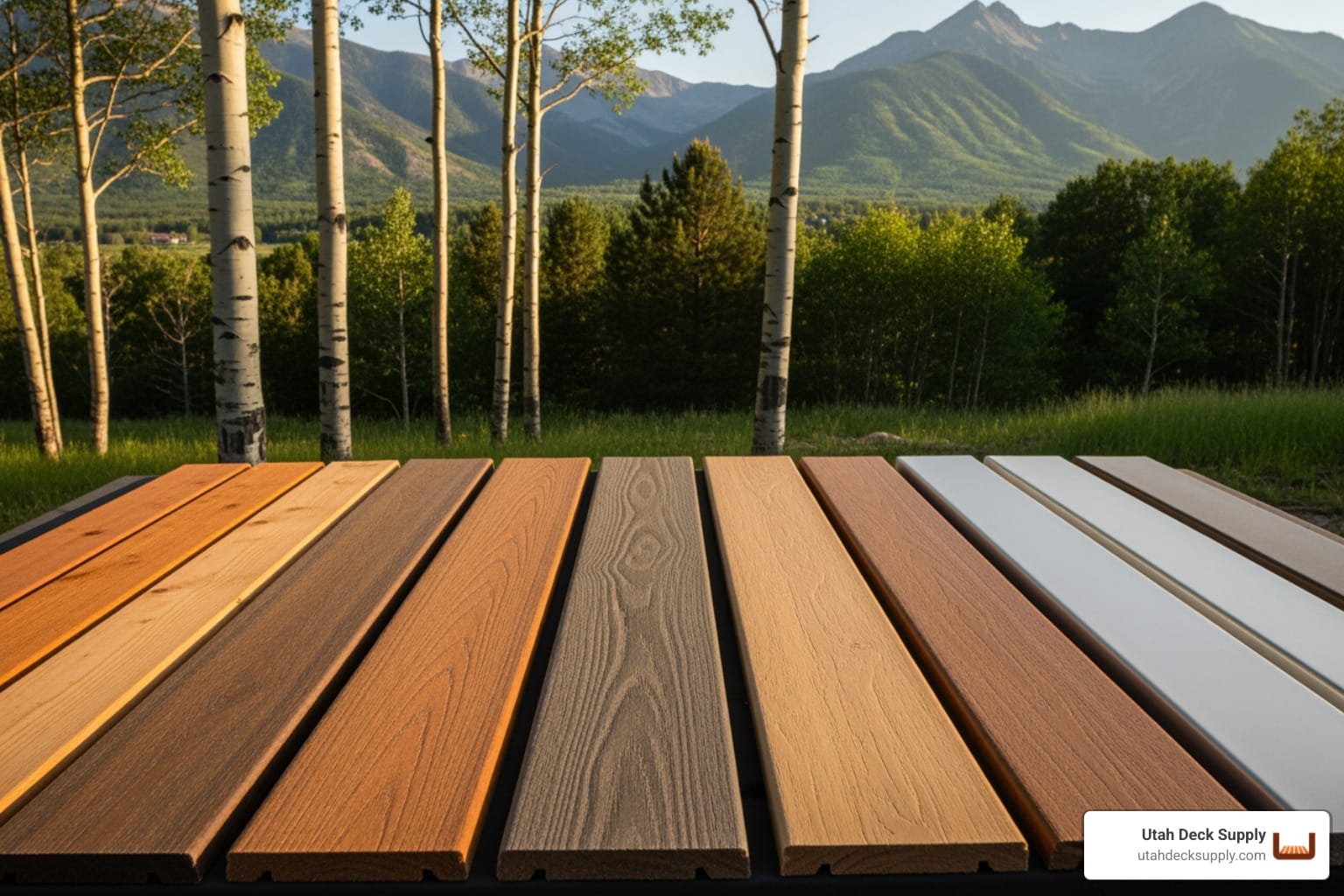
- Composite: Provides a huge range of colors and realistic wood-grain finishes.
- PVC: Modern options offer sophisticated color blends that beautifully replicate wood.
- Safety:
- Splinters: Composite and PVC are splinter-free, a major plus for kids and pets.
- Slip Resistance: Many synthetic boards are designed for better traction than wet wood.
- Fire Resistance: Some PVC decking offers Class A Flame Spread Ratings, a critical factor for certain areas in Utah.
- Environmental Impact:
- Composite: A strong eco-friendly choice, often made with up to 95% recycled plastic and wood fiber.
- PVC: Many brands use significant recycled content. Their extreme longevity also means less replacement and waste over time.
For more on sustainable choices, see our Eco-Friendly Decking Solutions: Sustainable Choices for Your Home.
Making the Final Call: Which Decking is Right for You?
You know what? After all the comparisons, it really comes down to how you want to live with your deck day to day. Are you okay spending a Saturday every year staining boards, or would you rather just hose things off and get back to relaxing?
After this deep deck material comparison, the truth is there’s no single “best” material for everyone. The perfect match depends on your priorities.
Here’s a quick summary to help you decide:
- Choose Wood if: You’re on a strict budget, love the natural look, and don’t mind annual maintenance.
- Choose Composite if: You want the beauty of wood with minimal upkeep, a long lifespan, and a great balance of cost and performance.
- Choose PVC if: You demand the absolute highest durability and lowest maintenance, especially for poolside decks or high-moisture areas.
Don’t forget to factor in Utah’s climate. Our intense sun and freeze-thaw cycles are tough on outdoor materials. The engineered resistance of composite and PVC truly shines here, offering superior performance against fading, warping, and moisture damage compared to wood. Our team at Utah Deck Supply understands these local challenges and can provide expert advice.
For more guidance, take a look at our Choosing the Perfect Deck Material: A Comprehensive Guide.
Honestly, choosing the right decking comes down to balancing your budget, desired maintenance level, and aesthetic goals. Whether you love the classic look of wood or prefer the set-it-and-forget-it ease of synthetics, there’s a perfect option waiting for you. If you’d like personal, experience-backed recommendations custom to your home and city, give our team a call at 385-993-5492 or swing by our West Jordan showroom to see materials side by side. When you’re ready to move from research to building, you can also Request a Free Quote and we’ll help you map out the best decking package for your project.