
Finding a few fresh scratches on composite decking after a long weekend of play with your four-legged friend can be frustrating. Honestly, while composite materials are incredibly durable, they aren’t completely bulletproof against sharp claws or heavy furniture. Let me explain how you can make those unsightly marks vanish and keep your outdoor space looking brand new.
Introduction
Scratches on composite decking after a fun weekend with your dog can feel disheartening. The good news? Most of those claw marks are far less serious than they look — and many can be fixed right at home.
When we talk about durability in the Utah climate—from the scorching summer sun in St. George to the heavy snow loads in Logan—composite decking is the gold standard. However, “low maintenance” doesn’t mean “no maintenance.” Pet nails are one of the most common sources of surface tension and wear and tear. Because composite is a blend of wood fibers and plastic, it reacts differently to pressure than solid timber does.
Understanding the engineering behind your deck is the first step toward a successful repair. Most modern decks in West Jordan or South Jordan use capped composite. This means the core of the board is protected by a “cap” or shell made of high-density polyethylene (HDPE). This shell is where the scratch resistance lives. Traditional, uncapped composite is more like a dense sponge; it’s the same material all the way through, making it easier to sand but more prone to staining.
At Utah Deck Supply, we follow E-E-A-T (Experience, Expertise, Authoritativeness, and Trustworthiness) standards to ensure the advice we give helps you protect your investment without voiding your warranty.

How to Repair Scratches on Composite Decking
Before you grab a tool, you need to know what kind of board you are standing on. Repairing a Trex Transcend board (capped) is a completely different process than repairing an older, uncapped board. Using the wrong method can actually make the damage more visible.
| Feature | Traditional (Uncapped) Composite | Capped Composite (Trex, TimberTech, etc.) |
|---|---|---|
| Primary Repair Tool | Medium to Fine-grit Sandpaper | Heat Gun or Touch-up Pen |
| Sanding Risk | Low (if done with the grain) | High (can remove the protective shell) |
| Heat Repair | Not Recommended | Highly Effective for scuffs |
| Color Blending | Blends naturally over time | May require a color-matched filler |
The first rule of thumb: Always clean the area first. Dirt and grit acting as sandpaper during the repair process will only create more scratches on composite decking. Use a mixture of warm water and mild liquid dish soap with a soft-bristle brush. For more detailed cleaning advice, check out our Composite Decking Utah Complete Guide or refer to this industry guide on how to repair scratches and dents on your composite decking.
Assessing the Damage: Scuffs vs. Deep Gouges
How do you know if you can fix it yourself? Use the “Tactile Test.” Run your fingertip (not your fingernail) over the mark.
- Surface Scuffs: If you can see the mark but can’t feel it, it’s likely just a change in the surface texture or “sheen.” These often vanish with a simple cleaning or light heat.
- Minor Scratches: If you can feel a slight ridge but it hasn’t changed the color of the board significantly, it’s a minor scratch.
- Deep Gouges: If the scratch has “plowed” the material or revealed a different color underneath, it’s a gouge. This might require a filler or, in extreme cases, a board replacement.
If you’re still in the planning stages of your backyard project, our Ultimate Guide to Choosing Composite Decking can help you pick a board with a higher Janka Hardness rating to resist these issues from the start.
Fixing Minor Scratches on Composite Decking
For traditional, uncapped boards, sanding is your best friend. You’ll want to use fine-grit sandpaper, typically between 60 and 100 grit.
- Clean: Use a Composite Deck Cleaner to ensure no debris is trapped in the scratch.
- Sand: Gently sand along the direction of the grain. Never sand across the grain, as this will create permanent swirl marks.
- Assess: The sanded area will look lighter than the rest of the deck initially. Don’t panic! This is normal. Over the next few weeks, the sun’s UV rays will weather the area to match the surrounding boards.
For capped decking, sanding should be a last resort and done very lightly with a much higher grit (220-320). If you sand too deep, you’ll hit the composite core, which is a different color and will not weather to match.
Advanced Techniques for Capped Composite Decking Scratches
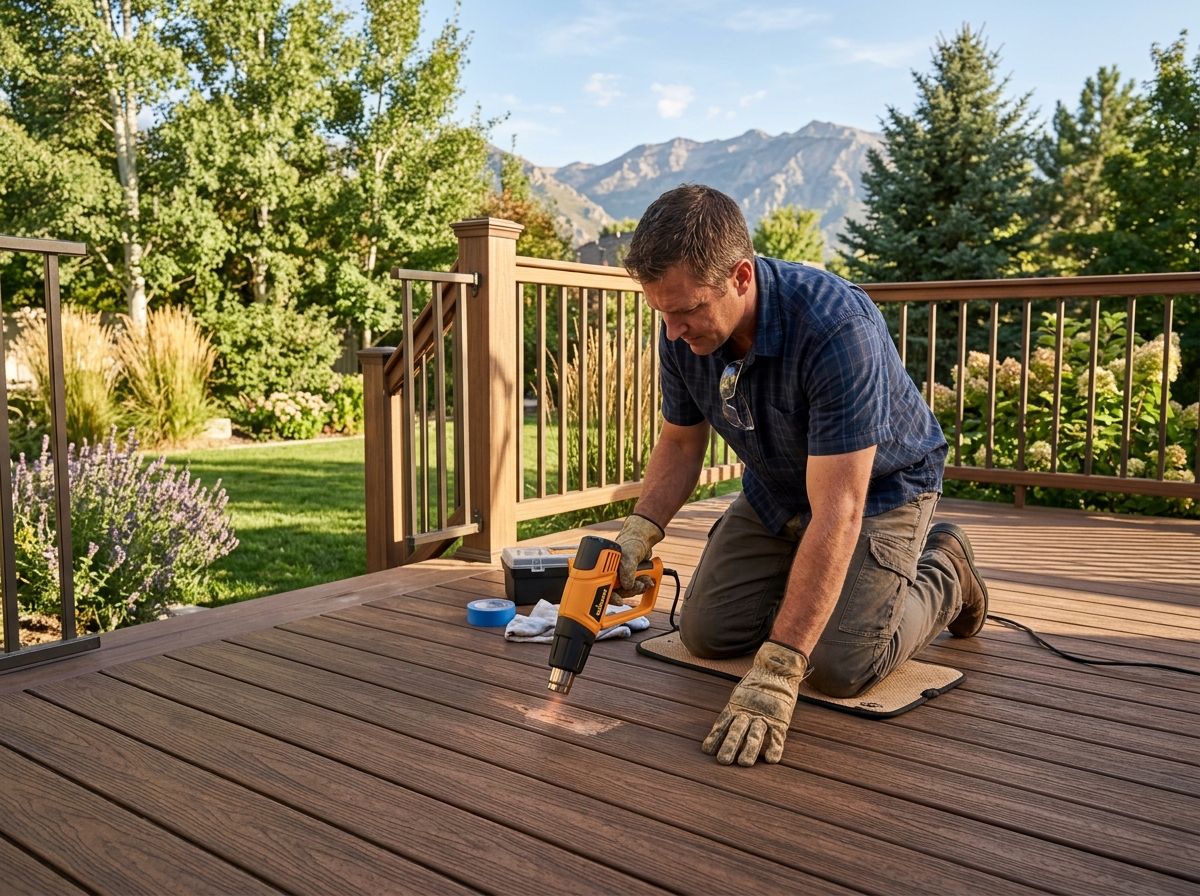
If you have a capped board from a brand like TimberTech or Fiberon, heat is a magic eraser. Most caps are thermoplastic, meaning they become pliable when heated.
The Heat Gun Method:
- Set the Temperature: Set your heat gun to approximately 450°C (about 840°F).
- Distance Matters: Hold the gun at least 3 to 6 inches away from the board.
- Keep it Moving: Move the heat gun in a constant motion over the scratch. Do not linger in one spot, or you will melt the board or cause bubbling.
- The “Massage”: As the scratch softens, some experts use a clean cloth or a scrap piece of the same decking to gently “massage” the texture back into place.
You know what? Many homeowners find that small scuffs actually blend in on their own over a few months of foot traffic and weather. If it’s a tiny mark, sometimes the best repair is to simply leave it alone. For more tips on keeping things pristine, see our guide on how to Keep Your Deck Looking New.
Preventing Future Damage and Maintaining Your Deck
Prevention is always cheaper and easier than repair. If your dog loves to do “zoomies” on the deck, or if you frequently move furniture for neighborhood BBQs in Draper or Sandy, proactive steps are essential.
Our Top Preventative Tips:
- Trim Those Nails: Keep your dog’s nails trimmed and buffed. If you can hear them “clicking” on the floor inside, they are sharp enough to mark the deck outside.
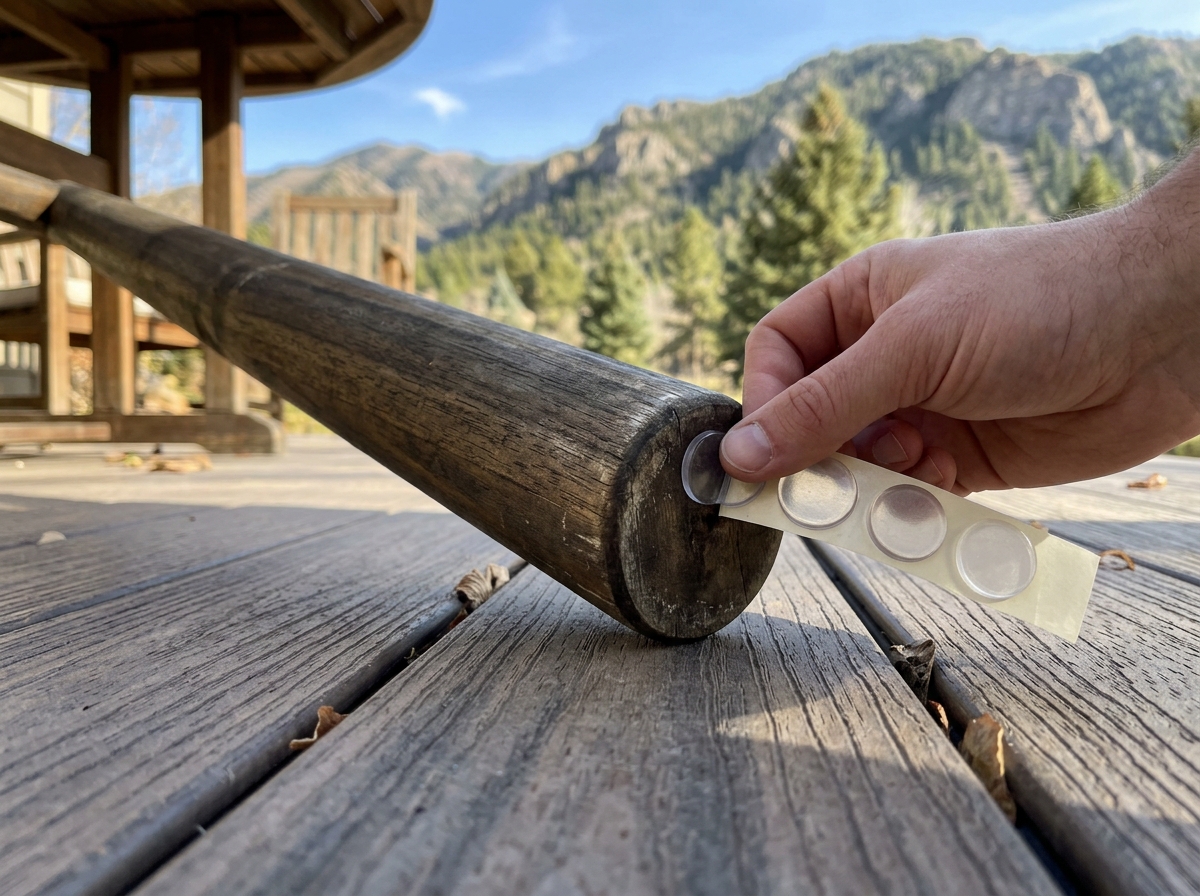
- Furniture Pads: Apply Teflon or felt pads to the bottom of all chair and table legs. This is the #1 way to prevent deep scratches on composite decking.
- Lift, Don’t Drag: It sounds simple, but dragging a heavy wrought-iron table is the fastest way to create a gouge that no heat gun can fix.
- Soft Tools Only: When winter hits in Salt Lake City or Ogden, use a plastic snow shovel. Never use a metal shovel or a “chipper” to remove ice from composite boards.
For a full checklist of year-round care, visit our Essential Deck Maintenance Tips or read The Ultimate Guide to Deck Maintenance.
Proactive Protection for Utah Decks
In high-traffic zones—like the area directly outside your sliding glass door—consider using an outdoor rug. Here’s the catch: Avoid rubber-backed or latex mats. These can trap moisture and heat, leading to permanent discoloration of the composite material. Instead, look for breathable polypropylene or woven rugs that allow air to circulate.
Utah’s UV index is notoriously high. While modern composite is incredibly fade-resistant, using protective measures helps maintain that “just installed” look for decades. Our Low Maintenance Deck Boards: The Ultimate Guide for Homeowners covers which brands handle the high-altitude Utah sun the best.
When to Replace a Board Instead of Repairing
Sometimes, a scratch is more than just a scratch. If a heavy object was dropped and created a structural crack, or if a gouge is deeper than the “cap” layer (usually about 1/16th of an inch), repair kits might look like a “patch job.”
Consider replacement if:
- The damage spans multiple boards.
- The “core” of the board is exposed to moisture.
- The board is warped or the structural integrity is compromised.
The beauty of the fastening systems we sell at Utah Deck Supply is that many allow for “individual board replacement.” If you kept a few extra boards from your initial build (which we always recommend!), you can swap out the damaged piece for a perfect color match. If your deck is older and the color has been discontinued, we can often help source “new old stock” to get your repair done right. Learn more about Maximizing Your Deck’s Lifespan: Tips for Durable Decking.
Essential Tools for Scratch Repair
If you’re a DIYer in American Fork or Lehi looking to build a “Deck First Aid Kit,” here is what we recommend keeping in your garage:
- Fine-grit Sandpaper (320 grit): For very light buffing on capped boards.
- Manufacturer-Approved Touch-up Pens: Trex and TimberTech both offer color-matched markers that work wonders on small scratches.
- Composite Wax Sticks: Similar to furniture crayons, these fill deeper nicks.
- Wire Brush: Sometimes used very gently with a heat gun to re-texture a sanded spot.
- Microfiber Cloths: For cleaning without adding more micro-scratches.
Honestly, having the right tools on hand makes the difference between a repair that vanishes and one that stands out like a sore thumb. You can find Top Tips for Maintaining Your Decking and More info about composite products on our website to ensure you’re using the right chemistry for your specific brand.
You know what? Maintaining a beautiful deck in Utah’s ever-changing weather doesn’t have to be a full-time job. Whether you are in Saratoga Springs or Eagle Mountain, your deck is an extension of your home, and a few scratches shouldn’t ruin your enjoyment of the outdoors. If you’re dealing with deep damage or simply want to upgrade to the most scratch-resistant materials on the market, our team is here to help. Give us a call at 385-993-5492 or Request a Free Quote today to ensure your outdoor living space remains the envy of the neighborhood.