
A lot of Utah deck projects reach the same point. The framing is done, the decking color is picked, and then the railing decision starts to feel bigger than expected. That's usually when black aluminum deck railing moves to the top of the list because it looks clean, works with a wide range of deck boards, and fits the way many homeowners want a finished deck to feel.
On the Wasatch Front, that choice also has to hold up through strong sun, winter moisture, snow, and regular temperature swings. A railing that looks sharp in a showroom still has to make sense on a deck in West Jordan, Sandy, Draper, Lehi, Ogden, or Provo. The right system isn't just about style. It's about material behavior, layout, code planning, and getting the parts list right before anything is ordered.
Why Choose Black Aluminum Railing for Your Utah Deck
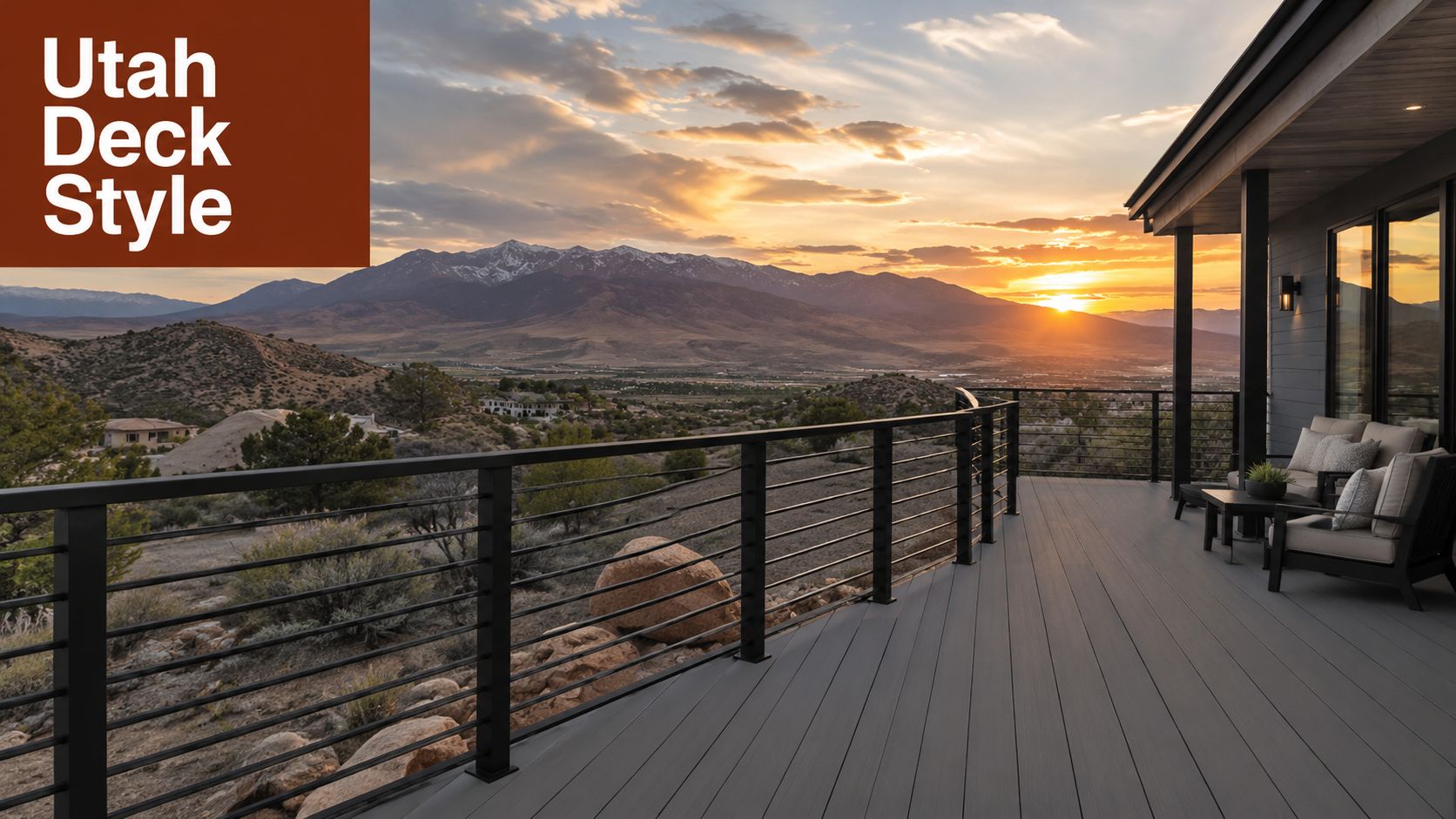
A Utah deck often reaches the same decision point right before the finish line. The boards are down, the stair layout is set, and the railing has to do two jobs at once. It has to meet code and make the whole project look intentional. Black aluminum usually stays in the running because it frames the deck cleanly without closing off mountain views, backyard sightlines, or the open feel people want from a raised outdoor space.
That matters more here than it does in milder climates. Strong summer sun, reflected light off snow, winter moisture, and big temperature swings will expose weak finishes and fussy materials fast. Black aluminum works well for Utah projects because it gives a finished look with less routine upkeep than painted wood railing, and it pairs easily with the composite decking colors we see most often in local builds, especially warm browns, driftwood grays, and lighter sand-tone boards.
It also fits a wide range of home styles. On stucco, stone, brick, or fiber cement exteriors, the dark frame reads clean and defined. On newer homes, it supports the straight-line look many owners want. On more traditional homes, it usually disappears into the background better than bulkier railing systems.
The other reason contractors and homeowners keep coming back to it is predictability. Black aluminum is easier to specify than many custom railing options, and that helps on Utah jobs where stair runs, snow exposure, fascia details, and post placement need to be sorted out before materials are ordered. A good railing choice is not just about curb appeal. It is about choosing a system that fits the deck plan, the local conditions, and the level of maintenance the owner will keep up with.
Utah Deck Supply works with homeowners, builders, and remodelers who want to compare railing options in person, match them to specific deck boards, and make sure the parts list fits the layout before the order goes in.
Understanding the Material Its Pros and Cons
Black aluminum deck railing is an aluminum railing system with a factory-applied powder-coated finish. That finish does more than add color. It creates a protective barrier for exterior use and helps the railing hold its appearance over time.
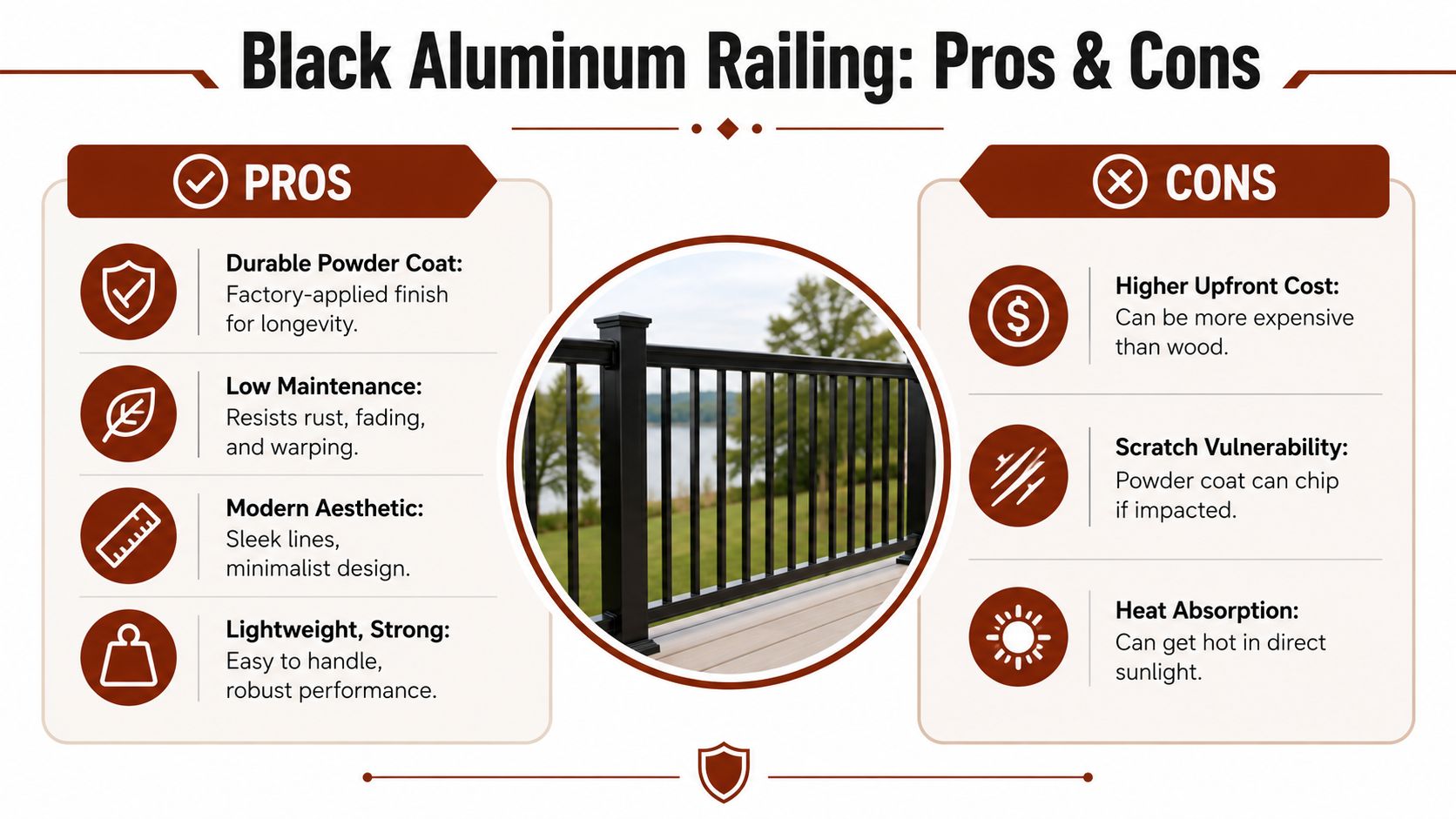
Manufacturers describe powder-coated aluminum railing as corrosion-resistant and virtually maintenance-free, and black finish options are commonly offered in coordinated textures and sheens across posts, rails, and balusters. The coating matters because it helps reduce surface oxidation, protects against UV exposure, and lowers repainting or refinishing needs compared with uncoated metal components, as described in powder-coated aluminum railing product guidance.
Where the material works well
Black aluminum usually earns its place on jobs where appearance and low upkeep matter equally.
- Low-maintenance ownership: It doesn't need the routine staining or sealing associated with wood railing.
- Corrosion resistance: Aluminum naturally resists rust, which is one reason it's widely used outdoors.
- Clean visual lines: Thin pickets and narrow rails keep the deck looking open.
- Lighter handling: Aluminum is easier to move and stage than heavier metal railing systems.
That combination is why it shows up so often on composite and PVC deck builds. The railing doesn't compete with the deck boards. It frames them.
The trade-offs to understand before buying
No railing material is perfect, and black aluminum has a few trade-offs worth calling out early.
- Higher upfront cost than basic wood options: The material and component system usually cost more at the start.
- Surface damage can show: If the powder coat gets hit hard, chips or scratches can be visible.
- Heat in direct sun: Dark finishes absorb more solar radiation, so black railing can feel hotter during Utah summer afternoons.
That last point matters more than many product pages admit. On a west-facing deck with full sun, the top rail can get uncomfortable to touch at peak heat.
The clean look is real. The low maintenance is real. The heat is real too, so the deck's orientation and shade pattern should be part of the decision.
Homeowners who want a broader breakdown can start by understanding deck railing options before narrowing down frame style, infill, and mounting details.
Popular Styles and Infill Options
A lot of buyers think black aluminum deck railing means one look. It doesn't. In most systems, the aluminum forms the structure. The infill changes the style, sightline, and feel of the deck.
Vertical baluster systems
This is the standard look that often comes to mind. Black posts and rails frame vertical pickets for a straightforward, durable railing that works on most homes.
It's often the easiest option to plan, especially on decks with straightforward runs and standard stair transitions. It also tends to be the most practical place to start when the priority is durability, clean lines, and a familiar finished appearance.
Good fit for these projects:
- Family decks and remodels: Traditional enough to work with many home styles.
- Contractor builds: Straightforward for takeoffs and repeatable layouts.
- Budget-conscious premium builds: Still upscale, but usually less involved than more open infill choices.
Cable infill with aluminum framing
Cable railing changes the visual weight of the system. The black aluminum frame remains, but the infill becomes thinner and more open. This works well when the deck backs to a view, open yard, or foothill lot and the owner wants less visual interruption.
Cable systems can look excellent, but they require more planning. Tensioning, post layout, and long-run alignment matter. For Utah decks with stairs, corners, or mixed elevations, the details begin to separate an easy order from a frustrating one.
Glass panel combinations
Glass paired with black aluminum framing creates the most open look of the three. The frame gives the system structure, while the glass keeps views clearer than vertical pickets.
This style is often chosen for decks with standout sightlines or for homeowners who want a more contemporary finish. It can also expose dirt, water spotting, and fingerprints more than baluster systems, so “low maintenance” means something different here. The aluminum frame stays simple to care for. The infill still needs regular cleaning if a clear view matters.
On view lots, the right infill matters as much as the railing frame. A black frame with the wrong infill can make an expensive deck feel heavier than it should.
For ideas on matching style to the house and deck surface, it helps to explore deck railing options before settling on a final system.
Code Safety and Installation Planning
Most railing problems don't start with the panel itself. They start with planning. Height, post placement, stair geometry, and attachment details all need to be sorted before the order is built.
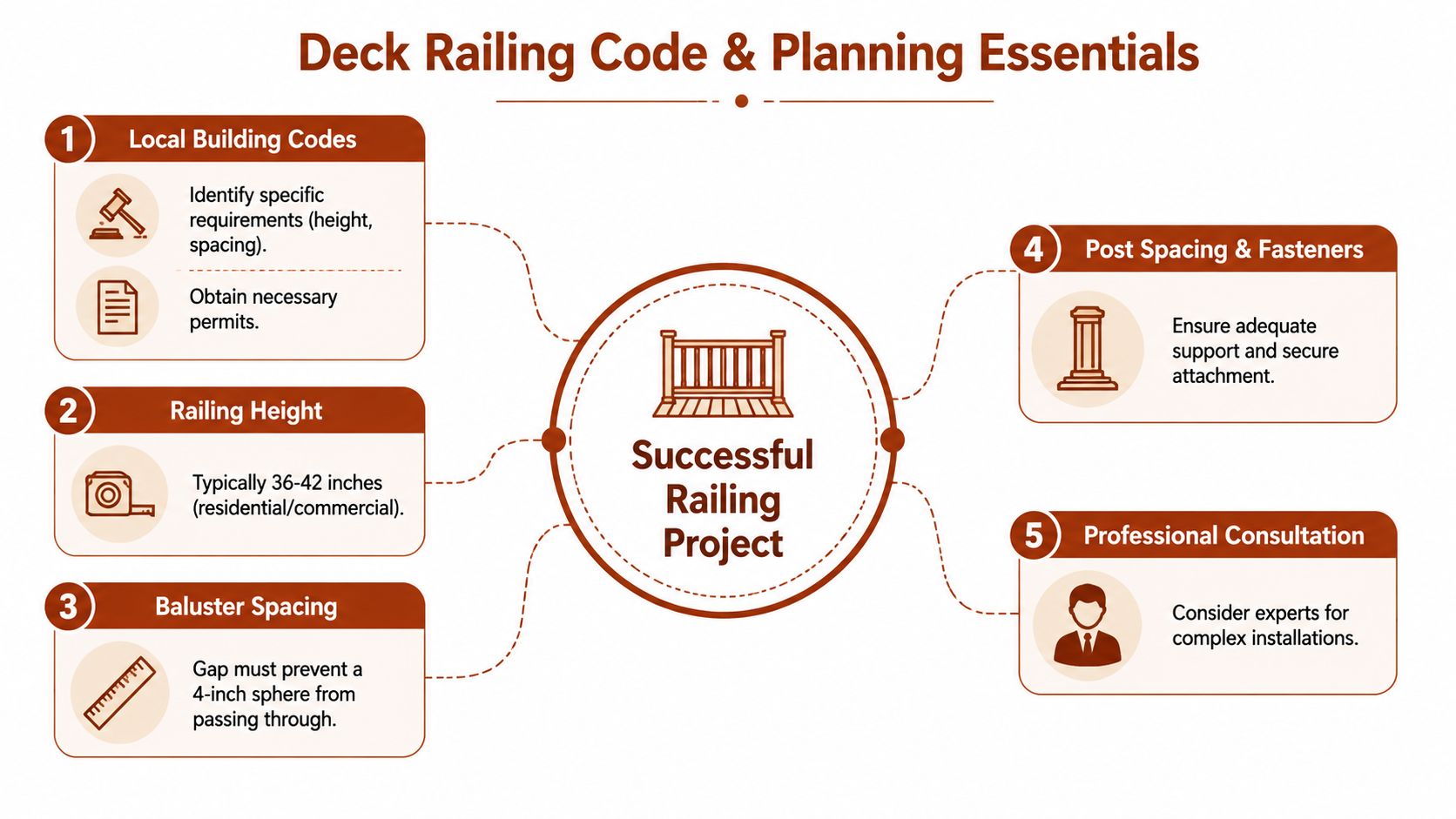
Black aluminum railing systems are commonly sold in 36-inch and 42-inch heights, with preassembled panels and modular post kits for level and stair use. Manufacturer and retail listings also show 6-foot panels paired with 42-inch-high systems and hardware for wood, composite, and concrete mounting in aluminum railing system specifications. That standardization can reduce field cutting and help consistency, but it doesn't remove the need to verify local requirements.
Height and layout decisions
For Utah homeowners and contractors, the first check should always be local code and the specific deck condition. A low deck and a high deck may not be treated the same way. Remodel work can add another layer if existing framing, stairs, or attachment points are being reused.
Common planning questions include:
- Guard height: Which system height fits the deck elevation and local requirements?
- Panel length: Will standard panel lengths fit the layout cleanly, or will cuts be needed?
- Substrate: Are the posts attaching to wood framing, composite over framing, or concrete?
- Transitions: Does the deck include level runs, stairs, turns, or landings?
Surface mount or fascia mount
The two mounting approaches usually come down to appearance, structure, and usable deck space.
A surface-mounted post attaches on top of the deck surface. This is common, easy to visualize, and often straightforward to plan. The trade-off is that it takes up some deck footprint and needs solid blocking and fastening below.
A fascia-mounted post attaches to the outer rim area of the deck. This can preserve more usable deck surface and create a different visual profile. It also demands careful attention to framing support, alignment, and manufacturer instructions.
Neither method is automatically right for every build. The framing and the railing system need to work together.
Stairs corners and angled sections
Simple estimates often prove insufficient. Real-world layouts often require special posts, different connectors, precise measurements, and more labor than a straight run suggests.
A documented installation walkthrough shows that aluminum railing projects can require careful post layout, plumb alignment, custom cutting, and angle-specific handling, including 45° cuts, corner adjustments, and precise spacing to fit panels correctly in this installation example for complex railing layouts. That's why stairs and corners should never be treated like an afterthought on the materials list.
Measure the deck as a system, not as a series of isolated runs. One stair landing or odd corner can change the post count, hardware list, cut plan, and order accuracy.
Anyone planning a deck with proper permits should verify code, guard height, attachment details, and permit requirements with the local authority before ordering materials.
Estimating Your Black Aluminum Railing Cost
A Utah homeowner will often walk into the showroom with one number in mind: total deck perimeter. That is a starting point, but it is rarely enough to price black aluminum railing accurately, especially once stairs, corners, or fascia-mounted sections enter the plan.
Black aluminum railing is usually budgeted by linear foot for early planning. That can help set expectations, but an actual order is built from components and layout details, not footage alone. On a simple rectangular deck, the rough math may be close. On a Wasatch Front rebuild with one stair run, a landing, and a few direction changes, it can miss by quite a bit.
What drives the total cost
The final price usually comes from a handful of practical variables:
- Panel sizes and run lengths: Standard panel lengths are easier to price and waste less material.
- Post count: Line posts, end posts, corner posts, and stair posts all change the package total.
- Mounting method: Surface mount and fascia mount use different parts and can affect labor.
- Infill choice: Standard square balusters are usually the most budget-friendly option.
- Trim and hardware: Brackets, base covers, fasteners, and connectors add cost fast.
- Site conditions: Remodel work, uneven framing, and tight access often add labor and cut time.
Stairs are where estimates usually drift. A straight deck perimeter can look simple on paper, but stair rail kits, angle brackets, extra posts, and custom cuts add both material and install time. The same goes for corners and short sections that do not land cleanly on standard panel lengths.
Why simple math is often inaccurate
A clean estimate starts with the plan, not just a tape measure. Every transition point matters. So does the attachment method, because the railing system has to match the deck framing you have, not the framing you hoped was there after demo.
For Utah projects, I also tell customers to budget with the full build in mind. Rail cost should make sense alongside decking, fascia, stairs, and permit-related changes, especially if the job needs guard rail upgrades to meet current code. A broader Utah deck material cost guide helps put the railing number in context before you finalize the order.
The best approach is a takeoff based on the deck plan, post locations, stair count, and mounting style. That gives you a material list you can order with confidence, instead of a rough perimeter number that has to be corrected later.
Design Tips and Long-Term Maintenance
Black aluminum deck railing is one of the easier systems to design around because the finish acts like a neutral frame. It can create contrast on a light deck or blend into a darker palette without looking busy.
Pairing railing with deck colors
On lighter composite or PVC deck boards, black railing gives strong definition. Gray, tan, and weathered wood-tone boards usually benefit from that contrast. On darker brown or charcoal decking, the railing creates a more unified look where the frame and deck feel intentional rather than mixed.
For Utah projects with heavy sun exposure, deck color and railing color should be considered together. Some homeowners focus only on board color and forget that railings affect how the whole perimeter reads from the yard, patio door, and interior windows.
A practical approach:
- Light gray or tan decking: Black railing creates a sharp, clean outline.
- Medium brown tones: The contrast softens and feels more architectural.
- Dark boards: The deck can look more monolithic and contemporary.
Heat cleaning and long-term use
Black aluminum can get hot in direct sunlight because dark-colored surfaces absorb more solar radiation, as explained in this overview of black aluminum railing heat behavior. That doesn't make it a poor choice. It just means homeowners should think about full-sun exposures, uncovered deck orientation, and who uses the rail most often.
The good news is that everyday care is usually simple. Powder-coated aluminum doesn't ask for sanding, painting, or sealing. Routine cleaning with mild soap and water is typically the main job. Keeping dirt, pollen, and sprinkler residue from sitting on the finish helps the railing keep its appearance longer.
If a deck gets strong afternoon sun, the railing should be treated as a touch surface during design planning, not only as a visual detail.
Get Your Deck Railing Plan Right in Utah
The strongest black aluminum deck railing project usually comes down to one thing. The order has to match the deck you have, not the deck a product page assumes you have.
That matters even more on remodels and custom layouts across the Wasatch Front. Straight runs are one thing. Stairs, offset corners, landing changes, fascia details, and mixed substrates are where material lists start going wrong. A showroom-based supplier can help sort out the component logic before parts are ordered, especially when the project includes more than basic level sections.
A careful plan should account for every post location, every transition, and the attachment method at each condition. That's true whether the deck is in West Jordan, Salt Lake City, Herriman, Draper, Ogden, or Provo. Material selection is only one part of the job. The takeoff is what turns a good material choice into a smooth installation.
For homeowners and contractors who want to see railing colors, compare profiles, and get help building a clean supply list, a local materials quote is usually the smartest next step. It keeps the project grounded in the actual layout instead of a generic online estimate.
Black aluminum railing is a strong fit for Utah decks when the goal is clean design, low maintenance, and long-term durability. It works best when the height, panel sizing, post count, stair details, and mounting method are all planned before the order is finalized.
For help sorting out posts, panels, stairs, hardware, and deck compatibility, request a deck materials quote or call 385-993-5492. Utah homeowners, contractors, and remodelers can also visit the West Jordan showroom to compare railing options and get help with a deck supply list that matches the actual project.
Design note: Black aluminum is popular because it frames the deck cleanly and pairs with almost every board color. The real decision is infill style, stair treatment, and how the finish will look next to house trim and exterior stone.
Internal links:
- Railing systems
- Metal deck railing systems
- Deck railing ideas
- Decking colors to pair with black rail
- Request a railing package quote
Resources and references
- Aluminum railing manufacturer guides for powder-coat care and install tolerances
- Local residential code requirements for guards and stairs