
A lot of Utah deck projects stall at the same point. The framing plan is coming together, the decking choice is close, and then the railing decision turns into a bigger issue than expected.
That happens because railing isn't just a trim detail. On a deck in West Jordan, Sandy, Draper, Herriman, Lehi, Ogden, or Provo, the railing has to hold up through intense sun, winter moisture, freeze-thaw movement, and regular daily use while still looking clean against the home. For many homeowners and builders across the Wasatch Front, metal deck railing systems end up being the practical answer.
Choosing the Right Railing for Your Utah Deck
A typical Utah homeowner starts with the visible choices first. Color. Style. Whether the view should stay open. Whether the railing should match composite decking or stand apart from it. Then deeper questions surface. Will it fade badly in direct sun? Will it rust after a few winters? Will it feel dated in a few years?
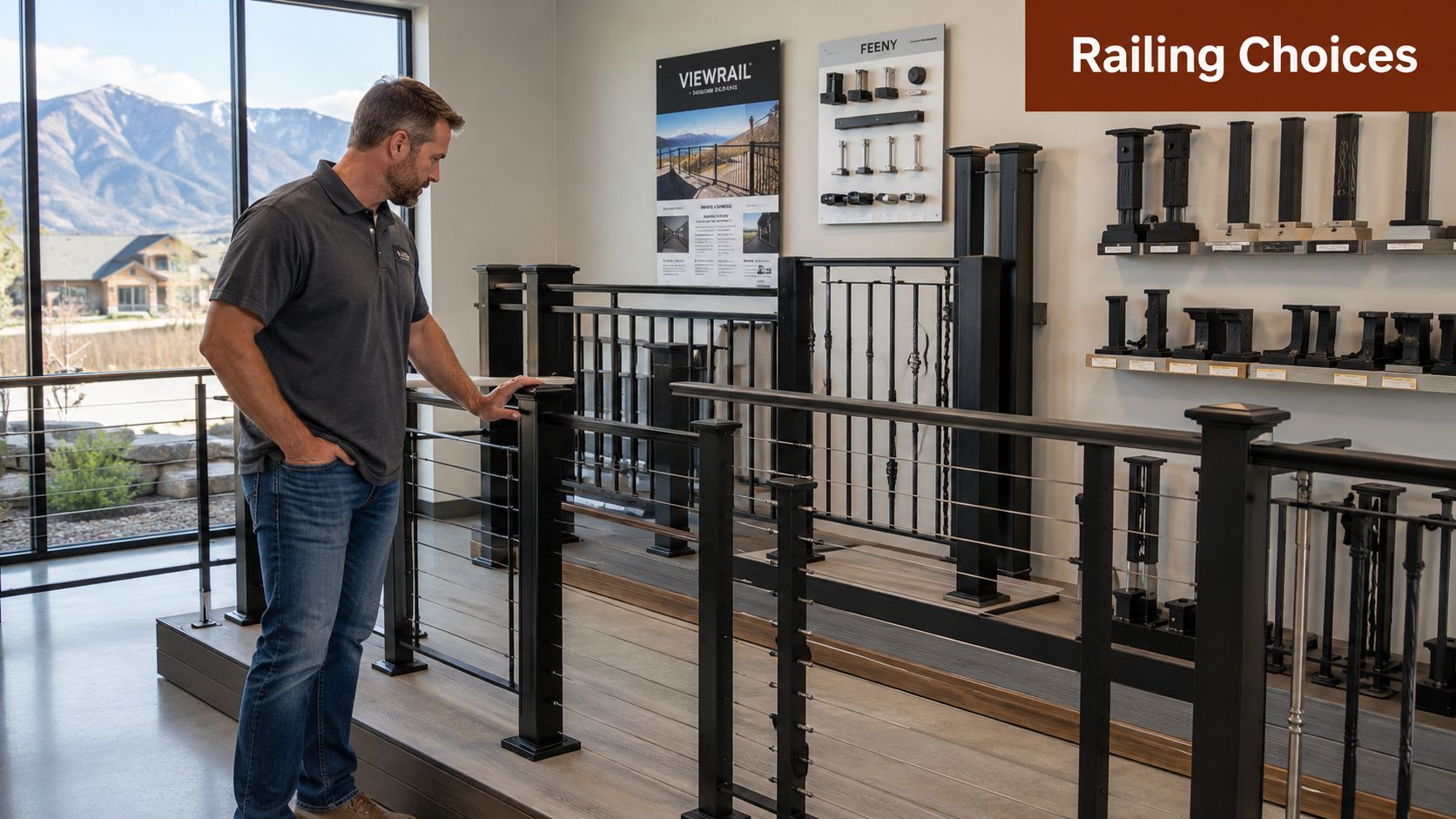
That's where metal starts separating itself from wood and other higher-maintenance options. Wood can still make sense for some builds, but it usually asks for more upkeep, especially in exposed Utah locations where snow sits on horizontal surfaces and summer sun beats down on every rail and post. Metal deck railing systems fit the way many people want to use a deck now. Clean lines, low maintenance, and better long-term stability.
What most buyers are balancing
Some want a straightforward black aluminum rail for a backyard family deck. Others want a cable look that keeps mountain views open. Contractors often need something that looks sharp, installs cleanly, and doesn't create callbacks a few seasons later.
A practical way to sort through the options is to compare deck railing options before deciding on style alone. This guide on how to compare deck railing options is a useful starting point if the project still includes other railing categories beyond metal.
Practical rule: The best railing choice usually isn't the one that looks best in a product photo. It's the one that still looks good after Utah sun, snow, and regular use.
For homeowners collecting ideas, broader design inspiration can help narrow the look before choosing the exact material. This roundup from Task Masters Inc. is useful for seeing how modern deck layouts and railing styles work together without losing function.
Comparing the Top Metal Deck Railing Materials
A railing that looks good on install day can behave very differently after a few Utah summers and winters. Material choice decides more than style. It affects how the system handles UV exposure, snow sitting at the base of posts, and the small finish failures that turn into service calls later.
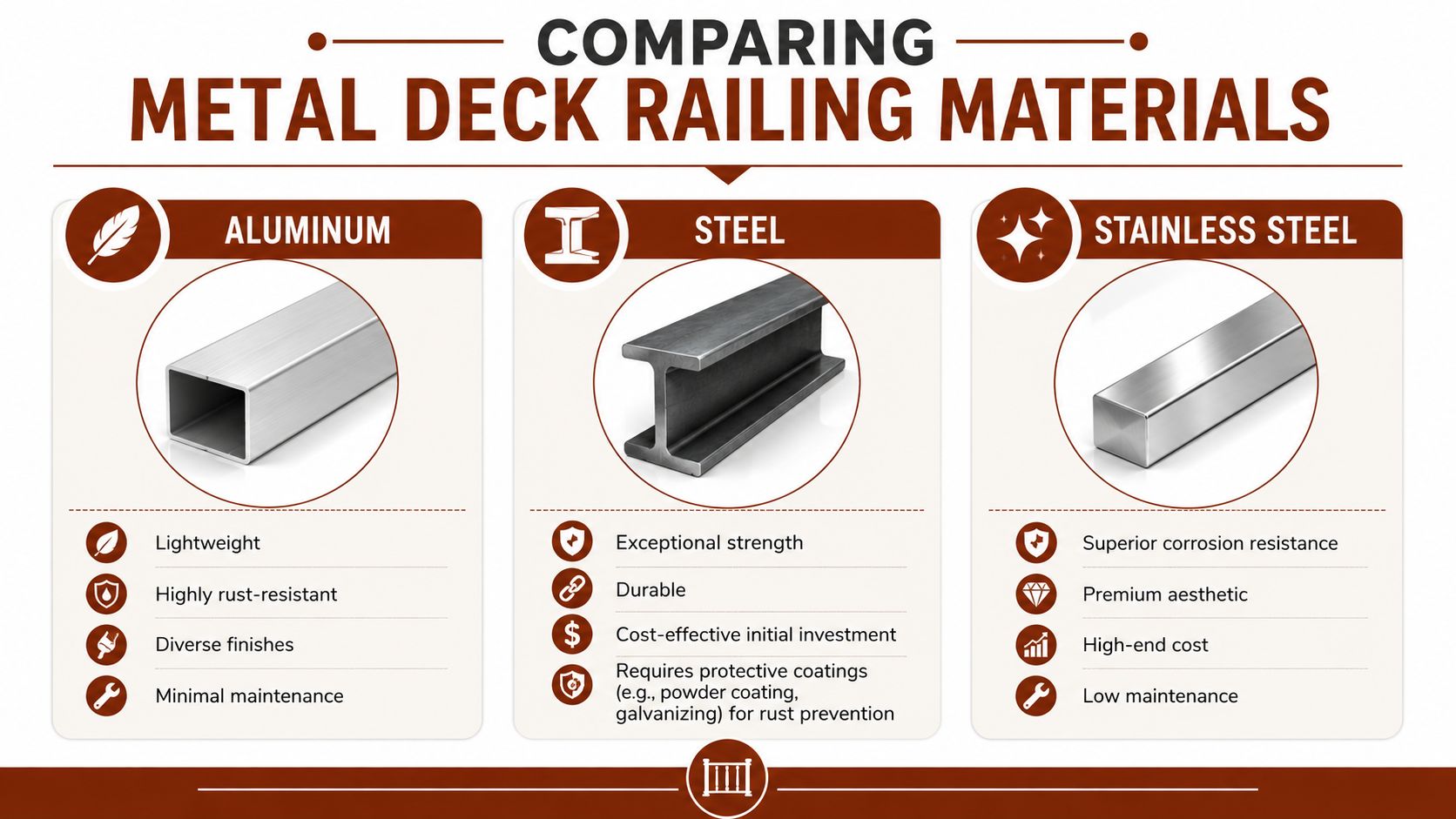
Metal railing materials at a glance
| Material | Upfront Cost | Maintenance | Utah Climate Durability |
|---|---|---|---|
| Aluminum | Moderate for most residential budgets | Low | Strong fit for most residential Utah projects |
| Steel | Varies by system, fabrication, and finish | Moderate to higher if finish gets damaged | Can work well, but exposed locations demand better coating and more follow-up |
| Stainless steel | Premium category | Low | Excellent corrosion resistance, often more material than most Utah decks require |
| Cable infill systems | Varies by frame material and layout complexity | Low to moderate depending on hardware and tensioning | Excellent for open views, but performance depends on frame strength and installation quality |
Aluminum for most residential decks
For a large share of Utah homes, aluminum is the safest pick.
It stays stable, keeps a clean appearance, and removes the rust concern that comes with ferrous metals. That matters on decks where snow piles against bottom rails, irrigation overspray hits the posts, or the deck faces strong afternoon sun for months at a time. In our experience, aluminum also gives homeowners the fewest long-term surprises if the product has a good powder-coated finish and the install crew handles cuts and fasteners correctly.
Budget planning is usually straightforward too. Aluminum sits in a range that works for many residential builds without pushing the project into premium-only territory. For buyers comparing profiles, infill choices, and common layout options, this aluminum deck railing guide is a useful next step.
Steel when weight and design presence matter
Steel brings a different look. It feels heavier, reads more architectural, and can be the right fit for custom homes or projects where the railing needs more visual substance.
The trade-off is maintenance risk, especially in Utah exposure. Once the finish gets chipped at a weld, cut edge, or fastener point, moisture has a path in. Freeze-thaw cycles do the rest. I would not rule steel out, but I would only use it when the owner understands the finish system, the exposure level, and the maintenance commitment.
Long-term cost is where steel often gets judged too late. Our experience shows that aluminum may cost more upfront in some configurations, but it usually saves money over time on residential decks because upkeep is lower and corrosion is less likely to become a recurring issue in cold, high-UV conditions.
Some steel railings look excellent at install and then show wear first at welds, cuts, fastener points, and coating breaks. That's usually where the comparison truly begins.
Stainless steel for premium corrosion resistance
Stainless steel usually enters the conversation for appearance, corrosion resistance, or both. It has a sharp modern look and performs well where moisture exposure is persistent.
For Utah decks, stainless is often a premium choice rather than the default one. We see it make the most sense on higher-end builds, minimalist designs, and projects where the owner wants the look enough to justify the added cost. In many standard residential settings, aluminum still covers the performance needs with a lower total investment.
Cable systems for open views
Cable railing is a style choice built around metal framing and cable infill, not a separate base material. It is popular on decks that face mountains, open space, golf courses, or backyards where a solid visual barrier would waste the view.
Good cable railing depends on the frame more than the cables themselves. Post stiffness, span length, corner detailing, and hardware quality all matter. A well-planned cable system looks clean and controlled. A poorly planned one can end up with flexing posts, uneven cable lines, and more adjustment work than the owner expected.
Durability and Maintenance in Utah's Four-Season Climate
A railing in Utah deals with more than weather. It deals with rapid weather swings. A deck can go from hard sun to freezing moisture, then back again, all within a short stretch of the year.
What the climate does to the finish
High UV exposure is rough on lower-quality coatings. Snow and ice don't just sit on the deck surface. They collect at post bases, bottom rails, connections, and horizontal details. Once moisture works into a damaged finish or poorly protected cut edge, the material underneath starts telling the truth.
Aluminum has a basic advantage here. It won't rust. That doesn't make every aluminum system equal, because coating quality and installation still matter, but it removes one of the most common long-term failure points seen in painted ferrous systems.
Where steel can still work
Steel still has a place. Some projects want the feel, weight, or design language that steel brings. In those cases, the smart move is to pay attention to the complete system rather than just the panel style.
That means looking closely at:
- Coating quality: A durable finish matters for both appearance and protection.
- Connection details: Screw penetrations, welded areas, and cut ends deserve extra attention.
- Exposure level: A covered deck has different demands than a fully exposed deck facing sun and snow.
- Maintenance reality: If the homeowner won't stay on top of touch-up and inspection, a lower-maintenance material is usually the better fit.
For readers considering that route, it helps to explore steel options with Utah Deck Supply and compare where steel makes sense and where it creates avoidable upkeep.
Utah rewards simple materials with fewer failure points. The more exposed the deck is, the more that matters.
Why aluminum usually wins the Utah test
For many residential projects, aluminum is the safer long-view choice. It handles Utah's mix of sun, winter moisture, and seasonal movement with less drama. It also tends to stay cleaner-looking with less effort, which matters on decks that are meant to be used, not constantly maintained.
That's the true maintenance conversation. Not whether a railing can survive a season, but whether the owner still likes living with it years later.
Installation and Local Building Code Essentials
A railing failure usually starts where nobody looks first. The panel may look straight and solid from the yard, but if the posts are poorly anchored or the framing below was never built for guard loads, Utah snow, movement, and daily use will expose that weakness fast.
Start with the load requirement
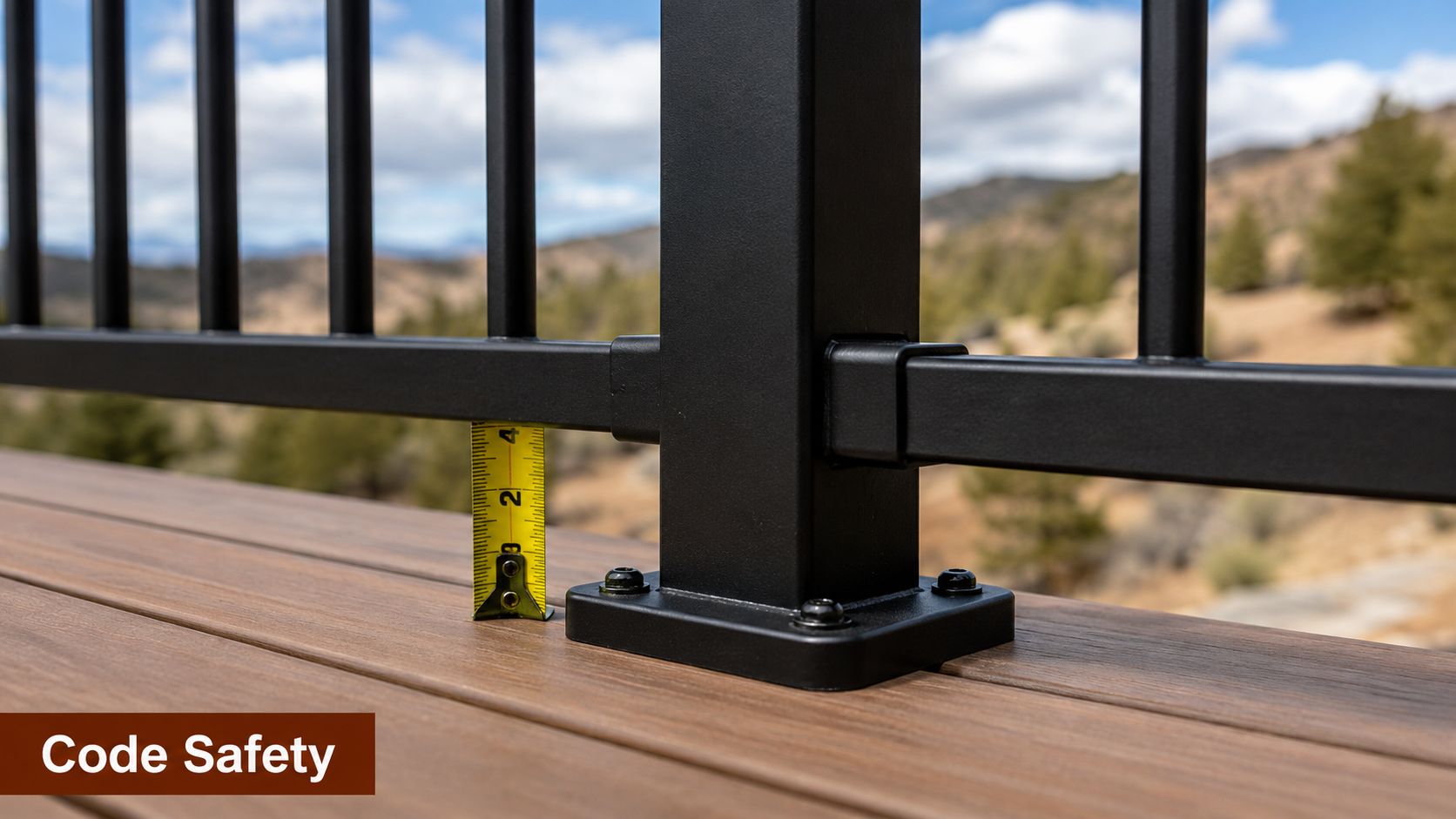
Code treats a deck guard as a structural safety component, not a finish detail. For decks high enough to require a guard, the system needs to resist a 200-pound concentrated load applied at the top in any direction, which aligns with widely used residential code standards published by the International Code Council.
That requirement affects more than the railing panel itself. Post spacing, blocking, fastener type, rim joist condition, and stair transitions all have to support that load path. In Utah, I also want installers thinking about winter movement and repeated freeze-thaw cycles. A connection that feels tight on install day can loosen over time if the framing and hardware were not planned as a system.
Post attachment decides how the railing performs
Surface-mount posts are often the trouble spot on older decks. The decking may still look serviceable, but the framing below may be undersized, split, or missing the backing needed for a safe attachment.
Before ordering materials, check these points:
- Framing at each post location: Posts need solid blocking or a framing member designed to take guard loads.
- Fastener and hardware compatibility: Treated lumber, powder-coated metal, and connector hardware need to work together without creating corrosion problems.
- Mounting surface thickness: Deck boards, trim, and fascia details can change the hardware stack-up and affect bolt engagement.
- Approved install method: Manufacturer instructions should match the field condition, especially on stairs, corners, and fascia mounts.
Skipping that review is expensive. It often leads to rework after the decking is down, which is one of the most common ways a clean railing install turns into a patch job.
Local permit review is part of the job
Utah municipalities often follow the same general code framework, but plan review and inspection expectations still vary. Guard height, stair details, attachment method, and permit triggers can all get extra scrutiny depending on the city and the scope of the project.
Review Utah deck permit requirements before you lock in your layout. That is especially helpful on rebuilds, raised decks, and any project where the railing ties into stairs or existing framing.
Treat stair sections as their own layout
Stairs are where small measurement errors become obvious. Rail angles, bracket locations, and bottom clearances all tighten up, and metal systems do not hide bad math well.
Measure stair runs separately from level sections. Confirm the rise and run are consistent, verify where the posts land, and make sure the chosen system has approved stair components for that pitch range. In snowy Utah conditions, that planning matters even more because stair traffic stays heavy through winter, and loose or awkward transitions show wear quickly.
Understanding Metal Railing Costs for Your Project
A railing quote can look reasonable on paper, then climb fast once actual deck conditions are revealed. In Utah, that usually means stair runs, snow-load exposure, fascia details, and upgraded finishes that hold up better under strong sun.
The biggest budgeting mistake is pricing the panel and treating the rest of the system like small add-ons. Posts, mounts, stair kits, corner fittings, gates, drink rails, and lighting often decide the final number more than the infill itself.
The material range is broad
Metal railing pricing varies widely by material, profile, finish, and how the system is engineered. Aluminum usually lands in the practical middle for Utah projects because it gives good corrosion resistance, lower maintenance, and a cleaner price point than many premium metal options. Stainless can make sense in the right design, but the upfront cost is higher, and that choice needs to pencil out against the setting and the expected lifespan of the deck.
Budget numbers also shift based on what is included in the quote. Some packages cover posts, brackets, and standard connectors. Others start with panel pricing and leave out the parts that enable system installation.
What raises the cost
Straight level sections are the easiest to price and usually the most efficient. Costs rise when the deck has multiple elevations, long stair runs, angled transitions, or custom post locations.
The common cost drivers are:
- Stairs and corners: These sections use more specialized components and take more install time.
- Mounting method: Fascia-mounted posts, surface-mounted posts, and retrofit conditions do not price the same.
- Infill choice: Cable, glass, and premium metal panel styles usually cost more than standard picket systems.
- Finish level: Higher-end textures, custom colors, and coastal-grade or heavy-duty coatings add cost.
- Accessories: Gates, post caps, drink rails, and integrated lighting all expand the package.
Hardware matters here too. Homeowners often compare panel styles and miss the attachment package, but brackets, fasteners, blocking needs, and post base details affect both material cost and labor. A broader look at hardware for building a deck helps tie those decisions back to the full structure.
Utah climate changes the value equation
Low upfront cost is not always low long-term cost.
In Utah, intense UV exposure can fade finishes faster on lower-grade products. Freeze-thaw cycles put more stress on loose connections and poorly protected fasteners. Heavy snow increases the importance of rigid posts, approved attachments, and systems that do not turn into a maintenance project after a few winters. A railing that costs more at purchase can still be the better value if it avoids refinishing, replacement parts, or mid-life repairs.
Lighting should be priced early if it is part of the plan. Wiring paths, post caps, stair illumination, and transformer placement are easier and cheaper to handle before the rail is fully installed. For design ideas around safer stair visibility, Golden Lighting's step illumination tips are a useful reference.
Build the budget around the whole deck
Railing should fit the deck's full service life, not just the opening bid. On a long-term deck build, it often makes more sense to choose a metal railing system that matches the durability of the framing, decking, and exposure conditions instead of saving money on a system that will need more attention in a few seasons.
That is usually the point where the right choice gets clearer. Price the full package, account for Utah weather, and compare ownership cost instead of panel cost alone.
Essential Hardware Accessories and Lighting
A railing can look great on install day and still become the part of the deck that causes callbacks. In Utah, that usually starts at the connection points. Snow load, sun exposure, and repeated freeze-thaw movement expose weak fasteners, mixed metals, and rushed lighting penetrations faster than many homeowners expect.
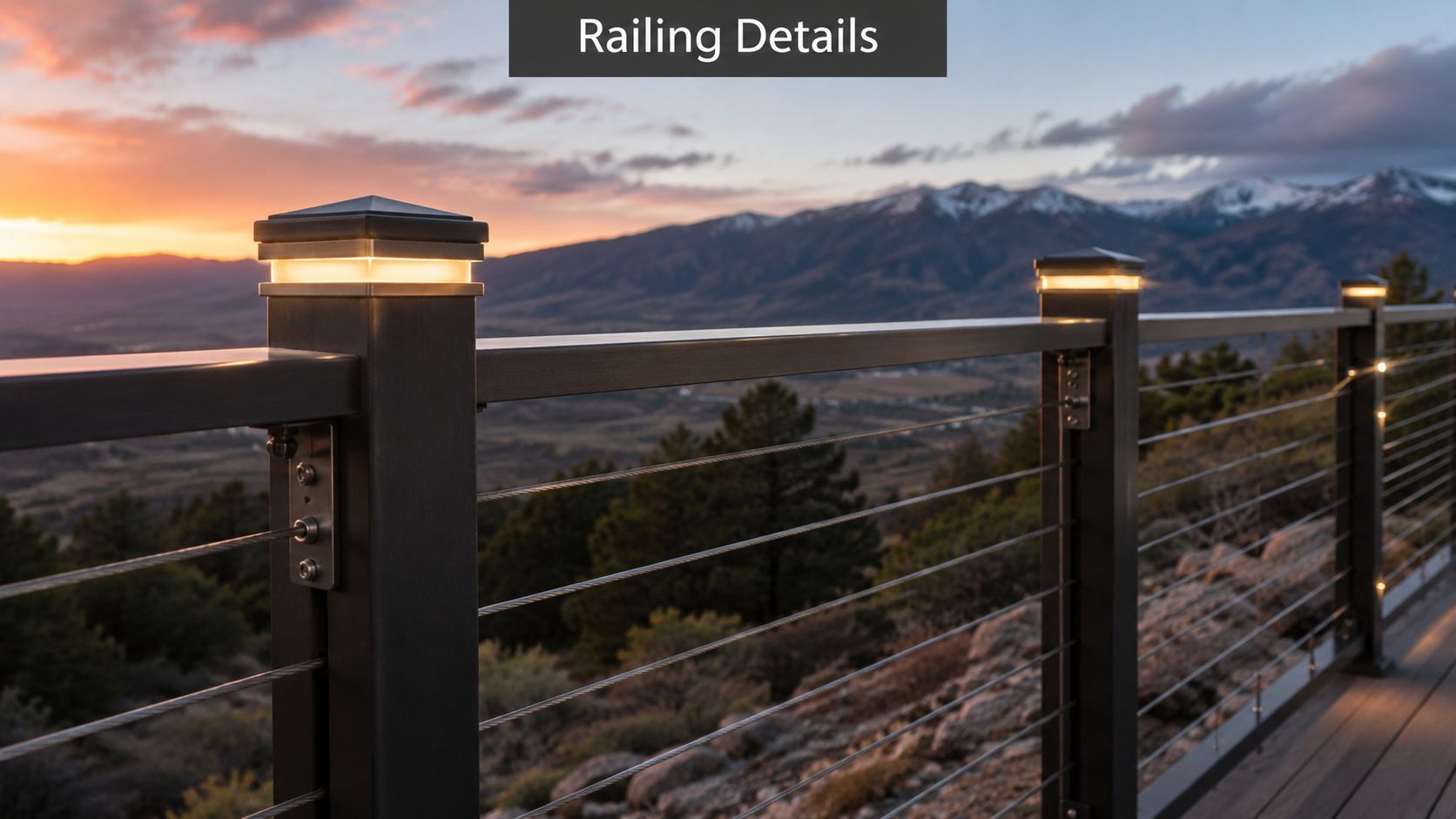
Hardware should match the system
Posts, brackets, fasteners, and anchors need to match the railing material and the framing they attach to. That means more than picking the right screw length. Aluminum, steel, stainless, pressure-treated framing, composite sleeves, and fascia details all change what hardware works and what creates corrosion trouble later.
A broader review of hardware for building a deck helps connect railing hardware decisions to the rest of the structure.
Good railing hardware should disappear visually and hold up structurally. Powder-coated screws that match the rail color help the finish look clean, but the bigger issue is using approved connectors and corrosion-resistant fasteners in the right locations. On Utah decks, I also recommend paying close attention to exposed cut ends, post base cover fit, and any spot where snowmelt can sit against metal longer than expected.
Lighting needs to be planned before the rail is assembled
Low-voltage lighting adds real value on stairs, around post lines, and near transitions to the yard. It also creates problems if the wiring plan starts after the railing is already built.
Our pro tip for a clean installation is to use self-tapping metal screws and mitered cable routing where low-voltage lines pass through posts and rails. That helps protect the wire path, avoids sloppy field cuts, and reduces the chance of moisture intrusion or finish damage. Transformer location matters too. Keep it accessible, protected from weather, and close enough to avoid avoidable voltage drop on longer runs.
For homeowners thinking about stair and path visibility, Golden Lighting's step illumination tips are also useful for understanding where low-voltage lighting tends to add the most practical value.
Accessories that earn their keep
The best accessories solve a real use case.
- Matching gates: Useful for stair control, pets, and child safety where the layout calls for a latchable opening.
- Lighted post caps: Worth considering when the deck gets regular evening use and the wiring is planned early.
- Drink rails: Practical on entertaining decks, but only if the top rail system is designed to support them properly.
- Post base trim and wall returns: Small details, but they clean up transitions and help the finished job look intentional instead of pieced together.
The short version is simple. The railing field gets the attention, but the hardware and accessory choices usually decide how the project performs after a few Utah seasons.
Your Next Steps Selection Checklist and Expert Help
By the time the deck plan reaches railing selection, the best choice usually comes down to four decisions. Material, style, code fit, and layout. Keeping those four in order prevents most expensive mistakes.
A simple checklist before ordering
- Choose the material: Aluminum is often the easiest long-term fit for Utah homes, while steel and stainless steel fit narrower use cases.
- Pick the look: Decide whether the project wants balusters, a more open cable feel, or another metal infill style.
- Verify local requirements: Check city requirements before finalizing heights, stair details, and attachment conditions.
- Sketch the layout: Count the straight runs, corners, stairs, and likely post locations before requesting pricing.
What to bring to the quote conversation
The most useful quote requests usually include basic measurements, a rough sketch, and photos of the deck area if it's an existing structure. That helps identify whether the project is straightforward or whether stairs, fascia conditions, and framing details may affect the railing package.
For homeowners and contractors across West Jordan, Salt Lake City, South Jordan, Sandy, Draper, Herriman, Lehi, Ogden, Provo, and the broader Wasatch Front, seeing the material in person often makes the final decision easier. Color, profile, and rail feel are much easier to judge in a showroom than on a screen.
Metal deck railing systems work best when the selection is based on actual site conditions, not just appearance. Utah climate rewards durable finishes, smart hardware, and realistic planning.
For help narrowing down railing materials, reviewing a supply list, or comparing options in person, Utah Deck Supply serves homeowners and contractors from its West Jordan showroom. To get pricing started, request a deck materials quote or call 385-993-5492.
Selection note: Aluminum is the default residential workhorse for many Utah decks. Steel earns its keep when you want heavier design presence. Stainless and cable systems are specialty tools, not automatic upgrades.
Internal links:
- Railing hub
- Cinch steel railing
- Fortress railing
- RailFX systems
- Black aluminum deck railing guide
- Deck stair railing guide
Resources and references
- Manufacturer installation manuals for post spacing, brackets, and finish care
- Local code office for guard height and infill spacing requirements
- IRC overview for background only