
A south- or west-facing deck in West Jordan can feel comfortable in the morning and punishing by late afternoon. Homeowners often ask, how hot does composite decking get in the sun, because bare feet, pets, and children reveal a problem that a product brochure may not: deck-board temperature can rise far above the air temperature.
The answer isn't one universal number. Board color, composite formulation, sun exposure, airflow, local conditions, and the testing method all change the result. Independent thermal testing recorded a dark composite sample at 65°C, or 149°F, which was 29.5°C hotter than ambient air (thermal testing of decking materials). That's enough to make heat mitigation a design decision, not an afterthought.
A West Jordan Deck That Got Too Hot to Walk On
A south-facing West Jordan deck can become unusable by a July afternoon. The house, trees, and pergola provide no shade, the hose is several steps away, and the boards sit under direct Wasatch sun. A homeowner steps outside barefoot, reaches toward the hose, and pulls back before crossing the deck.
That heat comes from several separate drivers. Board color controls how much sunlight the surface absorbs. Formulation affects how the board stores and releases heat. Airflow beneath and across the deck changes cooling, while altitude and clear Utah skies increase solar exposure. The test method also matters, because a hand, infrared thermometer, and contact probe measure different things.
The exact board matters more than the label composite. Dark surfaces can remain uncomfortable after the sun moves west. Children leave the deck, a dog searches for the shaded edge, and an outdoor rug becomes the only tolerable route.
For full-sun Wasatch Front projects, I usually steer homeowners toward a lighter TimberTech Vintage sample before a Trex Transcend Lineage sample. That recommendation reflects heat behavior, color availability, and the specific exposure, not a blanket claim that one material always stays cool.
Use the showroom sample test: place the exact boards in direct sun, measure each after the same exposure, and check them with your bare hand only briefly. Test the color you intend to buy, then compare it with a lighter option.
A field comparison reported composite surfaces from about 112°F to 156°F, averaging 128°F, while wood averaged 115°F. Treat those figures as directional, not a promise for your property.
Why Composite Decking Gets Hot in Direct Sun
A full-sun deck in West Jordan can become uncomfortable under bare feet even when the air temperature feels manageable. The board's surface heat comes from several separate drivers, so the label composite does not predict the result by itself.
Color sets the starting point. Dark pigments absorb more sunlight than lighter pigments. Formulation then affects how the board stores and releases that energy. A dense wood-plastic core may hold heat after direct exposure, while PVC and wood respond differently because their materials, moisture, finish, and density differ.
Airflow changes the outcome as well. Moving air cools the exposed surface and the space beneath the boards. Altitude and clear Utah skies can increase solar exposure, so a high-elevation deck may feel different from the same color installed in a humid, shaded yard. Sun angle matters too, because midday and late-afternoon rays can heat different deck faces.
Use these drivers to evaluate a sample:
- Color: Lighter boards generally reflect more solar energy.
- Formulation: Capped composite, uncapped composite, and PVC can absorb and release heat differently.
- Sun exposure: Unobstructed sun produces more heat than partial shade.
- Sun angle: Orientation changes which boards receive the strongest rays.
- Airflow: Ventilation helps carry heat away.
- Test method: A hand, infrared thermometer, and contact probe measure different conditions.
For Utah full-sun builds, I recommend testing a lighter TimberTech Vintage sample before choosing a Trex Transcend Lineage color. That is a product-specific recommendation, not proof that one material always stays cool. Place the exact composite decking samples in direct sun for the same exposure, check each with an infrared thermometer, and touch them briefly. Compare your intended color with a lighter option, then use the broader material discussion in the next section to weigh comfort, maintenance, and construction. Published heat ranges should guide testing, not replace it. Surface temperature depends on the board, installation, weather, and measurement method.
Composite vs PVC vs Wood Heat Behavior
For a full-sun Wasatch Front deck, material labels are only the starting point. Color, formulation, airflow, altitude, and exposure determine how the surface feels underfoot. Composite provides a wood-like appearance with low maintenance, but a dense core can retain substantial heat. PVC contains no organic wood fiber and can feel less heat-retentive. Wood may feel cooler during peak exposure, yet it requires regular sealing, staining, or refinishing.
| Material | Peak Surface Heat | Heat Retention | Utah Full-Sun Feel | Typical Use Case |
|---|---|---|---|---|
| Composite | Can become very hot, especially in dark colors and direct sun | Often substantial because of its dense core | Durable, but dark boards can be uncomfortable barefoot | Low-maintenance decks with broad color and texture choices |
| PVC | Often more forgiving underfoot than dense composite | Generally less dependent on an organic fiber core | Strong candidate when comfort is a priority | Full-sun decks, pool-adjacent areas, and comfort-focused projects |
| Wood | May feel cooler at peak sun in some comparisons | Varies by species, moisture, finish, and density | Natural and familiar, but maintenance affects long-term performance | Traditional decks where refinishing is acceptable |
A field-style comparison found that light-colored composites averaged 117°F, nearly matching cedar, while dark composites averaged 145°F. The useful conclusion is narrow and practical: a light composite can feel more comfortable than a dark board from the same material family. Those figures are comparison points, not a guarantee for every Utah installation.
For West Jordan full-sun projects, I recommend placing a lighter TimberTech Vintage sample beside the intended Trex Transcend Lineage color before ordering. Test both in the same unshaded location for the same exposure. Use an infrared thermometer, then touch each board briefly with your hand. This product-specific check is more useful than assuming every composite, PVC board, or wood species behaves alike.
Utah Deck Supply does not sell or stock aluminum deck boards or planks, so aluminum is outside this comparison. Aluminum railing is available. The deck-board choices remain composite, PVC, and wood. Use the Utah composite decking material guide to review appearance, maintenance, comfort, and construction trade-offs before requesting a quote.
The Six Drivers of Deck Surface Heat
A full-sun West Jordan deck can feel very different from a shaded deck two streets away. Surface heat comes from several separate drivers, so changing one decision will not solve every hot-deck problem.
| Heat Driver | Effect on Surface Temp | Homeowner Control |
|---|---|---|
| Board color and reflectivity | Darker boards usually absorb more solar energy and feel hotter | High, choose lighter tones |
| Polymer formulation and density | Cores, caps, and surface construction change how boards absorb and release heat | High, compare product lines |
| Sun angle and time of day | Direct afternoon exposure creates the strongest heating and hottest areas | Moderate, plan shade carefully |
| Airflow | Moving air helps release heat around and beneath the deck | Moderate, avoid trapping the assembly |
| Ambient temperature and elevation | Hot air and strong Utah sun raise the starting point for surface heating | Low, plan around the property |
| Surface-test method | Palm tests and infrared readings measure comfort and temperature differently | High, test boards consistently |
Color is usually the easiest lever to pull. Under identical exposure, a dark board can become much hotter than a light board. Independent testing recorded a dark composite sample at 65°C, or 29.5°C above ambient air (independent decking thermal test). This pattern is consistent with the independent thermal testing cited earlier in this article.
Formulation matters next. Capped composite boards can respond differently from boards with another cap or core construction. PVC also has a different material structure from wood-plastic composite, while wood varies by species, moisture, finish, and density. Compare the exact products rather than assuming one material category always stays cooler.
Airflow deserves equal attention. A low deck with restricted space beneath it can hold warm air. An adequately ventilated assembly releases heat more readily, although ventilation cannot overcome a very dark surface in direct afternoon sun.
Altitude and UV exposure belong in the site assessment. They should guide planning, not justify unsupported temperature promises. For a covered outdoor living space with Superior Home Improvement, overhead protection can reduce direct solar exposure, but orientation and afternoon shade still determine comfort. Test matching showroom samples in the intended colors and choose the board that performs better under comparable exposure.
Showroom Sample Test Checklist You Can Use Today
A sample test won't predict every surface temperature in a finished yard. It can, however, reveal which colors and formulations feel more comfortable relative to one another. The five-second palm test is a useful safety screen: if a person can't keep a palm on the surface for five seconds, the board is too hot for bare feet and pets (barefoot decking safety guidance).
At the West Jordan showroom, the test should stay consistent:
- Request matching colors. Compare similar light, medium, and dark tones from TimberTech Vintage, Trex Transcend Lineage, and Trex Select.
- Let samples acclimate. Keep the samples in the same showroom environment before testing so one board isn't unusually cold from storage.
- Use the same exposure. Place every sample near the brightest window or outdoor sample rack at the same time.
- Apply the palm test. Press a flat palm on each board for five seconds, then rank comfort without treating the result as a calibrated temperature.
- Mist one area lightly. A spray-bottle test can show how quickly surface comfort changes after water is applied, though it doesn't reproduce every outdoor condition.
- Tap with a coin. A coin tap can help compare cap hardness and construction feel, but it isn't a structural or warranty test.
- Test shade. Place matching samples under the showroom pergola display and compare them with samples in direct exposure.
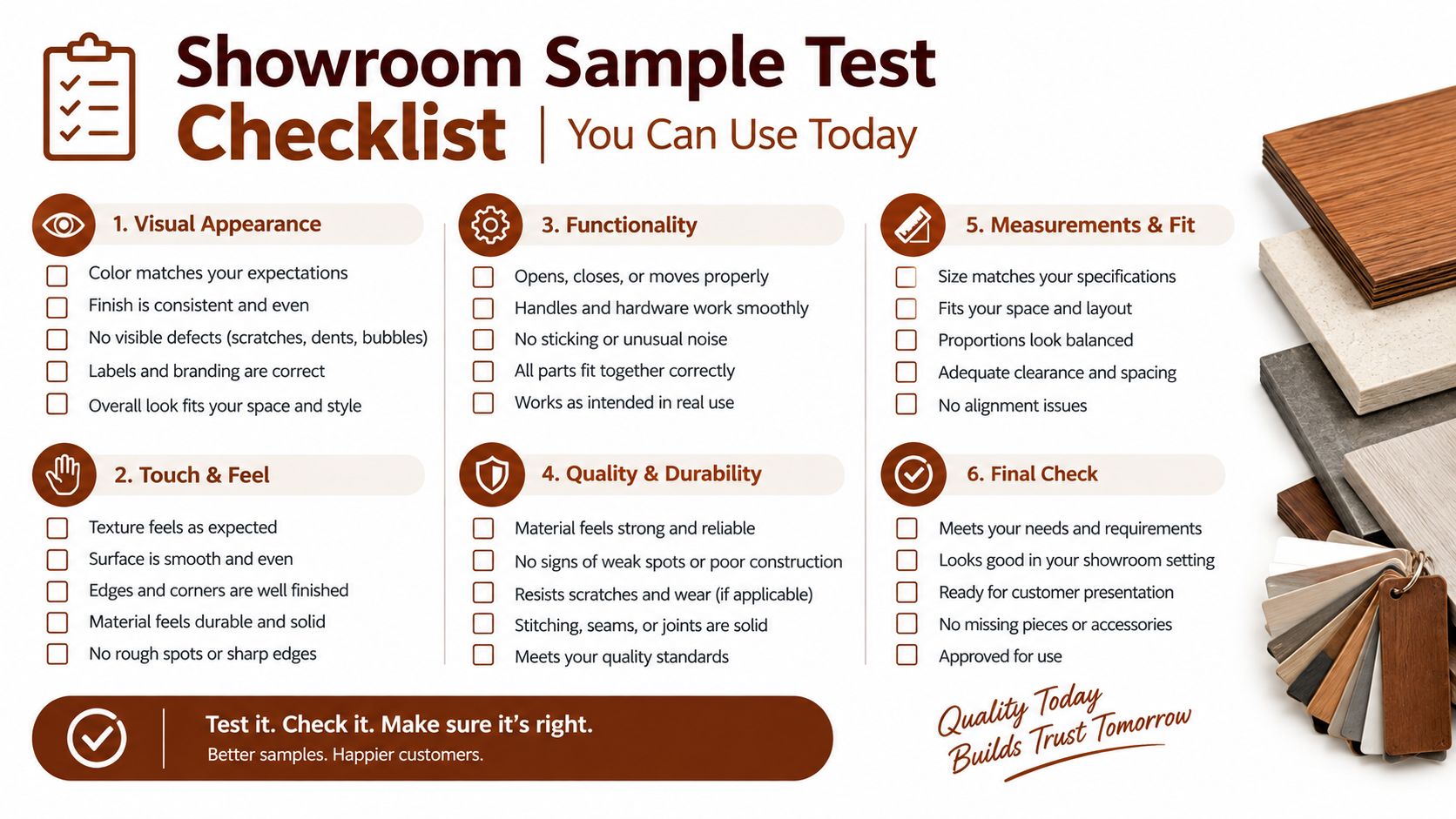
The point is relative ranking, not a promise that a sample will match a specific afternoon in a backyard. A consistent comparison gives the buyer a more useful shortlist than a single marketing temperature. The how to test deck samples before buying guide adds another practical step, reviewing samples in the property's actual light.
Cooler Color and Material Choices for Utah Full-Sun Decks
For a west-facing Utah deck, the strongest heat-mitigation stack starts with a lighter board color, a heat-conscious formulation, and real shade. TimberTech Vintage colors such as Coastline, Weathered Teak, and Ashwood deserve priority over very dark options when barefoot comfort matters.
Utah Deck Supply's guidance favors TimberTech Vintage over Trex Transcend Lineage for heat mitigation. Vintage's advanced PVC construction and co-extruded cap make it the preferred direction for west-facing builds with intense afternoon sun. Trex Transcend Lineage remains a legitimate composite option, but it shouldn't be presented as the leading choice for this specific heat concern.
The deck plan should reduce exposure rather than rely on the board alone:
- Add overhead shade: A pergola with adjustable shade cloth can filter strong sun while preserving airflow.
- Cover western exposure: Retractable awnings or shade elements near south- and west-facing walls can target the hottest period.
- Use living shade: Ornamental trees and carefully placed landscaping can filter late-afternoon sunlight without enclosing the deck.
- Preserve ventilation: Follow the selected manufacturer's joist-spacing, gapping, and ventilation requirements. Heat comfort doesn't justify changing structural or installation specifications.
- Avoid heat-trapping accessories: Dark rugs, furniture pads, and solid coverings can create localized hot spots or interfere with drainage. Use products only as the manufacturer allows.
Claims about heat, spacing, expansion, structural capacity, warranties, and product compatibility need to be checked against the current manufacturer's instructions. A shade structure also requires its own framing, connection, and local-code review. The cooler composite decking options can help narrow the material discussion before the deck layout is finalized.
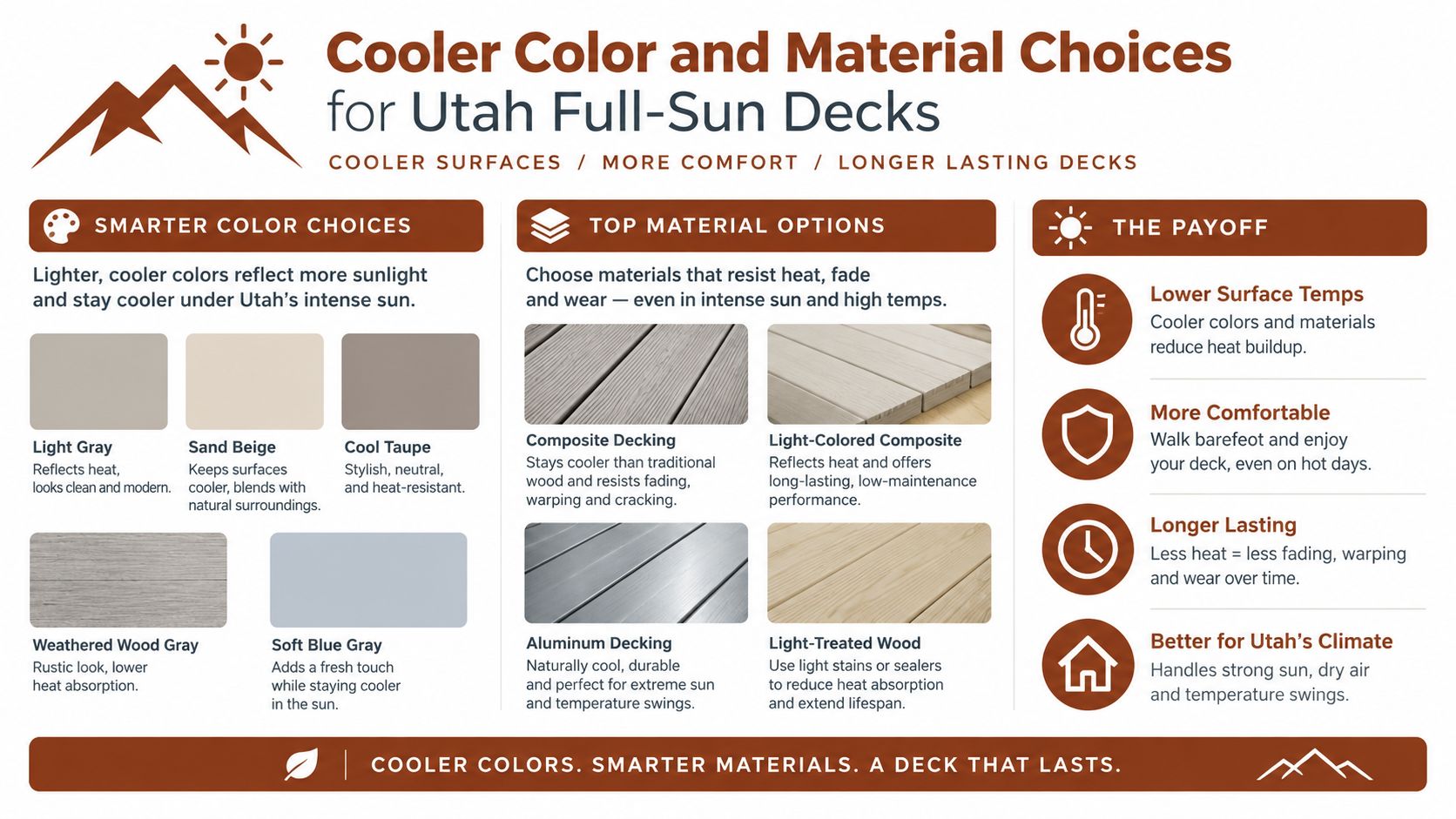
A cooler board won't make a full-sun deck cool in every condition. It will give the shade plan a better starting point and reduce the penalty of choosing a dark surface where people, children, or pets regularly walk barefoot.
Buying and Visiting the West Jordan Showroom
A heat-conscious purchase should begin with the property, not a color chart. Homeowners and contractors should bring a tape measure, photos showing the south and west elevations, notes about existing shade, and any HOA color restrictions. Those details help the showroom team compare a board's appearance and likely exposure instead of treating every Utah deck as identical.
The sample request should include matching tones from TimberTech Vintage and Trex Transcend Lineage, plus a lighter and darker reference. If the project involves a low deck, the buyer should also ask about ventilation, framing layout, joist protection, fasteners, and the manufacturer's required gaps. Structural hardware, corrosion resistance, railing systems, and installation requirements should be confirmed against current product documentation and local code requirements.
A practical review plan looks like this:
- Day one: Collect comparable samples and record the deck's sunniest areas.
- During the following week: Place samples in the planned deck location and review them during morning, midday, and late-afternoon exposure.
- Before ordering: Confirm the selected color, board profile, railing, fastener system, framing hardware, and shade-structure requirements.
- At the quote stage: Ask which heat-mitigation accessories and material quantities belong in the takeoff, without assuming a coating or rug will solve a poorly shaded design.
Homeowners across West Jordan and the Wasatch Front can visit a decking showroom to compare boards, railing, lumber, and deck hardware in person. The showroom visit is especially useful for DIY builders and contractors who need a coordinated materials list rather than a deck-board sample alone.
Utah Deck Supply helps Utah homeowners, DIY builders, and contractors compare composite, PVC, and wood decking, along with railing, fasteners, framing hardware, and shade-structure materials. Visit Utah Deck Supply, call 385-993-5492, or request a deck materials quote with the deck's orientation and sample preferences so the next step reflects the actual heat conditions on the property.