
A homeowner in Sandy can rebuild a south-facing composite deck and still choose the wrong screw before the first board goes down. A contractor in Lehi can use ACQ-treated lumber, a premium coating, and a compatible-looking connector, then discover corrosion at the exact place where the fastener matters most. Stainless steel vs coated deck screws isn't a one-winner argument. The correct choice depends on the board or framing material, moisture and chloride exposure, connector metal, structural role, and manufacturer approval.
The practical rule is simple. Use an exterior fastener system that matches the complete assembly, not just the screw head. The right deck screws for a West Jordan, Salt Lake City, or broader Wasatch Front project may differ from the right choice for a pool deck or a Great Salt Lake-adjacent build. A separate HomeProBadge deck guide can also help when the project includes a pergola and its supporting materials.
Choosing the Right Deck Screw for Your Utah Build
The first decision isn't stainless or coated. It's where the screw will go and what it must do.
A deck-board screw holding composite or PVC to a joist has a different job from a structural screw fastening a beam, post connection, ledger component, or metal connector. A screw approved for decking may not have the tested geometry, load data, or installation instructions required for a structural connection. A structural connector fastener, in turn, may be the wrong shape or finish for a visible composite deck surface.
Start with the project conditions
A useful counter-side checklist looks like this:
- Identify the substrate. Separate ACQ-treated framing, cedar, redwood, hardwood, composite boards, and PVC or capstock boards.
- Mark the exposure. Note irrigation overspray, pool chemicals, hot-tub splash, snowmelt, de-icing residue, and salt-laden air.
- Identify the connector metal. Galvanized steel, stainless steel, aluminum flashing, and mixed-metal assemblies don't automatically make a compatible system.
- Separate finish work from structure. Decking screws, hidden fasteners, and structural connector fasteners must be selected independently.
- Check the product instructions. The decking, hidden-fastener, connector, and screw manufacturers control approved combinations, spacing, embedment, and installation requirements.
Practical rule: A premium screw in the wrong application is still the wrong screw.
For most inland Wasatch Front projects, an ACQ-rated coated deck screw can be a sensible workhorse for visible deck boards and suitable framing applications. Stainless steel becomes the stronger recommendation as chloride exposure rises, as the board material becomes more stain-sensitive, or as removal and long-term corrosion resistance matter more than driving speed.
How Stainless and Coated Screws Fight Corrosion
A deck near a pool, hot tub, irrigation line, or salted walkway can expose every fastener to repeated moisture and chlorides. Choose the screw as part of the full assembly, including the substrate, connector metal, exposure, and structural role.
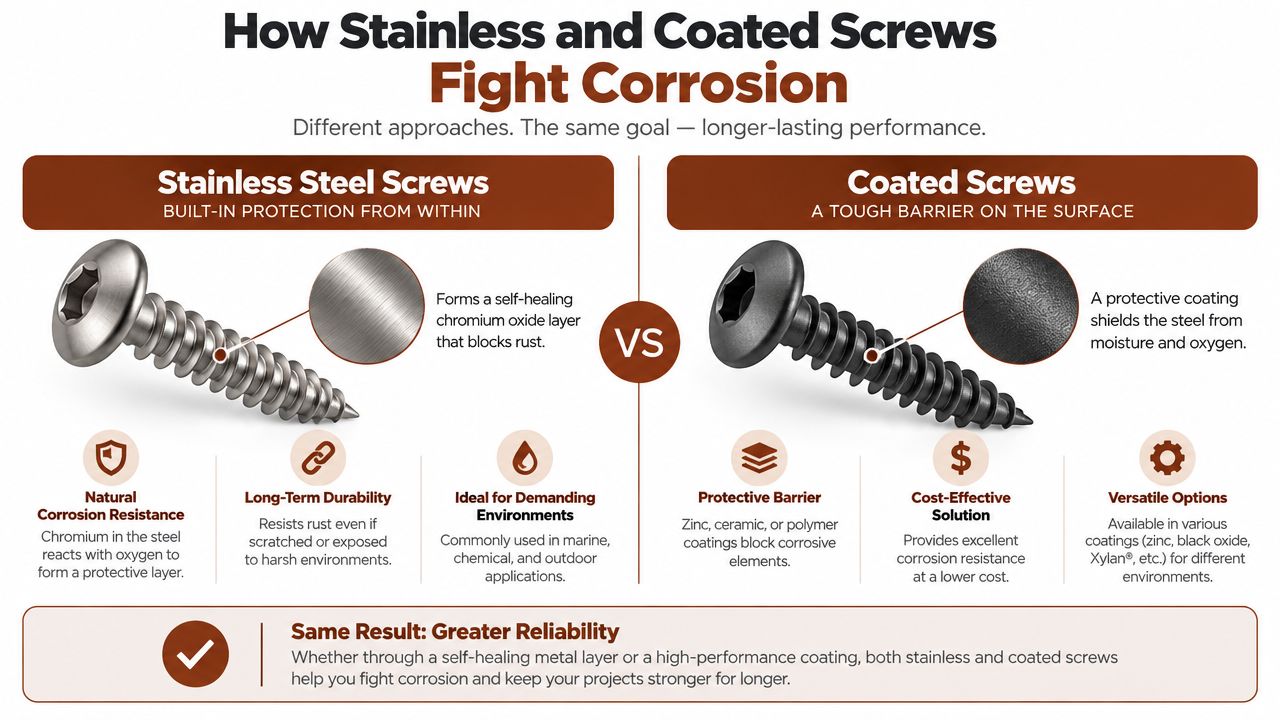
Stainless steel protects the fastener through its material. Chromium forms a passive oxide layer across the steel, so corrosion resistance does not depend on paint or plating. Industry guidance places A2 stainless in standard wet and salt-solution conditions, while A4 stainless is intended for more corrosive, marine-like exposure. That makes stainless the stronger choice near pools, salt, and de-icing residue when coating damage is a concern.
Coated screws protect a steel core with an external barrier. Depending on the product, that barrier can use organic, epoxy, ceramic, zinc, or mechanically deposited protection. A properly rated coating can perform well, but driving friction, sharp edges, cut threads, and contact with aggressive treated lumber can expose weak points.
Why the grade matters
A2, commonly associated with 304 stainless, handles ordinary exterior conditions well. A4, commonly associated with 316 stainless, adds molybdenum for better resistance to chloride corrosion. Specify A4 where pool chemicals, hot tubs, salt, or de-icing products create repeated exposure.
Judge coated screws by their actual rating, not by “weather resistant” wording alone. ASTM B117 neutral salt spray exposes fasteners to a 5% sodium chloride mist for 24 to 1,000 hours. One cited premium coated fastener exceeded 1,200 hours of salt spray testing and 30 Kesternich cycles. These results indicate delayed corrosion, not permanent immunity. (Coated and stainless corrosion guidance)
The connector metal completes the corrosion system. Moisture and an electrical path between dissimilar metals can produce galvanic corrosion, attacking the less noble metal. A stainless screw beside an incompatible galvanized or aluminum component may undermine the intended upgrade. Before finalizing a railing package, compare cable railing systems for decks and confirm that the screw, cable hardware, flashing, and connector metals are approved together.
Matching Screws to Substrate and Connector Metal
The matrix below is the useful part of the decision. It separates board attachment from structural hardware and forces the exposure question into the purchase.
| Substrate / Application | Stainless 304 | Stainless 316 | Coated Deck Screw |
|---|---|---|---|
| ACQ-treated wood framing, inland and protected | Suitable when approved | Suitable, with added corrosion margin | Suitable only when specifically rated for treated lumber |
| Composite boards such as Trex or TimberTech | Common choice when approved by the decking system | Useful for higher-moisture or chloride exposure | Suitable when the decking manufacturer approves the finish and system |
| PVC or capstock decking | Often preferred to control staining, subject to product approval | Preferred for pool, splash, or chloride exposure when approved | Use only a product specifically approved for the board and staining requirements |
| Cedar, redwood, or tannin-rich hardwood | Strong choice for visible surfaces | Strongest corrosion margin where exposure is severe | Riskier if coating damage exposes steel and causes staining |
| Galvanized structural connector | Use only where the connector manufacturer permits it | Use only where the connector manufacturer permits it | Use the specified connector fastener, not a generic deck screw |
| Stainless connector or stainless flashing | Compatible option when the complete system approves it | Best match when chloride exposure is high | Poor default because the coating and base metal may not match the assembly |
| Aluminum flashing or components | Do not assume compatibility | Do not assume compatibility | Do not assume compatibility |
Treated lumber changes the answer
Modern ACQ-treated lumber is more corrosive to ordinary steel fasteners than older treatment systems. Guidance for treated lumber identifies stainless steel as preferred for pressure-treated, coastal, lake, and pool environments, while polymer-coated or other ACQ-rated products may be used when stainless isn't selected. (Treated-lumber fastener guidance)
That doesn't mean every stainless screw belongs in every connector. A structural connector has a specified fastener family, diameter, length, head style, and corrosion environment. Simpson Strong-Tie, MiTek, and other connector manufacturers publish their own requirements. The safest practice is to match the connector brand's approved fastener, then select separate decking screws for the surface boards.
Hidden systems need their own approval
Hidden clips and plug systems add another restriction. A clip may accept a stainless-specific screw, a coated collated screw, or only the fastener supplied or specified for that system. A plug system may require a matching screw head, diameter, color, and driver geometry. Mixing a screw from one system with a clip or plug from another can compromise fit, finish, removability, or warranty coverage.
For the structural side of the build, keep the deck framing hardware list separate from surface fasteners. That one habit prevents a common counter mistake, using a convenient deck-board screw for a connection that needs an engineered structural fastener.
Installation Realities on Utah Job Sites
Coated carbon-steel deck screws usually win the driving contest. They tend to cut into wood readily, seat cleanly, and work efficiently with ordinary tools. That matters on dusty jobsites in Lehi, Herriman, or Park City, where a crew wants consistent production and fewer stripped heads.
Stainless steel rewards a slower installation method. Its strength and work-hardening behavior can make aggressive driving risky, especially with high speed, excessive pressure, a dull bit, or a driver set too aggressively. A pilot hole, the correct bit, and a controlled final seat protect both the screw and the board.
Installation differences
| Factor | Stainless 305/316 | Coated Carbon |
|---|---|---|
| Driving feel | Requires controlled speed and pressure | Usually faster with standard tools |
| Pre-drilling | More important in dense boards, hardwood, and board ends | Still useful near ends and edges |
| Driver bit | Torx-style drive is preferred when specified | Torx-style drive usually reduces cam-out |
| Removal | Corrosion resistance can make later removal easier | Damaged coatings and corrosion can complicate removal |
| Visible finish | Good stain control when the system is approved | Depends on coating durability and board chemistry |
| Hidden fastening | Must match the clip or plug system exactly | Must match the clip or plug system exactly |
Keep the installation method matched to the board
Composite and PVC boards can mushroom, crack, or show an oversized hole if the installer drives too fast or sinks the head too far. Pre-drilling near board ends remains important for both categories, while dense composite and capstock surfaces often justify a more deliberate pilot and countersink process.
A clean installation uses:
- A fresh driver bit. A worn bit increases stripping and head damage.
- A controlled clutch or speed. The screw should seat flush, not disappear below the surface.
- Consistent pilot depth. The hole should guide the screw without leaving a loose fit.
- The approved hidden-fastener version. Clip and plug systems aren't interchangeable by appearance alone.
- Separate structural hardware. Structural screws and connectors follow their own installation requirements.
The DIY deck building guide Utah can provide broader planning context, but manufacturer instructions still control the actual screw, bit, spacing, and installation method for the selected decking system.
Reading Utah Exposure Zones the Right Way
A Wasatch Front deck can face serious corrosion even in Utah's dry climate. Irrigation overspray, snowmelt, freeze-thaw movement, pool chemicals, and de-icing residue all change the fastener decision. Shade keeps framing damp longer, while south-facing boards and exposed heads take intense sun and temperature swings.
Build the exposure checklist before ordering
Inland residential deck: An ACQ-rated coated screw is usually a practical choice for ordinary visible decking and compatible framing, if the manufacturer approves the application. Choose stainless when the owner wants more corrosion margin, easier future removal, or a finish-sensitive assembly.
Pool or hot-tub deck: Chlorinated splash and persistent moisture require a higher corrosion margin. Start with stainless, then confirm the grade and finish against the decking and hidden-fastener instructions. The screw must also suit the connector metal and the assembly's structural role.
Great Salt Lake-adjacent property: Salt-laden air increases chloride exposure. Give A4 or 316 stainless serious consideration for exposed heads, PVC or capstock boards, and assemblies containing stainless or aluminum components. Ordinary galvanized or coated fasteners can lose protection sooner in salt-spray conditions, while 316 stainless provides stronger chloride resistance. (Coastal stainless construction guidance)
Cedar, redwood, or hardwood surface: Stain control matters alongside rust resistance. Select a screw and finish approved for the exact board. Damaged coatings and incompatible metals can leave dark marks around exposed heads, even when the fastener still holds.
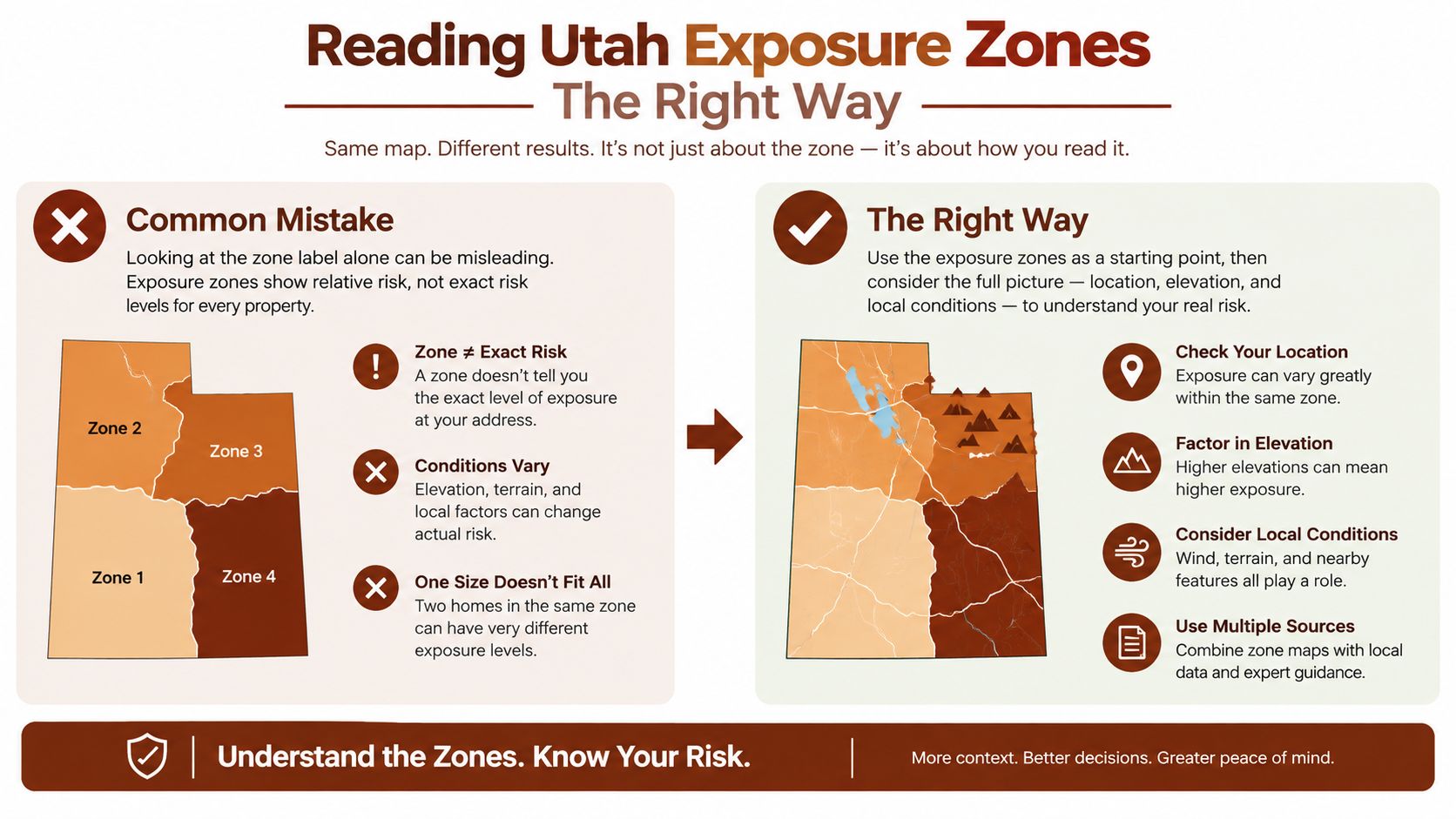
Salt, chlorine, and treated-lumber chemistry matter more than a city label. Sandy and Ogden do not share identical jobsite conditions, and a shaded backyard deck differs from a pool surround in the same neighborhood.
Put the exposure map on the material takeoff before loading the screw box. Choose the fastener as part of the full system, including the substrate, connector metal, board surface, and structural demand. Replacing corroded hardware after boards and trim are installed disrupts the project and may leave you limited by the original head and thread design.
Cost, Lifecycle, and When Stainless Pays for Itself
The cheapest box can create the most expensive callback. Coated screws usually lower material cost and drive easily, making them a practical choice for a protected inland project when they are approved for the treated lumber or decking.
Stainless costs more upfront. It earns that premium when corrosion would add labor, damage the finish, or complicate future access. Replacing a board with a seized fastener, repairing stained composite fascia, or removing a stripped head can cost more than the original difference between coated and stainless screws. Spend the upgrade where exposure, substrate, connector metal, and finish sensitivity demand it. Do not specify one grade for every part of the deck.
Cost and lifecycle comparison
| Fastener Type | Price per 5 lb Box | Estimated 500 sq ft Project Cost | Expected Service Life |
|---|---|---|---|
| ACQ-rated coated deck screw | Not stated in verified data | Not stated in verified data | Depends on coating, exposure, substrate, and approval |
| 305 stainless steel | Not stated in verified data | Not stated in verified data | Longer-life option because corrosion resistance is inherent |
| 316 stainless steel | Not stated in verified data | Not stated in verified data | Longest corrosion margin of the listed options in chloride exposure |
Accelerated corrosion tests help compare coated products, but they cannot predict the service life of a specific Utah deck. Salt-spray results show how a finish performs under a controlled protocol, not how a fastener will behave in a shaded yard, irrigation zone, pool surround, or freeze-thaw assembly. Use test results as one input, then check the substrate, connector metal, board surface, and structural role.
Choose a coated system for ordinary exposure when its approval matches the treated lumber or decking and the owner accepts the coating as the protection layer. Choose 305 stainless where pool water, hot-tub splash, aggressive irrigation, sensitive wood, or future removal raises the cost of failure. Choose 316 when chloride exposure is severe or the assembly needs more corrosion margin.
The 2026 galvanizing pricing guide shows why protective-metal decisions involve more than the initial fastener price. Galvanizing does not replace the approved deck or structural fastener. Match the screw to the complete assembly, then compare purchase cost against access, repair labor, finish risk, and expected service conditions.
Recommendations and Where to Get the Right Screws
For most inland Wasatch Front deck-board work, the practical default is an ACQ-rated coated composite screw when the product is approved for the selected boards and hidden or visible fastening system. It offers a good balance of drive performance, finish, and material cost for ordinary exposure.
Move to 305 stainless for pool surrounds, hot-tub decks, sensitive wood, and composite or PVC surfaces where staining and future removal matter. Choose 316 stainless when chloride exposure is severe, when the assembly needs the added corrosion margin, or when the owner prioritizes the most corrosion-resistant option available within the approved system.
The final truck checklist should include:
- Substrate approval: Confirm the screw is approved for ACQ-treated wood, composite, PVC, cedar, redwood, or hardwood.
- Connector compatibility: Use the structural connector manufacturer's specified fasteners. Don't substitute a generic decking screw.
- Metal compatibility: Check stainless, galvanized, aluminum, and flashing interfaces for galvanic concerns.
- Hidden-system match: Pair clips, plugs, screws, and drivers from the approved system.
- Length and profile: Confirm screw length against board thickness, joist depth, and fastening instructions.
- Exposure grade: Treat pool, hot-tub, salt, and de-icing exposure as a reason to review stainless options.
The Utah Deck Supply showroom in West Jordan helps homeowners, DIY builders, contractors, remodelers, and builders compare decking, railing, screws, hidden fasteners, joist tape, flashing, and framing hardware for Utah projects. The supplier carries composite, PVC, and wood decking, plus aluminum railing, but it doesn't sell aluminum decking boards or aluminum deck planks.
Utah Deck Supply can help match the screw system to the substrate, connector metal, exposure, and structural role instead of treating every deck as the same job. Visit the Utah Deck Supply showroom in West Jordan or request a deck materials quote with the board type, framing material, and Utah exposure conditions ready.